Can Starter Fertilizer Burn New Grass Seedlings?
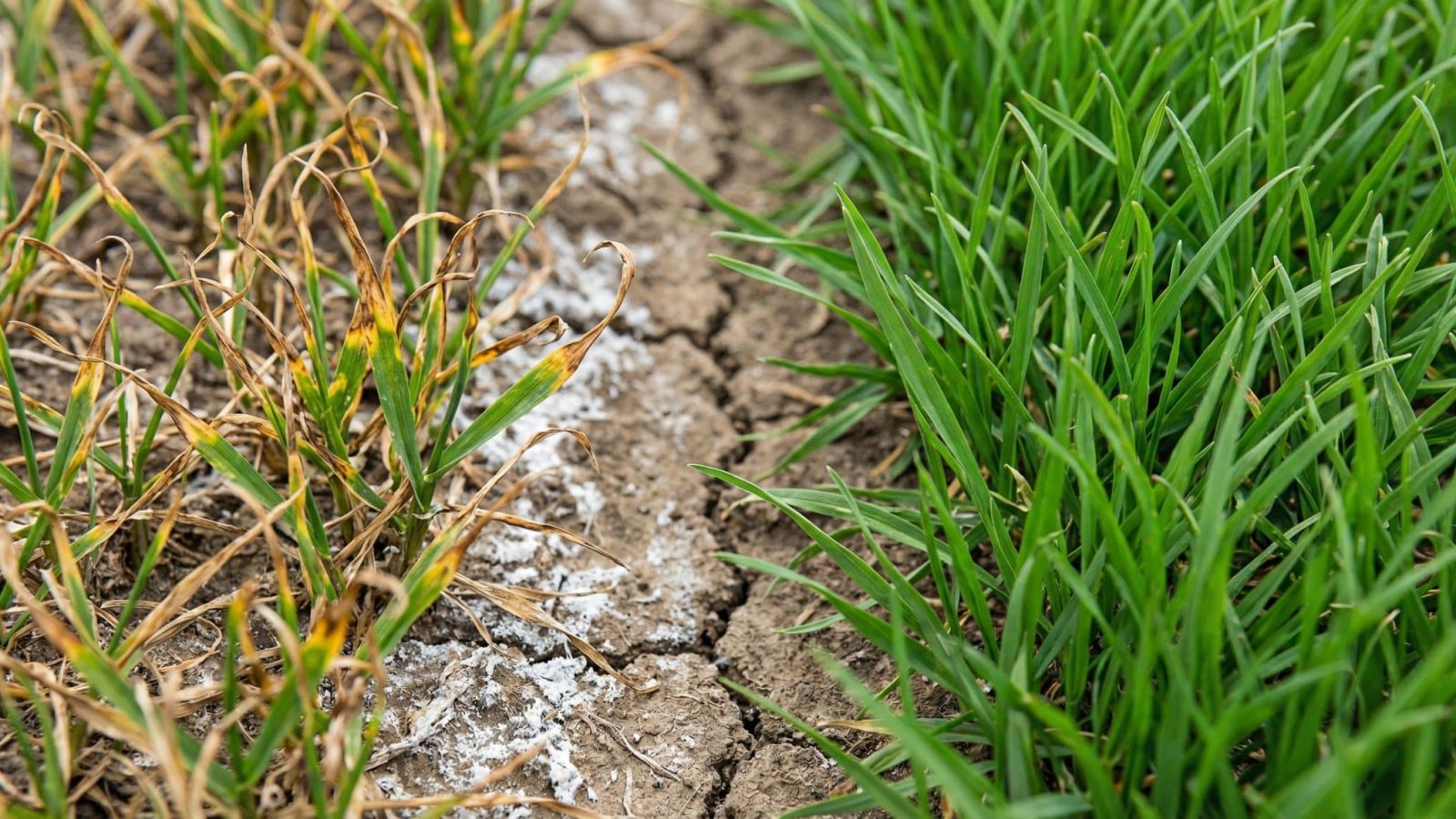
Yes, starter fertilizer can absolutely burn newly germinated grass seedlings when the rate is too high, the nitrogen source is too hot, or the product isn't watered in. University extension research shows seedling root tips are extremely sensitive to salt and ammonia during the first 2 to 3 weeks, which is why a "little extra" is the fastest way to wipe out a new lawn before it ever fills in.
The safe window is narrow. Most extension services recommend no more than 0.5 to 1.0 pound of actual nitrogen per 1,000 square feet at seeding, with a light watering immediately after to push the granules off the blades and into the root zone. Get past that ceiling, skip the watering, or use a quick-release weed-and-feed by mistake, and you'll see yellowing, tip dieback, or bare patches within 48 to 72 hours.
As of 2026, label guidance from major turf universities hasn't shifted much, but more homeowners are using polymer-coated nitrogen specifically because the slow release widens that safety margin. Let's dig into exactly how the damage happens, what rates are safe, and how to recover if you've already gone too heavy.
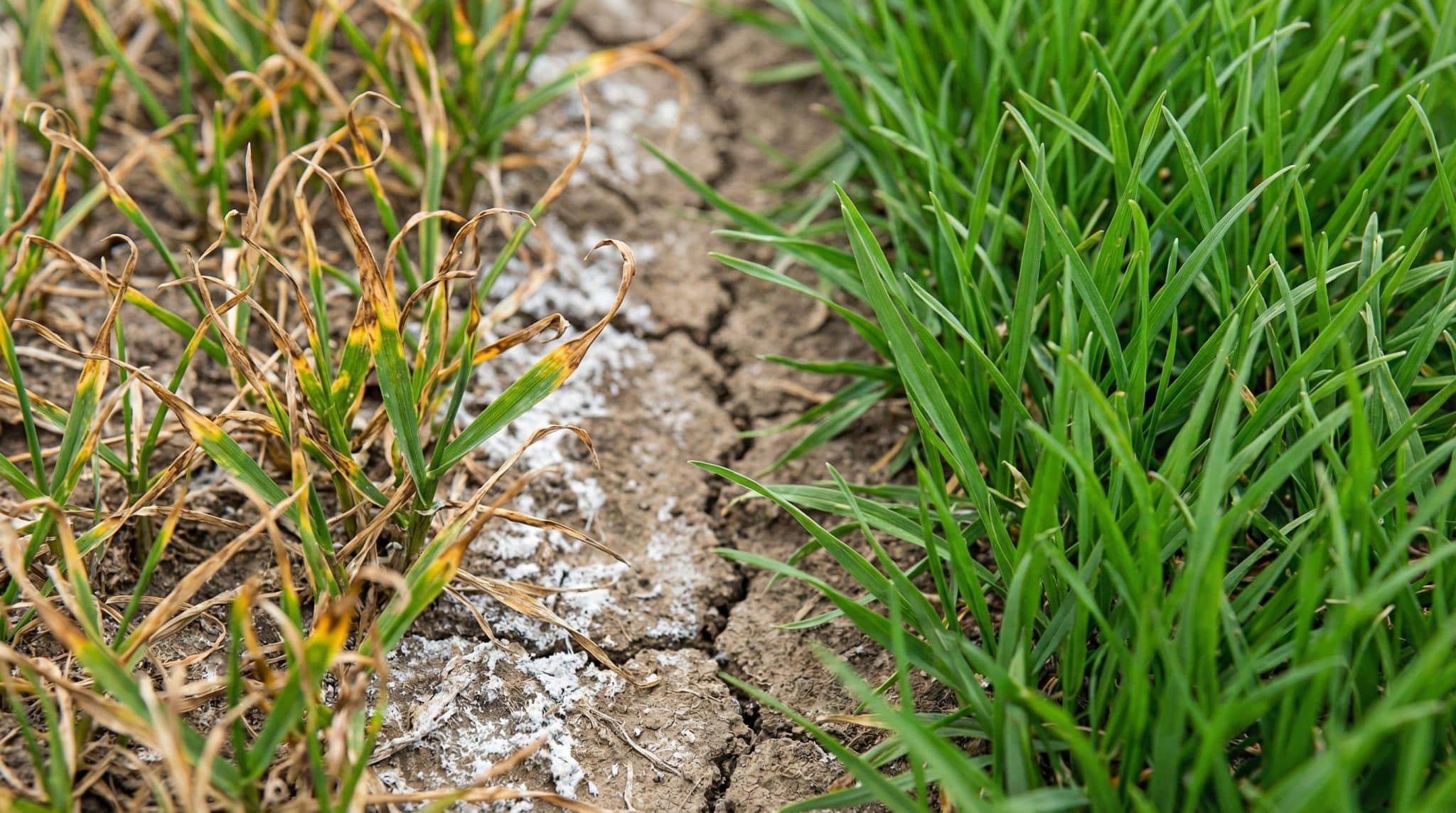
Image source: Bing (Web (fair-use with source credit))
Quick Answer
Yes. Starter fertilizer can burn newly germinated grass seedlings. Too much nitrogen raises salt levels around tender roots.
The result is yellow tips, brown blades, and dead patches. Stay at or below 1 pound of nitrogen per 1,000 square feet. Water lightly right after spreading.
Skip any product labeled weed-and-feed on new seed.
Will Starter Fertilizer Burn Newly Germinated Grass Seedlings?
It can, and it does more often than most homeowners realize. The label says "starter," so the assumption is that it's automatically safe. In practice, "starter" only tells you the product is balanced for new grass.
It does not tell you the rate is forgiving if you set your spreader too high.
The burn is a chemical process. Fertilizer salts pull water out of root cells through osmosis. The seedling dehydrates faster than it can replace moisture.
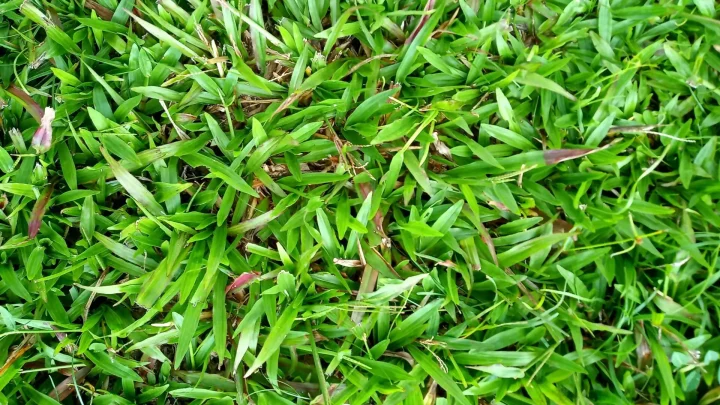
The first symptom is usually a dark green or purplish tint on the blade tips, followed by yellowing, then brown necrotic tissue.
Most documented cases of seedling burn come from three mistakes. Overlapping spreader passes, skipping the post-application watering, and using a high-nitrogen "regular" fertilizer instead of an actual starter formula. The University of Minnesota Extension turf team has tracked this pattern for years, and their guidance consistently points to rate and water as the two controllable variables.
If you're seeing damage now, the lawn isn't necessarily dead. Crown tissue often survives even when the blades burn off. The next two to three weeks will tell you how much recovery is realistic.
Why Starter Fertilizer Can Damage Tender Seedlings
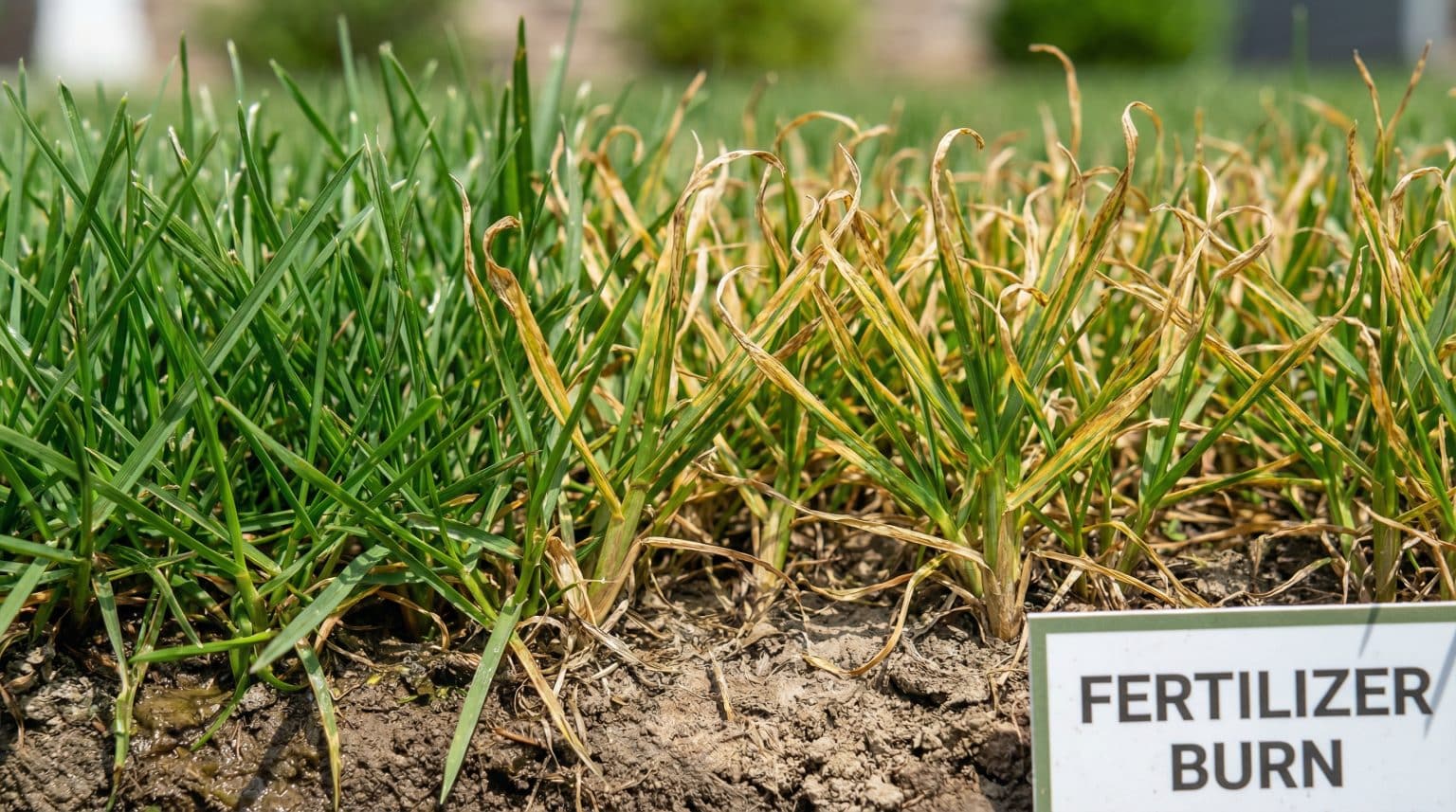
Image source: Bing (Web (fair-use with source credit))
Seedlings are not miniature mature grass plants. Their root systems are shallow, their leaf tissue is thin, and they have almost no carbohydrate reserves to bounce back from stress. Anything that disrupts the water balance in the top inch of soil hits them harder than it would a 2-year-old lawn.
Three mechanisms drive the damage:
- Salt injury. Soluble salts from urea, ammonium sulfate, or potassium chloride concentrate in the top quarter inch. Water moves out of the root tip toward the salt. Cells collapse. This is the most common cause of burn on day 1 after application.
- Ammonia toxicity. Fresh urea breaks down into ammonia gas in the first 48 hours. At high concentrations, ammonia burns root hairs directly. You smell it before you see it, that sharp "fertilizer" odor right after spreading.
- Osmotic shock. A heavy dose of any soluble fertilizer drops the soil water potential fast. Seedlings can't keep up. Symptoms look identical to drought stress, and many homeowners water more, which makes the salt uptake worse.
Environmental conditions amplify the risk. Hot, dry, low-humidity weather drives faster volatilization and concentrates salts. Sandy soils have less buffering capacity, so the same rate that works on loam will scorch a sandy yard.
Heavily composted topsoil gives you more margin, because organic matter holds water and dilutes the salt spike.
The takeaway is that the seedling is fragile by design. A 2-pound-per-1,000 rate that's perfectly safe on a mature lawn can wipe out new grass in 48 hours under the wrong conditions.
How Much Starter Fertilizer Is Safe (And What Happens When You Exceed It)
The widely accepted safe ceiling is 0.5 to 1.0 pound of actual nitrogen per 1,000 square feet at the time of seeding. Phosphorus is typically applied at 1 to 2 pounds of P₂O₅ per 1,000 square feet in the same pass. These numbers come from extension recommendations across the cool-season and transition zones and haven't moved much over the last decade.
What "actual nitrogen" means matters. A 20-27-5 bag is 20% nitrogen by weight. A 10,000-square-foot coverage bag at that analysis delivers 1 pound of N per 1,000 square feet if you set the spreader to the bag's recommended setting.
Set it one notch higher and you're at 1.3 to 1.5 pounds. That's the threshold where burn risk jumps sharply.
Safe vs Unsafe Application Rates
| Rate (lb N / 1,000 sq ft) | Typical Result | Risk Level |
|---|---|---|
| 0.25 to 0.5 | Mild boost, no visible damage | Very low |
| 0.5 to 1.0 | Standard extension recommendation | Low |
| 1.0 to 1.5 | Possible tip yellowing in heat | Moderate |
| 1.5 to 2.0 | Visible burn within 48 to 72 hours | High |
| Over 2.0 | Crown damage, reseed likely | Severe |
Exceeding the safe range doesn't just burn blades. The root system takes the hit first, because that's where the salt concentrates. A seedling with a scorched crown will green up from the base if the crown survives, but a dead crown means a bare spot for the rest of the season.
Two more variables shift the threshold. Soil moisture at application and the nitrogen source. A dry lawn that gets fertilized and not watered in is far more vulnerable than a lawn that's been irrigated the morning of application.
And a 100% quick-release urea source hits harder per pound than a 50% slow-release blend, even at the same total N rate. We'll break that comparison next.
Quick-Release vs Slow-Release Nitrogen: Which Is Safer for New Grass
The nitrogen source is the single biggest factor in burn risk after rate. Two starter fertilizers can have identical NPK numbers and behave very differently in the first week after application.
Quick-release sources (urea, ammonium sulfate, ammonium nitrate) convert to plant-available nitrogen within 7 to 14 days. That fast availability drives rapid top growth, which is great for established lawns but punishing on seedlings. The salt load also peaks hard in the first 72 hours, which is when burn symptoms show up.
Slow-release sources (methylene urea, IBDU, polymer-coated urea, sulfur-coated urea) release nitrogen over 6 to 12 weeks. The salt load is spread out. The seedling gets a steady feed instead of a spike.
Burn risk drops significantly at the same total rate.
Quick-Release vs Slow-Release on New Seedlings
| Attribute | Quick-Release | Slow-Release |
|---|---|---|
| Time to green-up | 5 to 10 days | 14 to 28 days |
| Peak salt load | First 3 to 7 days | Spread over 6 to 12 weeks |
| Burn risk at 1 lb N | Moderate to high | Low |
| Cost per bag | Lower | 20 to 40% higher |
| Best use case | Mature lawn recovery | New seeding, overseeding |
The trade-off is cost and patience. Slow-release costs more per bag. You also wait longer to see the green-up, which can be unnerving on a brand-new lawn where you want to see something happen.
For pure safety on a first-time seeding, the slow-release option wins. Extension publications from Purdue University's turf program lean toward slow-release for new seedings for exactly this reason.
Organic sources like Milorganite, alfalfa meal, or compost-based starters sit even further on the safety spectrum. They release nitrogen through microbial activity, which is temperature and moisture dependent but almost never burns. The downside is slow greening and higher cost per pound of actual nitrogen.
Step-by-Step: How to Apply Starter Fertilizer Without Burning Seedlings
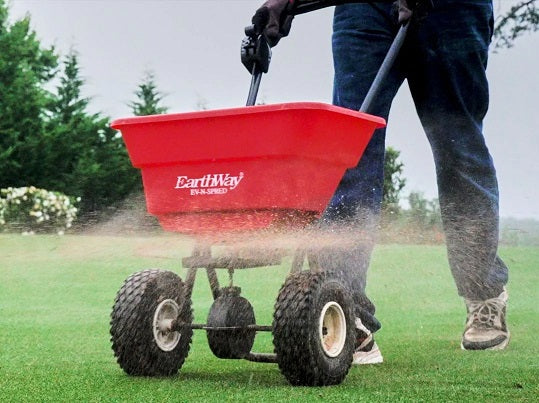
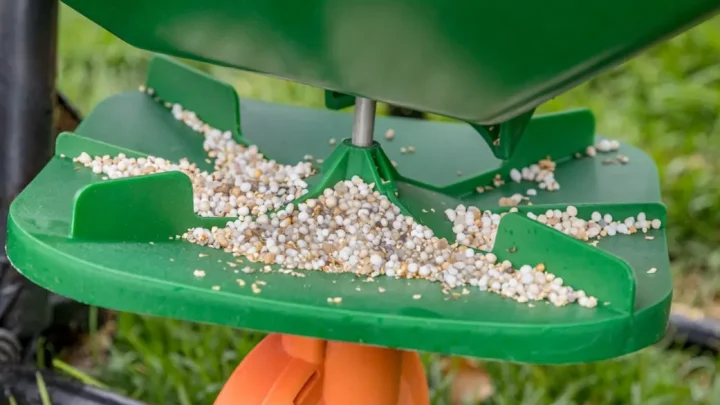
Image source: Web (Bing) / golfcourselawn.store (Web image (fair-use with source credit))
The goal here is simple. Get the right rate down, get the seed in contact with the soil, and get water on top of everything before the sun hits the granules. Skip any one of those and you stack the odds toward burn.
- Test or check your soil pH. Grass seedlings take up nutrients best between pH 6.0 and 7.0. Outside that range, fertilizer salts behave unpredictably. A $15 home test takes the guesswork out.
- Calibrate your spreader. Set it to the bag's lower end setting first. You can always go over the area a second time. You can't easily undo an over-application.
- Apply starter fertilizer to bare soil before seeding. The phosphorus needs to be in the root zone, not sitting on top of the seed. Spread, then lightly rake the top quarter inch.
- Spread seed immediately after. Drag a rake, then a roller if you have one, to press seed into the loosened soil. Good seed-to-soil contact is what actually drives germination.
- Apply a quarter inch of water within 30 minutes of spreading. This pushes the fertilizer off any granules resting on the surface and into the topsoil where roots can access it safely.
- Water lightly two to three times per day for the next two to three weeks. Short, frequent irrigation keeps the seedbed moist and dilutes any residual salt. Avoid one deep daily soak, which leaves the surface too dry between waterings.
- Hold off on any second fertilizer application until the new grass has been mowed two to three times. That's roughly 4 to 6 weeks after germination. The starter has enough phosphorus to carry the seedlings through establishment.
One detail that often gets missed. If you applied a pre-emergent crabgrass preventer earlier in the season, most of them block grass seed germination for 8 to 16 weeks. Check the label before you start this process, because no amount of perfect fertilizer technique will help if the seed can't sprout in the first place.
Common Mistakes That Trigger Fertilizer Burn on New Lawns
The same handful of errors show up in nearly every burned-lawn case we see. Most are fixable once you spot the pattern.
- Doubling the rate. The most common single mistake. Homeowners apply once, then run the spreader in a different pattern without realizing the second pass overlaps. Result is 1.5 to 2x the intended rate.
- Using a weed-and-feed. Any product labeled "weed control" or "crabgrass preventer" contains a herbicide. On new seedlings, those herbicides are designed to stop grass growth, not feed it. Even "seedling-safe" labels have waiting periods.
- Spreading on dry soil. Granules sitting on dry ground dissolve into a hyper-concentrated pocket. Water first, then fertilize, or fertilize right before an irrigation cycle.
- Skipping the post-application water. The 30-minute watering window after spreading isn't optional. It's the step that dilutes the salt before roots absorb it.
- Applying in midday heat. Spreading between 10am and 2pm cooks ammonia off the granules and into the leaf canopy. Early morning or late afternoon application keeps nitrogen in the soil where it belongs.
- Miscalculating coverage. A 5,000-square-foot bag on a 7,000-square-foot lawn means you're going light. The same bag on a 3,500-square-foot lawn means you're overdosing. Measure your area, not the bag's marketing claim.
One more worth flagging. Storing starter fertilizer in a damp shed breaks down the prills and creates clumps. Clumps don't spread evenly.
They dump nitrogen in one spot, which is a recipe for a perfect-circle burn pattern you can see two weeks later.
Recovering a Burned Seedling Lawn (And When to Start Over)
The first 7 to 10 days after a suspected burn tell you almost everything. If the blades brown but new green still pushes from the crown, you got lucky. The grass will recover with just water and patience.
What Recovery Looks Like by Scenario
| Damage Level | Visible Symptoms | Likely Outcome | Action Needed |
|---|---|---|---|
| Mild | Yellow tips only | Full recovery | Water deeply, wait |
| Moderate | Brown blade tips, green base | Recovery in 2 to 3 weeks | Water daily, mow at 3.5 in |
| Severe | Entire blade brown, no green at base | Crown likely dead | Reseed the area |
| Total | Bare soil, no green tissue at all | Full replant needed | Restart from scratch |
For moderate damage, the play is water and time. Skip any fertilizer for at least 4 weeks. Let the root system rebuild on its own.
A light compost top-dressing helps if you want to push recovery faster, but it's optional.
For severe damage, the honest answer is reseed. Pull the dead material, loosen the top quarter inch of soil, and reseed with a fresh starter application at the safe rate. Doing it in the same season is fine if you're still inside the seeding window for your grass type.
Don't reseed on top of the burned area without breaking the surface first. A crusted, fertilizer-loaded top layer is exactly the environment that burned the first round. A light rake or core aeration fixes the soil structure before you drop fresh seed.
If the damage covers more than a third of the lawn, the math shifts. Spot repair gets tedious. A full overseed across the whole area in the next seeding window is faster, cheaper, and gives you a uniform stand.
Trying to nurse damaged grass through summer is what costs homeowners the most.
Starter Fertilizer and New Grass: FAQs
How soon after germination can I fertilize new grass?
Wait until the new grass has been mowed 2 to 3 times before any additional feeding. The starter applied at seeding carries enough phosphorus and slow-release nitrogen to support the first 4 to 6 weeks. Feeding again too early is the second most common cause of burn.
Can I use regular lawn fertilizer on new grass seed?
It's not recommended. Regular fertilizer is typically higher in nitrogen (often 25 to 30 percent) and lacks the phosphorus ratio new seedlings need. Even at the correct rate, the high salt load stresses new roots.
A true starter formula with an NPK closer to 10-10-10 or 18-24-12 is the safer choice.
Will heavy rain wash away starter fertilizer before it works?
Light to moderate rain is actually helpful. It moves the granules off the surface and into the root zone, the same job a manual watering would do. A torrential downpour within an hour of application can wash granules off-slope or into low spots, creating uneven feeding and concentrated pockets.
If a major storm is forecast, hold off on spreading until it passes.
Is Milorganite safer than synthetic starter fertilizer?
Yes, significantly. Milorganite is an organic, slow-release product that feeds through microbial activity. Burn risk at the recommended rate is essentially zero.
The trade-off is cost (roughly 3 to 4x per pound of nitrogen) and slower green-up. It's an excellent choice for homeowners who want maximum safety margin on a new seeding.
Does starter fertilizer expire or go bad?
The nutrients don't break down quickly, but the prills can clump in humidity and the nitrogen can volatilize from a torn or wet bag. A bag stored in a cool, dry place stays effective for 2 to 3 seasons. If the bag is hard as a brick when you open it, sift out the clumps or replace it.
Clumps spread unevenly, which is its own burn risk.