Fix a Muddy Lawn: Better Drainage Before Seeding
If you're staring at a muddy lawn that won't dry out and you're wondering how to improve drainage in wet muddy lawn before planting seed, the fix usually starts before any grass goes down. Skipping the drainage work just means seed rot, patchy germination, and the same soggy mess next spring.
Most lawn drainage failures come down to three things: compacted soil, clay-heavy subsoil, or a yard that slopes the wrong way. Per NRCS soil surveys, a healthy turf area needs at least 1 inch of water infiltration per hour. Anything below that, and you're growing mud, not grass.
Let's walk through how to figure out what's actually wrong so you don't waste seed.
Quick Answer
Improve drainage before seeding by diagnosing the cause first. Add compost to loosen soil, regrade to a 2% slope away from the house, and install a French drain if water pools. Core aerate, topdress with compost, then seed only after the soil drains and firms up.
Why Your Lawn Stays Wet and What to Do Before You Plant Seed
Wet lawns aren't all the same problem. Some hold water because the soil is tight and airless. Others stay soggy because water flows into the yard and has nowhere to go.
A few have both going on. Treating the wrong one is the fastest way to waste a weekend and a bag of seed.
Here's the rough split we see most often:
- Surface water problems. Water runs onto the lawn from a roof, driveway, or neighbor's yard, then sits. Grading or a shallow drain fixes this.
- Subsurface water problems. Water soaks in but can't move through the soil profile. Clay layers, hardpan, or compaction are usually to blame.
- High water table problems. The ground itself is saturated from below. These need bigger drainage work, sometimes a dry well or curtain drain.
Before you buy anything or rent an aerator, spend 30 minutes figuring out which one you've got. Your plan changes completely depending on the answer.
First, Figure Out Why Your Lawn Holds Water
Do a quick perc test
Grab a shovel and dig a hole about 12 inches deep, 6 inches wide. Fill it with water and let it drain. Fill it again.
Time how fast the water disappears.
| Drainage time | What it means |
|---|---|
| Under 30 minutes | Soil drains well. Problem is probably surface flow or grading. |
| 30 minutes to 4 hours | Slow but workable. Compost and aeration will help a lot. |
| Over 4 hours or still full next day | You have a real drainage problem. Expect to amend or install drains. |
Look for the obvious signs
Walk the yard after a normal rain, not a downpour. Where does water sit longest? Is it near a downspout?
At the base of a slope? In a low pocket you can see with the eye? Each of these points to a different fix.
Check your soil type
Rub a moist pinch between your fingers. Gritty means sandy. Smooth and slippery means clay.
Sticky and stays in a ribbon means heavy clay. Clay under 6 inches deep is the most common reason soggy yards stay soggy.
Match the Fix to Your Situation
This is where most guides go wrong. They hand you a list of tools and let you figure out the rest. Instead, here's a simple if-then path.
If water pools in one spot after rain and the perc test is fast → You have a surface drainage issue. Regrade the low spot to a 2% slope (about 2 inches of fall over 10 feet) and add a small catch basin or French drain at the low end.
If water sits everywhere and the perc test is slow → You have a soil structure issue. Focus on building the soil with organic matter and aeration before you worry about drains. Drains alone won't fix tight clay.
If water flows onto your lawn from a higher yard or downspout → You need to intercept it. A curtain drain across the uphill edge or extending the downspout into a buried drainline handles 90% of these cases.
If the whole yard is spongy and water rises from below → You likely have a high water table. A French drain that empties to a dry well or daylight outlet is the usual answer. As of 2026, university extension services still recommend a 4-inch perforated pipe surrounded by #57 stone for residential curtain drains.
Build the Soil So Water Moves Through It
If your perc test came back slow, the soil itself is the problem. You can't fix that with a drain, you fix it by adding pore space. Organic matter is the cheapest, most effective way to do that.
Core aerate first
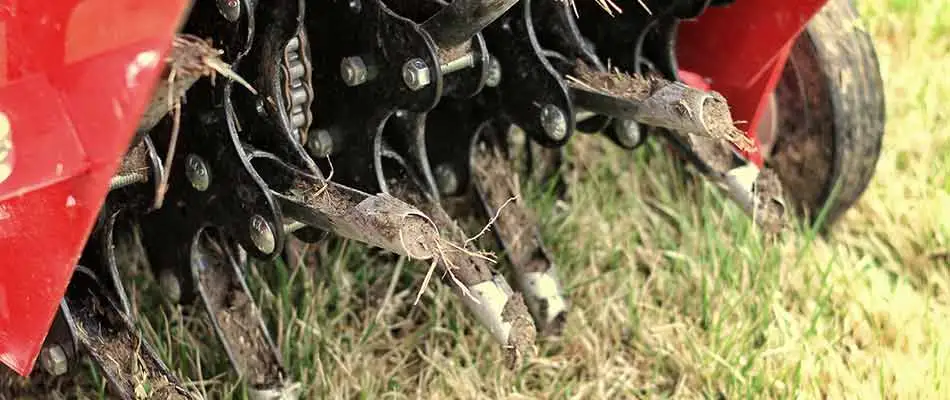
Rent a core aerator (most home improvement stores have them for about $75 for a half day). Run it over the lawn in two directions. The hollow tines pull out 2 to 3 inch plugs of soil.
Leave the plugs on the lawn. They'll break down in a week or two.
Core aeration is the single most useful step before seeding a wet lawn. It opens channels for water, air, and roots. Spike aerators don't do this.
They just compact the soil further. If you only do one mechanical thing, do this.
Image source: Bing (Web (fair-use with source credit))
Topdress with compost, not sand
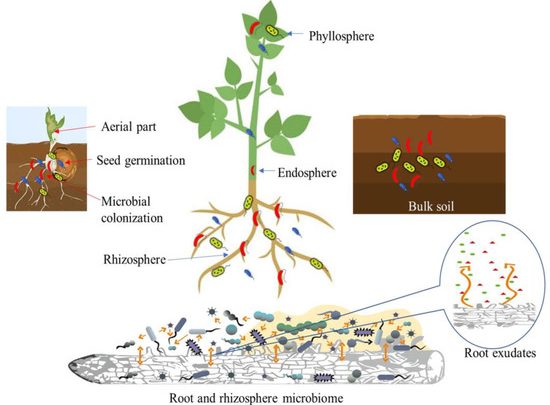
Spread a quarter inch of finished compost over the aerated lawn and rake it in. Compost builds soil structure, holds the right amount of moisture, and feeds the microbes that keep soil healthy.
Sand on clay is a classic mistake. A little sand mixed deeply into clay helps. A layer of sand on top of clay turns into a concrete-like crust once it dries.
University extension guidance from Penn State and UMN is consistent on this point. If you're going to add mineral material, till it in to at least 4 inches, not just spread it.
Use gypsum if you have sodic clay
Gypsum (calcium sulfate) helps break up certain heavy clay soils, especially the kind that crust over and turn rock-hard when dry. A typical rate is 40 pounds per 1,000 square feet. It doesn't work on all clay, but it's cheap insurance if your soil is the heavy, sticky kind.
Know what success looks like
You're not trying to make the lawn drain in 10 minutes. You're trying to move from "water sits for hours" to "water soaks in within an hour." That's enough for grass to thrive and seed to germinate without rotting.
Move Water Off the Surface With Grading and Drains
Surface water is the easiest drainage problem to see, and usually the easiest to fix. The trick is moving water somewhere useful before it has time to soak in and turn the lawn to mud.
Regrade low spots first
Anywhere water pools, you need at least a 2% slope away from the lowest point. That's roughly 2 inches of fall over 10 feet. You can eyeball it for small spots, or use a long 2×4 and a level for bigger areas.
Bring in screened topsoil to build up low pockets rather than digging out the high sides. You want to add good soil, not expose worse subsoil.
Install a French drain where water collects
A French drain is just a gravel-filled trench with a perforated pipe at the bottom. Water falls in through the gravel, enters the pipe, and gets carried to a safe outlet. For most residential lawns, the specs look like this:
- Trench depth: 18 to 24 inches
- Pipe: 4-inch perforated, slotted PVC or corrugated
- Gravel: #57 stone, wrapped in landscape fabric to keep silt out
- Slope: minimum 1% toward the outlet
The outlet matters as much as the drain. Daylighting to a ditch or street works in rural areas. In a city, tie into a storm drain only if your municipality allows it.
A dry well at the end is a common alternative on properties with good subsoil absorption.
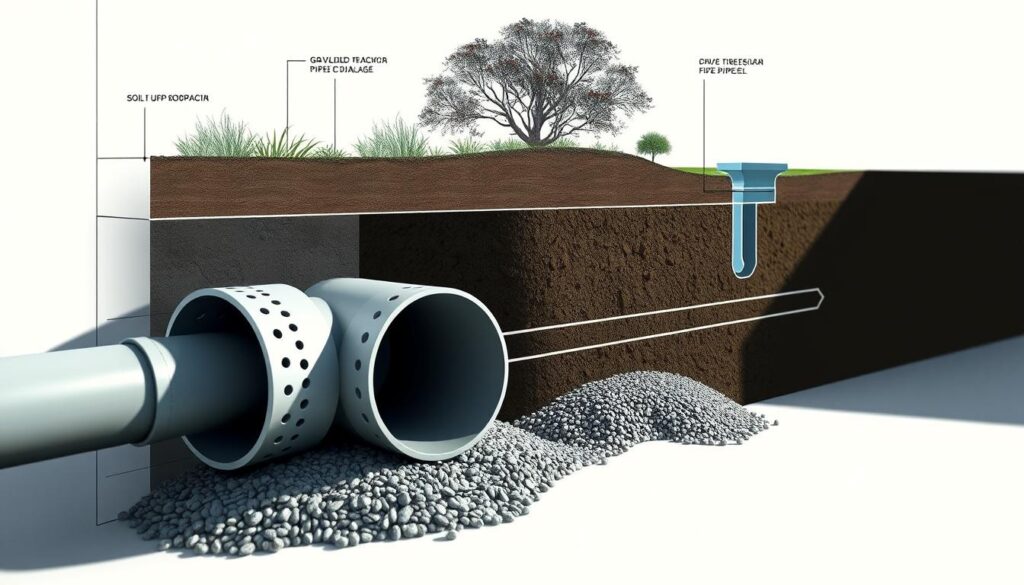
Image source: Bing (Web (fair-use with source credit))
Don't forget downspouts
A single downspout dumping next to the foundation can keep a 20 by 20 foot area wet for days. Extend downspouts at least 6 feet from the house. Better yet, run them into a buried drainline that daylights somewhere safe.
Most soggy lawn problems near a house trace back to a roofline dumping water right where you don't want it.
Get the Seedbed Right and Plant Grass That Can Handle Moisture
Once the drainage work is done, give the soil a few days to settle and dry back. Walking on wet soil recompacts everything you just fixed. Wait until you can walk without sinking or sticking.
Pick seed that tolerates wet feet
Some grasses handle periodic wetness much better than others. If your lawn stays damp longer than you'd like, even after drainage work, lean toward these:
- Tall fescue. Deep roots, tolerates wet soils, good for transition zones.
- Perennial ryegrass. Fast germination, handles a range of conditions.
- Fine fescues (creeping red, hard fescue). Good in shady, damp spots.
- Kentucky bluegrass blends. Work well in cooler regions with improved drainage.
Bermuda and most warm-season natives actually prefer drier ground. If you're in the South and the lawn stays wet, the soil, not the grass, is the problem.
Seed at the right depth and timing
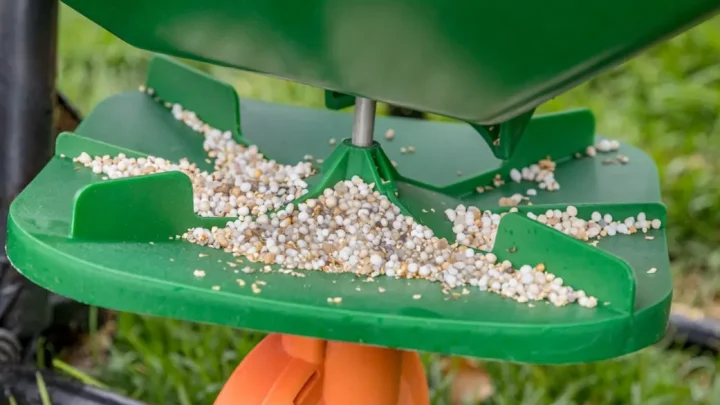
Spread seed with a broadcast or drop spreader. Aim for the rate on the bag, usually 3 to 6 pounds per 1,000 square feet for most cool-season blends. Rake lightly so seed sits about 1/4 inch deep.
Roll with an empty lawn roller for good seed-to-soil contact.
Late summer to early fall is the sweet spot for cool-season grasses. Soil is warm, air is cool, weeds are fading. You'll see germination in 7 to 21 days depending on species.
Water lightly once or twice a day until seedlings are about an inch tall, then back off.
Common Mistakes That Keep Muddy Lawns Muddy
Even with good drainage work, a few bad habits can undo all of it. These are the ones we see over and over.
Working the soil when it's wet
Tilling, aerating, or even walking on soggy soil squeezes air out and creates hardpan. Test before you work: pick up a handful, squeeze it, drop it. If it stays in a ball, wait.
If it crumbles, go.
Burying utilities by accident
Call 811 before you dig a French drain or regrade more than a few inches. It's free, it's fast, and the legal liability for hitting a gas or fiber line is on you. Same rule applies in the UK with utility-safe digging guidance.
Skipping the overflow plan
Every drain needs somewhere to send water. A French drain that ends in a low spot just moves the mud. Always trace the outlet path before you dig the trench.
Seeding too early
If the soil still squishes underfoot or water sits in the aeration holes, you're not ready to seed. Wait until the surface firms up and the top 2 to 3 inches are visibly moist, not soaked.
Frequently Asked Questions
How long should I wait after drainage work before planting grass seed?
Wait 3 to 7 days for the soil to settle and firm up. The top 2 inches should be moist but not squishy underfoot. Seeding into soggy soil causes rot and poor germination, so patience pays.
Can I just throw grass seed on a muddy lawn and hope for the best?
No. Seed on mud or sitting water will rot before it germinates. You'll waste the seed and still have a muddy lawn.
Fix the drainage first, then seed into a firmer, well-drained seedbed.
Is sand or compost better for improving wet soil?
Compost is better for most lawns. Sand on clay without deep tilling creates a hard crust. Compost builds soil structure, feeds microbes, and improves drainage over time without the risk.
Will a French drain solve my muddy lawn by itself?
Not always. If the soil is tight clay, a French drain collects surface water but the lawn stays soggy underneath. You usually need both: amend the soil and install the drain.
What grass seed grows best in wet soil?
Tall fescue and perennial ryegrass handle wet conditions better than most. Fine fescues also tolerate damp, shady spots. Avoid warm-season grasses like Bermuda in consistently wet areas.
Can I seed in spring instead of fall?
Yes, but late summer to early fall is better for cool-season grasses. Spring seed faces summer heat and more weed pressure. If you must seed in spring, get it down early and water consistently.

Similar Posts