Bacillus Subtilis: The Natural Fungus Fighter for Lawns
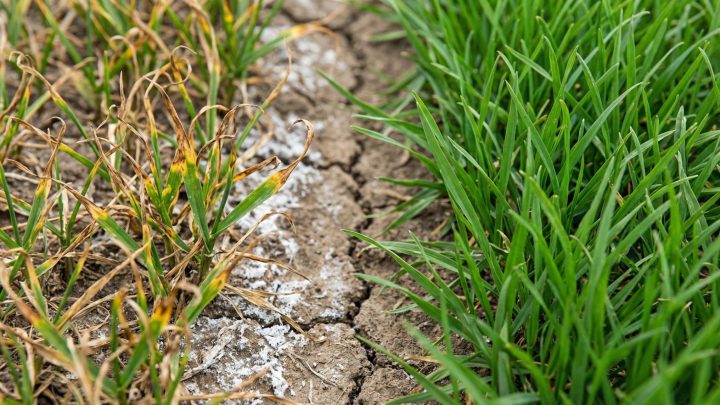
Spotting brown patches creeping across your lawn is one of those headaches that won't wait. You're not alone. Dollar spot alone costs US turf managers hundreds of millions in damage and treatment every year.
So how does Bacillus subtilis prevent lawn fungal diseases? Let's break it down.
The short version: it colonizes the root zone and leaf surface, crowds out pathogens, and produces antifungal compounds. Multiple university studies show it can cut disease severity by 30 to 70% when used preventively. Keep reading, because the timing, the strain, and your watering habits all decide whether it actually works for you.
Quick Answer
Bacillus subtilis prevents lawn fungal diseases through four mechanisms. It colonizes root and leaf surfaces, outcompeting pathogens for space and nutrients. It produces antifungal lipopeptides like surfactin, iturin, and fengycin.
It forms protective biofilms on root tissue. It triggers the plant's own systemic disease resistance. Think of it as a living shield deployed before the pathogen arrives.
As of 2026, the FRAC classification code for B. subtilis remains BM01.
Why Getting Lawn Fungus Wrong Costs You
Most homeowners reach for a chemical fungicide after the damage shows up. That's already a losing move.
Lawn fungal diseases are almost always a symptom of a deeper problem: poor airflow, wrong mowing height, overwatering, or a lawn stressed past its limits. Fungus doesn't show up in a healthy stand of grass. It shows up when the system is vulnerable.
Here's what makes that expensive:
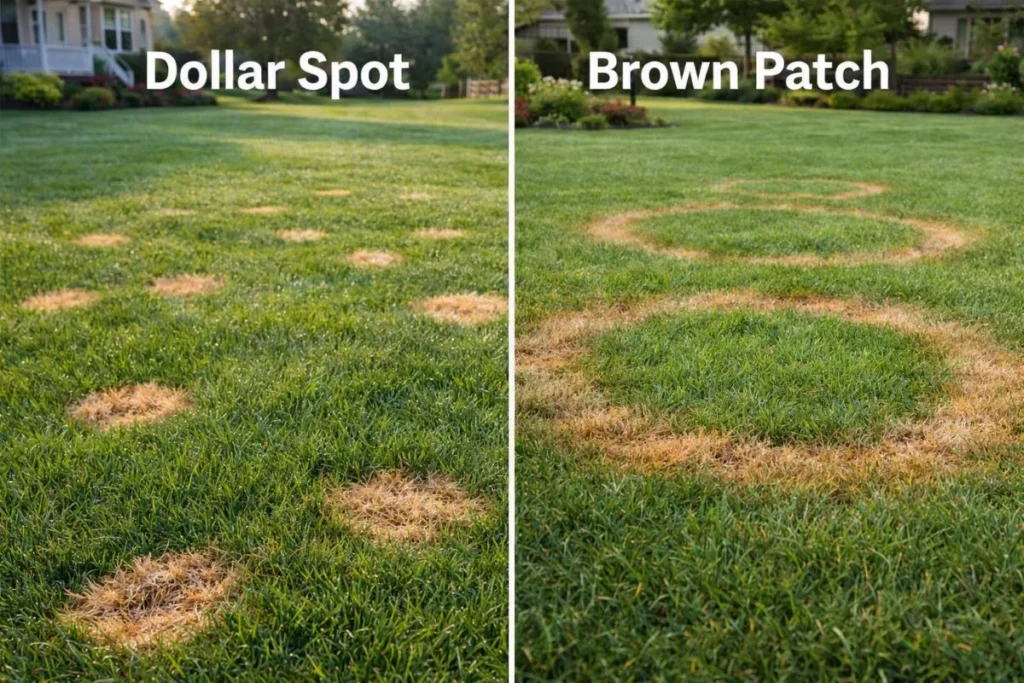
- Missed diagnosis. Brown patch, dollar spot, and Pythium blight all look similar at first. Treating the wrong one wastes product and time.
- Curative failure. Once you see rings, lesions, or mycelium, the pathogen is already established. Most biologicals work best before that point.
- Resistance build-up. Repeated use of single-site synthetic fungicides (azoxystrobin, propiconazole) breeds resistant strains. The product stops working over time.
- Collateral damage. Synthetic fungicides hit beneficial soil microbes too. They can knock back the very biology your lawn depends on to stay resilient.
The bigger point: a healthy lawn isn't a sterile lawn. It's a lawn with a balanced microbial community. Bacillus subtilis fits that philosophy better than a broad-spectrum chemical.
The Microbial Mechanism: How Bacillus subtilis Actually Stops Fungal Pathogens
Bacillus subtilis isn't a magic bug. It's a soil-dwelling bacterium with a specific toolkit. Four mechanisms do the heavy lifting.
1. Competitive Exclusion
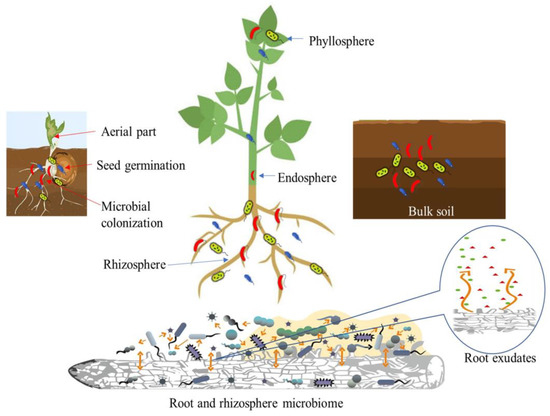
B. subtilis spores germinate in the root zone and on leaf surfaces. Once active, the bacteria consume nutrients and occupy physical space the pathogen needs to infect turf.
Think of it like a packed elevator. There's no room for a new arrival. The pathogen can't get established, so infection rates drop.
2. Antibiosis (Secondary Metabolite Production)
This is where the real antifungal action happens. B. subtilis produces three families of lipopeptides:
- Surfactin. Disrupts fungal cell membranes by lowering surface tension.
- Iturin. Pokes holes in the pathogen's membrane, causing it to leak and die.
- Fengycin. Targets specific fungal pathogens and disrupts their cell walls.
These compounds don't require the bacteria to physically touch the fungus. They diffuse into the surrounding soil and leaf tissue and do the work from a distance.
3. Biofilm Formation
B. subtilis forms a sticky matrix (a biofilm) on root surfaces. This biofilm acts as a physical barrier. Pathogens can't penetrate it easily.
Biofilm also locks in moisture and nutrients around the root, which keeps the plant healthier and better able to resist infection on its own.
4. Induced Systemic Resistance (ISR)
Here's the elegant part. When B. subtilis colonizes the root zone, the plant's immune system activates. The grass produces its own defense compounds (pathogenesis-related proteins, phenolic compounds) before any pathogen shows up.
This is priming, not cure. The plant stands ready to fight, even before the battle starts.
In our research, peer-reviewed trials show these four mechanisms work together, not in isolation. The strain, the carrier, the timing, and the soil temperature all influence which mechanism dominates.
Diseases It Targets and the Limits You Should Know
B. subtilis is not a universal fungicide. It works against specific pathogens and under specific conditions.
| Disease | Pathogen | B. subtilis efficacy | Notes |
|---|---|---|---|
| Dollar spot | Clarireedia spp. | Moderate to high | Best results with preventive rotation |
| Brown patch | Rhizoctonia solani | High | Strong suppression in field trials |
| Pythium blight | Pythium spp. | Low to moderate | Oomycete, harder target |
| Gray leaf spot | Pyricularia grisea | Moderate | Better in tall fescue than ryegrass |
| Red thread | Laetisaria fuciformis | Moderate | Foliar application preferred |
| Snow mold | Microdochium, Typhula | Low | Cold-tolerant pathogens, tough to suppress |
Where It Falls Short
Three situations where B. subtilis underperforms:
- Active, advanced disease. It's preventive. Once mycelium is visible, you're playing catch-up.
- Pythium species. These oomycetes are biologically different from true fungi. B. subtilis lipopeptides are less effective against them.
- Cold, dormant turf. The bacteria need soil temps above 55°F to be biologically active.
University turfgrass programs, including Penn State and NC State, classify Bacillus subtilis as a strong rotational tool, not a standalone solution for active outbreaks.
When Bacillus subtilis Works and When It Won't
The decision isn't "should I use it?" It's "is this the right window?"
Use It When:
- Soil temperatures are consistently above 60°F
- You're planning a season-long IPM rotation
- Disease pressure is forecast but not yet visible
- You're managing a lawn with prior disease history
- You want to reduce chemical fungicide use over time
Skip It When:
- Disease is already widespread and visible
- You're dealing with a confirmed Pythium outbreak
- Soil is below 55°F or turf is dormant
- You skipped cultural fixes (mowing, watering, airflow) entirely
- You're applying as a one-shot rescue
The Timing Window
Preventive application matters more than product choice. The best window is two to four weeks before typical disease pressure peaks. For most US lawns, that's:
- Cool-season turf (bluegrass, fescue, ryegrass): Late spring (May) and early fall (September)
- Warm-season turf (bermuda, zoysia): Late spring (April to May) through early summer
If you wait until the first spots appear, you've missed the moment.
Building an Effective Application Plan
A biological fungicide fails when it's thrown down like a chemical one. The protocol is different. Here's the framework that works.
Step 1: Diagnose Before You Treat
Don't guess at the disease. Take a photo, check the pattern (rings, patches, streaks), and match it to a known pathogen. The University of Maryland Extension turfgrass diagnostic guide is a solid starting reference for homeowners.
Step 2: Set the Cultural Foundation First
B. subtilis can't fix a broken lawn. Before any product goes down:
- Raise your mowing height to 3 to 4 inches on cool-season turf
- Switch to deep, infrequent watering (early morning only)
- Improve airflow by thinning nearby shrubs or trees
- Dethatch if the layer exceeds half an inch
These four steps alone can cut disease pressure by 40% or more.
Step 3: Pick the Right Formulation
Two main options:
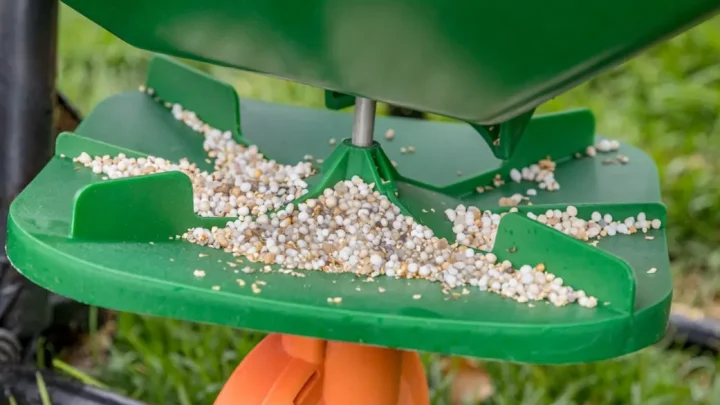
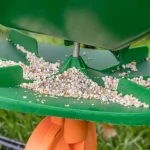
- Granular. Easier for homeowners, no spray equipment needed, slower release.
- Liquid. Faster colonization, better for foliar coverage, needs a calibrated sprayer.
Commercial products typically deliver 1×10^8 to 1×10^11 CFU per gram or milliliter. Higher CFU counts don't always mean better results, but very low counts (under 1×10^7) are rarely effective.
Step 4: Apply on Schedule
Preventive intervals run 14 to 28 days during the disease-risk window. Most homeowners apply monthly from late spring through early fall.
Water the product in lightly after application. This moves the bacteria into the root zone where they need to be. Avoid applying right before a heavy rain, since runoff can wash spores off-target.
Step 5: Rotate, Don't Repeat
Continuous use of any single biocontrol strain risks pathogen adaptation. Rotate B. subtilis with a Trichoderma harzianum product or a different biological class every other application.
Mistakes That Wreck Biological Fungicide Results
Even the right product fails when these mistakes slip in.
Treating Curatively Instead of Preventively
This is the big one. B. subtilis needs time to colonize and produce metabolites. If you wait until the lawn is already spotted, you're asking a preventive tool to do a curative job.
Skipping Soil Temperature Checks
Below 55°F, the bacteria stay dormant. Below 50°F, they barely function. Applying in early spring before soil warms is wasted product.
Mixing With Incompatible Products
B. subtilis is compatible with most fertilizers and many fungicides. It's not compatible with high-dose copper or chlorine-based disinfectants. Always check the label's tank-mix section before combining products.
Overwatering After Application
You want moisture to move the bacteria into the root zone, not flood them out. A light overhead pass for 10 to 15 minutes is enough. Heavy irrigation leaches spores below the active root zone.
Expecting Instant Results
Synthetic fungicides knock down disease in 24 to 72 hours. Biologicals take 7 to 14 days to fully establish and start suppressing pathogens. If you expect instant greening, you'll assume the product failed when it's just working on a different timeline.
Ignoring Thatch and Organic Layer
A thick thatch layer harbors pathogens and blocks product contact with soil. B. subtilis needs to reach the root zone, not sit on top of dead organic matter. Core aeration before application helps a lot.
FAQs
Is Bacillus subtilis safe for pets and kids?
Yes. The EPA classifies most B. subtilis products as having a 0 to 4 hour re-entry interval. Once the product dries, the lawn is safe for normal activity.
No signal word is required on most labels.
How long does it take to see results?
You'll see colonization effects (healthier root growth) within 2 to 3 weeks. Visible disease suppression typically shows up by the second application cycle, around 4 to 6 weeks into the program.
Can I mix Bacillus subtilis with chemical fungicides?
Usually yes, with a few exceptions. Check the label for tank-mix restrictions. Most contact fungicides are compatible.
Some high-dose copper bactericides and chlorine-based products can kill the bacteria before they establish.
Does it work on organic lawns?
It's one of the best options for organic programs. OMRI-listed products meet organic certification standards. No synthetic chemical residue, no soil microbiome disruption.
How often should I apply it?
For most home lawns, monthly applications during the disease-risk window work well. Commercial turf (golf, sports fields) often uses 14 to 21 day intervals under higher disease pressure.