Grow a Lush Lawn Near the Ocean: Beat Salt Spray Damage
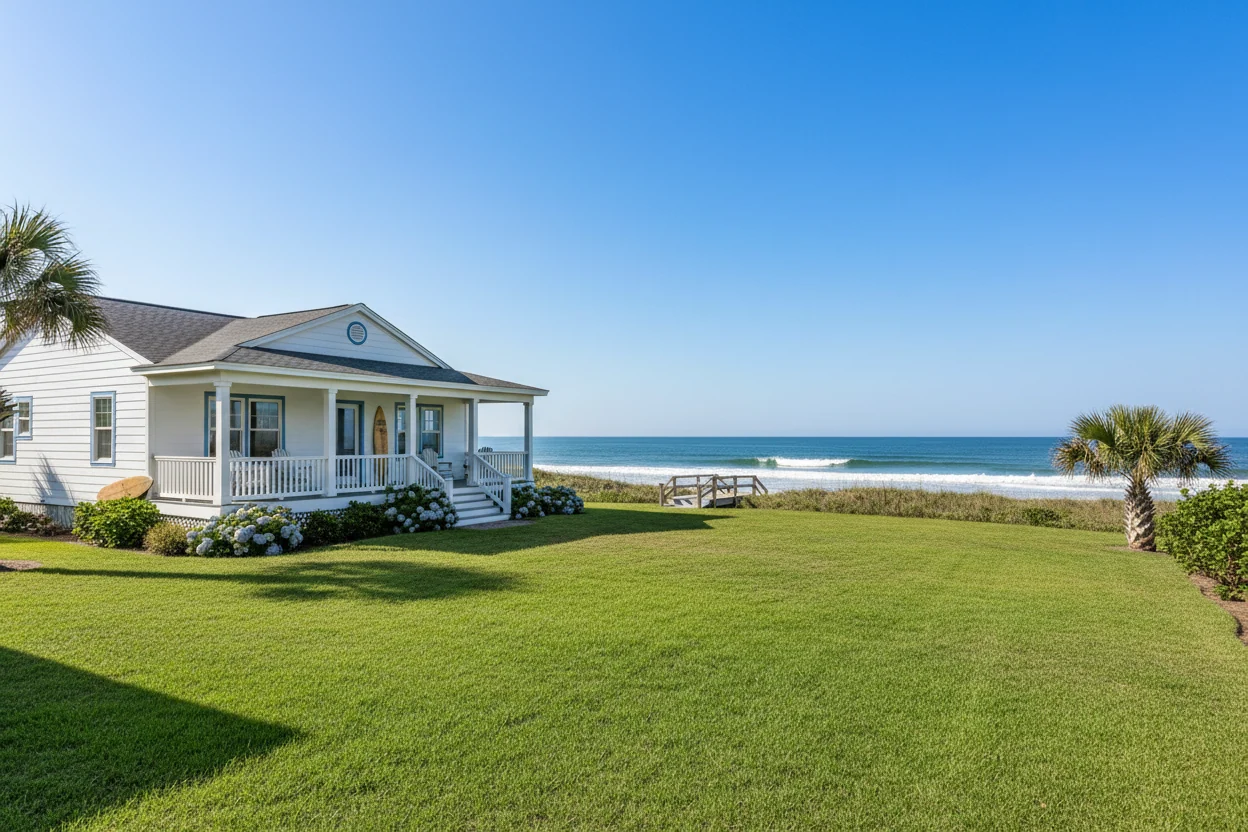
Growing a lush lawn near the ocean with salt spray is doable once you understand the real enemy, which is sodium, not just the breeze itself. Most turfgrass species can't tolerate chloride buildup on leaf surfaces or in the root zone, so the right variety, the right soil prep, and a smart maintenance routine all matter.
Salt spray deposition drops sharply with distance, falling off fast past about 50 meters from the shoreline. Per USDA extension data, electrical conductivity above 4 dS/m in soil starts stressing most turf types, which is why your grass choice, your gypsum plan, and your watering schedule all hinge on how exposed your yard really is. Let's figure out where you sit, then build from there.
Quick Answer
Pick a salt-tolerant grass like seashore paspalum, Bermuda, or St. Augustine. Test your soil's electrical conductivity.
Apply gypsum to displace sodium. Establish with sod, not seed. Water deeply to leach salts below the root zone.
Rinse foliage after wind events. Mow at the higher end of the species' range.
Understanding Your Coastal Salt Exposure Zone
Before you plant a single seed or unroll a single roll of sod, you need to know which zone you're in. Salt exposure isn't one-size-fits-all, and the difference between a lawn that thrives and one that turns into a brown patch often comes down to this first step.
The three main coastal zones break down like this:
| Zone | Distance from Shore | What Happens |
|---|---|---|
| Direct exposure | 0 to 50 meters | Daily salt spray, leaf burn, fastest soil sodium buildup |
| Moderate exposure | 50 to 150 meters | Occasional spray during storms, slower salt accumulation |
| Sheltered | 150+ meters or behind dunes/structures | Minimal direct spray, but storm surge and salt fog still reach the lawn |
If you're in the direct zone, you need a grass with high salt tolerance plus aggressive maintenance. If you're sheltered, you can get away with moderate-tolerance varieties and a lighter touch.
Here's the decision logic: if your yard catches sea spray on calm days, treat yourself as direct exposure. If spray only reaches you during onshore winds, you're moderate. If you only see salt damage after named storms, you're sheltered but still coastal.
Wind direction matters as much as distance. A property 200 meters inland on a windward coastline can see more salt than one 50 meters back on a leeward shore. Watch your lawn for a few weeks.
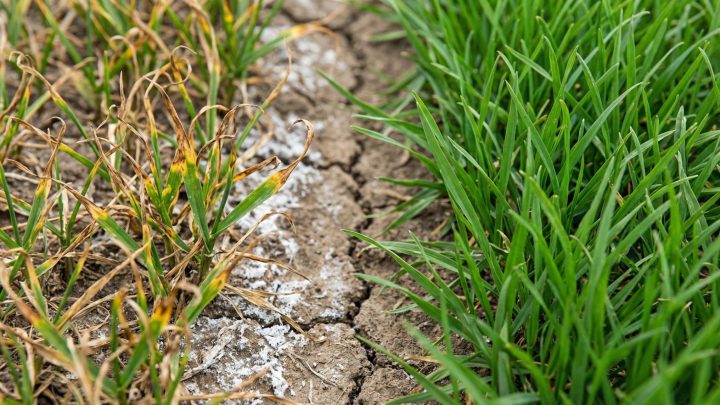
White leaf tips and browning on the windward edge are your confirmation.
Soil type also shifts your zone. Sandy coastal soils drain fast, which helps leach salts but also dries out quickly. Heavier clay soils hold sodium longer and need more gypsum to break it loose.
For a deeper look at how salt accumulates in soil and how to interpret test results, the USDA Natural Resources Conservation Service offers solid baseline guidance on saline and sodic conditions.
Choosing the Right Salt-Tolerant Grass for Your Property
Not all "salt-tolerant" grasses are equal. Some handle foliar spray beautifully but fail in saline soil. Others tolerate root-zone salt but burn easily on the leaves.
You need a variety that handles both, and your zone decides how much you can compromise.
| Grass Type | Salt Spray Tolerance | Soil Salinity Tolerance | Best Zone | Establishment |
|---|---|---|---|---|
| Seashore paspalum | Excellent | Excellent (up to 15 dS/m) | Direct | Sod or sprigs |
| Bermuda | Good | Good (up to 8 dS/m) | Direct to moderate | Sod, seed, or sprigs |
| St. Augustine | Moderate | Moderate | Moderate to sheltered | Sod or plugs |
| Zoysia | Moderate | Good | Moderate | Sod or plugs |
| Centipede | Low | Low | Sheltered only | Seed or sod |
If you're in the direct zone, seashore paspalum is the gold standard. It's the same species used on many seaside golf courses, and it laughs at salt spray that would kill St. Augustine in a month.
Per University of Florida IFAS Extension trials, paspalum maintains color and density at salinity levels that cause 50% or more dieback in less tolerant species.
Bermuda is the runner-up for hot, sunny coastal lots. It spreads fast, recovers from stress, and tolerates both salt and drought. The tradeoff is that it goes dormant and brown in cooler months, which bothers some homeowners.
St. Augustine is the classic Southern coastal lawn, but it's not as salt-tolerant as people think. It handles occasional spray fine, but daily exposure will thin it out over time.
If you love its broad blades and shade tolerance, plant it in moderate or sheltered zones only.
Zoysia offers a nice middle ground. It's tougher than St. Augustine, more shade-tolerant than Bermuda, and holds color longer into fall.
It establishes slowly, so sod is the practical choice.
One more option worth mentioning: if you're right on the dune line and even seashore paspalum struggles, consider a groundcover transition. Mondo grass, liriope, or even creeping thyme can handle salt better than any turfgrass. It's not a traditional lawn, but it stays green where grass won't.
Preparing and Repairing Salt-Damaged Soil
Choosing the right grass is half the battle. The other half is fixing the soil underneath, because sodium changes soil structure in ways that block water and roots even after you plant.
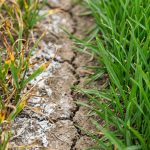
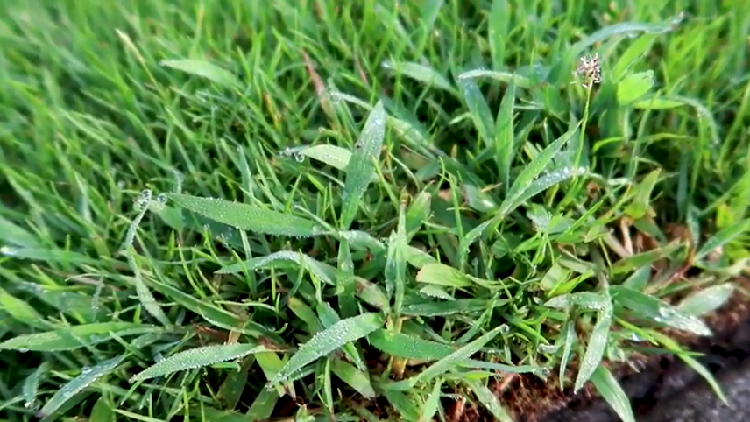
Here's how saline and sodic soil work: salt (sodium chloride) builds up in the root zone. Sodium binds to clay particles and makes them repel each other, which collapses soil structure. The result is a hard, crusted surface that water runs off instead of soaking into.
Roots can't penetrate, and grass starves even in irrigated soil.
You test for this with a soil salinity test. Most county extension offices offer them for a small fee, or you can use a home EC meter. You're measuring electrical conductivity (EC) in dS/m and the sodium adsorption ratio (SAR).
Here's what those numbers mean for turf:
| EC Reading | Soil Status | What to Do |
|---|---|---|
| Below 2 dS/m | Normal | Plant any grass, no amendment needed |
| 2 to 4 dS/m | Slightly saline | Gypsum lightly, leach once |
| 4 to 8 dS/m | Moderately saline | Gypsum, leach repeatedly, pick tolerant grass |
| Above 8 dS/m | Heavily saline | Aggressive gypsum + leaching, consider soil replacement |
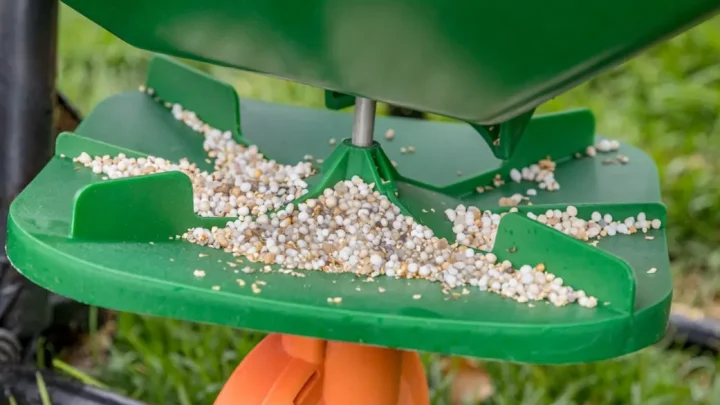
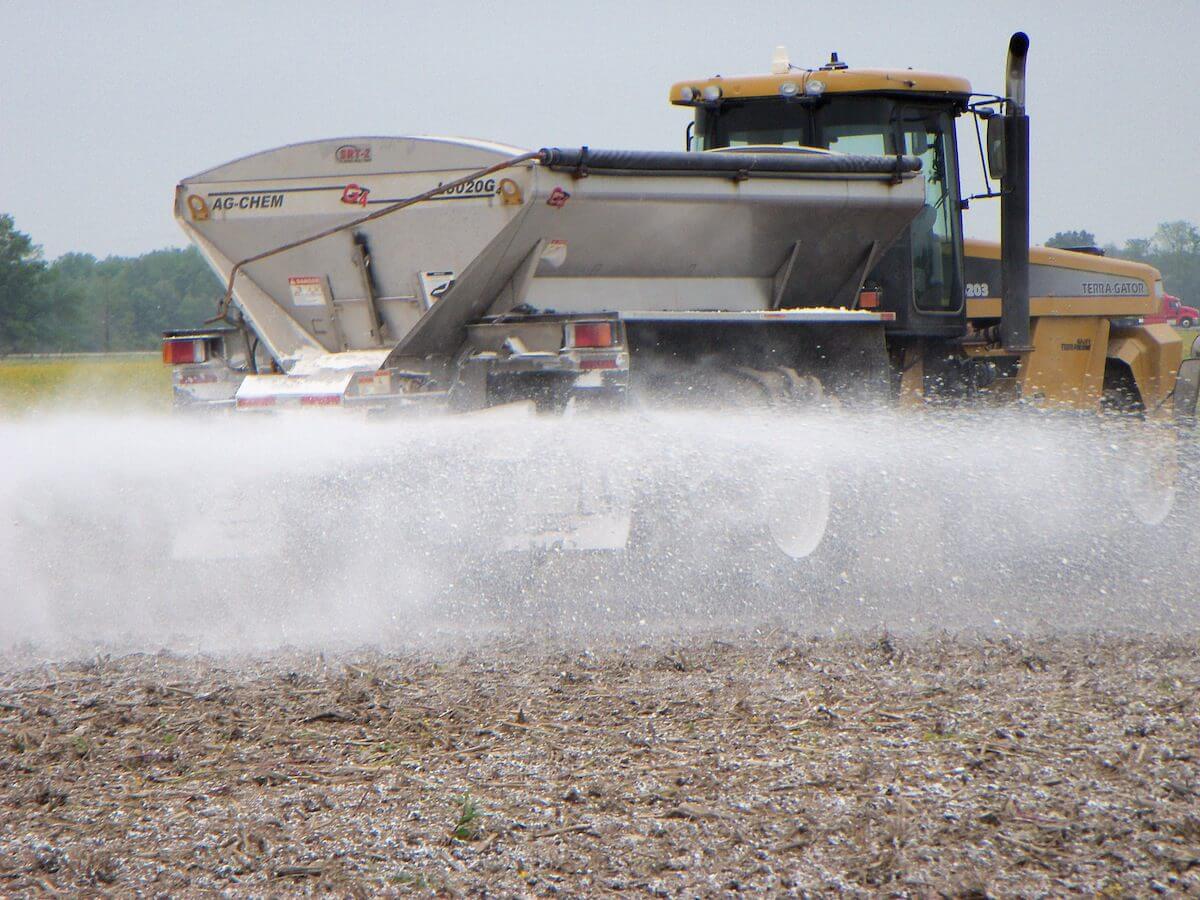
If your SAR is above 13, you have a sodic soil, which means gypsum is not optional, it's required. Gypsum (calcium sulfate) replaces sodium on soil particles with calcium, which flocculates the soil and restores structure. Then you leach the displaced sodium down and out with fresh water.
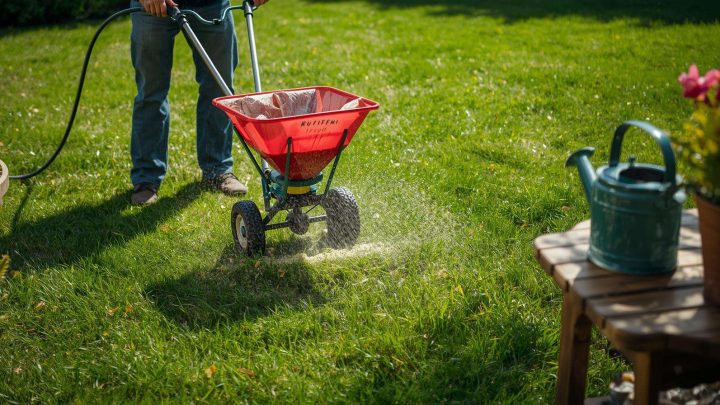
Application rates depend on your soil texture and sodium level, but a common starting point is 20 to 50 pounds per 1,000 square feet for moderately affected soil. Work it into the top 4 to 6 inches before planting, then water heavily to push the sodium through.
If your lawn already exists and you're rehabbing, top-dress with gypsum and water it in. Repeat every few months until soil tests improve. This isn't a one-and-done fix, it's an ongoing process in direct-exposure zones.
For homeowners dealing with salt-contaminated irrigation water (common in coastal areas on shallow wells), the same principles apply. Test your water, calculate your leaching fraction, and adjust gypsum timing accordingly. The Texas A&M AgriLife Extension publishes practical guidance on managing saline irrigation water for landscapes.
Establishing Your Coastal Lawn Step by Step
Once you know your zone, your grass, and your soil status, it's time to plant. The establishment phase is when you set the trajectory for the next decade of your lawn, so don't rush it.
Here's the workflow for a new or renovated coastal lawn:
Step 1: Kill existing vegetation. If you're starting over, apply a non-selective herbicide or solarize with clear plastic for 6 to 8 weeks. Don't skip this, because old grass competes with new grass and many weeds handle salt better than your chosen turf.
Step 2: Test and amend the soil. Pull a soil test 2 to 4 weeks before planting. Apply gypsum based on results, and work it into the top 4 to 6 inches with a rototiller.
If your pH is off, correct that now too.
Step 3: Install your grass. For most coastal lawns, sod beats seed. It establishes faster, competes better with salt-laden wind, and gives you immediate erosion control.
If budget forces seed, stick with Bermuda, which seeds reliably. Seashore paspalum seed is available but slow.
Step 4: Water for establishment. New sod needs daily watering for the first 2 weeks, then every other day for another 2 weeks. You're not just keeping it moist, you're leaching salts away from the root zone.
Run irrigation in the early morning so leaves dry before evening.
Step 5: Hold off on fertilizer for 30 to 45 days. New roots are sensitive, and salt-laden fertilizer can burn them. Once the grass is rooted and actively growing, start a light feeding program.
Step 6: Mow at the high end of the recommended range. For Bermuda, that's 1.5 to 2 inches. For St.
Augustine, 3 to 4 inches. Taller grass shades the soil, reduces evaporation, and builds deeper roots that handle salt better.
If you're renovating a damaged lawn rather than starting fresh, the same steps apply, but you'll likely need to remove dead sod first. A sod cutter makes this fast. Don't just throw new sod over dead grass; the salt layer underneath will haunt you.
One timing note: as of 2026, planting in late spring or early summer gives coastal grasses the longest establishment window before fall stress. Avoid planting right before hurricane season if you can.
Maintaining a Healthy Lawn Under Salt Spray
Establishment gets the lawn in the ground. Maintenance keeps it alive through years of salt exposure. The routines below separate lawns that thrive for a decade from ones that slowly decline.
Irrigation Is Your Most Powerful Tool
Water does two jobs in a coastal lawn. It hydrates the grass, and it leaches salts below the root zone. If you irrigate shallow and often, salts build up at the surface and burn roots.
If you irrigate deep and infrequent, you push salts down and out.
Aim for 1 to 1.5 inches of water per week, delivered in one or two deep sessions rather than daily sprinkles. Early morning is best. You lose less to evaporation, and leaves dry before nightfall, which reduces fungal pressure.
After major wind events or suspected heavy spray, run an extra irrigation cycle the next morning. You're washing salt off the foliage before it has time to concentrate and burn leaf tissue. This single habit prevents more damage than almost any other.
Mowing Height and Frequency
Mow high. We've said it before and it bears repeating. Taller grass means deeper roots, more shade on the soil, and better salt tolerance across the board.
| Grass | Mow at This Height | Mow Every |
|---|---|---|
| Seashore paspalum | 1 to 2 inches | 5 to 7 days |
| Bermuda | 1.5 to 2 inches | 5 to 7 days |
| St. Augustine | 3 to 4 inches | 7 to 10 days |
| Zoysia | 1.5 to 2.5 inches | 7 to 10 days |
Never remove more than one-third of the blade at once. Scalping weakens grass and exposes soil to salt crusting.
Fertilization in a Saline Environment
Sodium competes with potassium for uptake in grass roots. If your soil is salty, your grass is probably potassium-starved even if your fertilizer has plenty. Per university extension recommendations, coastal lawns often need 1.5 to 2 times the normal potassium rate to stay healthy.
Split your nitrogen into multiple light applications rather than one heavy feed. Slow-release nitrogen sources work best because they don't push tender new growth that's vulnerable to salt burn. Apply in spring and early fall, and avoid fertilizing right before peak summer stress or hurricane season.
Aeration and Dethatching
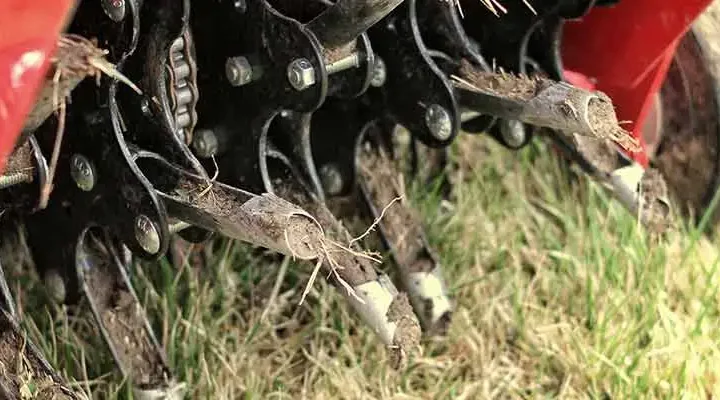
Sodic soils compact fast. Annual core aeration in late spring or early summer relieves compaction and improves water infiltration. The holes also give gypsum and water a direct path into the root zone.
If thatch builds up beyond half an inch, dethatch. Thatch holds salt and sheds water, both of which work against you.
Common Mistakes That Kill Coastal Lawns
Even with the right grass and good intentions, a few common errors undo everything. Here's what to watch for.
Overwatering Shallow and Often
People see salt damage and assume more water is the answer. It is, but only if the water moves salts down and out. Shallow daily watering just dissolves salts and redeposits them at the surface, which makes the problem worse.
Deep, infrequent irrigation is the fix. If your soil stays soggy at the surface, you're overwatering.
Skipping the Soil Test
Guessing on gypsum and amendments wastes money and can hurt your lawn. A $20 soil test tells you exactly how much salt is present, what the SAR is, and what your pH is doing. Without it, you're applying products blind.
Test annually in direct-exposure zones, every other year in moderate zones. Soil chemistry shifts over time, especially with salt spray accumulation.
Planting the Wrong Variety
The single biggest mistake is choosing grass by appearance or local tradition rather than salt tolerance. A beautiful St. Augustine lawn in a direct-exposure zone will decline within two seasons, no matter how well you maintain it.
If you're on the front line, plant what handles salt. If you want the look of St. Augustine, pick a palmetto or similar cultivar with slightly better salt tolerance, or accept that you'll be replacing it periodically.
Ignoring Storm Surge and Salt Flooding
Storm surge is different from salt spray, and it causes different damage. Salt water sitting on the lawn for hours pushes salt deep into the soil profile, far below the normal root zone. After the water recedes, you need to leach heavily and immediately.
If your lawn was submerged, flush with fresh water within 24 to 48 hours, applying 2 to 3 inches to push salt below the root zone. Then re-test your soil before assuming the lawn will recover. Sometimes surge damage is severe enough that renovation is cheaper than rehab.
Using Cheap Irrigation Water Without Testing
If you're on a well near the coast, your irrigation water may already be saline. Test it. If your water EC is above 1.5 dS/m, you're adding salt every time you water, and gypsum alone won't keep up.
You may need to switch to a freshwater source or accept a salt-tolerant groundcover instead.
Coastal Lawn FAQ
How close to the ocean can you grow grass?
You can grow grass right up to the dune line if you pick seashore paspalum and commit to aggressive maintenance. For most homeowners, 50 to 100 meters of buffer makes life much easier. Beyond 150 meters, you can usually grow any moderate-tolerance variety successfully.
Does salt spray kill all grass?
It kills most varieties, yes. Only a handful of turfgrasses handle daily salt spray without significant thinning. Seashore paspalum is the most tolerant, followed by certain Bermuda cultivars.
St. Augustine handles it in moderate exposure but declines in direct zones.
How do you fix salt-damaged soil?
Test the soil first. Apply gypsum to displace sodium, then leach with fresh water to flush salts below the root zone. Repeat as needed based on follow-up tests.
For heavily damaged soil, remove the top 4 to 6 inches and replace with clean topsoil before replanting.
Can you grow a lawn with saltwater irrigation?
No standard turfgrass survives long-term saltwater irrigation. Seashore paspalum handles brackish water (up to about 2,000 ppm) but not full seawater. If your only water source is saline, consider a groundcover, a xeriscape, or synthetic turf.
How long does it take for a coastal lawn to establish?
Sod establishes in 2 to 4 weeks under good conditions. Seeded Bermuda takes 6 to 10 weeks for full coverage. Either way, treat the lawn as "establishing" for the first full growing season, and avoid heavy traffic, stress, or fertilizer during that window.
What is the best grass for a beachfront property?
Seashore paspalum, without question. It's the same species used on coastal golf courses from Florida to the Caribbean, and it outperforms everything else in direct salt spray. If you want a Bermuda look, choose a salt-tolerant cultivar like 'Celebration' or 'Tifway 419'.
Final Checklist for a Lush Salt-Spray Lawn
Before you close the gate on this project, run through this quick decision checklist.
- Confirm your exposure zone based on distance, wind, and observed damage.
- Pick a grass matched to that zone, not to your personal aesthetic preference.
- Pull a soil salinity test and an irrigation water test.
- Apply gypsum based on results, and work it into the top 4 to 6 inches.
- Establish with sod if budget allows, especially in direct-exposure zones.
- Irrigate deep and infrequent, aiming for 1 to 1.5 inches per week.
- Rinse foliage after wind events with an extra morning watering cycle.
- Mow at the high end of the species' recommended range.
- Aerate annually and top-dress with gypsum as soil tests indicate.
- Plan for storm surge recovery before hurricane season arrives.
A lush coastal lawn isn't about fighting the ocean. It's about picking the right plant, fixing the soil underneath, and staying ahead of salt accumulation with smart water and amendment habits. Do those things, and your lawn will look better than 90% of the ones around you, even with the surf in your backyard.

Similar Posts