Fix Iron Chlorosis in St. Augustine Grass Fast
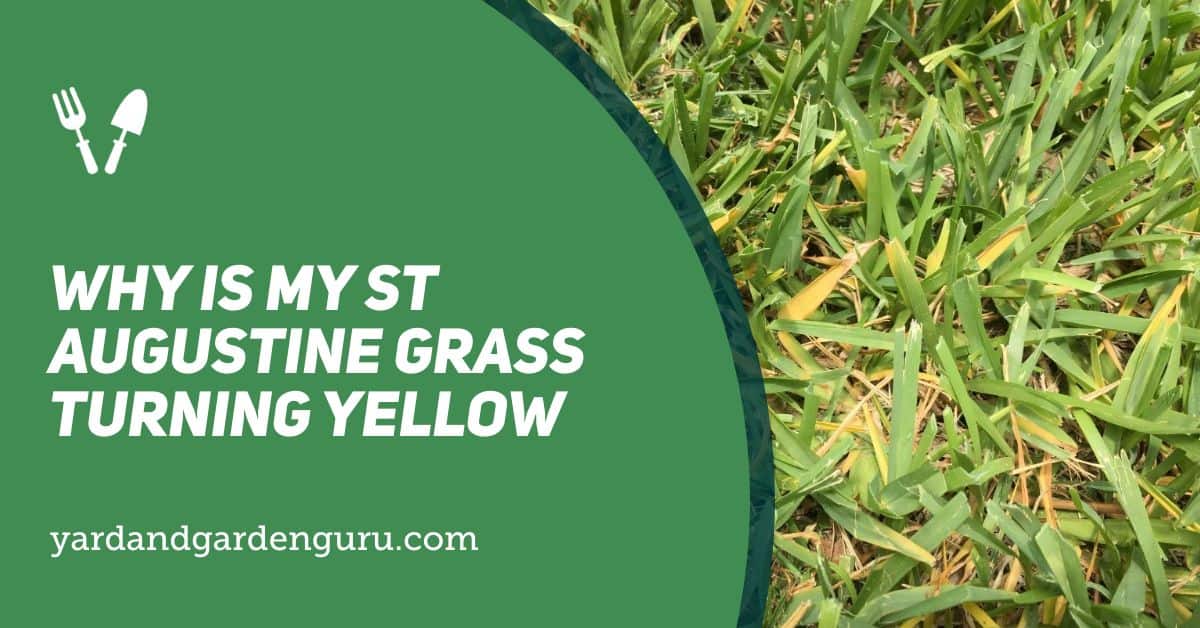
If your St. Augustine grass is looking more yellow than green and a dose of nitrogen didn't fix it, you're probably dealing with iron chlorosis. Learning how to treat iron chlorosis in St.
Augustine grass comes down to diagnosing the actual cause first, then picking the right product for your soil pH, because spraying iron on alkaline soil without testing is just throwing money on the lawn.
In the alkaline soils common across the South, iron becomes unavailable to grass roots even when it's sitting right there in the soil. University extension research, including work from Texas A&M AgriLife Extension, confirms that soil pH above 7.5 locks up iron fast, and foliar greening shows up in as little as 24 to 72 hours while granular soil apps can take two to four weeks. As of 2026, chelated iron products like FeEDDHA remain the most stable option for high-pH lawns.
Let's walk through how to actually fix this.
Quick Answer
Treat iron chlorosis in St. Augustine grass with a foliar spray of chelated iron for fast greening. Apply FeEDDHA for soil pH above 7.5.
Confirm with a soil test first. Address alkalinity or drainage to prevent it returning. Repeat every 3 to 6 weeks as needed.
Confirm It's Actually Iron Chlorosis (Not Nitrogen Deficiency or Something Else)
This is where most homeowners waste product. Iron chlorosis and nitrogen deficiency look similar at a glance, but they behave differently. Treating the wrong one either burns the grass or fuels a disease outbreak.
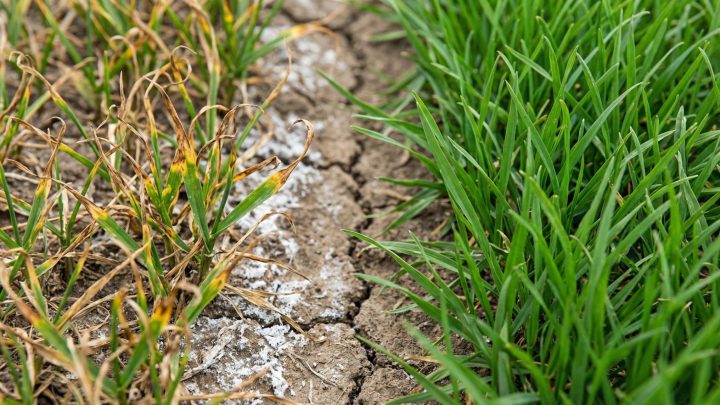
The visual giveaway for iron chlorosis:
- Yellowing appears on the newest leaves first
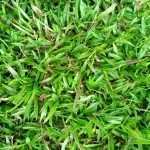
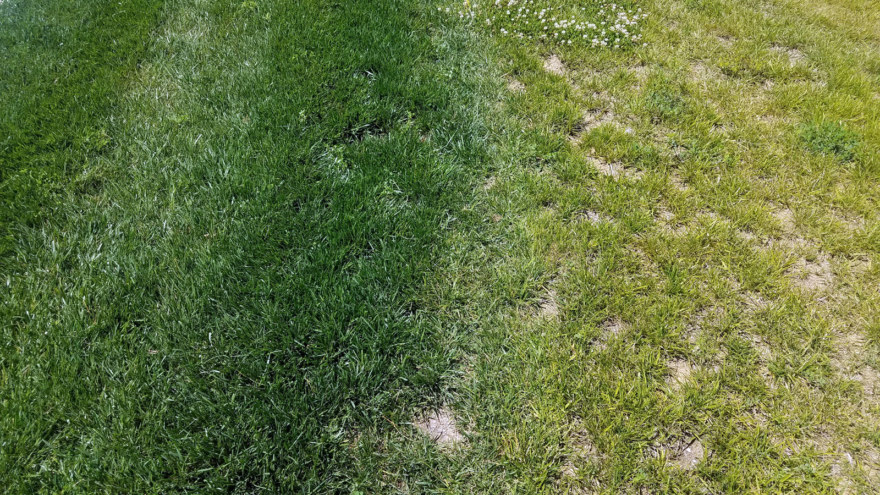
- Veins stay green while the tissue between them turns pale yellow
- Growth rate stays normal or even slows
- Pattern is patchy, often in high-pH or wet spots
The visual giveaway for nitrogen deficiency:
- Yellowing hits older, lower leaves first
- Whole blade fades uniformly, not between veins
- Growth slows or stops
- Pattern is usually uniform across the lawn
If you're seeing the first list, you're dealing with iron. If you're seeing the second, your grass needs nitrogen, not iron, and piling on iron will just darken the leaves without solving the growth problem.
There's also a third possibility that trips people up: manganese deficiency. It mimics iron chlorosis almost perfectly because both micronutrients show up as interveinal yellowing. A soil test clears it up in five minutes, but the practical shortcut is that manganese issues are rare in alkaline lawns, while iron issues are constant.
If your pH is above 7.5, bet on iron first.
One more thing worth ruling out before you spray anything: root damage from overwatering, grubs, or compacted soil. Stressed roots can't take up iron even when it's available. If your grass is spongy underfoot, pulls up easily, or sits in soggy soil after irrigation, fix the drainage first.
The yellowing won't respond to iron until the roots can breathe.
Run a Soil and Water Test Before You Apply Anything
Iron chlorosis isn't really an iron problem. It's a soil chemistry problem that makes iron unavailable. Skip the test and you'll be reapplying every few weeks forever.
What to test for in soil:
- pH (target range for St. Augustine: 6.0 to 7.5)
- Bicarbonate level
- Iron content (total and available)
- Manganese
- Cation exchange capacity (CEC)
What to test for in irrigation water:
- pH
- Bicarbonate concentration
- Total alkalinity
Why both? Because your irrigation water can raise soil pH over time even if your native soil started in a good range. Bicarbonate levels above 150 ppm in water are a known aggravator of iron chlorosis, and many municipal and well sources in Texas, Arizona, and Florida sit well above that threshold.
You can grab a basic soil pH kit from a garden center, but a real lab test gives you the full picture. Your state's university extension, like the University of Florida's UF/IFAS Extension, offers affordable testing with turnaround in about a week.
Decision rule based on results:
| Soil pH | Best Product Choice |
|---|---|
| Below 7.0 | Ferrous sulfate usually works fine |
| 7.0 to 7.5 | Chelated iron (FeDTPA or FeHEDTA) |
| Above 7.5 | FeEDDHA (most stable at high pH) |
If your pH is above 7.5, you're not going to fix this with a single iron spray. You also need to address the pH itself through sulfur amendments, which we cover in the long-term section below.
Choose the Right Iron Product for Your Soil pH
Once you know your pH, picking the product is straightforward. There are three main categories, and they behave very differently in alkaline soil.
Ferrous sulfate (iron sulfate):
- Cheapest option, around $10 to $20 per 1,000 sq ft coverage
- Works fast as a foliar spray (greening in 24 to 72 hours)
- Becomes unavailable almost immediately in high-pH soil
- Stains concrete, stone, and clothing badly
- Best for low-pH lawns or quick foliar fixes
Chelated iron (FeEDDHA, FeDTPA, FeHEDTA):
- More expensive, typically $25 to $45 per 1,000 sq ft
- Chelate protects iron from being locked up by soil pH
- FeEDDHA is stable up to about pH 9.0
- FeDTPA works up to about pH 7.5
- FeHEDTA is a middle-ground option
- Longer residual effect in soil
Granular lawn fertilizers with iron added:
- Convenient for broadcast application
- Iron content is usually low (1% to 5%)
- Better for maintenance than for fixing active chlorosis
- Cheaper chelates often used, less effective at high pH
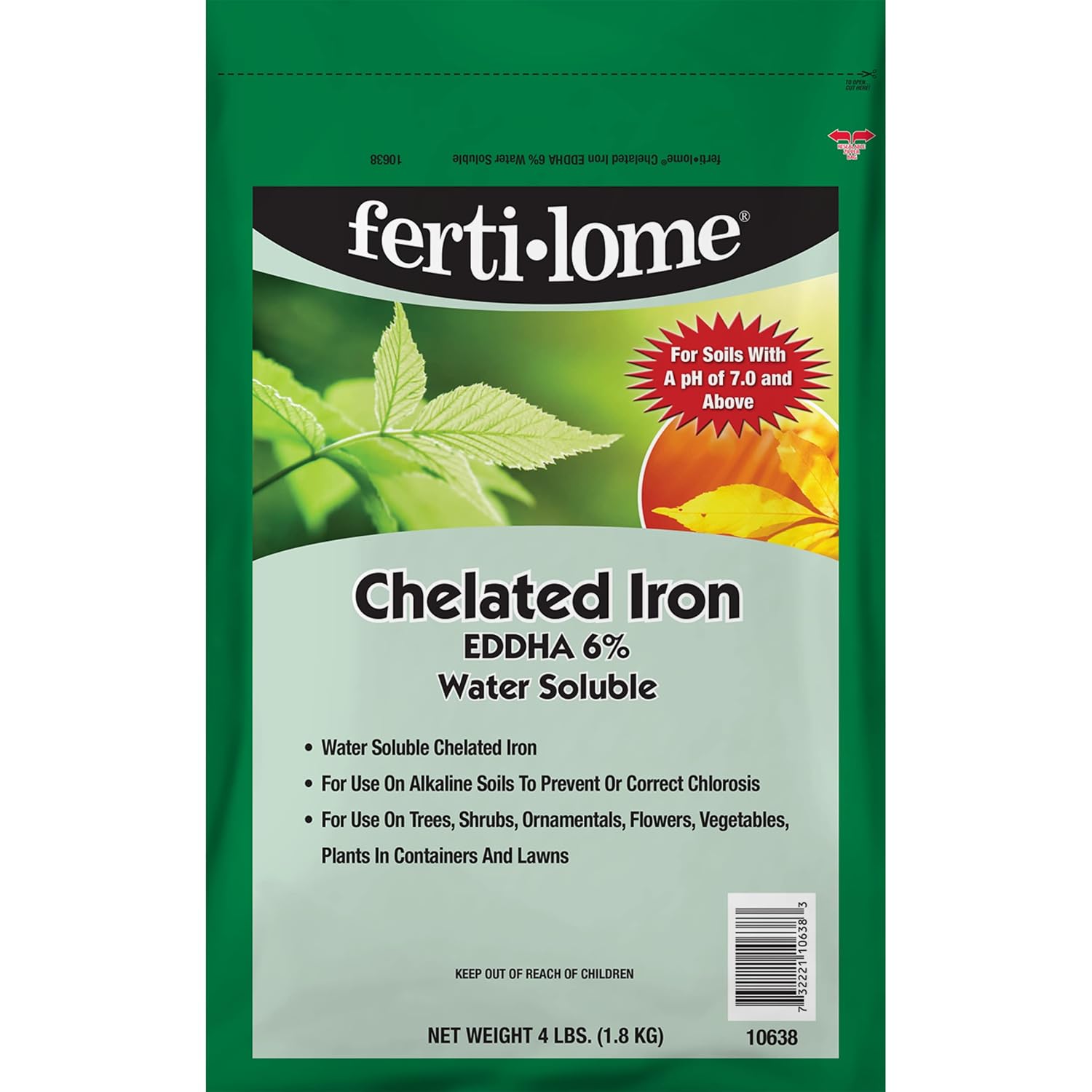
The decision tree for picking:
If your pH is below 7.0 and you want cheap and fast, ferrous sulfate foliar spray is fine. If your pH is 7.0 to 7.5, go with FeDTPA or FeHEDTA chelated iron. If your pH is above 7.5, FeEDDHA is the only chelate that holds up.
If you're maintaining a lawn that's already mostly green and just needs a seasonal boost, a granular fertilizer with iron works for routine upkeep.
One more practical note: liquid chelated iron concentrates stain everything they touch. Keep them off driveways, sidewalks, and fences. Rinse splashes immediately because rust stains on concrete are permanent.
Apply It the Right Way, Foliar, Granular, or Soil Drench
How you apply matters as much as what you apply. Each method has a different speed, duration, and risk profile.
Foliar spray (fastest green-up):
- Mix per label, typically 2 to 4 oz ferrous sulfate or labeled rate of chelated liquid per gallon
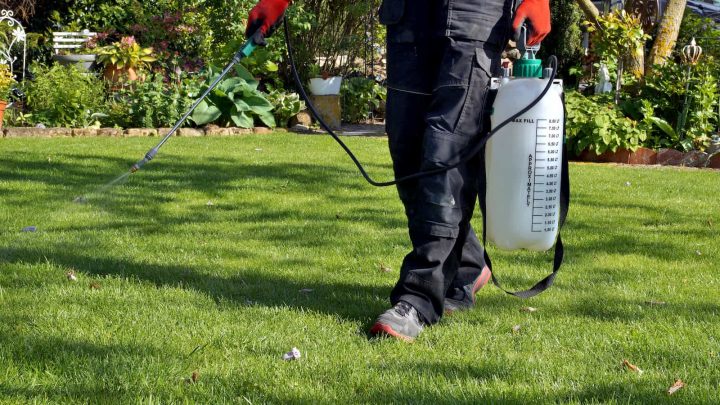
- Apply with a pump or backpack sprayer
- Coat blades lightly, not to runoff
- Best done in early morning or evening when temps are below 85°F
- Greening shows in 24 to 72 hours
- Reapply every 3 to 6 weeks during the growing season
- Avoid spraying within 24 hours of expected rain
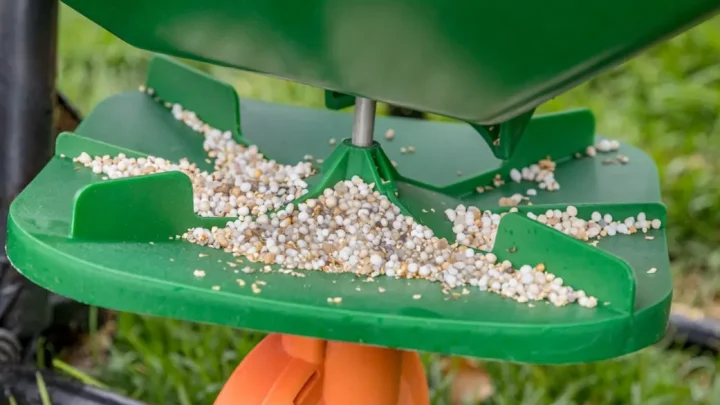
Granular broadcast (longer lasting):
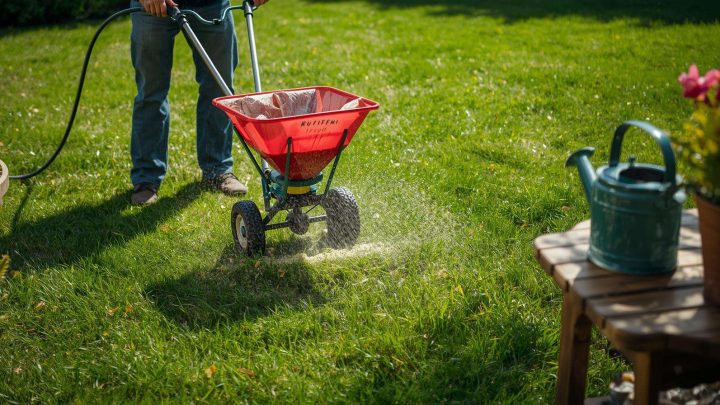
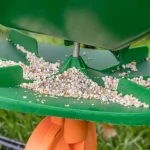
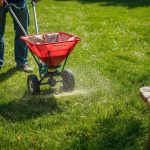
- Apply 0.5 to 1 lb per 1,000 sq ft of granular chelated iron
- Use a broadcast or drop spreader for even coverage
- Water in immediately with about a quarter inch of irrigation
- Response takes 2 to 4 weeks
- Less staining risk than foliar
- Better for large lawns
Soil drench (targeted, less common):
- Mix chelated iron in a watering can
- Apply directly over affected patches
- Useful for small problem areas under trees or near concrete
- Slower than foliar but longer lasting than spray
Common application mistakes:
- Spraying during peak heat (above 85°F) causes leaf burn
- Applying before rain washes product into the soil before it can be absorbed
- Overlapping passes double the rate and burn the turf
- Skipping the watering-in step on granular products
- Using a chelate that's not rated for your soil pH
If you're tank-mixing iron with a fungicide (common on St. Augustine for brown patch control), do a jar test first. Most chelated liquids are compatible with common fungicides, but wettable powders can sometimes clump.
Manufacturer specs confirm compatibility for most pre-mixed products.
Fix the Underlying Cause So It Doesn't Come Back
Iron applications are a band-aid unless you deal with what's making the iron unavailable in the first place. Two culprits cause most recurring cases: high soil pH and alkaline irrigation water.
Lowering soil pH (when it's above 7.5):
Elemental sulfur is the standard amendment for acidifying alkaline soil over time. Soil bacteria convert it to sulfuric acid, gradually dropping the pH. Expect 6 to 12 months for meaningful change.
- Apply 5 to 10 lb per 1,000 sq ft of elemental sulfur
- Work it into the top 2 to 4 inches if possible
- Reapply annually based on soil test results
- Faster alternatives include ammonium sulfate fertilizer, but they acidify more aggressively and can burn if overdone
Dealing with alkaline irrigation water:
If your soil pH keeps climbing despite amendments, your water is the problem. Bicarbonate levels above 150 ppm in irrigation water will gradually overwhelm any sulfur you apply.
Options for high-bicarbonate water:
- Switch to a different water source if possible
- Install a sulfur-burning irrigation injector
- Apply chelated iron regularly as ongoing maintenance (3 to 6 times per year)
- Accept the issue and budget for routine iron apps
Other long-term fixes worth considering:
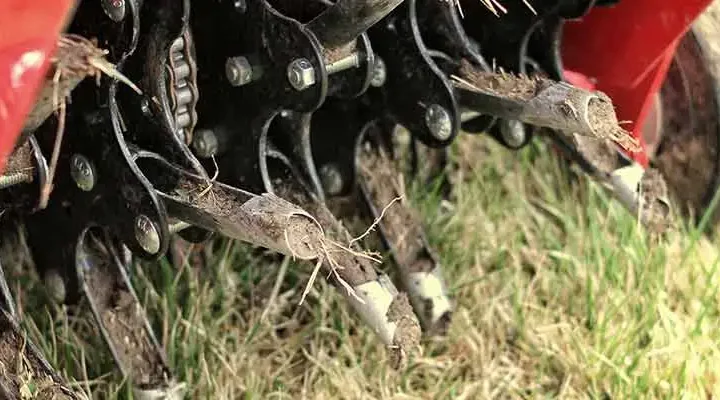
Improve drainage if water sits on the lawn. Compacted or waterlogged soil suffocates roots and limits iron uptake. Core aeration once a year helps.
Topdress with acidic organic matter like pine bark compost. It gradually buffers pH and adds organic chelates that help iron stay available.
Avoid over-liming. Many chlorosis cases show up within a year of a heavy lime application that pushed pH too high.
Common Mistakes That Make Iron Chlorosis Worse
Even with the right product, a few common errors can burn your grass, waste your money, or make the chlorosis come back faster.
Applying iron without testing first:
You might be treating manganese deficiency, nitrogen deficiency, or a root problem. Iron on those issues does nothing or makes things worse. A $20 soil test beats $100 in wasted product every time.
Spraying during peak heat:
Foliar iron on grass blades when temps are above 85°F causes leaf burn. You'll see brown tips within hours. Apply in early morning or late evening, especially during summer.
Using ferrous sulfate on high-pH soil:
It converts to an unavailable form almost immediately in alkaline conditions. You'll see a quick green flash followed by yellowing again within two weeks. Use a true chelate rated for your pH.
Ignoring irrigation water:
If your water is the source of the problem, no amount of soil amendment will keep up long-term. Test your water and address high bicarbonate at the source.
Over-applying to "force" greening:
More iron doesn't mean greener grass past a certain point. Excess iron builds up in soil, can interfere with manganese uptake, and stains everything it touches. Follow label rates.
Mixing iron with incompatible products:
Some pesticides and fertilizers react with chelated iron, causing clumping or reduced effectiveness. Check label compatibility or do a jar test before tank-mixing.
Expecting one application to fix it permanently:
In alkaline-soil regions, iron chlorosis is seasonal maintenance, not a one-time fix. Plan on 3 to 6 applications per year if your soil pH stays high.
Skipping PPE:
Liquid iron concentrates stain skin and can irritate eyes. Wear gloves and eye protection. Keep pets and kids off the lawn until the spray dries completely.
Frequently Asked Questions
How long does it take for iron to green up St. Augustine grass?
Foliar iron sprays show visible greening in 24 to 72 hours. Granular soil applications take 2 to 4 weeks. The speed depends on the product type and how badly the grass is deficient.
Can I apply iron and fertilizer at the same time?
Yes, in most cases. Iron and nitrogen can be tank-mixed without issues. Avoid mixing chelated iron with pesticides unless the label confirms compatibility, and do a small jar test first to check for clumping.
Will iron chlorosis kill my St. Augustine grass?
Not directly. The grass can live in a chlorotic state for a long time, but it grows slowly, thins out, and becomes vulnerable to weeds, disease, and heat stress. Treat it before the lawn declines too far.
How often should I apply iron to my lawn?
In high-pH regions, plan on 3 to 6 applications per year during the growing season. In neutral or slightly acidic soils, one or two spring applications may be enough to correct the deficiency.
Is chelated iron safe for pets and kids?
Once the product has dried on the lawn, it's generally safe for re-entry. Liquid concentrates should be kept away from pets and children during application. Always follow the specific label instructions for re-entry intervals.
Why does my St. Augustine turn yellow every summer?
Summer stress plus high soil pH and alkaline irrigation water creates a perfect storm for iron chlorosis. The grass is actively growing and needs more iron than it can absorb. Seasonal iron apps usually solve this pattern.

Similar Posts