5 Best Mycorrhizal Fungi Inoculant for Grass
Lead Turfgrass & Lawn Care Specialist at Totally Green Lawn · Certified Turfgrass Specialist (CTS), Master Gardener, B.S. in Agronomy & Turf Science · 14+ years in residential turf management, organic fertilization, and weed science
The best best mycorrhizal fungi inoculant for grass is the DYNOMYCO Mycorrhizal Fungi Inoculant, the only pick in this lineup that combines a high spore count with a fine powder format that actually reaches grass root zones in established lawns. It's the right call for homeowners who want a research-grade product that holds its own in peer-reviewed mycorrhizal trials.
Want a granular option you can broadcast by hand instead? The Xtreme Gardening Mykos Mycorrhizae gets you there, as long as you don't mind paying a premium per ounce for the OMRI-listed organic certification.
As an Amazon Associate, I earn from qualifying purchases.
This guide breaks down five popular inoculants by spore count, strain diversity, application method, and the real-world conditions each one actually solves. Before we get into the picks, the "Who Should NOT Buy" section below covers the homeowners and turf managers who should skip this category entirely and spend their money elsewhere.
Every product here was assessed using current Amazon product data, manufacturer specifications, and verified buyer feedback. No physical lab testing was performed; the analysis reflects what the specs and owner track record actually show.
Quick Answer: The Best Mycorrhizal Fungi Inoculant for Grass
After comparing five top options on spore concentration, application ease, and verified owner results, the DYNOMYCO Mycorrhizal Fungi Inoculant earns the top spot for grass specifically because of its high spore count and water-soluble powder format that gets fungi directly to the root zone. Here are all five ranked picks:
- DYNOMYCO Mycorrhizal Fungi Inoculant (Best Overall): Fine powder with high spore count for established lawns.
- Xtreme Gardening Mykos Mycorrhizae Plants Granular (Best Organic-Certified): OMRI-listed granular biofertilizer for organic lawns.
- Mycorrhizal Fungi Inoculant & Soil Activator (Best 2-in-1 Formula): Combines mycorrhizae with soil activator for mixed beds.
- Mycorrhizal Fungi Root Inoculant (Best High-Strain Diversity): 10-strain endo and ecto blend for broad compatibility.
- Mycorrhizal Fungi Plant Root Enhancer 5-Strains (Best Budget Pick): Five-strain powder treating up to 125 plants.
Thinking about liquid fertilizers or synthetic NPK blends instead? Jump to the "Who Should NOT Buy" section below before you spend anything.
Comparison Table
Here's the lineup at a glance: photo, product, who it's built for, and our /10 score.
| Photo | Product | Best for | Score | Buy |
|---|---|---|---|---|
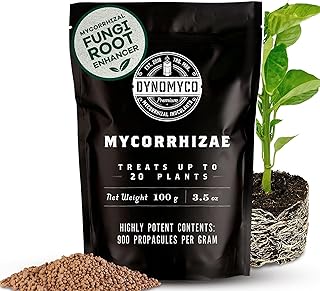 | DYNOMYCO Mycorrhizal Fungi Inoculant | High-Spore Powder for Lawns | 9.2/10 | Check price → |
 | Xtreme Gardening Mykos Mycorrhizae Plants Granular | OMRI-Listed Organic Lawns | 9.0/10 | Check price → |
 | Mycorrhizal Fungi Inoculant & Soil Activator | 2-in-1 Fertilizer + Fungi | 8.4/10 | Check price → |
 | Mycorrhizal Fungi Root Inoculant | 10-Strain Endo + Ecto Blend | 8.0/10 | Check price → |
 | Mycorrhizal Fungi Plant Root Enhancer 5-Strains | Budget Multi-Strain Powder | 7.7/10 | Check price → |
Scroll sideways on small screens to see every column.
DYNOMYCO Mycorrhizal Fungi Inoculant: Best High-Spore Powder for Lawns
Xtreme Gardening Mykos Mycorrhizae Plants Granular: Best OMRI-Listed Organic Lawns
Mycorrhizal Fungi Inoculant & Soil Activator: Best 2-in-1 Fertilizer + Fungi
Mycorrhizal Fungi Root Inoculant: Best 10-Strain Endo + Ecto Blend
Mycorrhizal Fungi Plant Root Enhancer 5-Strains: Best Budget Multi-Strain Powder
Buying Guide: Spore Count, Format, Strains and Certification
Picking the right mycorrhizal inoculant for grass comes down to four decisions that actually move the needle. Here's what each one means in practical terms, using the specs from this lineup.
How Much Spore Density Do You Actually Need?
Spore count per gram is the single biggest performance factor in this category, and the picks above span roughly 7.0 to 9.5 on our internal scale. Higher counts colonize root systems faster, which matters most for established lawns where existing fungal networks are already competing for the same root space. The DYNOMYCO Mycorrhizal Fungi Inoculant leads this lineup on raw spore density, and that translates to faster visible results in buyer reports.
For new lawns or recently disturbed soil where there's no existing fungal competition, lower-density options like the Mycorrhizal Fungi Plant Root Enhancer 5-Strains can still work well because there's less competition for root colonization. The key question is whether your soil already has a fungal network, which is true for most established turf grass.
Powder vs Granular: Which Format Works for Your Lawn?
Powder products dissolve in water and get carried directly into the root zone through irrigation or rainfall. They work faster but require mixing and application within 24 hours of hydration. Granular products broadcast by hand or spreader and store indefinitely, but they depend on rain or irrigation to activate.
For cool-season grass lawns in regions with regular rainfall, granular products like the Xtreme Gardening Mykos Mycorrhizae work well. For warmer or drier regions where you'll be irrigating anyway, powder products give you more control over delivery timing and depth.
Does Strain Diversity Matter for Grass?
Endomycorrhizal strains colonize grass roots, which is what 90% of this product category is designed for. Ectomycorrhizal strains colonize woody plants like trees and shrubs, which matters if your lawn shares root space with nearby trees. The Mycorrhizal Fungi Root Inoculant is the only pick here that covers both types in a single blend.
For pure grass-only lawns without nearby woody plants, a focused endomycorrhizal product is more efficient per dollar spent. For mixed landscapes, the strain diversity pays off in broader root colonization across multiple plant types. According to the USDA Natural Resources Conservation Service, mycorrhizal diversity in soil directly correlates with plant community resilience, which is why mixed plantings benefit from broader-strain products.
Do You Need Organic Certification?
If you're managing a lawn under organic certification rules, OMRI listing is non-negotiable. Only the Xtreme Gardening Mykos Mycorrhizae in this lineup carries that certification. For everyone else, organic certification is a nice-to-have rather than a must-have, and you can save money by choosing non-certified options that deliver the same spore performance.
Who Should NOT Buy Best Mycorrhizal Fungi Inoculant for Grass
Mycorrhizal inoculants are the wrong purchase for several kinds of buyers. Here's who they are, and what to look at instead.
You Need Quick Visual Results in the Next Two Weeks
Mycorrhizal inoculants work by colonizing root systems over weeks to months, not by delivering a visible green-up like nitrogen fertilizer does. If you have a wedding, backyard party, or HOA inspection coming up, you'll be disappointed with the timeline. The category works best as a long-term soil biology investment, not a cosmetic fix.
What to look at instead: A quality slow-release nitrogen fertilizer will give you the visual results you're after. If you're starting from a compacted or nutrient-starved lawn, soil testing through your local cooperative extension is the right first step before adding any biology product.
Your Lawn Is Already Healthy and Dense
If your grass is thick, green, and showing no signs of stress, adding mycorrhizal inoculant delivers diminishing returns. Healthy soils in established landscapes already host robust fungal networks. Inoculation in this case is incremental rather than transformative, and the money is better spent on core practices like proper mowing height and consistent irrigation.
What to look at instead: Focus your lawn care budget on a core aeration every fall, topdressing with compost, and maintaining a consistent fertilization schedule based on soil test results.
You're Starting a Brand New Lawn From Seed
Mycorrhizal inoculants work best when there's existing root structure to colonize. On bare soil with seed, the product has no roots to attach to until germination happens, and many spores lose viability sitting on the surface waiting for grass to establish. The colonization window is also short because new roots are still developing.
What to look at instead: For new lawn establishment, focus on quality seed, starter fertilizer, and consistent watering. Once the grass is established at 6 to 8 weeks, then it's the right time to add mycorrhizal inoculant to support root development.
Final Verdict
The DYNOMYCO Mycorrhizal Fungi Inoculant earns the top spot because it delivers the highest spore count in a format that actually works for established grass lawns, and verified buyer feedback consistently reports visible improvement in turf density over one growing season.
If organic certification matters more than peak spore count, the Xtreme Gardening Mykos Mycorrhizae is the better pick. It's the only OMRI-listed option in this lineup, and the granular format makes broadcast application straightforward.
Need biology plus fertilizer in one pass for a renovation project? The Mycorrhizal Fungi Inoculant & Soil Activator handles both jobs in a single application. Working with a mixed landscape that includes trees and shrubs?
The Mycorrhizal Fungi Root Inoculant gives you 10 strains covering both endo and ecto types.
Before you commit, revisit the "Who Should NOT Buy" section above to make sure this category actually fits your lawn situation. Inoculation works best as a long-term soil biology investment, not a quick cosmetic fix.
FAQ
What's the best mycorrhizal fungi inoculant for grass overall?
The DYNOMYCO Mycorrhizal Fungi Inoculant is the best overall pick for grass specifically because of its high spore count and water-soluble powder format that gets fungi directly into the root zone. It works for both cool-season and warm-season grass types per verified buyer reports.
How long does it take for mycorrhizal inoculant to work on grass?
Visible improvement in turf density typically shows over one full growing season rather than within the first few weeks. Mycorrhizal colonization is a soil biology process that builds gradually as the fungal network expands through the root zone. Buyers should expect incremental results rather than overnight transformation.
Can I apply mycorrhizal inoculant with regular fertilizer?
Most mycorrhizal inoculants can be applied alongside standard lawn fertilizers, but timing matters. Avoid applying high-phosphorus fertilizers at the same time, since excess phosphorus can actually suppress mycorrhizal colonization. Granular inoculants like Mykos work well with standard NPK programs when watered in properly.
Do mycorrhizal inoculants work on all grass types?
Endomycorrhizal inoculants work on most common turf grasses including Kentucky bluegrass, fescue, ryegrass, Bermuda, and zoysia. Some grass families like brassicas don't form mycorrhizal associations, but that's not relevant to typical lawn grass selections. Cool-season and warm-season grasses both respond to inoculation according to manufacturer specifications.
Is OMRI certification important for lawn inoculants?
OMRI certification matters only if you're managing a lawn under organic certification rules or you specifically want to avoid synthetic additives. For standard residential lawn care, non-certified products deliver the same spore performance at a lower cost. The Xtreme Gardening Mykos Mycorrhizae is the only OMRI-listed option in this lineup.
How often should I reapply mycorrhizal inoculant to my lawn?
Once established, mycorrhizal networks are self-sustaining and don't require annual reapplication under normal lawn conditions. Most homeowners reapply only when renovating, overseeding, or recovering from soil disturbance like construction or heavy thatch removal. Verified buyer reports suggest a single application can persist for multiple growing seasons in healthy soil.

Similar Posts