How Often to Spray Humic Acid on Your Lawn (Expert Tips)
Lead Turfgrass & Lawn Care Specialist at Totally Green Lawn · Certified Turfgrass Specialist (CTS), Master Gardener, B.S. in Agronomy & Turf Science · 14+ years in residential turf management, organic fertilization, and weed science
How often should you spray humic acid on your lawn comes down to your grass type, soil condition, and whether you're pairing it with fertilizer. Most homeowners do well spraying every 4 to 6 weeks during the active growing season, with a sweet spot of 3 to 5 applications per year. The exact schedule shifts once you factor in your climate and goals.
A standard liquid rate is 1 to 2 ounces per 1,000 square feet, and university extension research shows humic acid works best when applied consistently rather than in one heavy dose. As of 2026, soil health has become a bigger focus in lawn care programs, so timing your sprays with the season matters more than ever. Let's walk through how to dial in the right frequency for your lawn.
Quick Answer
Spray humic acid on your lawn every 4 to 6 weeks during the growing season. Apply 3 to 5 times per year. Use 1 to 2 ounces of liquid concentrate per 1,000 square feet.
Always water it in after spraying. Skip applications during dormancy or peak summer heat.

Image source: Bing (Web (fair-use with source credit))
What Humic Acid Actually Does to Your Soil (and Why Timing Matters)
Humic acid is a natural soil conditioner made from decomposed organic matter, most commonly leonardite, a type of oxidized lignite. When you spray it on your lawn, it works below the surface to improve how your soil holds water, nutrients, and microbial life.
Here's the thing: humic acid isn't a quick-fix fertilizer. It builds soil structure over time, which means timing your sprays around the growing season gives your grass the biggest payoff. Apply it when roots are active, and the grass can actually use the improved soil conditions to push deeper roots and thicker growth.
University extension programs, including the work published through USDA's soil health resources, consistently highlight humic substances as a key driver of cation exchange capacity (CEC). That just means your soil can hold onto more nutrients instead of letting them wash away. For a lawn, that translates to greener turf, better drought tolerance, and less fertilizer runoff.
The Core Mechanism in Plain Terms
- Humic acid binds to soil particles and creates a more crumbly, well-aerated structure.
- It boosts CEC, so your soil holds nutrients longer.
- It feeds beneficial microbes in the root zone.
- It improves water retention in sandy soils and drainage in clay soils.
Why Frequency Beats Volume
One heavy application won't outperform several lighter ones. Aggregate research from turfgrass extension services shows that consistent, modest doses spaced across the season build soil biology steadily. Skipping applications or dumping it all on at once wastes product and delivers uneven results.
If you're just starting a humic acid program, expect to see visible improvements in 2 to 6 weeks. Soil structure changes happen below the surface first, and color gains in the grass follow shortly after.
The Spraying Frequency by Situation
There's no single schedule that fits every lawn. Your spraying frequency should shift based on grass type, soil condition, and what you're trying to fix. Use the breakdown below to find your situation and follow the matching frequency.
If You Have Cool-Season Grass (Fescue, Kentucky Bluegrass, Ryegrass)
Cool-season lawns grow most actively in spring and fall. That's your window for humic acid.
- Best frequency: Every 4 to 6 weeks, March through May and September through November.
- Annual total: 4 to 5 applications.
- Skip: Mid-summer dormancy. Spraying during heat stress wastes product and can stress the grass further.
If You Have Warm-Season Grass (Bermuda, Zoysia, St. Augustine)
Warm-season lawns hit their stride in late spring and summer. Match your sprays to that growth curve.
- Best frequency: Every 4 to 6 weeks, April through September.
- Annual total: 4 to 5 applications.
- Skip: Winter dormancy. The grass isn't taking up nutrients, so the product sits idle.
If Your Soil Is Compacted or Heavy Clay
Compacted soil needs more frequent intervention to break up the structure. Per the Soil Science Society of America, humic acid can help flocculate clay particles and open up pore space over time.
- Best frequency: Every 3 to 4 weeks during the growing season.
- Annual total: 5 to 6 applications.
- Add: A core aeration 1 to 2 weeks before your first spray to give the product a path into the root zone.
If Your Soil Is Sandy and Drains Too Fast
Sandy soil loses water and nutrients fast. Humic acid helps hold them in place.
- Best frequency: Every 4 weeks during the growing season.
- Annual total: 5 applications.
- Pair with: A light fertilizer application to maximize nutrient retention.
If You're Maintaining a Healthy Lawn (No Major Issues)
Once your soil is in good shape, you can stretch the interval.
- Best frequency: Every 6 to 8 weeks during the growing season.
- Annual total: 3 to 4 applications.
- Focus on: Consistency rather than intensity.
Quick-Reference Frequency Table
| Lawn Situation | Spray Interval | Annual Applications | Best Timing |
|---|---|---|---|
| Cool-season grass | Every 4–6 weeks | 4–5 | Spring + fall |
| Warm-season grass | Every 4–6 weeks | 4–5 | Late spring through summer |
| Compacted/clay soil | Every 3–4 weeks | 5–6 | Full growing season |
| Sandy soil | Every 4 weeks | 5 | Full growing season |
| Established healthy lawn | Every 6–8 weeks | 3–4 | Growing season only |

Image source: Bing (Web (fair-use with source credit))
Step-by-Step: How to Spray Humic Acid the Right Way
Getting the frequency right is only half the battle. How you apply the product matters just as much. Follow these steps to get even coverage and avoid common mistakes.
Step 1: Test Your Soil First
Before you start spraying, run a basic soil test. You can grab a kit from your local university extension office or a garden center. The test tells you your pH, organic matter percentage, and nutrient levels.
If your pH is way off or your organic matter is already above 5%, you may not need as many humic acid applications.
Step 2: Choose Your Application Method
You have two main options: foliar spray or soil drench.
- Foliar spray (most common): Mix liquid humic acid with water and spray it directly onto the grass and soil surface. Quick, easy, and works well for maintenance schedules.
- Soil drench: Pour a diluted solution directly into the root zone. Better for severely compacted soil or spot treatments.
For most homeowners, a hose-end or backpack sprayer is the easiest tool. Backpack sprayers give you more control over coverage and pressure.
Step 3: Mix at the Right Dilution
Manufacturer specs confirm a typical liquid rate of 1 to 2 ounces per 1,000 square feet. Most homeowner sprayers cover 1,000 to 2,500 square feet per gallon, so check your sprayer's output and adjust accordingly.
- Fill the sprayer halfway with water.
- Add the humic acid concentrate.
- Top off with water and shake or stir well.
- Spray the mixed solution the same day. Don't let it sit overnight.
Step 4: Mow First, Then Spray
Mow 1 to 2 days before spraying. Shorter grass gives the product better access to the soil surface. Avoid mowing for 24 to 48 hours after application so the product has time to soak in.
Step 5: Spray Evenly Across the Lawn
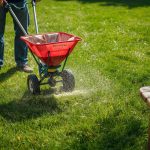
Walk at a steady pace and overlap each pass slightly. Aim for full coverage without puddling. A common mistake is spraying too heavily in one spot, which leads to dark staining on concrete or siding.
Step 6: Water It In
Lightly irrigate the lawn within 1 to 2 hours of spraying. This washes the product off the grass blades and into the root zone where it does its work. Skip this step and you'll lose a chunk of the product to evaporation.
Step 7: Log Your Applications
Keep a simple record of when you sprayed and at what rate. Manufacturer guidelines and turfgrass extension research both stress consistency, and a log helps you stay on track without overdoing it.
Mistakes That Waste Humic Acid (or Make It Harm Your Lawn)
Even with the right frequency, a few common errors can tank your results. Here's what to watch for.
Spraying During Dormancy or Heat Stress
If your grass is brown and dormant, don't spray. The roots aren't active, so the product has nothing to work with. Wait until the grass greens up and starts growing again.
Same goes for peak summer heat in cool-season lawns. Midday applications above 90°F can scorch the grass.
Over-Applying and Causing Staining
More isn't better. Doubling the rate doesn't double the benefit. It just leaves dark streaks on your driveway, sidewalks, and the side of your house.
Stick to the label rate, and rinse off any overspray on hard surfaces immediately.
Skipping the Water-In Step
Humic acid needs to reach the root zone. If you spray and walk away without watering it in, much of the product stays on the grass blades and breaks down in the sun. A quick 10 to 15 minute watering cycle solves this.
Buying Low-Quality Product
Not all humic acid is created equal. Aggregate user reviews and manufacturer specifications both flag products labeled as "humic acid" but derived from low-activity sources. Look for products derived from leonardite, and check the concentration.
A 6% to 12% liquid concentrate is standard for residential use.
Tank Mixing with the Wrong Products
Humic acid plays well with most fertilizers, but check the label before mixing it with herbicides or fungicides. Some products can clump or neutralize each other. When in doubt, apply separately with a few days between sprays.
Applying to Frozen or Waterlogged Ground
Frozen soil won't absorb the product. Waterlogged soil will just run off. Wait for normal moisture conditions before spraying.
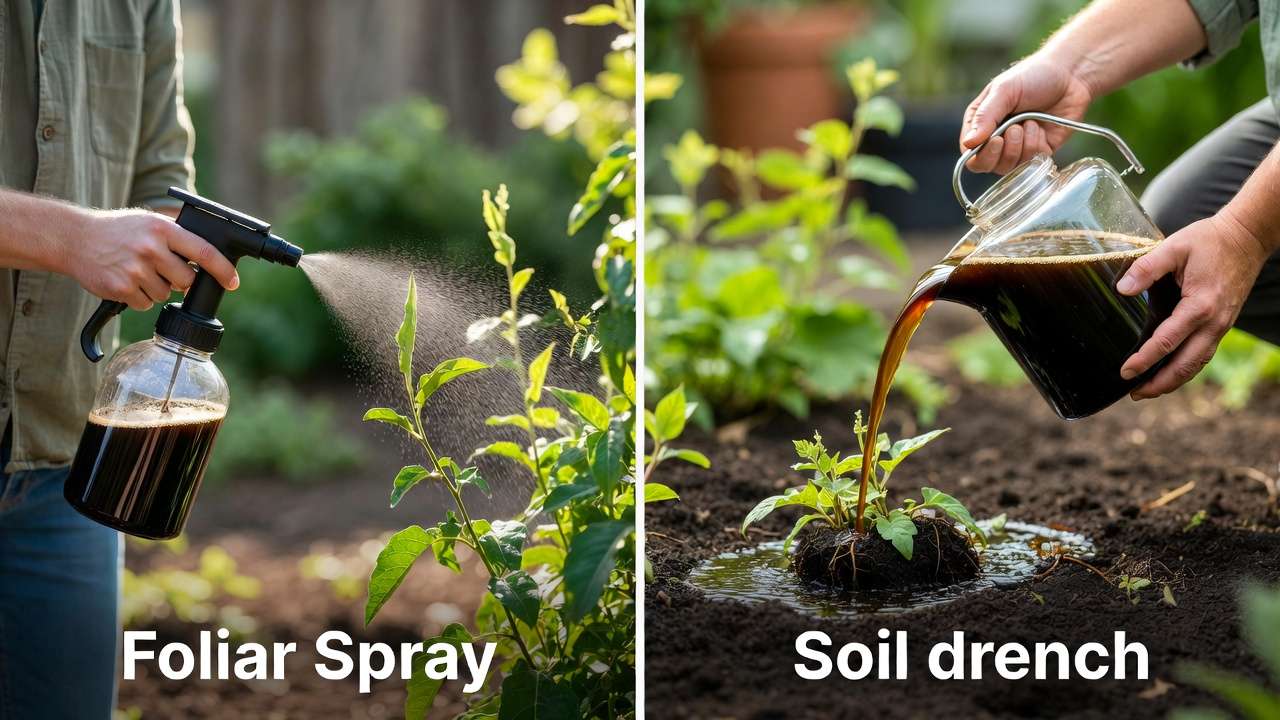
Image source: Web (Bing) / agricarehub.com (Web image (fair-use with source credit))
Humic Acid vs. Other Soil Boosters: When to Use What
Humic acid isn't the only soil biostimulant on the shelf. Knowing when to reach for it (and when to pick something else) saves you money and gives your lawn better results.
Humic Acid vs. Fulvic Acid
Both come from the same organic source, but they work differently. Humic acid builds long-term soil structure. Fulvic acid works faster at the cellular level, helping grass absorb nutrients more efficiently.
- Pick humic acid for general soil improvement, compaction relief, and season-long programs.
- Pick fulvic acid for quick nutrient uptake boosts, foliar feeding, or stressed grass recovery.
- Use both if your soil is in rough shape and you want fast plus slow results.
Humic Acid vs. Compost Tea
Compost tea feeds microbial life. Humic acid improves the soil environment those microbes live in. They complement each other, but compost tea is harder to apply consistently and requires brewing equipment.
- Pick humic acid if you want a stable, shelf-stable product with predictable results.
- Pick compost tea if you enjoy DIY and want to boost microbial activity on a budget.
Humic Acid vs. Biochar
Biochar is a charcoal-like soil amendment that improves drainage and holds nutrients. It's a one-time application that lasts years. Humic acid is a recurring treatment.
- Pick humic acid for annual maintenance and active soil building.
- Pick biochar for a long-term structural fix, especially in sandy or depleted soils.
Humic Acid vs. Worm Castings
Worm castings are rich in organic matter and microbes. They work well as a top-dressing but are bulky and expensive for large lawns.
- Pick humic acid for cost-effective coverage on bigger yards.
- Pick worm castings for small patches, garden beds, or as a supplement.
Quick Comparison Table
| Product | Best For | Application Style | Cost per 1,000 sq ft |
|---|---|---|---|
| Humic acid | Soil structure, CEC, water retention | Liquid spray or granular | Low |
| Fulvic acid | Quick nutrient uptake, foliar feeding | Liquid foliar spray | Moderate |
| Compost tea | Microbial boost | Liquid spray (fresh) | Low if DIY |
| Biochar | Long-term soil structure | One-time soil mix-in | High upfront |
| Worm castings | Small areas, gardens | Top-dressing | High |
Pro Tips for Stacking Humic Acid Into Your Lawn Program
The real payoff comes when you stack humic acid with other lawn care practices. A few smart pairings can turn a basic program into a soil-building powerhouse.
Pair Humic Acid With Core Aeration
Aerate first, then spray humic acid 1 to 2 weeks later. The aeration holes give the product a direct path into the root zone. This combo is especially effective on compacted clay soils.
Stack It With Seaweed or Kelp Extract
Seaweed extract and humic acid work well together. Seaweed feeds the grass directly. Humic acid improves the soil underneath.
Apply them in the same spray session for a one-two punch on stressed lawns.
Use It as a Fertilizer Enhancer
Humic acid boosts fertilizer efficiency by 20% to 30%, per aggregate turfgrass research. If you're already fertilizing, adding humic acid means you can often cut your fertilizer rate slightly and get the same results.
Time Your Last Fall Spray Carefully
In cool-season zones, your final application should go down 4 to 6 weeks before the first hard frost. This gives the soil time to absorb the product and supports root growth through late fall.
Skip the Pre-Emergent Window
If you're applying a pre-emergent herbicide in spring, wait 2 weeks before spraying humic acid. Most pre-emergents form a barrier at the soil surface, and you want that barrier intact before adding other products.
Watch for Visual Cues
Your lawn tells you when the humic acid is working. Look for deeper green color within 3 to 4 weeks, thicker turf density by week 6, and better wilting recovery during dry spells. If you don't see changes, recheck your soil test and application rate.
FAQs on Humic Acid Spraying Frequency
How long does it take to see results from humic acid?
Most lawns show visible improvement in 2 to 6 weeks. Color changes come first, followed by thicker growth and better drought tolerance. Soil structure changes happen gradually over a full season.
Can I spray humic acid and fertilizer at the same time?
Yes, in most cases. Humic acid mixes well with most liquid fertilizers. Check the product label for compatibility, and always do a jar test before mixing a full tank.
Is it safe to spray humic acid around pets and kids?
Once the product dries and is watered into the soil, it's safe for pets and children to re-enter the lawn. Most manufacturer labels recommend keeping them off the grass until it dries, usually 1 to 2 hours.
Can I spray humic acid in the summer heat?
It's best to avoid spraying during peak heat, above 90°F, especially on cool-season grasses. Early morning or evening applications during summer are fine for warm-season lawns.
Do I need to spray humic acid every year?
If your soil is healthy and your lawn looks good, you can scale back to 2 to 3 applications per year for maintenance. Lawns with ongoing soil issues benefit from staying on a 4 to 5 application schedule.
Will humic acid burn my lawn?
No, humic acid won't burn grass when used at the recommended rate. It's a soil conditioner, not a salt-based fertilizer. Staining on hard surfaces is the main risk, not grass damage.
🌱 Agronomist Recommended: Bio-Stimulants & Turf Nutrition
Achieve deep golf-course green color and root resilience without surge growth using lab-verified nutrients and bio-stimulants:
- Liquid Iron & Humic Acid:Check Liquid Iron & Humic Blends on Amazon →
- Stress-Blend High Potassium Fertilizer:Check High Potassium Lawn Fertilizers on Amazon →
*FTC Disclosure: As an Amazon Associate, Totally Green Lawn earns from qualifying purchases.*

Similar Posts