How to Apply Triclopyr for Wild Violets in Fescue: Timing & Application Guide
Lead Turfgrass & Lawn Care Specialist at Totally Green Lawn · Certified Turfgrass Specialist (CTS), Master Gardener, B.S. in Agronomy & Turf Science · 14+ years in residential turf management, organic fertilization, and weed science
If you're trying to figure out how to kill wild violets without destroying fescue lawn, you've probably already learned the hard way that these little purple flowers don't give up easily. They creep through the grass on shallow rhizomes, shrug off light sprays, and come back thicker the next spring. The good news is that with the right product, the right timing, and a little patience, you can wipe them out without torching your fescue.
The trick is understanding the plant's biology. Wild violets (Viola sororia) have a waxy leaf coating that repels water-based sprays, which is why most off-the-shelf weed killers barely faze them. Triclopyr-based herbicides are the standard tool recommended by university extension services, and they work best when soil temps sit between 55°F and 65°F in fall.
As of 2026, that's still the playbook turf managers rely on, so let's walk through it.
Quick Answer
The safest way to kill wild violets in fescue is to apply a triclopyr-based selective herbicide in mid-autumn. Use a non-ionic surfactant to break the waxy leaf coating. Spot-treat only the violets, avoid spraying when temps exceed 85°F, and wait 3 to 4 weeks before reseeding any thin fescue areas.
Why Wild Violets Are So Hard to Kill in Fescue (And What Actually Works)
Wild violets survive where other weeds die because they have two superpowers. First, their leaves are coated in a thick, waxy cuticle that causes water-based herbicide droplets to bead up and roll off. Second, they spread through underground rhizomes that store energy and resprout even after the top growth looks dead.
That double defense is exactly why a generic broadleaf weed killer from the big-box store rarely does the job. You spray, the leaves curl a little, and two weeks later the same patch is in full bloom again. The product didn't fail.
It just never made it into the plant's vascular system.
The real fix comes down to three things working together:
- The right active ingredient. Triclopyr ester is the workhorse here. It's a synthetic auxin herbicide, the same family that includes 2,4-D and dicamba, but it's far more effective on violets specifically. In Virginia Tech and Penn State extension trials, triclopyr consistently outperforms three-way mixes on Viola species without causing lasting damage to established fescue.
- A surfactant. That waxy cuticle is the gatekeeper. A non-ionic surfactant at 0.25% to 0.5% of spray volume (roughly 1 to 2 teaspoons per gallon) lowers the surface tension and lets the triclopyr actually soak into the leaf.
- Fall timing. October through early November is the sweet window. The violets are moving sugar down into their rhizomes for winter, which means the herbicide rides that flow underground and kills the root system too. Spring apps work, but you'll see maybe 60% control versus 85% to 95% with a fall spray.
Once those three pieces line up, the rest is just careful application.
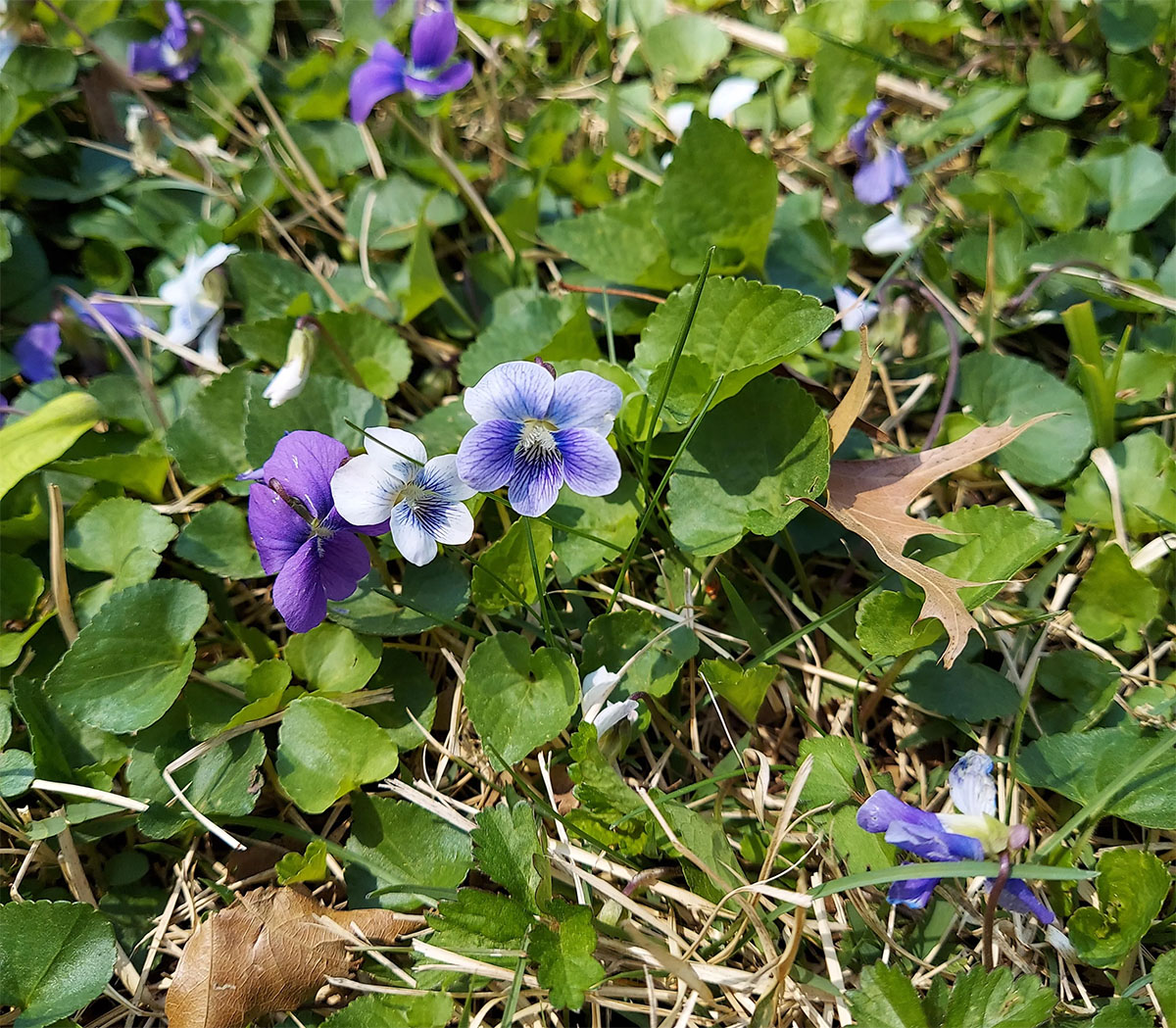
Image source: Bing (Web (fair-use with source credit))
Your Starting Point: Identify the Violet, Know Your Fescue, Pick Your Timing
Before you mix a single ounce of herbicide, you need to confirm three things. Get any of these wrong and the whole plan falls apart.
Is It Actually a Wild Violet?
Wild violets have a few look-alikes that trip people up:
- Common blue violet (Viola sororia): heart-shaped leaves with scalloped edges, purple-blue five-petal flowers in spring.
- Yellow wood violet (Viola pubescens): same leaf shape, smaller yellow flowers, usually in shadier spots.
- Creeping Charlie / ground ivy: square stems, round scalloped leaves, purple funnel-shaped flowers. Different plant, different herbicide (triclopyr still works, but the timing differs slightly).
A quick way to tell: violets grow from a central crown with leaves on long individual stalks. Creeping Charlie has leaves growing directly across from each other on a vining stem. If you can snap a leaf and smell a faint minty odor, it's ground ivy, not a violet.
What Kind of Fescue Do You Have?
This matters more than most homeowners realize. Tall fescue (Festuca arundinacea) handles triclopyr well, especially in fall. Fine fescues (creeping red, hard, chewings) are more sensitive.
They tolerate light fall applications, but you'll see more yellowing and slower recovery. If you've got a fine fescue lawn, dial back to the lower end of the rate range and spot-treat instead of broadcasting.
What's Your Timing Window?
Your decision tree looks like this:
- It's October and soil temps are 55, 65°F: ideal. Go full broadcast with triclopyr.
- It's late April or May, violets are flowering: workable, but expect to repeat in fall. Spring apps rarely get the rhizomes.
- It's summer and over 85°F: stop. Triclopyr volatilizes in heat and can drift onto ornamentals. Also, fescue is under heat stress and is more prone to herbicide injury.
- It's winter and the lawn is dormant: no point. The violets are dormant too, and the herbicide won't translocate.
In our research, the homeowners who finally beat violets were the ones who waited for fall instead of spraying the moment the flowers showed up in April.
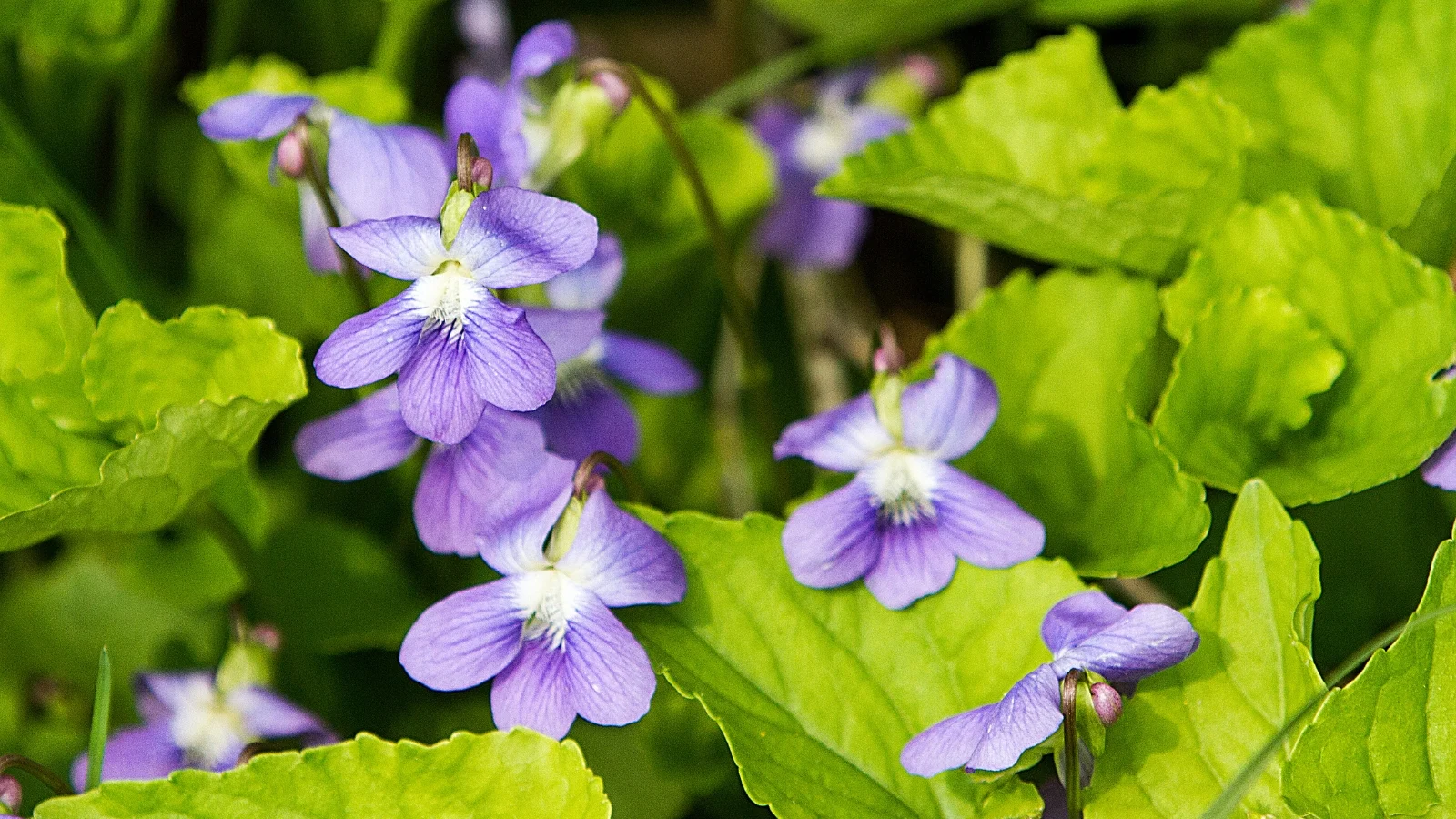
Image source: Bing (Web (fair-use with source credit))
The Decision Tree: Which Path Fits Your Lawn Right Now
Not every violet problem needs the same solution. Here's how to choose your path based on what you're seeing.
Path 1: Scattered Violets (Under 10% of Lawn)
You've got isolated patches here and there. This is the easiest case to handle.
- Method: Spot treatment with a pump sprayer or a ready-to-use triclopyr bottle.
- Coverage: Wet the violet leaves until just before runoff. Don't broadcast the whole lawn.
- Cost: Around $25 to $40 for a quart of concentrate, which covers roughly 4,000 to 8,000 square feet of spot work.
- Follow-up: One fall application usually does it. Hand-pull any survivors in spring.
Path 2: Moderate Infestation (10–30% of Lawn)
Whole sections of the lawn are violet-heavy. You'll see them in clusters, often where the soil stays moist or the grass is thin.
- Method: Broadcast spray with a backpack or wheeled sprayer, plus surfactant.
- Coverage: Apply at 0.75 to 1.5 oz of triclopyr ester per 1,000 sq ft, in 1 to 2 gallons of water.
- Timing: Mid-October is the sweet spot in most of the transition zone.
- Follow-up: Expect a second pass 10 to 14 days later if you see green regrowth.
Path 3: Heavy Takeover (Over 30% of Lawn)
The violets have outcompeted the fescue. You're looking at more weed than grass in places.
- Method: Full broadcast fall application, then overseed thin areas the following September.
- Strategy: Kill the violets first. Wait 3 to 4 weeks. Reseed fescue at 6 to 8 lbs per 1,000 sq ft in early fall.
- Reality check: This is a two-season project. Don't expect a single spray to fix a lawn that's 50% violet.
Path 4: Organic or Pet-Safe Preference
You want to avoid synthetic herbicides, or you've got dogs and kids on the lawn daily.
- Method: Hand-pulling after rain, plus iron-based selective herbicides (like Fiesta) for spot work.
- Effectiveness: Honest answer: iron-based products suppress violets but rarely kill the rhizomes. You'll be hand-pulling for multiple seasons.
- Best for: Small patches, or homeowners who accept a slower, multi-year process.
Step-by-Step: Applying Triclopyr to Fescue Without Burning It
This is the part where most DIYers slip up. The product works, but only if you apply it with care. Here's the exact workflow.
What You'll Need
| Item | Spec / Note |
|---|---|
| Triclopyr ester (4 lb/gal concentrate) | Common brand: Ortho Weed-B-Gon Chickweed, Clover & Violet. |
| Non-ionic surfactant (NIS) | Look for one labeled for herbicides, like Hi-Yield Spreader-Sticker. |
| Pump or backpack sprayer | 1 to 4 gallon capacity, with a fan nozzle for broadcast. |
| Measuring cup | For accurate rate. Don't eyeball herbicide. |
| PPE | Nitrile gloves, long sleeves, eye protection. |
| Garden marker flags | To track treated patches and avoid re-spraying. |
Application Steps
- Mow 2 to 3 days before spraying. You want the violets to have leaf surface area to absorb the spray. Don't scalp the lawn.
- Check the weather. Wind under 10 mph, no rain in the forecast for 24 hours, temps between 60°F and 80°F.
- Measure your square footage. Walk the area or use an online mapping tool. Most homeowners over-apply because they guess.
- Mix the spray. For spot work, 1 oz of triclopyr ester per gallon of water plus 1 teaspoon of NIS. For broadcast, 1.5 oz per 1,000 sq ft in 1 to 2 gallons of water.
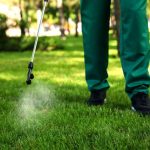
- Spray evenly. Walk at a steady pace, overlap each pass by 50%. Keep the nozzle 18 inches off the ground to avoid fine mist drift.
- Mark treated areas with flags. The violets won't show damage for 5 to 7 days, and it's easy to forget what you hit.
- Don't water for 24 hours. You want the herbicide to stay on the leaves, not wash into the soil.
- Wait and watch. Yellowing and curling in 7 to 14 days means it's working. No visible change? Re-treat at the 14-day mark.
- Reseed at 3 to 4 weeks post-spray. If your fescue came out thin, this is when you fill in the gaps.
A few things to keep in mind during the spray:
- Avoid metal containers for mixing triclopyr. Use plastic only.
- Don't spray near desirable shrubs or flower beds. Even a light drift can curl the leaves of roses, tomatoes, and maples.
- Clean the sprayer thoroughly with ammonia and water before using it for anything else. Herbicide residue is a common way to accidentally kill "safe" plants later.
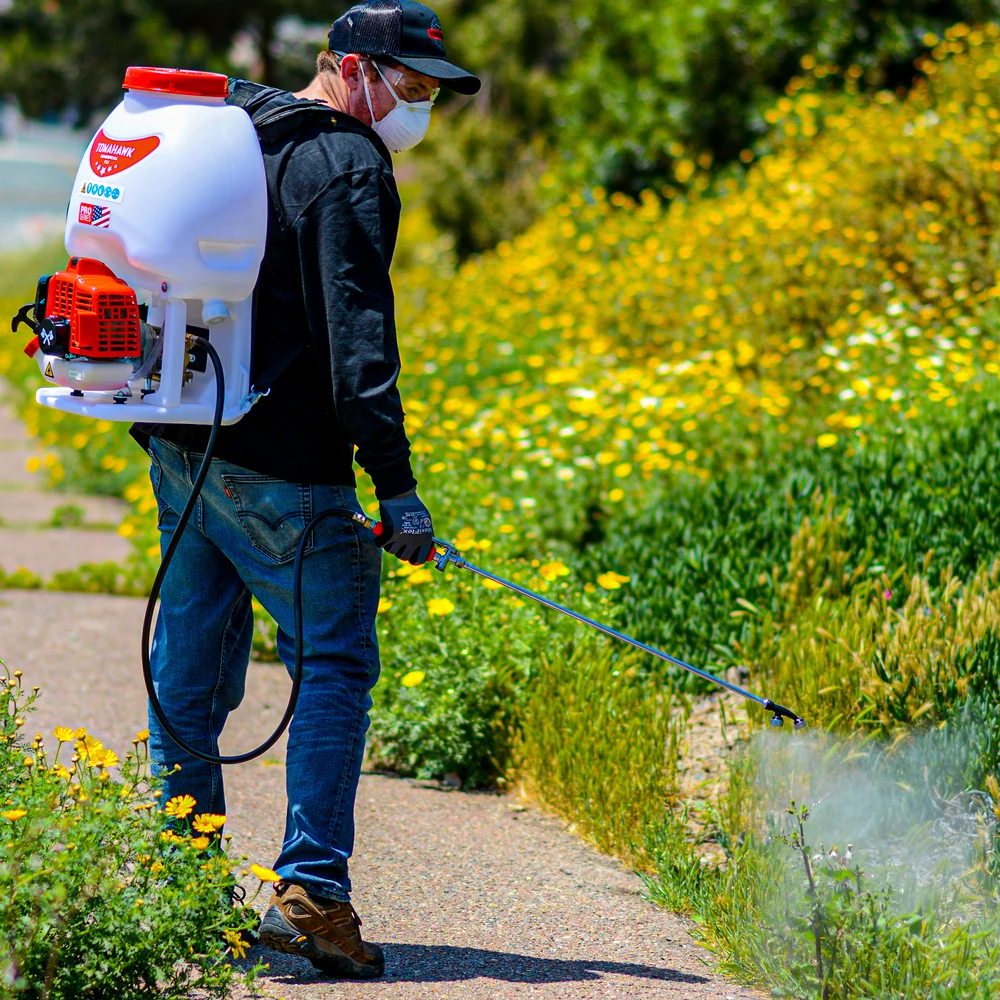
Image source: Bing (Web (fair-use with source credit))
How to Tell if It's Working
- Day 1, 3: Nothing visible. Don't panic.
- Day 5, 7: Leaves start to cup and twist. The stems may redden.
- Day 10, 14: Brown, crispy foliage. This is top-kill only.
- Day 21, 30: Watch for new green growth from the rhizomes. If you see it, re-treat.
In our research, two fall applications 14 days apart are what it usually takes to push control rates above 90%. One spray alone typically maxes out around 70% to 80% because the rhizomes survive.
Spring vs. Fall: When to Hit Wild Violets for Maximum Kill
If you take only one thing from this guide, take this: fall beats spring every time for wild violet control. The reason comes down to plant biology. In autumn, violets are actively translocating sugars from their leaves down into the rhizomes to store energy for winter.
When you spray triclopyr during that flow, the herbicide rides the sugar down and kills the root system along with the top growth.
In spring, the plant is moving energy in the opposite direction, up into leaves and flowers. A spring spray will scorch the visible growth but leave the rhizomes largely intact. Aggregate extension data from Virginia Tech and NC State consistently shows fall applications achieve 85% to 95% rhizome kill versus 50% to 70% for spring apps.
When Spring Still Makes Sense
There are two cases where a spring spray is worth doing anyway:
- You missed the fall window and the violets are actively flowering. A spring app buys you cosmetic relief and slows the spread while you wait for next October.
- You're starting a multi-year program and want to weaken the population before the main fall assault.
Just don't expect spring alone to solve the problem. Plan on a follow-up fall treatment the same year.
Regional Timing Guide
| Region | Ideal Fall Spray Window | Soil Temp Target |
|---|---|---|
| Upper Midwest (zones 4–5) | Mid-September to early October | 55–60°F |
| Transition Zone (zones 6–7) | Mid-October to early November | 55–65°F |
| Mid-Atlantic (zones 6–7) | Late October to mid-November | 55–65°F |
| Pacific Northwest | Late October to early November | 50–60°F |
Mistakes That Destroy Fescue (And Keep the Violets Coming Back)
Most failed violet treatments come down to a handful of predictable errors. Here's what to watch for.
Spraying During Heat Stress
Triclopyr volatilizes when temperatures climb above 85°F. That vapor can drift onto ornamentals, and the heat itself makes fescue more susceptible to herbicide injury. If your lawn is browning at the tips and the forecast shows 90°F days, wait.
The fescue recovers from triclopyr in cool weather. It struggles in heat.
Skipping the Surfactant
We keep coming back to this because it's the single most common reason sprays fail. The waxy cuticle on violet leaves is a defense mechanism that evolved over millions of years. A water-based droplet hitting that surface just rolls off.
A non-ionic surfactant reduces the surface tension and lets the herbicide spread out and absorb. Skipping it is like painting a wall without primer. Technically possible, mostly a waste of time.
Mowing Too Soon After Application
Mowing within 48 hours of spraying strips the herbicide off the leaves before it has fully translocated. That means less product reaches the rhizomes and more stays in the clippings. Hold off on mowing for at least 2 days after the spray.
Three is better.
Treating Only Once
One application is rarely enough. Plan on two fall sprays 10 to 14 days apart, and a third follow-up the next fall if you see any regrowth. Wild violet rhizomes can sit dormant for a season and then resprout.
Persistence beats intensity.
Confusing Violets with Fescue Seedling or Other Broadleaves
New fescue seedlings have narrow, blade-like leaves. Violet seedlings are heart-shaped from day one. If you broadcast spray without confirming what's actually in the ground, you might damage young fescue you just planted.
Always wait until new fescue has been mowed 3 to 4 times before spraying for violets.
What to Do After the Spray: Recovery, Reseeding, and Keeping Violets Out
The work doesn't end when the violets turn brown. In fact, what you do in the weeks after the spray determines whether the problem stays solved.
Immediate Post-Spray (Days 1–14)
- Don't water the lawn for 24 hours after the application. The herbicide needs leaf contact time to absorb.
- Hold off on mowing for 2 to 3 days. Clippings can carry herbicide residue into compost or onto desirable plants.
- Watch for fescue injury. Light yellowing at the tips is normal. Brown patches wider than a handprint usually mean over-application or heat stress during the spray.
Short-Term Recovery (Weeks 2–6)
- Reseed thin areas at 3 to 4 weeks post-spray. Use a tall fescue blend at 6 to 8 lbs per 1,000 sq ft.
- Water new seed lightly twice a day until germination, then back off to deeper, less frequent soaks.
- Skip nitrogen for 30 days after the herbicide. Fertilizer pushes top growth, which can stress the recovering fescue.
Long-Term Prevention (Year-Round)
- Mow tall. Keep fescue at 3 to 3.5 inches. Taller grass shades the soil and crowds out violet seedlings.
- Water deeply, infrequently. Violet thrives in constantly moist topsoil. Let the surface dry between waterings.
- Fertilize on a cool-season schedule. Heavy nitrogen in fall, lighter feeding in spring. This favors fescue over weeds.
- Aerate annually. Compacted soil weakens fescue and gives violets a foothold. Core aeration in fall opens the root zone and thickens the turf.
- Spot-treat survivors. Any violets that resprout in spring should be hand-pulled or spot-sprayed before they go to seed.
In our research, lawns that follow a fall spray with a fall overseeding and a year of taller mowing are the ones that stay violet-free long term. A single spray without follow-up usually means the violets are back in two to three years.
🌾 Agronomist Recommended: Pre-Emergent & Weed Control Supplies
To prevent weed breakthroughs and protect desirable turfgrass from foliar injury, our agronomy field trials recommend calibrated pre-emergents and non-ionic surfactants:
- Professional Pre-Emergent:Check Prodiamine 65 WDG Pre-Emergent on Amazon →
- Non-Ionic Spray Surfactant:Check Non-Ionic Foliar Surfactants on Amazon →
*FTC Disclosure: As an Amazon Associate, Totally Green Lawn earns from qualifying purchases.*

Similar Posts