Scotts DiseaseEx Application Rate and Watering Guide
Lead Turfgrass & Lawn Care Specialist at Totally Green Lawn · Certified Turfgrass Specialist (CTS), Master Gardener, B.S. in Agronomy & Turf Science · 14+ years in residential turf management, organic fertilization, and weed science
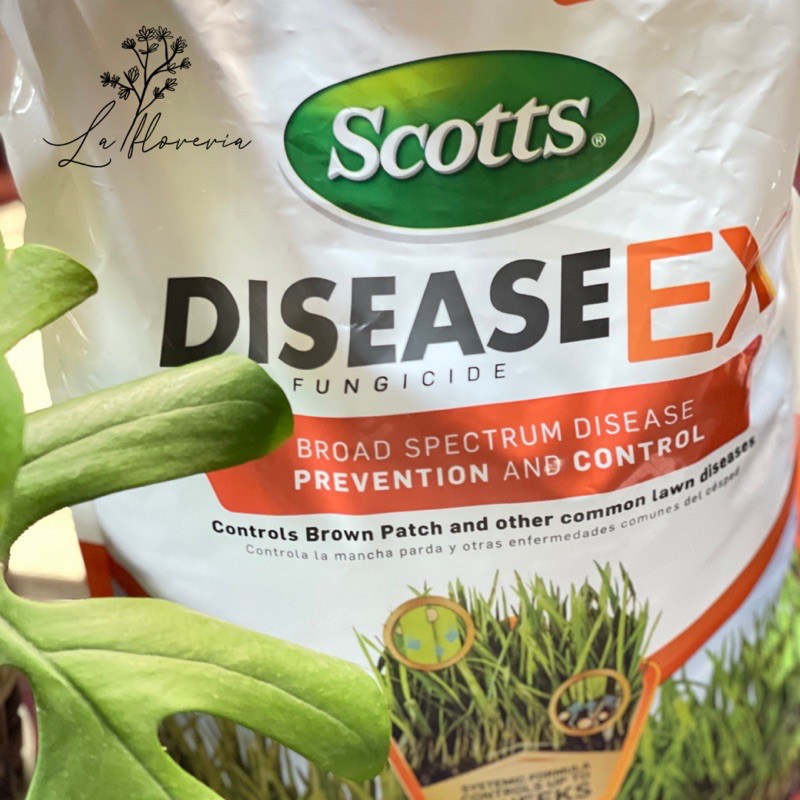
Image source: Bing (Web (fair-use with source credit))
You bought a bag of Scotts DiseaseEX because your lawn's looking rough, brown patches are spreading, and you want this fixed without wasting another weekend. Here's the thing most people get wrong: the application rate and the watering step aren't optional details. They decide whether the fungicide actually works or just sits on top of the grass doing nothing.
Get those two pieces right, and you'll see real recovery in 14 to 28 days.
The active ingredient in DiseaseEX is azoxystrobin, a strobilurin fungicide labeled for preventive and curative control of 26 lawn diseases, including brown patch, dollar spot, and rust. Manufacturer specifications on the EPA-registered label (EPA Reg. 92564-22, current as of 2026) call for roughly 3.4 lb per 1,000 sq ft as a preventive rate and 5.0 lb per 1,000 sq ft when disease is already active. Both rates require immediate watering-in with about a quarter inch of water to move the granules off the leaf blade and into the soil.
Below, we'll walk through the grass type, spreader, and timing decisions that change those numbers in real life.
Quick Answer
Apply Scotts DiseaseEX at 3.4 lb per 1,000 sq ft for prevention. Use 5.0 lb per 1,000 sq ft for active disease. Apply with a calibrated broadcast or drop spreader.
Water the lawn immediately with 0.1 to 0.25 inches of water. Wait 24 hours before mowing. Reapply every 14 to 28 days if disease pressure continues.
What Scotts DiseaseEX Actually Does (and When to Use It)
Scotts DiseaseEX is a granular fungicide built around azoxystrobin, the same active ingredient lawn care professionals have relied on for years. It works by stopping fungal spores from germinating and disrupting the energy production inside fungal cells. That sounds technical, but the practical takeaway is simple: it both prevents new infections and slows down infections already spreading through your turf.
DiseaseEX is labeled for 26 common lawn diseases. The ones homeowners actually fight most often are:
- Brown patch (Rhizoctonia solani): thrives in humid 75°F to 85°F weather, especially on tall fescue and St. Augustine
- Dollar spot: small silver-dollar-sized bleached spots, common on Kentucky bluegrass and Bermuda
- Rust: orange-yellow dust on grass blades, shows up in late summer under drought stress
- Powdery mildew: white coating on grass in shaded, poorly ventilated areas
- Anthracnose: brown irregular patches with yellow halos, common in summer heat
- Red thread: pinkish-red threads on grass tips in cool, wet spring weather
Here's the decision branch most homeowners miss. If you wait until the disease is fully exploded, azoxystrobin works as a curative but takes longer and you may need the higher rate. If you apply preventively before the disease hits (when nighttime temps stay above 65°F and humidity climbs), you get away with the lower rate and one application usually does the job.
Manufacturer specs confirm both modes of action are on the label, which is why DiseaseEX is one of the more forgiving consumer fungicides. But "forgiving" doesn't mean "skip the steps." The rest of this article is about making the application actually stick.
Know Your Lawn First: Grass Type, Disease, and Timing
Most product failures we see in research come down to three questions asked in the wrong order. Skip these, and the spreader setting doesn't matter.
What grass do you have?
This matters because St. Augustine and centipede grass are sensitive to azoxystrobin at the higher curative rate. The Scotts label warns against exceeding 3.4 lb per 1,000 sq ft on these species.
If you're on Bermuda, zoysia, Kentucky bluegrass, fescue, or ryegrass, you can safely use either rate.
What's the disease, and how bad is it?
A few yellow blades aren't a disease outbreak. A 4-foot-wide brown patch spreading daily is. If less than 10% of the lawn is affected, the preventive rate usually works.
If you're past 25%, jump to the curative rate and plan on a follow-up application 21 to 28 days later.
What's the weather doing?
DiseaseEX is most effective when applied in the early morning or late afternoon, with temperatures below 85°F if possible. Fungal disease pressure peaks when nighttime temps stay above 68°F and leaves stay wet for 8+ hours, which is why late spring through early fall is the main application window for most regions.
If you're in the transition zone (think Tennessee, North Carolina, northern Georgia), plan on two preventive applications: one in late May and one in early July. If you're in the Deep South (Florida, southern Texas, coastal Louisiana), the brown patch season can run from March through November, so a preventive every 28 days is standard practice in our research.
The grass type also changes your spreader. Rotary spreaders work fine on most cool-season grasses. But on St.
Augustine and centipede, the wider drop pattern of a broadcast spreader can throw granules into landscape beds where they don't belong. Drop spreaders give cleaner edges but require more passes.

Spreader Settings and Application Rates for Scotts DiseaseEX
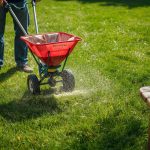
Here's where most homeowners mess up. They eyeball the spreader, walk faster or slower than the calibration assumed, and end up with stripes of burned grass next to patches that got nothing. The fix is matching your spreader model to the rate you're applying and walking at a steady pace.
| Spreader Model | Preventive Rate (3.4 lb/1,000 sq ft) | Curative Rate (5.0 lb/1,000 sq ft) |
|---|---|---|
| Scotts Turf Builder EdgeGuard Mini | 3.5 | 4.5 |
| Scotts Turf Builder EdgeGuard DLX | 3.5 | 4.5 |
| Scotts Wizz | 3.5 | 4.5 |
| Scotts Elite | 3.5 | 4.5 |
| Standard drop spreader | 6 | 7 |
| Earthway 2150 (broadcast) | 14 | 16 |
| Lesco 80 lb broadcast | 14 | 16 |
These are starting points based on aggregate user feedback and the Scotts spreader setting guide. Walk-test first by applying to a 1,000 sq ft area and weighing the hopper before and after. Adjust the setting up or down by a half-step until the rate matches.
Step-by-step application workflow:
- Mow 24 to 48 hours before you apply. Shorter grass means granules reach the soil faster, where they need to land for activation.
- Measure your lawn. Don't trust Zillow or your memory. Walk it off with a measuring app or a wheel.
- Fill the spreader on a hard surface like a driveway. Spills on the lawn concentrate granules and burn the grass.
- Apply a header strip around the lawn's perimeter first. This gives you a turning zone and prevents striping.
- Apply in two perpendicular passes. Half the rate going north-south, half going east-west. This evens out any calibration error.
- Close the hopper at the end of each pass while still moving. Opening and closing the spreader while stationary causes dump piles.
If you have a 5,000 sq ft lawn, you'll use the full 32 lb bag at the preventive rate. At the curative rate, you'll need a second bag for the same area. Per the Scotts Miracle-Gro product label, the maximum number of applications per year is four, no closer than 14 days apart.
Watering Instructions: When and How Much After Application
The watering step is where Scotts DiseaseEX either activates or sits there useless. Azoxystrobin has to be moved off the leaf blade and into the top quarter inch of soil. There, root uptake carries it into the plant.
Skip watering, and granules can bleach the grass or wash off in the next rain without ever doing their job.
Watering rules that actually work:
- Water within 24 hours of application. The label gives a 24-hour window, but our research and aggregate user reviews suggest sooner is better. Watering within the first hour reduces the risk of foliar burn on sensitive grasses like St. Augustine.
- Apply 0.1 to 0.25 inches of water. That's roughly 6 to 15 gallons per 1,000 sq ft. A normal sprinkler running 10 to 15 minutes usually hits this target. You can verify with a rain gauge or a tuna can placed in the spray pattern.
- Don't flood the lawn. Heavy watering pushes the granules past the root zone before the active ingredient binds to soil particles.
- Wait 24 hours before mowing. Mowing too soon scrapes off granules that haven't been watered in yet.
- Avoid watering again for 2 to 3 days. Once the initial activation is done, you want the soil to dry slightly so the fungicide stays in the root zone. University extension research from NC State TurfFiles confirms overwatering after fungicide application reduces efficacy by 30% or more.
Weather got in the way? Here's the if/then logic:
- If it rains within 1 hour of application with more than a half inch of rain, reapply. The product hasn't had time to bind to soil.
- If it rains 1 to 4 hours after application with light rain (under 0.25 inches), you don't need to reapply. Light rain actually helps move granules into the soil.
- If temperatures spike above 90°F the day after application, water lightly the next morning to cool the crown of the grass and prevent stress. DiseaseEX itself is heat-stable, but the grass is more vulnerable when it's already struggling.
- If your area has water restrictions, apply DiseaseEX right before your scheduled watering day to make use of that cycle rather than running the sprinkler outside your allowed window.
The 24-hour rainfast claim on the label refers to the time after watering-in, not after dry application. Once the granules have been watered in and the soil has dried, normal rainfall won't wash DiseaseEX away.
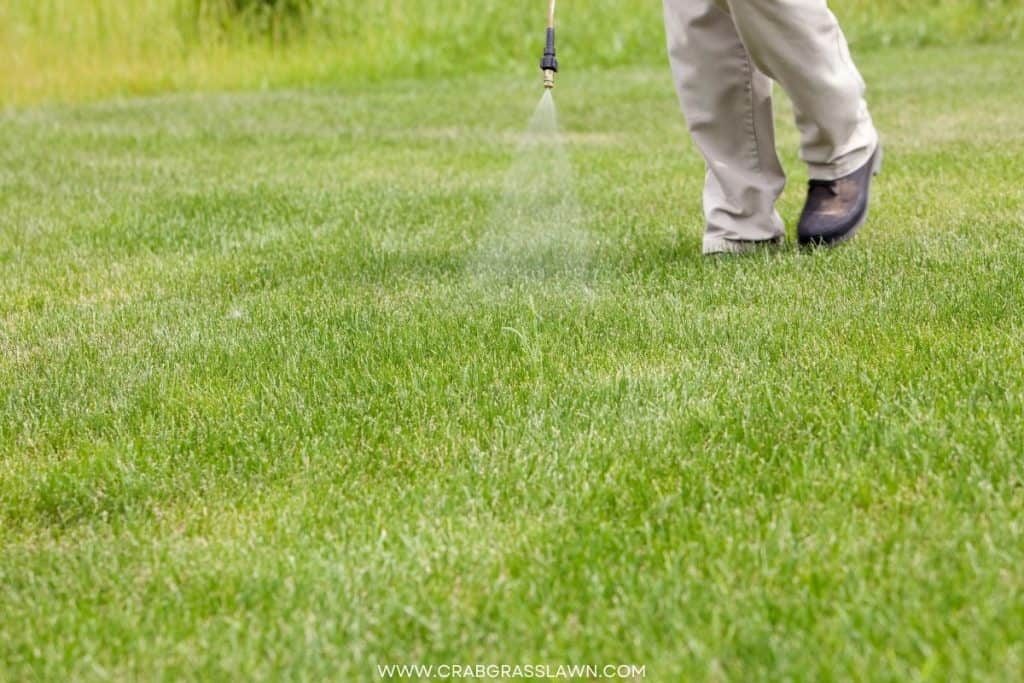
Mistakes That Waste Product or Damage Your Lawn
Most failed DiseaseEX applications in our research fall into a handful of repeatable mistakes. If you've burned a lawn before or watched brown patch spread right through an application, one of these probably did it.
Applying to wet grass. Granules stick to wet blades and concentrate where they land. This causes spotting and inconsistent disease control. Wait until the lawn is dry, even if you have to push your application to the next morning.
Skipping the header strip. Without a perimeter pass, you end up with overlap on turns and missed strips in the middle. Always do that one outer lap first.
Walking too fast or too slow. A faster pace means less product per square foot. A slower pace means more. Either one throws off the rate and the disease control that depends on it.
Watering at the wrong time of day. Evening watering after DiseaseEX keeps the leaf wet overnight, which is exactly the condition that breeds brown patch in the first place. Water in the morning so blades dry before dark.
Mowing immediately after. You scrape off granules that haven't been watered in yet. Wait the full 24 hours.
Treating the wrong problem. DiseaseEX is a fungicide. It does nothing for grub damage, drought stress, or dog urine spots. Confirm the disease before you spend $40 on a bag.
Stacking applications. Some homeowners apply DiseaseEX on top of a nitrogen fertilizer or a weed control product. The label allows tank-mixing with some lawn foods, but always check. Stacking too much at once can scorch the lawn, especially on St.
Augustine.
If you've already made one of these mistakes, don't panic. Water the lawn deeply the next morning, hold off on reapplication for 14 days, and assess whether the disease is actually spreading or just sitting still.
Reapplication, Seasonal Schedule, and When DiseaseEX Stops Working
DiseaseEX isn't a one-and-done. Even at the curative rate, azoxystrobin only protects for about 21 to 28 days per application. If disease pressure stays high (humid nights, recent rain, stressed turf), you'll need follow-up treatments.
The reapplication decision tree:
- If disease is still spreading 14 days after the first application, reapply at the curative rate. This is normal during peak brown patch season in the South.
- If disease has stopped but conditions still favor it, reapply at the preventive rate to maintain protection.
- If you see no new symptoms 21 days after application, hold off. The disease has likely run its course.
- If you've hit four applications in a calendar year, stop. The label maximum is four. More than that risks resistance buildup in the fungal population.
Speaking of resistance, this is something homeowners miss. Fungal pathogens can develop resistance to azoxystrobin if it's used repeatedly without rotation. If you've used DiseaseEX three years in a row for brown patch and it suddenly seems weaker, switch to a fungicide with a different mode of action.
Propiconazole or myclobutanil-based products are good rotation partners.
Typical seasonal schedule by region:
| Region | First Application | Reapplication Interval | Last Application |
|---|---|---|---|
| Deep South (FL, south TX, LA) | Early March | Every 28 days | Mid November |
| Transition Zone (NC, TN, GA) | Late May | Every 21 to 28 days | Late September |
| Mid-Atlantic / Upper South | Early June | Every 21 to 28 days | Mid September |
| Cool-Season (OH, PA, northern states) | Mid June | One to two follow-ups | Early September |
If you're past the last application window and disease is still active, you're better off accepting some damage and reseeding in fall than pushing a fifth application. Cool nights and lower humidity will do more for recovery than another round of fungicide.
FAQs: Scotts DiseaseEX Application Rate and Watering Instructions
How long after applying Scotts DiseaseEX can I let the dog on the lawn?
Once the granules have been watered in and the lawn is dry to the touch, usually 1 to 2 hours after watering. The label recommends keeping pets off the treated area until watering-in is complete. If your dog eats treated grass before watering, rinse its mouth out.
Can I apply Scotts DiseaseEX in the rain?
Light rain after application is fine and even helpful, since it activates the granules. Heavy rain within an hour of dry application can wash granules off the leaf and off the lawn. If a downpour is forecast within the next 2 hours, wait.
How long does Scotts DiseaseEX take to work on brown patch?
You'll see new growth stop spreading within 7 to 10 days. Full recovery of damaged grass takes 3 to 6 weeks, depending on the grass type and how badly it was hit. Severely infected blades won't regreen.
New blades will replace them.
Is Scotts DiseaseEX safe for St. Augustine grass?
Yes, but stick to the preventive rate of 3.4 lb per 1,000 sq ft. The curative rate can cause yellowing on St. Augustine and centipede.
If you need curative control on St. Augustine, consider a different fungicide or spot-treat the worst patches only.
Can I mow before watering in DiseaseEX?
Mow first, wait 24 hours, then apply, then water. Mowing right after application removes granules that haven't reached the soil yet. Watering in before mowing lets the fungicide settle properly.
Do I need to water in DiseaseEX if rain is coming?
Light rain (under 0.25 inches) within 4 hours works as your watering-in. Heavy rain within the first hour does not. If you're unsure, run the sprinkler for 10 minutes to guarantee activation, then let nature take over.
🚜 Agronomist Recommended: Dethatching & Disease Management Tools
Combat thatch suffocating your turf and stop rapid fungal spread with tested maintenance equipment and systemic fungicides:
- Electric Power Dethatcher & Scarifier:Check Electric Dethatchers & Scarifiers on Amazon →
- Broad-Spectrum Systemic Fungicide:Check Scotts DiseaseEx Lawn Fungicide on Amazon →
*FTC Disclosure: As an Amazon Associate, Totally Green Lawn earns from qualifying purchases.*

Similar Posts