How to Lower Alkaline Soil pH for Healthier Grass
Lead Turfgrass & Lawn Care Specialist at Totally Green Lawn · Certified Turfgrass Specialist (CTS), Master Gardener, B.S. in Agronomy & Turf Science · 14+ years in residential turf management, organic fertilization, and weed science
If your grass looks yellow no matter how much you fertilize, the problem is probably underneath it. Knowing how to lower alkaline soil pH for grass starts with one non-negotiable step: test the soil first. Most cool-season turf wants a pH between 6.0 and 7.0, but alkaline regions like the American Southwest regularly run 7.5 to 8.5, which locks out iron and turns turf pale.
The fix isn't one product. It's a branching decision based on your soil type, how fast you need results, and how much pH you actually need to drop. Walk through the steps below, and your lawn will tell you what it needs.
Quick Answer
Test your soil pH first with a lab or reliable kit. If the reading sits above 7.0, apply elemental sulfur for slow, long-term acidification. Use iron sulfate if you need faster results.
Sandy soils need less amendment than clay soils. Retest in 60 to 90 days. Most turf responds best in the 6.0 to 7.0 range.
Why Your Grass Is Struggling: Understanding Alkaline Soil
Alkaline soil isn't "bad" soil. It's just soil where calcium carbonate or sodium dominates the cation exchange sites, pushing pH above 7.0. That high reading creates two real problems for grass.
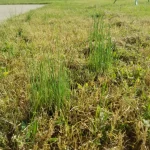
First, nutrients get locked up. Iron, manganese, and phosphorus all become less available as pH climbs, especially past 7.5. That's why you'll see yellowing between the leaf veins on otherwise healthy grass.
It's called lime-induced chlorosis, and it's the most visible symptom of alkaline stress.
Second, the soil structure can suffer. Sodium-dominated alkaline soils often go tight and crusted, which restricts root growth and water movement. This shows up a lot in the western U.S., where calcareous parent material and high-pH irrigation water stack the deck against turf.
The good news: pH is one of the few soil problems you can actually fix. You just have to match the fix to the soil.
Step 1: Test Before You Treat — Soil pH and Buffer pH Explained
Every successful pH correction starts with two numbers: current pH and buffer pH. Skip either one, and you're guessing.
Current pH tells you where you stand. A reading of 7.5 is mildly alkaline. A reading of 8.0 or higher is severely alkaline and needs serious amendment.
DIY kits run $10 to $30 and get you in the ballpark. Lab tests through your local Cooperative Extension Service cost $15 to $50 and include nutrient panels, which matters because pH problems almost always come paired with deficiencies.
Buffer pH is the number most homeowners miss. It measures how strongly your soil resists pH change. A clay loam with high organic matter has a high buffer capacity, meaning it takes more amendment to move the needle.
A sandy soil has a low buffer capacity, so a little sulfur goes a long way.
A lab report typically gives you both. If you're using a DIY kit, you can estimate buffering from soil texture: sandy = low buffer, clay = high buffer.
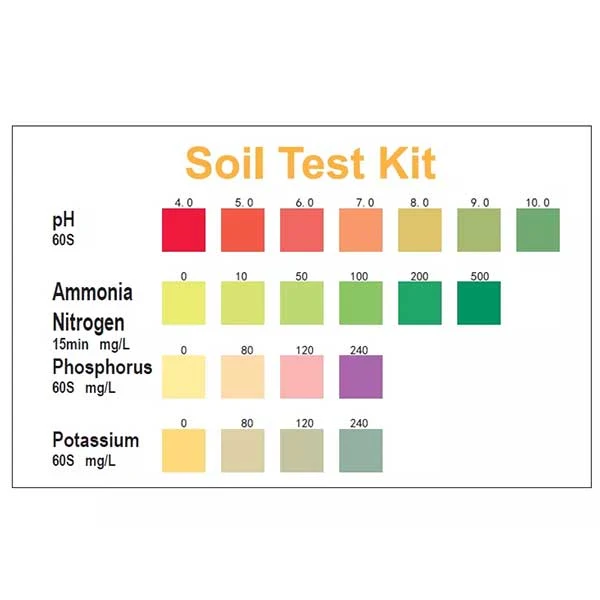
Image source: Bing (Web (fair-use with source credit))
Here's the rule that saves homeowners the most money: never apply amendment without a current test. Applying sulfur to a soil that only needs 0.3 pH points of correction is a waste and can push you into acidic territory, which is just as bad for grass.
If your pH reads between 6.5 and 7.0, you don't need to lower anything. Your grass is already in the sweet spot, and the yellowing is probably a separate issue like nitrogen deficiency or compacted soil.
Step 2: Pick Your Amendment Based on Soil Type and Timeline
Once you know your pH and buffer reading, the next decision is which acidifying amendment to use. The right choice depends on two things: how fast you need results, and what your soil is made of.
Elemental Sulfur: The Slow, Steady Choice
Elemental sulfur is the workhorse of soil acidification. Soil bacteria oxidize it into sulfuric acid, which then neutralizes the alkaline carbonates. The catch: that bacterial process takes time.
Expect 2 to 6 months for full effect, longer in cold or dry soils.
This is what you want when you're planning ahead: new lawn installations, fall renovations, or long-term correction. It's also the most cost-effective option for large areas.
Application rates vary with soil texture. A sandy soil might only need 1 pound per 100 square feet to drop pH by one full point. A heavy clay could need 4 pounds or more for the same shift.
Always check your lab report's specific recommendation.
Iron Sulfate: The Fast Fix
If your lawn is yellow right now and you need green within weeks, ferrous sulfate (iron sulfate) is the faster option. It reacts directly with soil alkalinity rather than waiting on bacteria, and most turf shows improvement in 2 to 4 weeks. As a bonus, it supplies iron directly, which helps with chlorosis even before the pH fully corrects.
Trade-offs: it's more expensive per square foot, and it can stain concrete and walkways if you spill it. Use a broadcast spreader, sweep up any drift on hard surfaces, and water it in immediately.
Other Amendments Worth Knowing
Aluminum sulfate works fast, similar to iron sulfate, but carries a real risk of aluminum toxicity in already acidic pockets. Most turf managers avoid it for that reason.
Ammonium-based fertilizers (ammonium sulfate, urea, ammonium nitrate) acidify slowly as the ammonium converts to nitrate. They won't fix a severe pH problem on their own, but they're excellent for maintenance once you've reached your target pH.
Gypsum (calcium sulfate) is often recommended online for alkaline soil, but here's the truth: gypsum improves sodic soil structure but does almost nothing to lower pH. If your goal is acidification, skip it.
Organic options like peat moss, pine bark, and elemental sulfur-rich compost work, but at a much slower pace and higher cost. They're best for ongoing maintenance, not initial correction.

Image source: Bing (Web (fair-use with source credit))
| Amendment | Speed | Best For | Approx. Rate (per 100 sq ft) |
|---|---|---|---|
| Elemental sulfur | 2–6 months | Long-term correction | 1–4 lbs |
| Iron sulfate | 2–4 weeks | Quick green-up | 0.5–1 lb |
| Ammonium sulfate | Ongoing | Maintenance | Per fertilizer label |
| Gypsum | N/A for pH | Sodic structure only | Not a pH fix |
Step 3: Apply It Right — Rates, Timing, and Spreader Calibration
Even the right amendment fails if you apply it wrong. Three details decide whether your pH correction actually works: timing, distribution, and water-in.
When to Apply
Fall is the best window for cool-season grasses. Soil is still warm enough for bacterial activity, but turf isn't heat-stressed. Spring works for warm-season grasses coming out of dormancy.
Avoid peak summer, when microbial activity slows and turf is already under heat stress.
How to Calibrate and Spread
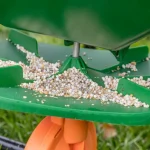
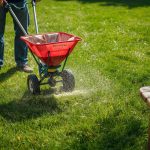
Use a broadcast or drop spreader for granular amendments. Set it to half the recommended rate and apply in two perpendicular passes (north-south, then east-west). This prevents stripes and gives even coverage.
Calibrate your spreader using the product's label chart. Most sulfur products have settings for popular spreader models.
For iron sulfate, be careful around hard surfaces. Sweep any granules off concrete before watering, or you'll get rust stains that last months.
Water-In and Wait
Water the treated area thoroughly after application. You want the amendment into the top few inches of soil, not sitting on the surface. Then wait.
Don't reapply on schedule. Don't assume nothing happened. Retest in 60 to 90 days. pH change is slow, and over-correcting is a real risk.
If your initial test showed pH 8.2 in heavy clay, plan on multiple applications over a full growing season. If you're at 7.3 in sandy loam, one application may be all you need.
Step 4: Hold the Gains — Maintenance, Retesting, and Long-Term pH Control
Getting pH down is half the job. Keeping it there is the other half, especially if you live in an arid region or irrigate with hard water. As of 2026, extension services across the western U.S. continue to flag alkaline irrigation as the leading cause of pH rebound in home lawns.
Switch to Acidifying Nitrogen
Once your pH is in the target range, switch your nitrogen source to ammonium-based fertilizer (ammonium sulfate or urea). Each pound of ammonium nitrogen produces a small acidifying effect as it converts in soil. Nitrate-based fertilizers do the opposite, so avoid them if pH drift is a concern.
Watch Your Water
If your irrigation source is hard or alkaline (common in the Southwest), pH will slowly creep back up over time. You can't easily treat irrigation water at home, but you can counter it with annual light sulfur applications and consistent ammonium nitrogen. Some homeowners also use sulfur burners on irrigation lines for severe cases.
Retest Annually
Make a soil test part of your fall lawn routine. Once pH is stable, testing every other year is fine. If you notice yellowing creeping back, test immediately rather than reaching for iron supplements.
Aerate Compacted Areas
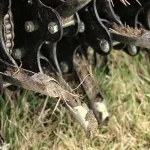
Compaction makes pH correction harder because amendments can't penetrate. Core aeration in fall or spring opens the soil, improves amendment reach, and supports the microbial activity that drives sulfur oxidation.
Common Mistakes That Keep pH High (or Worse, Burn the Lawn)
Most failed pH corrections come from the same handful of mistakes. Avoiding them saves you a season of wasted work.
Applying Without Testing
The single biggest error is treating pH based on a guess. If your soil is already at 6.8 and you add sulfur, you'll drop into acidic territory. Acidic soil creates a new set of problems, including aluminum toxicity and phosphorus lockout.
A $20 test prevents a $200 mistake.
Using Gypsum as a pH Fix
Gypsum is everywhere in lawn care advice, and almost none of that advice is right. Gypsum supplies calcium and sulfur. It can improve structure in sodic soils.
It does not meaningfully lower pH. If your goal is acidification, gypsum alone won't get you there.
Over-Applying Iron Sulfate
More isn't faster. Iron sulfate at high rates can blacken grass blades and scorch roots, especially in hot weather. Stick to label rates, water it in immediately, and don't apply during heat stress.
If you're going from pH 8.0 to 7.0, plan multiple lighter applications, not one heavy dose.
Ignoring Buffer pH
Two lawns at pH 7.8 can need very different sulfur rates. A sandy buffer pH of 7.0 might only need 1 pound of sulfur per 100 square feet. A clay buffer pH of 7.0 might need 3 or 4.
Treating them the same wastes product and gives uneven results.
Reapplying Before Retesting
Sulfur works slowly, but it does work. Homeowners who retest at 30 days often see no change and reapply. That second application catches up with the first, and the combined effect overshoots.
Wait 60 to 90 days between applications and always retest first.
Watering with Hard Water Without Realizing It
In parts of Arizona, Nevada, and New Mexico, irrigation water can have a pH of 8.0 or higher. Every time you water, you're re-alkalizing the soil. This is why pH drifts back even after successful correction.
It's not a failure of your amendment. It's the water. Address it with annual light sulfur and ammonium-based nitrogen.
Quick Reference: Amendments, Rates, and What Actually Works
Here's the cheat sheet for choosing and applying amendments on an alkaline lawn.
| Situation | Best Amendment | Expected Timeline | Key Caveat |
|---|---|---|---|
| pH 7.3 in sandy soil | Light elemental sulfur | 2–3 months | Don't over-apply |
| pH 8.0 in clay loam | Elemental sulfur + iron sulfate | 3–6 months | High buffer, plan multiple apps |
| Yellow grass, fast fix needed | Iron sulfate | 2–4 weeks | Stains concrete |
| Maintenance after correction | Ammonium sulfate | Ongoing | Pair with annual test |
| Sodic structure (sodium issue) | Gypsum | Months | Not a pH fix, use alongside sulfur |
For most homeowners, the path looks like this. Test in early fall. If pH is above 7.3, apply elemental sulfur at the lab-recommended rate.
Water it in. If chlorosis is severe, supplement with a one-time iron sulfate application. Retest in spring.
Adjust based on results.
For homeowners in the alkaline West, expect to repeat this cycle every 2 to 3 years. Stable pH is the goal, not permanent correction. Your irrigation water and soil parent material are working against you.
Annual light maintenance is realistic and affordable.
FAQs on Lowering Alkaline Soil pH for Grass
How long does it take to lower soil pH with sulfur?
Elemental sulfur takes 2 to 6 months to fully acidify soil, depending on microbial activity, soil temperature, and particle size. Finer sulfur reacts faster. Cool, dry conditions slow the process.
Iron sulfate works much faster, often showing results in 2 to 4 weeks.
Can I use vinegar or other household acids to lower soil pH?
No. Household acids like vinegar give a short-term pH drop that rebounds quickly. They can also harm soil biology and burn roots.
Stick with sulfur-based amendments, which provide sustained acidification through biological processes.
Will lowering pH hurt my existing grass?
If you apply amendments at label rates and follow a soil test, lowering pH to the 6.0, 7.0 range helps most turf species. Over-application is the real risk. Pushing pH below 6.0 can create aluminum and manganese toxicity, which damages roots and stunts growth.
How often should I test my soil after applying sulfur?
Test again 60 to 90 days after application. This gives soil bacteria time to oxidize the sulfur and pH to stabilize. If pH is still above 7.5, apply a second round.
If it's at or near your target, switch to maintenance mode with ammonium-based nitrogen.
Is gypsum a good option for alkaline soil?
Gypsum helps with sodium-affected (sodic) soils by displacing sodium and improving structure. It does not significantly lower pH. If your soil test shows high sodium, gypsum is useful.
If your only goal is pH reduction, use elemental sulfur or iron sulfate instead.
What's the best grass for naturally alkaline soil?
If pH correction isn't realistic for your situation, switch species. Tall fescue, bermudagrass, and buffalograss all tolerate alkaline conditions better than Kentucky bluegrass or centipede. Buffalograss is especially tolerant of pH 7.5, 8.5 across the Plains states.
🧪 Agronomist Recommended: Soil pH Testing & Aeration Gear
Healthy root systems require balanced soil chemistry and loose structure. Our field testing recommends calibrated digital testers and biological aerators:
- Digital Soil pH & Moisture Tester:Check Digital Lawn Soil pH Testers on Amazon →
- Liquid Soil Aerator & Penetrant:Check Liquid Soil Aerators & Conditioners on Amazon →
*FTC Disclosure: As an Amazon Associate, Totally Green Lawn earns from qualifying purchases.*

Similar Posts