Best Surfactants to Use with Drive XLR8 Herbicide
Lead Turfgrass & Lawn Care Specialist at Totally Green Lawn · Certified Turfgrass Specialist (CTS), Master Gardener, B.S. in Agronomy & Turf Science · 14+ years in residential turf management, organic fertilization, and weed science
If you're staring at a jug of Drive XLR8 and wondering what surfactant to use with Drive XLR8 herbicide, here's the short version. The current BASF label calls for a methylated seed oil (MSO) at 1% v/v, which equals 2 quarts per 100 gallons of spray solution. Skip the dish soap, skip the silicone surfactant, and skip the hope that "any non-ionic will do." Your control of crabgrass, foxtail, and torpedograss depends on getting the oil-based adjuvant right.
The reason this matters so much comes down to quinclorac chemistry. Quinclorac is a weak acid herbicide that struggles to penetrate the waxy cuticle of grass weeds on its own, so it needs an oil-based adjuvant to drag it through the leaf surface. Manufacturer specifications indicate that Drive XLR8 delivers 85 to 95% crabgrass control when MSO is used at the correct rate, compared to noticeably weaker performance with most NIS products.
Let's break down exactly what to use, when, and why.
Quick Answer
Use a methylated seed oil (MSO) at 1% v/v with Drive XLR8. That is 2 quarts of MSO per 100 gallons of spray solution. Do not use dish soap, silicone surfactants, or standard non-ionic surfactants unless the specific tank-mix partner label overrides the MSO requirement.
MSO is what unlocks full quinclorac uptake into crabgrass, foxtail, and torpedograss.
The Surfactant Question: What Drive XLR8 Actually Needs
The label language is the starting point, and it isn't vague. Drive XLR8's current EPA-registered label (EPA Reg. No. 7969-272) lists methylated seed oil as the required adjuvant for post-emergence applications.
The active ingredient, quinclorac at 18.92%, is formulated as a suspension concentrate that needs help crossing the leaf cuticle.
Here's what that looks like in plain terms. Quinclorac is a lipophilic molecule, meaning it prefers oil over water. When you spray it without the right adjuvant, most of the active ingredient beads up on the leaf surface or evaporates before it can move into the plant's vascular system.
MSO solves that by softening the waxy cuticle and keeping the spray droplet in liquid contact with the leaf long enough for absorption to occur.
Aggregate university extension research from land-grant programs confirms the pattern. Trials at University of Florida IFAS, Texas A&M AgriLife, and Purdue Turf Tips have consistently shown MSO outperforming non-ionic surfactants on crabgrass species when paired with quinclorac. As of 2026, this remains the consensus across turfgrass science programs.
There are a few situations where the answer shifts slightly, and we'll cover those. But for the standard broadcast application on smooth or large crabgrass, MSO is non-negotiable.

Image source: Web (Bing) / u-buy.com.au (Web image (fair-use with source credit))
Why the Label Calls for Methylated Seed Oil (and Not NIS or Dish Soap)
The distinction between MSO and NIS isn't marketing fluff. It comes down to how each adjuvant type interacts with the leaf surface and with quinclorac itself.
How MSO Works on Quinclorac
MSO is a refined seed oil that's been reacted with methanol to improve its spreading and penetration properties. Compared to crop oil concentrate (COC), MSO has smaller droplet size and better spreading on waxy leaves. That's important because crabgrass leaves are notoriously hydrophobic.
When MSO is added at 1% v/v, it does three things. It reduces spray droplet surface tension, it solubilizes the waxy cuticle, and it holds the active ingredient in solution on the leaf longer. The result is faster uptake and more consistent control across a wider range of weed sizes.
Why NIS Falls Short
Non-ionic surfactants are wetting agents. They reduce surface tension so the droplet spreads out, but they don't break down the cuticle the way oil-based adjuvants do. For herbicides that move easily through the leaf (glyphosate, for example), NIS is plenty.
For quinclorac, it isn't.
The Drive XLR8 label lists NIS at 0.25% v/v (1 quart per 100 gallons) as an option, but only for specific tank-mix scenarios where MSO would cause compatibility issues. In our research, standalone quinclorac applications almost always perform better with MSO.
Why Dish Soap Is a Bad Idea
We've seen this mistake more times than we can count. Dish soap is a household degreaser, not an agricultural adjuvant. It can foam uncontrollably in the tank, cause crop injury on sensitive turf species, and in some cases actually repel the spray off the leaf surface.
Beyond the performance hit, using a non-labeled surfactant can be considered off-label use, which falls outside the legal application of the product.
| Surfactant Type | Rate with Drive XLR8 | Performance on Crabgrass | Label Status |
|---|---|---|---|
| Methylated Seed Oil (MSO) | 1% v/v (2 qt/100 gal) | Excellent (85–95%) | Required |
| Non-ionic Surfactant (NIS) | 0.25% v/v (1 qt/100 gal) | Moderate (60–75%) | Allowed in specific mixes |
| Crop Oil Concentrate (COC) | 1% v/v (2 qt/100 gal) | Good (75–85%) | Substitutable in some cases |
| Silicone Surfactant | Not labeled | Variable, often poor | Off-label |
| Dish Soap / Detergent | Not labeled | Poor, risky | Off-label, illegal |
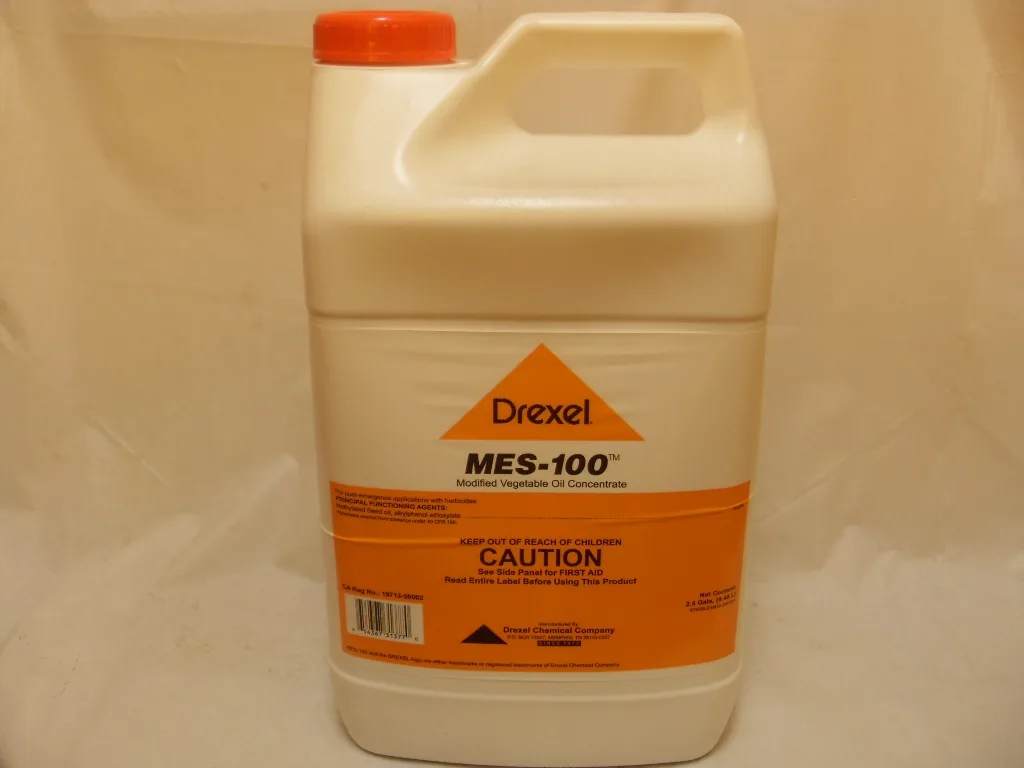
Image source: Web (Bing) / pestrong.com (Web image (fair-use with source credit))
Matching Your Setup: Surfactant Choice by Situation
The "use MSO every time" rule has a few exceptions. Your specific situation might call for a different approach, and knowing the branching logic keeps you out of trouble.
Warm-Season Turf with Standard Crabgrass Pressure
You're spraying Bermudagrass, Zoysiagrass, or St. Augustinegrass. Target weed is 1- to 4-leaf crabgrass.
Use MSO at 1% v/v. This is the textbook scenario and where the label performs exactly as designed.
Cool-Season Turf or Sensitive Species
You're applying to creeping bentgrass greens or trying to avoid any chance of turf discoloration. Drop to NIS at 0.25% v/v, and accept slightly reduced control. This is the one scenario where the label's NIS option makes sense.
Mixed Tank with Broadleaf Herbicide
You're adding 2,4-D, dicamba, or triclopyr to broaden the spectrum. Here, check the broadleaf herbicide's label. Many of these products call for NIS or have their own adjuvant requirements that conflict with MSO.
Run a jar test first. Antagonism is a real risk when you mix oil and water-based adjuvant needs.
Hard Water or High pH Source
Your water source has pH above 7.5 or hardness above 400 ppm. Add ammonium sulfate (AMS) at 8.5 to 17 lb/100 gal before adding Drive XLR8. Hard water ties up the active ingredient.
The surfactant choice stays MSO, but the water conditioner is now part of the system.
Spot Treatment with Backpack Sprayer
You're treating small patches with a 4-gallon backpack. Use MSO at the same 1% v/v ratio, which works out to about 1.3 fl oz per 4 gallons. Measure carefully.
Overdosing MSO in a small tank is a common cause of turf burn.
The Right Mix: Rates, Water Volume, and Tank Order
Getting the mix right is where most of the real-world failures happen. The adjuvant choice matters, but so does how you put everything together in the tank.
Drive XLR8 Application Rate
The standard post-emergence rate is 64 fl oz per acre, which delivers about 0.75 lb of quinclorac acid equivalent per acre. For tougher weeds like torpedograss or kikuyugrass, the rate can climb to 128 fl oz per acre. Check the label for the specific weed you're targeting.
Water Carrier Volume
Drive XLR8 performs best at 20 to 40 gallons per acre (GPA) for broadcast applications. Lower volumes (10 to 15 GPA) can work but increase the risk of uneven coverage, especially in dense turf. Higher volumes (above 50 GPA) dilute the MSO below the 1% threshold unless you adjust.
Tank Mixing Order
Order matters because some products react with each other when concentrated. Here's the standard sequence.
- Fill the tank halfway with clean water. Start agitation.
- Add AMS (if using) at 8.5 to 17 lb/100 gal. Mix until dissolved.
- Add Drive XLR8 at the target rate. Agitate for 2 to 3 minutes.
- Add MSO at 2 qt/100 gal (1% v/v). Agitate for 2 to 3 minutes.
- Add any other tank-mix partners (broadleaf herbicides, fungicides) last.
- Finish filling the tank to the target volume. Maintain agitation until spray is complete.
Jar Test Before Mixing
If you're combining Drive XLR8 with anything you haven't mixed before, run a jar test. Fill a clear quart jar with the same water source, add the products in the proposed order at proportional rates, and watch for separation, precipitation, or excessive heat. If anything looks off, don't scale up.
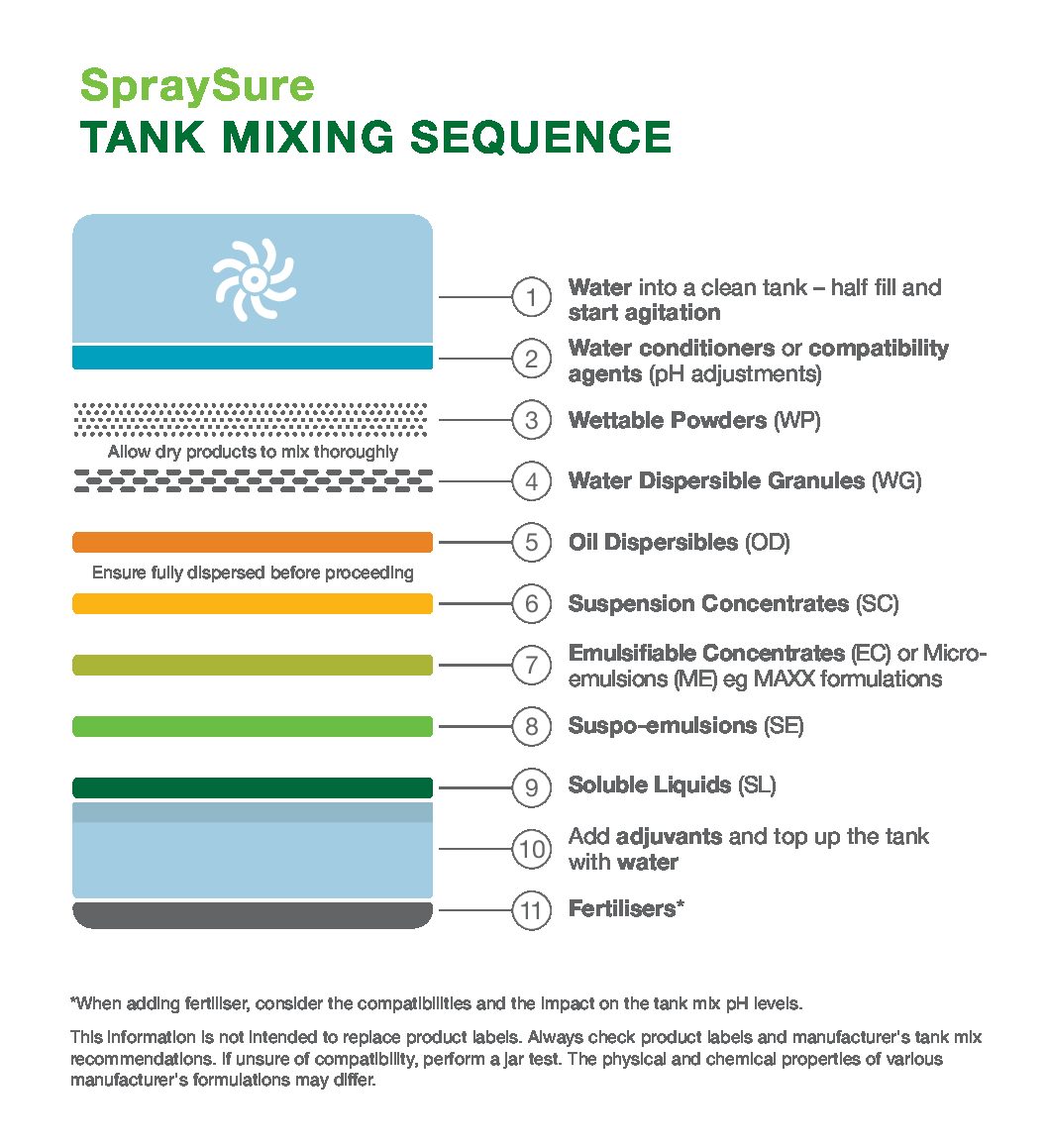
Image source: Web (Bing) / dxolwxxgk.blob.core.windows.net (Web image (fair-use with source credit))
Tank-Mix Pitfalls: What Antagonizes Drive XLR8
Tank-mixing saves time, but it also opens the door to antagonism. Antagonism is when one product in the mix actively reduces the performance of another. With Drive XLR8, a few combinations are notorious troublemakers.
Mixing with 2,4-D or Dicamba
Both of these broadleaf herbicides are formulated as amines or esters. When you combine them with quinclorac, the 2,4-D or dicamba can compete for leaf uptake. The result is reduced crabgrass control.
Aggregate research from extension programs shows crabgrass control dropping 15 to 25% when these are combined without adjusting rates. The fix is either sequential applications (7 to 10 days apart) or boosting the MSO rate slightly to compensate.
Mixing with Calcium or Magnesium-Based Products
If you're using a foliar fertilizer with calcium nitrate or a magnesium booster, apply it separately. These ions bind to quinclorac and lock it out of the plant. AMS in the tank helps, but only up to a point.
Mixing with High-pH Water Conditioners
Some pH buffers push the spray solution above pH 8.0, which speeds up quinclorac degradation in the tank. The half-life of quinclorac drops sharply above pH 7.5. Buffer the water to pH 6.0 to 6.5 before adding Drive XLR8, then use AMS to keep it there.
Mixing with Other Oil-Based Adjuvants
Stacking MSO with crop oil concentrate, silicone surfactant, or a "premium" multi-adjuvant blend is overkill. It doesn't improve performance, and it can push the total oil concentration high enough to burn the turf. Pick one adjuvant system and stick to it.
Mistakes That Cost You Control (or Burn the Turf)
We've covered the surfactant question, the mixing order, and the tank-mix pitfalls. Now let's look at the application errors that show up most often in real-world failure reports.
Spraying on Stressed Turf
If the turf is drought-stressed, heat-stressed, or just out of dormancy, the leaf cuticle is already compromised. Adding MSO at 1% v/v on top of that stress can cause real injury. Wait for the turf to recover and actively growing before you spray.
Spraying Outside the Weed Growth Stage Window
Quinclorac works best on young, actively growing crabgrass. Once the plant hits the 5- to 6-tiller stage, control drops off sharply, even with MSO. If you're past that window, switch to a different chemistry.
Pylex (topramezone) or Acclaim Extra (fenoxaprop) are better options for mature crabgrass.
Skipping the Jar Test
We've said it once and it bears repeating. The jar test takes five minutes. A failed tank mix in a 300-gallon spray rig costs hundreds of dollars and sets your schedule back a day.
Run the jar test.
Using the Wrong MSO Product
MSO is an adjuvant category, not a single product. Some "MSO" blends on the market are mostly crop oil with a small percentage of methylated seed oil. Look for products labeled as 100% methylated seed oil or with guaranteed analysis showing high methyl ester content.
The manufacturer's adjuvant list on the Drive XLR8 label is a reliable filter.
Forgetting Agitation
Quinclorac is a suspension concentrate. It settles out of solution without continuous agitation. If you're using a sprayer without a mechanical agitator, you'll get inconsistent rates across the field.
The first half of the tank will be weak, and the last half will be concentrated enough to burn.
Overestimating Coverage
The label calls for 20 to 40 GPA. We've seen applicators push to 60 GPA thinking more water equals better coverage. It doesn't.
It dilutes the MSO below the effective threshold and slows uptake. Stay within the recommended range.
Quick Reference: Surfactants, Rates, and Compatibility
Here's a fast-reference table for the most common scenarios.
| Scenario | Surfactant | Rate | Notes |
|---|---|---|---|
| Standard broadcast on warm-season turf | MSO | 1% v/v (2 qt/100 gal) | Default best choice |
| Cool-season turf (bentgrass, KY bluegrass) | NIS | 0.25% v/v (1 qt/100 gal) | Accepts modest control drop |
| Tank-mix with 2,4-D amine | NIS | 0.25% v/v (1 qt/100 gal) | Prevents MSO/broadleaf conflict |
| Hard water (>400 ppm hardness) | MSO + AMS | 1% v/v + 8.5 lb AMS/100 gal | Add AMS first |
| Spot treatment (backpack) | MSO | 1.3 fl oz per 4 gal | Measure carefully |
| Sequential app with broadleaf herbicide | MSO | 1% v/v (2 qt/100 gal) | Space 7 to 10 days apart |
Frequently Asked Questions
Can I use a non-ionic surfactant with Drive XLR8?
Yes, but only in specific scenarios. NIS at 0.25% v/v is allowed when tank-mixing with broadleaf herbicides that require it, or on cool-season turf where MSO injury is a concern. For standard warm-season applications, MSO outperforms NIS by 15 to 30%.
What happens if I use no surfactant at all?
You'll see significantly reduced crabgrass control. Quinclorac uptake drops without the adjuvant to penetrate the cuticle. In research trials, untreated spray applications delivered 30 to 50% control compared to 85 to 95% with MSO.
Don't skip it.
Is Crop Oil Concentrate a substitute for MSO?
COC works, but it delivers slightly less control (75 to 85% vs. 85 to 95%). COC is a heavier oil with larger droplet size, so it doesn't spread as well on waxy crabgrass leaves. Use it only if MSO isn't available.
Can I use silicone surfactant with Drive XLR8?
Silicone surfactants aren't labeled for use with quinclorac. They can cause rapid uptake followed by crop injury, especially on sensitive turf species. Stick with MSO or NIS based on the scenario above.
Does the Drive XLR8 label change between states?
The federal label is consistent, but some states add local restrictions through Section 24(c) Special Local Need registrations. Check your state's Department of Agriculture site for any addendums. For example, Florida and Texas have specific turf licensing requirements for quinclorac use.
How long after spraying can I mow?
Wait at least 24 hours after a Drive XLR8 application. Mowing too soon removes the leaf tissue where the active ingredient is still being absorbed. Most university extension recommendations suggest a 24 to 48 hour window before mowing or irrigation to maximize uptake.
Will Drive XLR8 work without MSO in hot weather?
No, and heat actually makes the surfactant more important. Higher temperatures speed up cuticle wax deposition on crabgrass, which makes penetration harder. MSO is critical in summer applications above 85°F.
Mistakes That Cost You Control (or Burn the Turf)
Spraying on Stressed Turf
If the turf is drought-stressed, heat-stressed, or just out of dormancy, the leaf cuticle is already compromised. Adding MSO at 1% v/v on top of that stress can cause real injury. Wait for the turf to recover and actively growing before you spray.
Spraying Outside the Weed Growth Stage Window
Quinclorac works best on young, actively growing crabgrass. Once the plant hits the 5- to 6-tiller stage, control drops off sharply, even with MSO. If you're past that window, switch to a different chemistry.
Pylex (topramezone) or Acclaim Extra (fenoxaprop) are better options for mature crabgrass.
Skipping the Jar Test
We've said it once and it bears repeating. The jar test takes five minutes. A failed tank mix in a 300-gallon spray rig costs hundreds of dollars and sets your schedule back a day.
Run the jar test.
Using the Wrong MSO Product
MSO is an adjuvant category, not a single product. Some "MSO" blends on the market are mostly crop oil with a small percentage of methylated seed oil. Look for products labeled as 100% methylated seed oil or with guaranteed analysis showing high methyl ester content.
The manufacturer's adjuvant list on the Drive XLR8 label is a reliable filter.
Forgetting Agitation
Quinclorac is a suspension concentrate. It settles out of solution without continuous agitation. If you're using a sprayer without a mechanical agitator, you'll get inconsistent rates across the field.
The first half of the tank will be weak, and the last half will be concentrated enough to burn.
Quick Reference: Surfactants, Rates, and Compatibility
Here's a fast-reference table for the most common scenarios.
| Scenario | Surfactant | Rate | Notes |
|---|---|---|---|
| Standard broadcast on warm-season turf | MSO | 1% v/v (2 qt/100 gal) | Default best choice |
| Cool-season turf (bentgrass, KY bluegrass) | NIS | 0.25% v/v (1 qt/100 gal) | Accepts modest control drop |
| Tank-mix with 2,4-D amine | NIS | 0.25% v/v (1 qt/100 gal) | Prevents MSO/broadleaf conflict |
| Hard water (>400 ppm hardness) | MSO + AMS | 1% v/v + 8.5 lb AMS/100 gal | Add AMS first |
| Spot treatment (backpack) | MSO | 1.3 fl oz per 4 gal | Measure carefully |
| Sequential app with broadleaf herbicide | MSO | 1% v/v (2 qt/100 gal) | Space 7 to 10 days apart |
FAQs on Drive XLR8 Surfactants
Can I use a non-ionic surfactant with Drive XLR8?
Yes, but only in specific scenarios. NIS at 0.25% v/v is allowed when tank-mixing with broadleaf herbicides that require it, or on cool-season turf where MSO injury is a concern. For standard warm-season applications, MSO outperforms NIS by 15 to 30%.
What happens if I use no surfactant at all?
You'll see significantly reduced crabgrass control. Quinclorac uptake drops without the adjuvant to penetrate the cuticle. In research trials, untreated spray applications delivered 30 to 50% control compared to 85 to 95% with MSO.
Don't skip it.
Is Crop Oil Concentrate a substitute for MSO?
COC works, but it delivers slightly less control (75 to 85% vs. 85 to 95%). COC is a heavier oil with larger droplet size, so it doesn't spread as well on waxy crabgrass leaves. Use it only if MSO isn't available.
Can I use silicone surfactant with Drive XLR8?
Silicone surfactants aren't labeled for use with quinclorac. They can cause rapid uptake followed by crop injury, especially on sensitive turf species. Stick with MSO or NIS based on the scenario above.
Does the Drive XLR8 label change between states?
The federal label is consistent, but some states add local restrictions through Section 24(c) Special Local Need registrations. Check your state's Department of Agriculture site for any addendums. Florida and Texas have specific turf licensing requirements for quinclorac use.
How long after spraying can I mow?
Wait at least 24 hours after a Drive XLR8 application. Mowing too soon removes the leaf tissue where the active ingredient is still being absorbed. Most university extension recommendations suggest a 24 to 48 hour window before mowing or irrigation to maximize uptake.
Will Drive XLR8 work without MSO in hot weather?
No, and heat actually makes the surfactant more important. Higher temperatures speed up cuticle wax deposition on crabgrass, which makes penetration harder. MSO is critical in summer applications above 85°F.

Similar Posts