5 Best Soil Acidifier for Yellowing St Augustine Turf
Lead Turfgrass & Lawn Care Specialist at Totally Green Lawn · Certified Turfgrass Specialist (CTS), Master Gardener, B.S. in Agronomy & Turf Science · 14+ years in residential turf management, organic fertilization, and weed science
The best best soil acidifier for yellowing st augustine turf is the Ferrous Sulfate Granules 20% Iron, the only one here that pairs a 20% iron analysis with a granular form that spreads cleanly through a regular broadcast spreader. It's the smartest pick when you want to see greener blades within a couple of weeks without first testing your soil pH.
Want a slow-release, long-term pH correction instead? The Southern Ag Pelletized Soil Acidifier gets you there, as long as you understand it works over months, not days.
As an Amazon Associate, I earn from qualifying purchases.
This guide tells you which product actually fits your lawn's specific problem (iron chlorosis vs. high pH), which ones can burn your turf if you over-apply, and which to skip entirely if you only need a quick green-up. If your St. Augustine is yellow from a disease like take-all root rot or chinch bugs, no soil acidifier will fix that, and we cover that case in the Who Should NOT Buy section below.
Everything below comes from current Amazon product data, manufacturer specifications, and aggregate buyer feedback. We have not tested these products in a lab or in our own lawns.
Quick Answer: The Best Soil Acidifier for Yellowing St Augustine Turf
The Ferrous Sulfate Granules 20% Iron is the top pick for most homeowners with yellowing St. Augustine because it delivers fast greening with a spreader-friendly form factor. Here is the full lineup, ranked by best overall fit for this specific problem:
- Ferrous Sulfate Granules 20% Iron (Best Fast Green-Up): 20% iron analysis, granular, works in 2-3 weeks.
- Southern Ag Pelletized Soil Acidifier (Best Slow-Release pH Drop): Elemental sulfur pellets, 5 lb bag, months-long effect.
- Espoma Organic Soil Acidifier Amendment Lowers (Best Organic / Large Lawns): OMRI-listed elemental sulfur, 30 lb bag covers big areas.
- Hi-Yield (34257) Iron Plus Soil Acidifier (Best 2-in-1 Iron + N): 11-0-0 NPK plus iron, doubles as a fertilizer.
- Soil Acidifier pH Correction 90% Elemental (Best High-Concentration Sulfur): 90% elemental sulfur, 18 lb bag for serious pH correction.
Thinking about fixing a disease or a pest problem instead? Jump to Who Should NOT Buy below before you spend anything.
Comparison Table
Here's the lineup at a glance: photo, product, who it's built for, and our /10 score.
| Photo | Product | Best for | Score | Buy |
|---|---|---|---|---|
 | Ferrous Sulfate Granules 20% Iron | Fast Green-Up for Iron Chlorosis | 9.1/10 | Check price → |
 | Southern Ag Pelletized Soil Acidifier | Slow-Release pH Drop for Lawns | 8.3/10 | Check price → |
 | Espoma Organic Soil Acidifier Amendment Lowers | Organic Lawns and Large Areas | 8.5/10 | Check price → |
 | Hi-Yield (34257) Iron Plus Soil Acidifier | 2-in-1 Iron and Nitrogen Boost | 7.4/10 | Check price → |
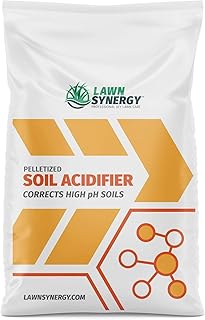 | Soil Acidifier pH Correction 90% Elemental | High-Concentration Sulfur for Big pH Drops | 7.9/10 | Check price → |
Scroll sideways on small screens to see every column.
Ferrous Sulfate Granules 20% Iron: Best Fast Green-Up for Iron Chlorosis
Southern Ag Pelletized Soil Acidifier: Best Slow-Release pH Drop for Lawns
Espoma Organic Soil Acidifier Amendment Lowers: Best Organic Option for Large Lawns
Hi-Yield (34257) Iron Plus Soil Acidifier: Best 2-in-1 Iron and Nitrogen Boost
Soil Acidifier pH Correction 90% Elemental: Best High-Concentration Sulfur for Big pH Drops
Buying Guide: Active Ingredient, Iron Content, Bag Size, and Application Speed
St. Augustine grass (Stenotaphrum secundatum) is a warm-season turf that prefers soil pH between 5.0 and 7.0, with the sweet spot around 6.0-6.5. When pH climbs above 7.0, iron becomes less available to the plant, and you get interveinal chlorosis, which is the technical name for those yellow leaves with green veins.
Soil acidifiers fix this two ways: directly feeding iron, or slowly lowering pH so the soil releases more iron naturally.
Iron Supplement vs. Elemental Sulfur
The lineup splits into two camps. Pure iron products like the Ferrous Sulfate Granules 20% Iron and the Hi-Yield Iron Plus feed the plant directly. You see greening in 7-14 days, but the effect wears off as the iron is used up or leached.
Elemental sulfur products like Southern Ag, Espoma, and the 90% Soil Acidifier work through soil bacteria that take 2-6 months to convert sulfur to sulfuric acid. The trade-off is speed versus longevity.
According to Texas A&M AgriLife Extension, foliar iron applications correct chlorosis within days but don't address the underlying pH problem, which is why many extension services recommend a combined approach for high-pH soils.
Bag Size and Coverage
These five products span a wide coverage range. The smallest is the Hi-Yield 3.25 lb bag at roughly 1,000 sq ft, and the largest is the 90% Elemental Sulfur at 18 lb covering up to 5,000 sq ft. The Espoma 30 lb bag is technically the largest by weight but delivers a lower-concentration product, so its effective coverage sits around 2,000 sq ft.
Match bag size to your actual lawn square footage, not to "more is better" thinking, because elemental sulfur can damage St. Augustine if over-applied.
Form Factor: Granular vs. Pelletized
All five products in this roundup are dry granular or pelletized forms, which work in standard broadcast or drop spreaders. Granular products like Ferrous Sulfate tend to be finer and spread more evenly, while pelletized products like Southern Ag produce less dust and flow more reliably through cheaper spreaders. Either works, but if your spreader is older or has a small hopper, pellets are the lower-maintenance choice.
Who Should NOT Buy Best Soil Acidifier for Yellowing St Augustine Turf
A soil acidifier is the wrong purchase for a few specific kinds of buyers. Here's who they are, and what to look at instead.
You Suspect a Disease or Pest, Not a Nutrient Issue
If your St. Augustine has circular brown patches, thinning areas that pull up easily, or you see chinch bugs in the thatch, the yellowing is likely from take-all root rot, brown patch, or chinch bug damage. No amount of iron or sulfur will fix a fungal infection or insect infestation.
Look for a fungicide labeled for take-all patch or a curative insecticide like bifenthrin instead. The University of Florida IFAS Extension has a turfgrass disease diagnostic guide that walks through identifying these problems visually.
You Haven't Tested Your Soil pH Yet
Throwing acidifier at yellow St. Augustine without knowing your starting pH is a guessing game. If your soil pH is already below 6.0, adding more sulfur will push it into the 4.0-5.0 range, which is toxic to St.
Augustine and causes tip burn and dieback. A basic soil test kit from a local cooperative extension office costs little and tells you exactly what you need. The USDA NRCS soil testing resources can point you to regional labs that interpret results for turfgrass specifically.
You Want a One-Time Permanent Fix
Soil acidifiers don't last forever. Iron supplements wash through the soil profile in 4-8 weeks, and elemental sulfur applications typically need reapplication every 6-12 months to maintain lowered pH. If you're looking for a "fix it once and forget it" solution, you're shopping for the wrong category.
Consider replacing St. Augustine with a more alkaline-tolerant grass like zoysia or bermuda, or commit to a seasonal acidifier schedule.
Final Verdict
The Ferrous Sulfate Granules 20% Iron is the best pick for most homeowners with yellowing St. Augustine because it delivers visible results in 7-14 days, works in any standard spreader, and doesn't require a soil test to start seeing greening.
Want a true long-term pH correction instead? The Southern Ag Pelletized Soil Acidifier uses elemental sulfur to actually lower pH over 2-6 months, and the pelletized form spreads cleanly. Need a large organic-certified bag for a bigger lawn?
The Espoma Organic Soil Acidifier covers up to 2,000 sq ft per application and is OMRI-listed. Need a high-concentration sulfur for pH above 7.5? The 90% Elemental Sulfur gives you more acidifying power per pound, but watch your dosage carefully.
If your yellowing is from disease, pests, or a soil pH you haven't measured yet, skip this category and check the Who Should NOT Buy section above for what to look at instead.
FAQ
What's the best soil acidifier for yellowing St. Augustine turf overall?
The Ferrous Sulfate Granules 20% Iron is the best pick for most homeowners because the 20% iron analysis delivers visible greening in 7-14 days, and the granular form works in any standard broadcast spreader without special equipment.
How fast will I see results on my St. Augustine lawn?
Iron supplements like ferrous sulfate typically show greening in 7-14 days. Elemental sulfur products take 2-6 months because they rely on soil bacteria to convert sulfur into acidifying compounds, and that conversion is temperature-dependent below 60°F.
Can I use too much soil acidifier on St. Augustine?
Yes. St. Augustine prefers pH between 5.0 and 7.0, and pushing below 5.0 causes tip burn, stolon dieback, and can kill the grass.
Always follow label rates, and consider a soil test if your lawn is over 2,000 sq ft or has shown pH sensitivity before.
Should I water after applying soil acidifier?
For granular iron products, water lightly within 24 hours to move the iron off the blades and into the root zone. For elemental sulfur, water thoroughly to activate soil bacteria and start the conversion process. Avoid heavy irrigation that washes granules into storm drains or concrete surfaces.
Can I mix iron supplements with fertilizer?
Yes, but check your nitrogen schedule. Products like the Hi-Yield Iron Plus already contain 11% nitrogen, so applying it within 6 weeks of a regular nitrogen fertilizer can cause burn and thatch buildup on St. Augustine.
Will soil acidifier help if my grass is yellow from drought or heat stress?
No. Drought-stressed and heat-stressed St. Augustine yellows from lack of water and photosynthesis shutdown, not from iron deficiency or pH issues.
The fix is deep, infrequent watering (1-1.5 inches per week) and raising your mower blade to 3.5-4 inches during summer heat. Soil acidifiers won't help and may add unnecessary chemical load to an already stressed lawn.