How to Siphon Gas From a Lawn Mower Before Winter Storage
Lead Turfgrass & Lawn Care Specialist at Totally Green Lawn · Certified Turfgrass Specialist (CTS), Master Gardener, B.S. in Agronomy & Turf Science · 14+ years in residential turf management, organic fertilization, and weed science
Most push mowers and riding mowers sit with half a tank of fuel the day you stop mowing, and that fuel is the number one reason small engines refuse to start in spring. If you're wondering how to siphon gas out of a lawn mower before winter, the honest answer is that a cheap hand pump, a clear hose, and about ten quiet minutes are usually all it takes, as long as you work in a ventilated spot and use the right container.
The fuel in a typical push mower tank, usually 0.5 to 1 gallon of E10 gasoline, begins to oxidize within about 30 days and starts gumming up the carburetor well before the first snow flies. Per EPA guidance on storing fuel at home, homeowners should keep gasoline in approved containers and never let it sit in equipment for long stretches, so pulling it out before storage is the move that protects both the mower and the shed.
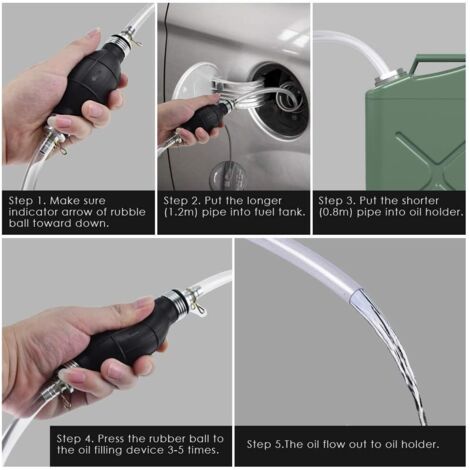
Image source: Bing (Web (fair-use with source credit))
Quick Answer
To siphon gas out of a lawn mower before winter, let the engine cool. Disconnect the spark plug wire. Insert a hand siphon pump hose into the tank.
Pump until fuel flows into an approved gas can. Seal the can. Store or dispose of the fuel safely.
First, Figure Out Your Situation (The Decision Branches)
Before you pull out a pump, it helps to know which branch of the winterization decision tree you're actually on. Most homeowners fall into one of three camps, and the right move is different for each.
How long will the mower sit unused?
The length of downtime is the biggest fork in the road.
- Under 30 days: You're fine leaving fuel in the tank. E10 gas stays usable for roughly a month before noticeable degradation kicks in.
- 30 to 90 days: Borderline. You can get away with fuel stabilizer, but siphoning is the cleaner option.
- Over 90 days: Siphon the gas. That's the full winter for most of the northern U.S., and 90-plus days is where stale fuel reliably gums up float bowls and jets.
What kind of fuel is in the tank?
Ethanol-blended fuel is the real troublemaker in small engines.
- E10 (10% ethanol): Standard pump gas. Attracts moisture, corrodes fuel lines, and phaseseparates in as little as 60 days.
- E15 or higher: Worse. Many small engine makers, including Briggs & Stratton, explicitly warn against using it in mowers.
- Ethanol-free: Far more stable. Can last 3 to 6 months in a tank with little trouble, so siphoning is optional rather than mandatory.
Is the mower a push or a riding model?
Tank size and accessibility change the approach.
- Push mower: 0.5 to 1 gallon tank, usually easy to access from the top with a short siphon tube.
- Riding mower: 1.5 to 3 gallons, often under the seat or hood. A longer hose or electric transfer pump saves the day.
- Two-stroke equipment: No separate oil, but fuel mix goes bad the same way. Siphon and replace with fresh mix in spring.
How to Siphon Gas Out of a Lawn Mower Step by Step
The actual siphoning process is straightforward, but the order matters for both safety and a clean result. Manufacturer service bulletins and university extension offices consistently walk through the same sequence, so follow it in order and you'll avoid spills and stuck engines.
What you'll need
| Item | Why you need it | Spec to look for |
|---|---|---|
| Hand siphon pump | Pulls fuel without you needing to suck on a hose | 1/4-inch or 3/8-inch outlet, auto-stop valve |
| Approved gas can | Receives the drained fuel safely | 1 to 5 gallons, ANSI/UL listed |
| Rags or shop towels | Catches drips at the tank neck | Lint-free, fuel-safe |
| Nitrile gloves | Keeps fuel off your skin | Chemical-resistant |
| Safety glasses | Splash protection | ANSI Z87.1 rated |
A basic squeeze-bulb siphon runs about $10 and is enough for most push mowers. For riding mowers or frequent use, a 12V electric transfer pump moves about 1 to 3 gallons per minute and removes the manual pumping.
The siphoning process
- Park the mower on a flat, hard surface outdoors. Concrete or asphalt is ideal. Never work over grass if you can avoid it, since a spilled half-gallon of gas kills the lawn underneath.
- Let the engine cool completely. A hot muffler near fuel vapors is a real fire risk, so give it at least 15 to 20 minutes after the last cut.
- Disconnect the spark plug wire. Tuck the boot away from the plug so the engine cannot fire while your hands are near fuel.
- Remove the gas cap and set it aside. Open the cap vents if your model has a vented cap, since that lets fuel flow freely.
- Insert the siphon hose into the tank. Push it down until it reaches the bottom, or as far as the tank neck allows.
- Start the siphon. For a squeeze pump, give the bulb a few firm squeezes until you see fuel moving through the clear hose. For a hand-pump style, stroke the handle until flow starts.
- Direct fuel into the gas can. Hold the can steady on the ground. Don't lift it onto a workbench, since a sloshing can spills fast.
- Watch for air bubbles. Once fuel flow sputters and stops, the tank is empty. Pull the hose out and recap the can immediately.
- Reinstall the gas cap. This keeps moisture and critters out of an empty tank.
- Reconnect the spark plug wire. The mower is now ready for storage.
A few pro tips for the actual pull
- Tilt the mower slightly toward the filler neck only if your manual allows it. Some mowers leak oil into the air filter when tipped the wrong way, so check first.
- Stop early if the flow rate is slow. A clogged tank vent is the usual culprit, and a quick twist of the cap to release pressure usually fixes it.
- Don't try to get every last drop. A few tablespoons left in the bottom won't hurt anything, and chasing them with the hose usually means spills.
Siphon vs. Stabilizer vs. Run It Dry: Which Route Is Right for You?
Siphoning isn't the only winterization method, and depending on your situation it may not even be the best one. Here's how the three main options compare, and when each one wins.
| Method | Best for | Downside | Approximate cost |
|---|---|---|---|
| Siphon and store fuel | Long storage, fuel you want to reuse, riding mowers with large tanks | Takes 10 to 15 minutes, needs a container | $10 to $30 for a siphon pump |
| Add fuel stabilizer | Short to mid storage, owners who want the easiest path | Doesn't fix already-old fuel, costs $5 to $15 per bottle | $10 per treated tank |
| Run the tank dry | Equipment going to long-term storage, no gas can on hand | Hard on the carburetor if done abruptly, wastes any usable fuel | Free |
When siphoning is the clear winner
If the mower is a riding model, the gas is fresh enough to pour into your car or truck, or you're storing equipment for 4-plus months, siphoning beats both alternatives. You reclaim the fuel, the tank is truly empty, and there's nothing left to varnish up the carburetor.
When stabilizer makes more sense
For a push mower you only park for 6 to 8 weeks, a bottle of STA-BIL or equivalent stabilizer added to a full tank, run for two minutes to circulate, then shut down, is faster and nearly as effective. It's also the only realistic option if the mower is stored in a place where spilling fuel during a transfer would be a problem, like a deck or near a well.
When running the tank dry is acceptable
This is the oldest method and the riskiest. Running the engine until it stalls leaves a thin film of fuel on every internal surface, which still oxidizes. Use it only for equipment you're storing 6-plus months and don't mind fogging the cylinder with a spritz of oil before shutdown.
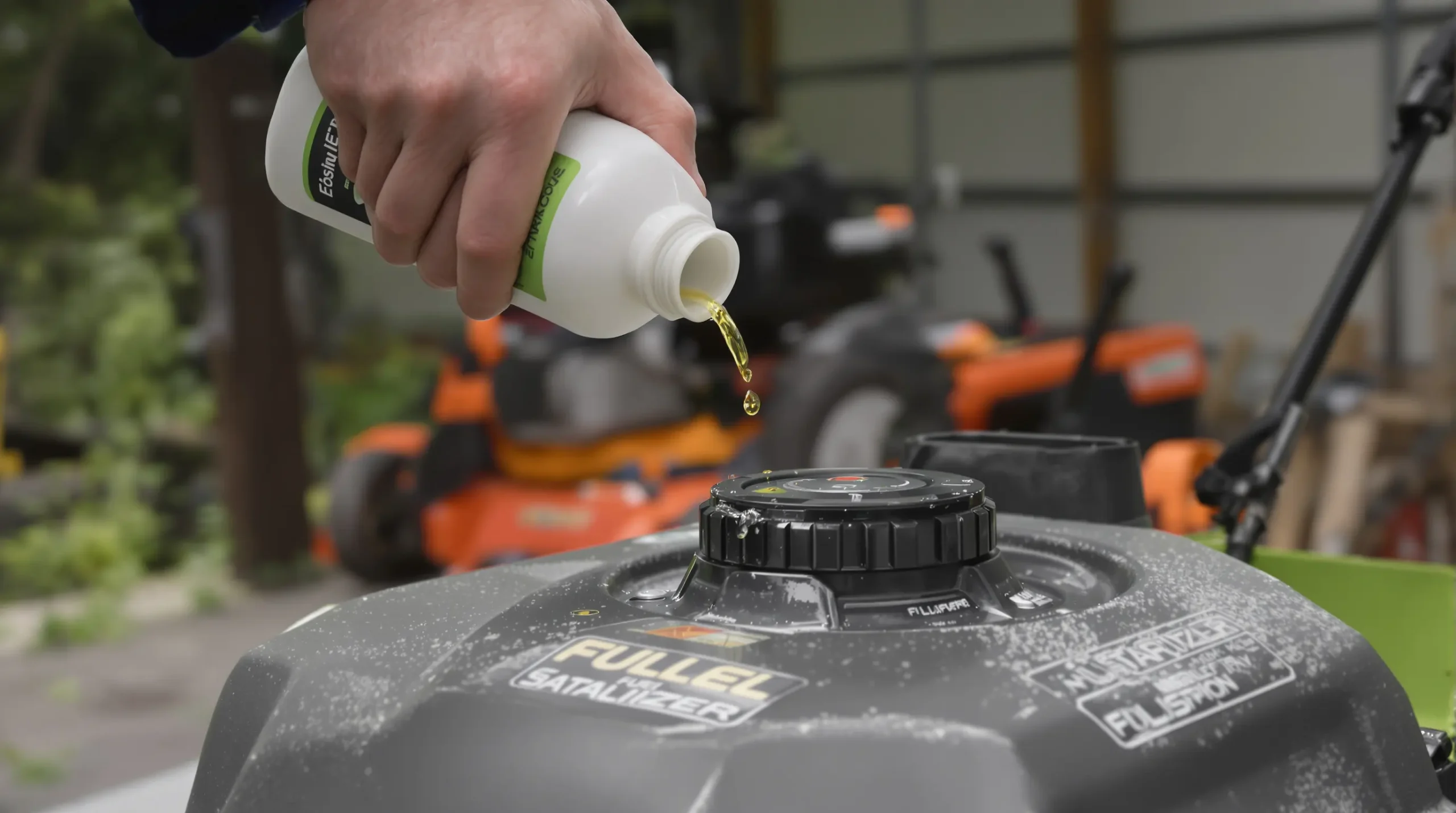
Image source: Bing (Web (fair-use with source credit))
Common Mistakes That Ruin Mowers (and Lawns)
Most winterization disasters come from the same handful of errors, and most of them are easy to avoid once you know they exist.
Siphoning mistakes
- Siphoning by mouth. This is the single most dangerous shortcut. Gasoline in the lungs is a medical emergency, and the few seconds "saved" aren't worth the ER visit. Always use a pump.
- Using a hose that isn't fuel-rated. Clear vinyl tubing sold at the hardware store can dissolve or leach plasticizers into gasoline. Use a hose labeled for fuel transfer, or a purpose-built siphon kit.
- Siphoning over grass. Even a small spill of fresh gas yellows and kills turf within hours. Lay down a tarp or move to concrete.
Storage mistakes after siphoning
- Leaving the tank cap off. Moisture, dust, and spiders all love an open fuel tank. Cap it tight.
- Storing the drained gas in an unapproved container. Milk jugs, glass jars, and old soda bottles leak or shatter. Only ANSI-rated containers, like the one shown below, are legal and safe for gasoline storage.
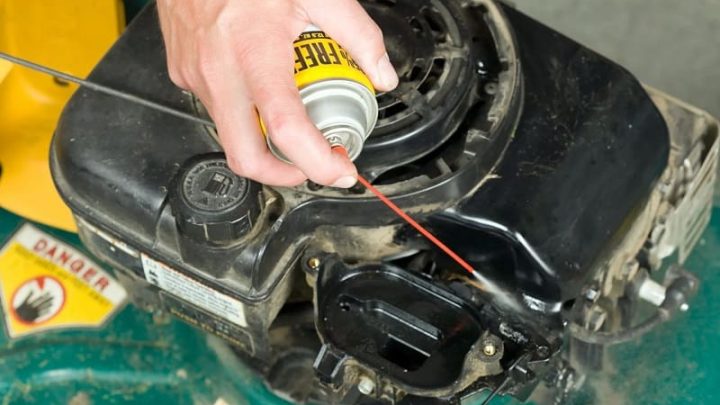
- Forgetting the carburetor. Even an empty tank can leave varnish in the float bowl. If the mower is 3-plus years old, a quick shot of carb cleaner through the throat before storage is cheap insurance.
Timing mistakes
- Waiting until the first freeze. By the time the temperature drops, fuel has already started degrading. Pull gas in late fall, before overnight lows hit freezing for a week straight.
- Pulling gas the morning after the last mow. The engine is still warm, fuel vapors are still off-gassing, and the tank is hot to the touch. Cool-down first, then siphon.
Safety, Storage, and What to Do With the Gas You Pulled
Pulling gas out of a mower is only half the job. Where that fuel goes next matters just as much, both for safety and for staying on the right side of local rules.
Container rules you can't skip
- Use only ANSI/UL-listed containers. Look for the stamp on the bottom. The red plastic jugs sold at every hardware store meet this standard, and the container shown here is a typical example.
- Never fill a gas can to the brim. Leave at least a half-inch of expansion space, since fuel expands in heat.
- Label the can with the date. A piece of masking tape and a Sharpie takes ten seconds and saves guessing later.
- Keep containers outdoors or in a detached shed. Attached garages are technically allowed, but most fire codes cap residential storage at 25 gallons and require distance from ignition sources.
Reusing the gas you siphoned
Fresh-looking fuel that came out of a mower tank is usually fine to burn in a car or truck, provided it was clean to begin with. The rule of thumb is simple. If the gas was less than 30 days old and the mower ran well on it, pour it into a vehicle and use it.
If the mower was running rough or the fuel smells sour, take it to a hazardous waste drop-off instead.
Disposing of old or contaminated gas
Most counties run household hazardous waste collection days at least twice a year. Many auto parts stores also accept small amounts of used fuel. The EPA's hazardous waste directory lists regional contacts and pickup options.
Never dump gas down a storm drain, on the ground, or in the trash. It's illegal almost everywhere, and a single gallon can contaminate thousands of gallons of groundwater.

Image source: Bing (Web (fair-use with source credit))
FAQs: Siphoning Gas From a Lawn Mower Before Winter
Do I really need to siphon gas, or can I just add stabilizer?
Stabilizer works for storage under about 90 days. Past that, especially with E10 fuel, siphoning is the safer bet.
Can I siphon gas with my mouth instead of buying a pump?
No. Inhaling gasoline damages the lungs and can be fatal. Use a hand pump or electric transfer pump every time.
What if my mower tank has a small opening?
A flexible 1/4-inch siphon hose fits most mower necks. If the opening is truly tiny, an electric pump with a thin intake line is the workaround.
Is it okay to tip the mower on its side to drain gas?
Only if the owner's manual says so. Many mowers leak oil into the air filter or exhaust when tipped wrong. Siphoning is the cleaner option.
How long does siphoning a push mower take?
About 5 to 10 minutes for setup and pull. A riding mower with a 2-gallon tank takes 15 minutes or less with a powered pump.
Can I store my mower with an empty tank over winter?
Yes, as of 2026, that's the recommended long-term storage method by most manufacturers. Just cap the tank and run the engine briefly to clear the carburetor.
Final Call: What To Do Before You Put the Mower Away
If you've made it this far, the path is short. Pull the gas if storage is longer than 90 days, or the fuel is ethanol-blended and you're parking the mower through a real winter. Add stabilizer instead if downtime is short and you'd rather skip the siphon.
Either way, disconnect the spark plug wire, clean the deck, and sharpen the blade before the cover goes on.
The 10 minutes you spend on this in late fall save the hour you'd otherwise spend cleaning a carburetor next April. That's the real trade, and it's one almost every homeowner is happy to make once they've done it once.

Similar Posts