How Long Does Soil Sulfur Take to Lower Lawn pH?
Lead Turfgrass & Lawn Care Specialist at Totally Green Lawn · Certified Turfgrass Specialist (CTS), Master Gardener, B.S. in Agronomy & Turf Science · 14+ years in residential turf management, organic fertilization, and weed science
If you're staring at a soil test that says your lawn pH is 7.5 or 8.0, you probably want one number: how long does soil sulfur take to lower lawn pH before you actually see results? The honest answer is that it usually takes 2 to 6 months to register a meaningful pH drop, and 6 to 12 months to fully hit your target range. That's a wide window, and it's wide on purpose, because your soil, your sulfur form, and your timing all change the clock.
Here's what most people miss. University extension guidance from places like Texas A&M and Penn State shows that elemental sulfur works by being slowly converted into sulfuric acid by soil bacteria. That biological step is the bottleneck.
The faster those microbes work, the faster your pH moves. As of 2026, current recommendations still center on that same oxidation process, so your real lever is setting conditions that speed it up. Let's walk through exactly how to do that.

Image source: Bing (Web (fair-use with source credit))
Quick Answer
Soil sulfur lowers lawn pH in about 2 to 6 months for a first reading. Full correction to your target pH takes 6 to 12 months. Speed depends on soil type, sulfur form, and microbial activity.
Sandy soils respond faster than clay. Warm, moist soil speeds it up. Cold or dry soil stalls it.
The Real Answer: How Long Soil Sulfur Takes to Lower Lawn pH
Let's get one thing clear before the timeline. Sulfur doesn't directly "burn" alkalinity out of your soil. It works by feeding sulfur-oxidizing bacteria, mostly Thiobacillus species, which turn elemental sulfur (S) into sulfate and ultimately sulfuric acid.
That acid is what drops your pH. So the timeline isn't really about the sulfur itself. It's about how fast your soil biology can do the conversion.
Here's the practical window most turf managers and extension services report:
| Condition | Time to Noticeable pH Drop | Time to Full Correction |
|---|---|---|
| Sandy soil, warm and moist | 1 to 3 months | 3 to 6 months |
| Loamy soil, average conditions | 3 to 6 months | 6 to 9 months |
| Heavy clay or calcareous soil | 6 to 12 months | 12 to 18 months |
The reason for that spread is buffering capacity. Soils high in calcium carbonate (think arid West, Texas, Florida, and the Southwest) resist pH change like a sponge resists water. You'll be applying sulfur for months before the needle moves.
Sandy soils with low organic matter shift much faster because there's less buffer holding the pH in place.
A second factor is your starting pH. Dropping from 7.5 to 6.5 is a bigger job than dropping from 7.0 to 6.5. The further you need to go, the longer it takes, and the more total sulfur you'll need.
Most soil test reports include a "buffer pH" or "lime requirement" number that tells you exactly how much sulfur to apply per 1,000 square feet. If yours doesn't, you're guessing, and guessing usually means under-applying.
If you're re-testing at 90 days and seeing nothing, that's normal in clay soils. Don't re-apply yet. Wait for the 6-month mark, and don't skip the soil test before round two.
What Actually Slows Down (or Speeds Up) Sulfur's pH Drop
Think of sulfur as the fuel and soil bacteria as the engine. No engine, no movement, no matter how much fuel you dump. Here are the variables that decide how fast your engine runs.
Soil Temperature
Microbial activity roughly doubles for every 10°F increase in soil temperature, up to about 85°F. That means:
- Soil below 50°F: oxidation almost stops
- Soil at 60 to 70°F: slow, steady conversion
- Soil at 70 to 85°F: peak conversion rate
This is why sulfur applied in fall or late spring works better than winter applications in cold climates. If you live in the Midwest or Northeast and you spread sulfur in November, you're mostly feeding nothing until the ground warms in April.
Soil Moisture
Bacteria need water to live and move. Dry soil stalls oxidation completely. Overly soggy soil creates anaerobic conditions where different bacteria take over, and the sulfur conversion slows.
The sweet spot is consistently moist, not wet. Think of a wrung-out sponge.
Soil Texture and Buffering Capacity
Sandy soils have low buffering capacity, which means small sulfur applications cause relatively large pH shifts. Clay and loam soils with high organic matter hold onto pH stubbornly. Caliche or calcareous soils in the Southwest can have so much free calcium carbonate that you'd need tons of sulfur per acre to make a dent.
This is the single biggest variable most homeowners underestimate.
Sulfur Particle Size
Finer particles oxidize faster because there's more surface area for bacteria to attack. Micronized or wettable sulfur works noticeably faster than coarse prills. The tradeoff is dust and application difficulty.
For most homeowners, a mid-grade prilled elemental sulfur is the practical choice.
Application Rate
More sulfur means more potential acid, but only up to the limit of what bacteria can process. A common mistake is dumping 20 pounds per 1,000 square feet and hoping for a quick fix. Bacteria can only oxidize a few pounds per acre per week under ideal conditions.
Excess sulfur just sits there waiting its turn, or worse, it can drop pH unevenly and burn turf.
Image source: Bing (Web (fair-use with source credit))
Microbial Population
Soils with active organic matter cycles have more sulfur-oxidizing bacteria already present. Soils that have been heavily chemically treated, fumigated, or left bare for years have weaker populations. If your lawn is brand new construction fill, expect a slower start.
The Decision Path: Which Sulfur Form and Rate Fit Your Lawn
Not all sulfur is the same, and picking the wrong form can stretch your timeline from 4 months to 14. Here's the decision logic.
If You Have a Mild pH Issue (7.0 to 7.5) and a Typical Lawn
Go with prilled elemental sulfur at 5 to 10 pounds per 1,000 square feet, split into two applications 60 days apart. This is the workhorse option. It takes longer than ammonium sulfate, but the pH drop is real and lasts for years, not weeks.
If You Need Faster Results (6 to 8 Weeks)
Use ammonium sulfate (21-0-0-24S) at 3 to 5 pounds per 1,000 square feet. The nitrogen acidifies as it converts, so you'll see a pH shift within a month or two. The downside is shorter-lasting effect.
You'll likely reapply the next season. This is the "I want green grass this fall" option.
If You're Starting a New Lawn or Renovating
Incorporate elemental sulfur into the top 4 to 6 inches of soil before seeding or sodding. This puts the sulfur where the bacteria are most active, and you can use higher rates (10 to 15 pounds per 1,000 square feet) without burn risk because there's no established turf to damage. Expect 3 to 6 months to see the full effect once the lawn is established.
If Your Soil Test Shows Heavy Calcium Carbonate
You need higher rates (15 to 25 pounds per 1,000 square feet) and patience. Some calcareous soils will never go below 7.5 no matter how much sulfur you add. At that point, the better question is whether to grow alkaline-tolerant turf like tall fescue or buffalograss instead of fighting the soil.
If You're on a Tight Budget
Elemental sulfur is by far the cheapest per pound of acidifying potential. Ammonium sulfate costs more because you're paying for nitrogen too. Gypsum doesn't work for this purpose at all.
It supplies calcium and sulfur but doesn't change pH.
Step-by-Step: How to Apply Sulfur So It Actually Works on Schedule
Follow this sequence and you'll hit the fast end of the timeline. Skip steps and you'll add months.
Step 1: Test Your Soil First
Use a university-affiliated lab if possible. The USDA Natural Resources Conservation Service maintains soil survey data that can tell you your general soil type before you even pull a sample. A complete test should report current pH, buffer pH, organic matter, and nutrient levels.
The buffer pH number is what tells you how much sulfur to apply. Home kits give you pH but not buffer pH, so they're only half the answer.
Step 2: Calculate Your Rate
Most extension service recommendations look like this for elemental sulfur to drop pH by one full unit:
| Soil Type | Pounds per 1,000 sq ft |
|---|---|
| Sandy | 4 to 6 |
| Loamy | 6 to 10 |
| Clay or high organic | 10 to 15 |
Split this total into two or three applications 60 to 90 days apart. Splitting prevents turf burn and gives bacteria time to process each batch.
Step 3: Pick the Right Time
Apply when soil temps are 60°F or higher and rain or irrigation is expected within a week. Fall applications (September to early November in most zones) work well because soil is still warm and winter moisture helps carry sulfur into the root zone. Spring applications (April to early June) are the second-best window.
Avoid summer peak heat unless you can keep the soil consistently moist.
Step 4: Calibrate Your Spreader
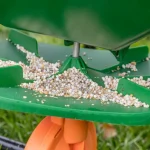
Set your broadcast or drop spreader to half the rate and go over the lawn twice in perpendicular directions. This gives even coverage. Sulfur applied in streaks leads to streaky pH changes, which show up as uneven turf color months later.
Step 5: Water It In
Apply 0.5 to 1 inch of water within 24 to 48 hours of application. This dissolves the prills slightly, moves sulfur into the topsoil where bacteria live, and prevents turf burn from concentrated surface granules. Don't flood the lawn.
You want a deep soak, not runoff.
Step 6: Wait and Test
Mark your calendar for 90 days. Re-test at that point. In sandy soils you should see a 0.3 to 0.5 pH drop.
In clay, you might see nothing yet. Either way, don't re-apply until the test tells you to.
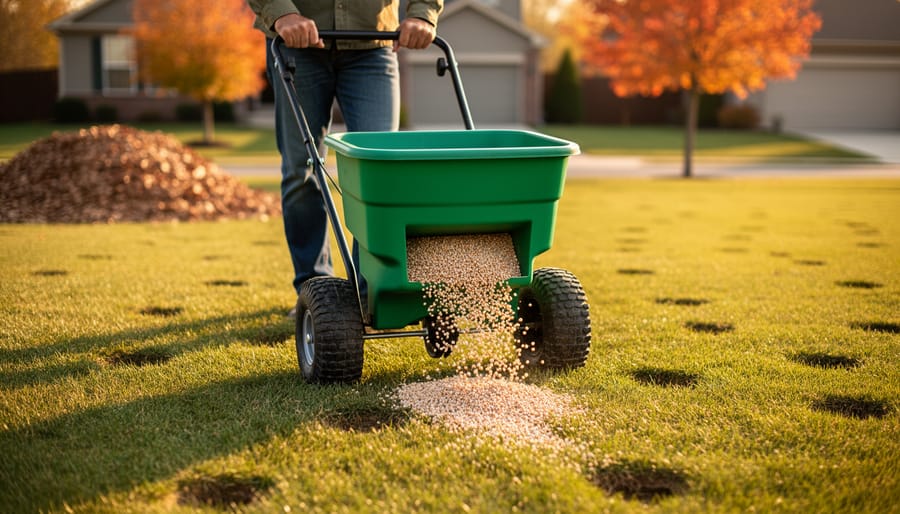
Image source: Bing (Web (fair-use with source credit))
Mistakes That Add Months to Your Timeline
Most timeline failures aren't about the sulfur. They're about how it's used. Here are the errors we see over and over.
Confusing Gypsum With Elemental Sulfur
Gypsum is calcium sulfate. It supplies calcium and sulfur but doesn't change pH. If you've been spreading gypsum expecting pH to drop, it won't.
The two products look similar in the bag, which is why this mistake is so common.
Applying Without a Buffer pH Test
A current pH reading tells you where you are. A buffer pH tells you how much sulfur you need. Without the second number, you're guessing.
Most home test kits don't include buffer pH, which is why a lab test through your local cooperative extension is worth the $15 to $30.
Spreading on Dry Soil With No Follow-Up Water
Sulfur sitting on a dry surface oxidizes slowly, if at all. Without water to move it into the root zone, you'll wait months for nothing. Water it in within 48 hours, every time.
Expecting One Application to Fix Everything
Even on sandy soil, one application rarely nails the target. Plan on two to three applications over a year, with soil tests in between, before you reach a stable pH in your goal range.
Re-Testing Too Early and Panicking
A 30-day re-test in clay soil will show almost no change. That's not a failure, it's the soil working as designed. Give it 90 days minimum between tests, and longer for heavy soils.
Maintenance Schedule: How to Hold the pH You Worked For
Once you've hit your target pH, the job isn't over. Most soils drift back toward their native pH over time, especially in regions with alkaline irrigation water. Here's the maintenance rhythm that keeps your lawn stable.
Annual Soil Test
Test every fall after the growing season. This catches drift before it becomes a problem. If pH has crept up 0.2 to 0.3 units, a light maintenance application (2 to 4 pounds per 1,000 square feet) keeps it in range.
Skip the test and you won't notice the drift until the turf starts yellowing from nutrient lockout.
Light Annual Sulfur Application
For most lawns, 2 to 4 pounds of elemental sulfur per 1,000 square feet once a year is enough maintenance. Apply in fall for cool-season turf, late spring for warm-season. This replaces what bacteria have oxidized and leached out.
Watch Your Irrigation Water
If you water with well or tap water above pH 7.5, you're slowly re-alkalinizing your soil every time you irrigate. Test your water source. If it's high pH, you'll need slightly higher maintenance rates, or you can amend the water with a sulfur injector.
Topdress With Organic Matter Once a Year
A quarter-inch of compost topdressing in fall does two things. It feeds the microbial population that processes sulfur, and it buffers pH swings in either direction. It's the single best companion practice to sulfur applications.
Don't Over-Lime
The flip side of the pH coin is over-correcting. If your soil test comes back at 6.0 and you accidentally apply lime, you'll undo months of work. Always read the soil test before applying anything, even lime, even on a neighbor's recommendation.
Frequently Asked Questions
How long does it take sulfur to lower pH in sandy soil?
Sandy soil typically shows a pH drop within 1 to 3 months of elemental sulfur application. Full correction usually takes 3 to 6 months. Sandy soils have low buffering capacity, so even modest sulfur rates cause relatively fast shifts.
Can I use sulfur and lime at the same time?
No. Sulfur lowers pH and lime raises it. Applying them together cancels both out and wastes product.
Apply sulfur, wait at least 60 to 90 days, re-test, and only apply lime if the soil has actually become too acidic.
Does pelletized sulfur work faster than granular?
Pelletized sulfur is usually finer than coarse prills, so it does oxidize a bit faster. The difference is usually 2 to 4 weeks on the timeline, not dramatic. If you have a spreader that handles dust well, micronized sulfur is the fastest homeowner option.
Will sulfur burn my lawn if I apply too much?
Yes. Excess sulfur in one application can cause turf burn, especially in hot weather. The damage is usually cosmetic and grows out, but it sets you back visually.
Stick to split applications based on your soil test buffer pH, and water thoroughly after each pass.
How do I know if my soil sulfur is actually working?
Re-test at 90 days. A pH drop of 0.3 to 0.5 units in sandy soil, or 0.1 to 0.3 in clay, confirms the sulfur is oxidizing. No change at 90 days means either the rate was too low, the soil is highly buffered, or conditions were too cold or dry for microbial activity.
Should I apply sulfur before or after rain?
Light rain or irrigation within 24 to 48 hours of application is ideal. It moves sulfur off the grass blades and into the soil. Heavy rain right after application can wash granular sulfur into low spots or runoff, so time your application around the forecast when you can.
🧪 Agronomist Recommended: Soil pH Testing & Aeration Gear
Healthy root systems require balanced soil chemistry and loose structure. Our field testing recommends calibrated digital testers and biological aerators:
- Digital Soil pH & Moisture Tester:Check Digital Lawn Soil pH Testers on Amazon →
- Liquid Soil Aerator & Penetrant:Check Liquid Soil Aerators & Conditioners on Amazon →
*FTC Disclosure: As an Amazon Associate, Totally Green Lawn earns from qualifying purchases.*

Similar Posts