Lime per 1000 Sq Ft: How Many Pounds to Raise pH by 1
Lead Turfgrass & Lawn Care Specialist at Totally Green Lawn · Certified Turfgrass Specialist (CTS), Master Gardener, B.S. in Agronomy & Turf Science · 14+ years in residential turf management, organic fertilization, and weed science
If you're standing in the garden center staring at a 40-pound bag of pelletized lime and wondering if it's enough, the short answer to how many pounds of lime per 1000 sq ft to raise pH by 1 point usually falls between 25 and 75 pounds. The catch is that "one point" is a moving target, because your soil's texture, its starting pH, and the type of lime you choose all shift the number up or down.
Most university extension services settle on a rough rule: about 25 pounds per 1000 square feet for sandy soil, 50 pounds for loam, and 75 to 100 pounds for clay, all to bump pH by a full point. As of 2026, those benchmarks still match what extension offices like Penn State, Virginia Tech, and Texas A&M publish in their liming guides. The smart move is to soil-test first, then dial in the exact rate, which is exactly what we'll walk through below.
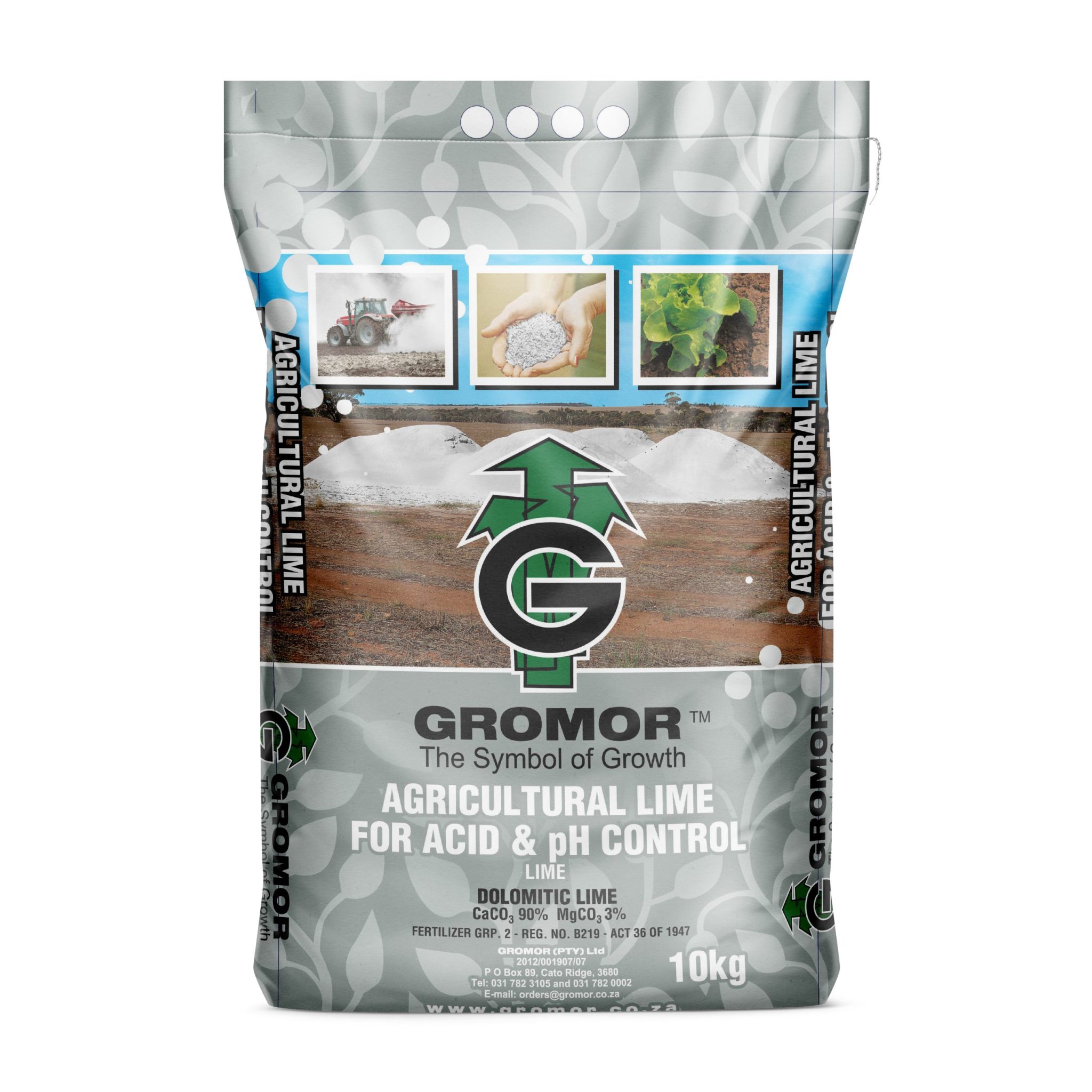
Image source: Bing (Web (fair-use with source credit))
Quick Answer
Most lawns need 25 to 75 pounds of lime per 1,000 square feet to raise pH by one full point. Sandy soil sits at the low end. Loam lands in the middle.
Clay needs the most. A lab soil test tells you the exact rate for your yard. Without one, you're guessing.
The Variables That Change Your Lime Rate (Soil Type, Current pH, Lime Type)
Three things actually decide how much lime you'll spread: your soil's texture, where your pH currently sits, and the limestone product you buy. Everything else is just packaging.
Soil texture changes everything
Think of soil particles like a sponge. Sandy soil has big pores, so lime dissolves fast and reacts quickly. You don't need much.
Clay is the opposite. The particles are tiny, tightly packed, and heavily buffered, meaning they resist pH change. You'll need two to three times more lime on clay than on sand to move the needle the same distance.
Here's the rough rule that extension agronomists keep publishing:
| Soil Type | Lime Per 1,000 Sq Ft to Raise pH by 1 |
|---|---|
| Sandy | 25 to 35 lb |
| Loamy | 40 to 55 lb |
| Clay / heavy | 75 to 100+ lb |
If your soil test reports your texture as "sandy loam," sit in the middle. If it says "silty clay loam," plan on the heavier side.
Current pH vs. target pH matters more than you'd think
A jump from 5.0 to 6.0 is a full point, but the soil chemistry involved is not linear. The further you are from neutral (7.0), the more resistant the soil becomes, especially in clay. Buffer pH, which is the part of a professional soil test most homeowners skip reading, captures that resistance.
A high buffer pH means you need more lime for the same result. That's why lab reports give you a custom number instead of a chart.
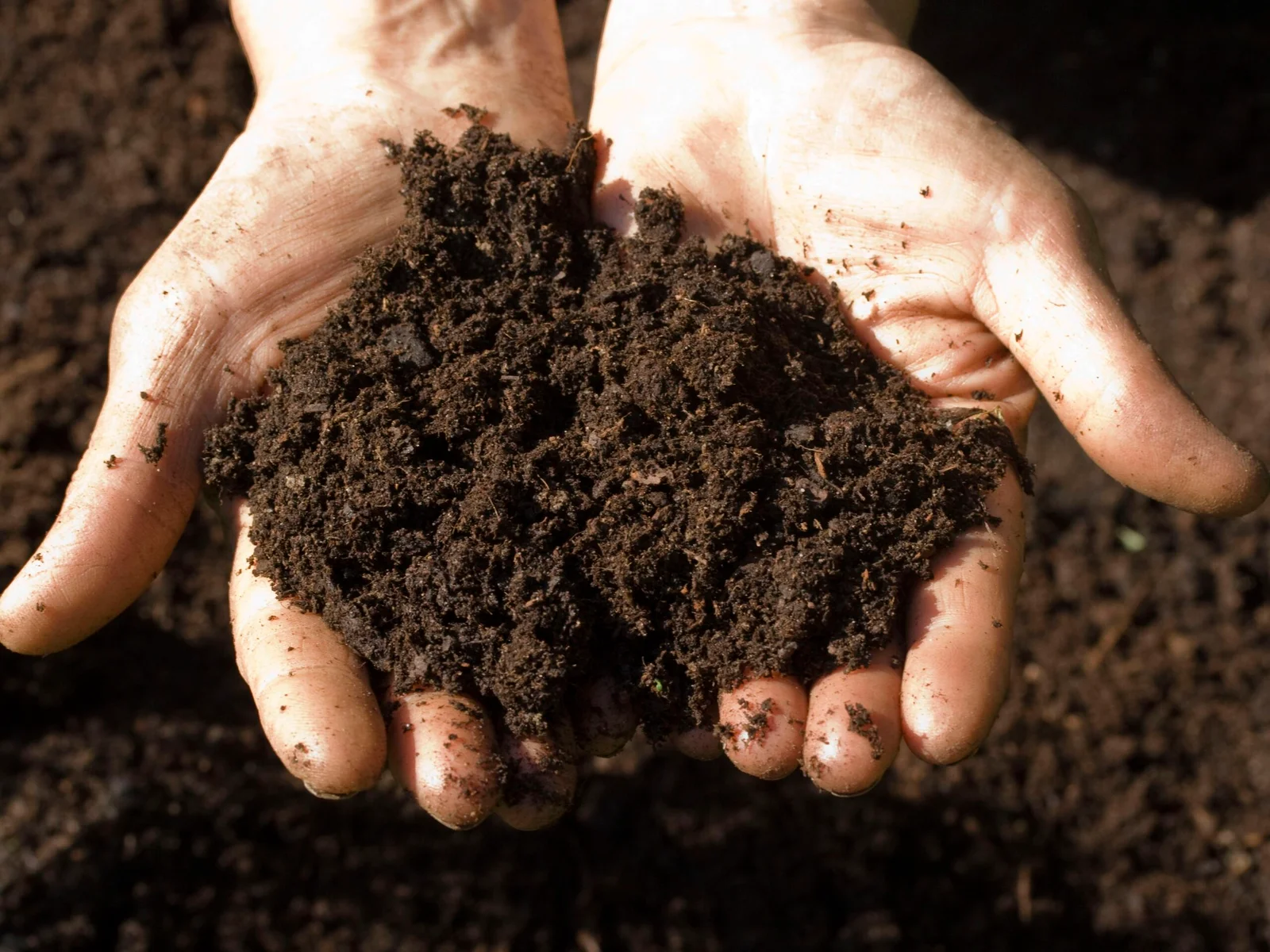
Image source: Web (Bing) / millcreekconservancy.com (Web image (fair-use with source credit))
Lime type affects effective coverage
Not all lime is created equal. The calcium carbonate equivalent (CCE) of a product tells you how much actual acid-neutralizing power you're paying for. Pure calcitic limestone rates at 100% CCE.
Most aglime products sit between 80% and 95%. If you buy a 90% CCE product and the chart says 50 pounds, multiply by 100/90 to get your real number, which comes out to about 55 pounds. Pelleted lime often runs a bit lower in CCE than bulk aglime because of the binding agents.
Calcitic vs. Dolomitic vs. Pelletized Lime — Which One to Use
Walk into any garden center and you'll see three main options. Each has a job, and picking the wrong one either wastes money or starves your soil.
Calcitic lime: pure calcium carbonate
This is straight limestone, mostly calcium carbonate (CaCO₃). Use it when your soil test shows adequate magnesium (usually above 25 ppm) but you still need to raise pH. It's the most common pick for lawns in the Southeast and Mid-Atlantic where magnesium is naturally sufficient.
Dolomitic lime: calcium plus magnesium
Dolomitic lime is a mix of calcium carbonate and magnesium carbonate. Reach for it when your soil test shows low magnesium, which is common in coastal plain soils, sandy soils, and anywhere potassium has been heavily applied. The added magnesium is a bonus for turf and tomatoes, both of which are magnesium-hungry.
One caution: don't apply dolomitic lime to centipede or centipede-blend lawns. They already get plenty of magnesium, and the extra can throw the nutrient balance off.
Pelletized lime: convenience, not magic
Pelletized lime is finely ground limestone compressed into easy-spread granules. It spreads cleanly through a rotary spreader, doesn't blow around, and works faster than coarse aglime. Manufacturer specs from major producers confirm a typical CCE in the 88% to 95% range.
The trade-off is cost. You'll pay roughly three to four times more per pound of actual lime compared to bulk aglime. For a 5,000 sq ft lawn, that's a real difference on the receipt.
For most home lawns, the rule of thumb is:
- Calcitic lime if magnesium is fine.
- Dolomitic lime if magnesium is low.
- Pelletized lime if you want easy spreading and faster reaction.
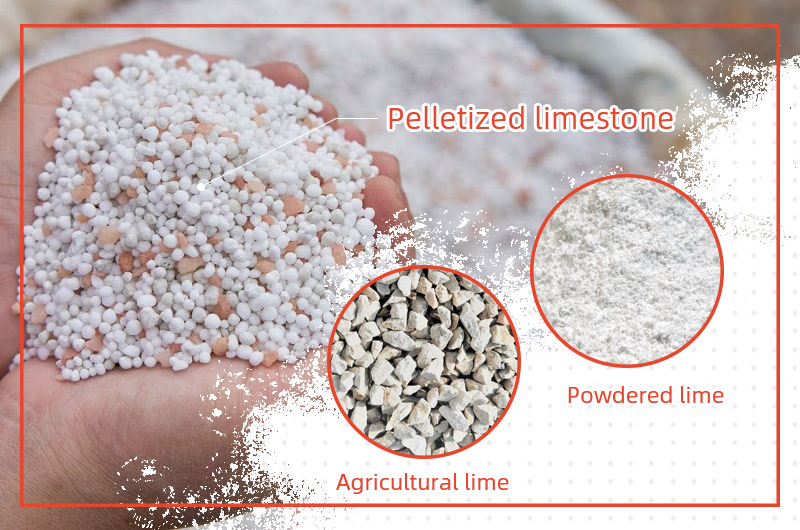
Image source: Bing (Web (fair-use with source credit))
Step-by-Step: How to Calculate Your Exact Lime Requirement
Stop eyeballing it. A real calculation takes about 10 minutes once you have your soil test in hand. Here's the workflow that turf managers and extension agents actually use.
Step 1: Pull a real soil test
Skip the cheap probe kits from the hardware store. They read within 0.5 pH units at best, and that's not close enough for liming decisions. Send a sample to your state's extension service lab or a private lab like Waypoint Analytical.
Most charge $15 to $25 and give you back texture, pH, buffer pH, phosphorus, potassium, calcium, magnesium, and a lime recommendation in pounds per 1,000 sq ft. That recommendation is your number. Don't second-guess it.
Step 2: Identify your target pH
Different plants want different pH:
| Plant / Use | Target pH |
|---|---|
| Cool-season lawn (fescue, KBG, rye) | 6.0 to 7.0 |
| Bermudagrass / zoysiagrass | 6.0 to 6.5 |
| Centipedegrass | 5.0 to 6.0 (lower than most) |
| Vegetable garden | 6.2 to 6.8 |
| Blueberries, azaleas, rhododendrons | 4.5 to 5.5 (do NOT lime) |
If your centipede lawn test comes back at 5.5, you don't need lime. Many homeowners over-lime centipede by chasing a "neutral" target the grass doesn't want.
Step 3: Match the lab rate to your product
If your soil test recommends 50 lb of lime per 1,000 sq ft based on a 100% CCE reference, and you're using a 90% CCE product, adjust upward: 50 × (100/90) = 55.5 lb. Always do this for aglime. Pelletized lime CCE is usually printed on the bag.
Step 4: Calculate total product needed
Multiply your per-1,000 rate by your total lawn area, then divide by 1,000. For a 7,500 sq ft lawn at 50 lb per 1,000: 50 × 7.5 = 375 lb total.
Step 5: Set your spreader
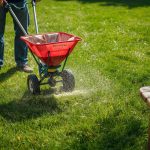
Pulverized aglime is best applied with a drop spreader to keep the dust on target. Pelletized lime flows well through a rotary spreader. Calibrate by measuring off a 1,000 sq ft area (a 20×50 strip works), then weigh out the right amount and run the spreader until it's empty.
Adjust opening size until the swath matches.
Best Time to Apply Lime and How to Do It Without Burning Your Lawn
Timing is the difference between lime that works in two months and lime that takes six.
When to apply
Fall is the best window for most cool-season lawns. The soil is still warm, microbial activity is high, and winter freeze-thaw helps work the lime into the root zone. You're set up for strong spring growth.
Spring works too, but you'll be waiting longer for results.
For warm-season lawns, late winter before green-up is fine. Avoid peak summer heat. You're not hurting anything chemically, but stressed turf plus heavy spreader traffic is a recipe for wheel ruts and torn-up spots.
How to apply without problems
- Mow first. Short grass catches lime more evenly.
- Apply at half the rate in one direction, then the other half in a perpendicular pass. This crisscross pattern evens out any spreader striping.
- Water lightly after application. You're not trying to dissolve the lime, just wash the dust off the blades so it doesn't burn the leaf tissue.
- Don't apply lime and fertilizer at the same time if you can avoid it. Most university extension services recommend a 2 to 3 week gap. Lime raises pH, and high pH can temporarily lock up nitrogen and iron in some fertilizers.
How long until it works
Pelletized lime: 2 to 4 weeks for noticeable pH change.
Pulverized aglime (fine grind): 2 to 4 months.
Coarse aglime or quarry lime: 6 to 12 months.
If you're correcting pH for a new seeding, plan at least 90 days between liming and seeding. Otherwise the seed germinates in an environment that hasn't finished shifting.
Mistakes That Waste Lime or Lock Out Nutrients
Most lime application failures aren't about the lime. They're about the steps around it. Skip these and you'll either spend money for nothing or make your soil worse.
Applying lime without a soil test
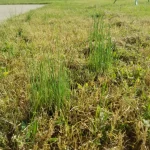
This is the single most common mistake. A bag of lime from a big-box store says "raises pH" and folks spread it on a lawn that's already at 6.5. They push the pH to 7.5 or higher, and iron and manganese lock out overnight.
The grass yellows. People blame the lime. The real problem is guessing instead of testing.
Using hydrated lime on a lawn
Hydrated lime (calcium hydroxide) reacts fast. Too fast. It can burn turf roots and skin, raise pH in unpredictable spikes, and create handling hazards.
It's a masonry and agricultural industrial product, not a homeowner lawn product. Stick with calcium carbonate or dolomitic limestone.
Spreading lime and fertilizer the same day
These products fight each other when applied simultaneously. Lime raises pH, and many fertilizers (especially iron sulfate and some nitrogen sources) work better in slightly acidic conditions. Wait at least 2 to 3 weeks between applications.
If you're seeding, lime first, then seed 6 to 12 weeks later after the pH has actually moved.
Ignoring particle size
Coarse aglime takes 6 to 12 months to react. Fine aglime (60 to 100 mesh) reacts in 2 to 4 months. Pelletized lime (finely ground, then bound) reacts fastest of all.
If you need pH change before spring seeding, don't buy the cheapest quarry lime and expect miracles. Match the grind to your timeline.
Over-liming year after year
Acidifying fertilizers, sulfur applications, and even pine needle mulches slowly bring pH back down. But many homeowners keep adding lime on autopilot. Re-test every 2 to 3 years.
If pH is already 6.5 or higher, stop liming and save the money.
Real-World Lime Rates by Scenario (Lawn, Garden, Pasture)
A flat number per 1,000 sq ft doesn't tell the whole story. Here's how the rate actually changes once you factor in the use case.
Cool-season lawn (fescue, Kentucky bluegrass, rye)
Target pH: 6.0 to 7.0. Most extension publications in the Mid-Atlantic and Upper South recommend 50 lb per 1,000 sq ft of standard aglime on loam to move pH from 5.5 to 6.5. Sandy soil drops that to 25 to 30 lb.
Clay jumps to 75 to 100 lb. For pelletized lime, manufacturers commonly suggest 25 to 40 lb per 1,000 sq ft because of the higher CCE and finer grind.
Warm-season lawn (bermuda, zoysia, St. Augustine)
Target pH: 6.0 to 6.5. Same general rate as cool-season, but you rarely need to push past 6.5. Centipede is the exception.
It prefers 5.0 to 6.0 and suffers from iron deficiency above 6.0. Don't lime centipede unless a soil test specifically calls for it.
Vegetable garden
Target pH: 6.2 to 6.8. Garden beds usually get limed more aggressively than lawns because vegetables pull a lot of calcium and magnesium, especially tomatoes, peppers, and brassicas. Pre-season rates often land at 50 to 75 lb per 1,000 sq ft for loamy garden soil, applied 2 to 3 months before planting.
Always re-test each year before adding more.
Pasture and hayfield
Target pH: 6.0 to 6.5. Pastures are limed by the ton, not the pound, because the acreage adds up fast. A common extension recommendation is 1 to 2 tons of bulk aglime per acre to raise pH by one point on loam soils, which works out to roughly 50 to 100 lb per 1,000 sq ft.
Pasture liming is a multi-year investment. Most operations split the application, applying half in year one and the rest in year two or three.
Acid-loving landscape (azaleas, blueberries, camellias)
Target pH: 4.5 to 5.5. Do not lime. If surrounding lawn lime drifts into these beds, the pH rises, leaves yellow, and growth stalls.
Use sulfur or ammonium sulfate to keep these beds acidic.
Frequently Asked Questions
How long does pelletized lime take to raise pH?
Pelletized lime typically begins raising pH within 2 to 4 weeks. Full effect shows up around 6 to 8 weeks after application under warm, moist soil conditions. Cool soil slows the reaction.
Can I apply lime and grass seed at the same time?
It's better to wait. Apply lime first, water it in, then wait 6 to 12 weeks before seeding. This gives the pH time to shift so the new seed germinates in a balanced environment and the seedlings can actually use the nutrients you're unlocking.
How often should I lime my lawn?
Most lawns need lime every 2 to 3 years, but the only honest answer comes from a fresh soil test. Heavy rainfall, nitrogen fertilizer use, and pine needle drop all push pH downward over time.
Will lime green up my lawn?
Indirectly, yes. Lime doesn't add nitrogen, so it doesn't green grass on its own. What it does is raise pH into the range where nitrogen, phosphorus, and iron become available to the plant.
Many homeowners see green-up after liming because the fertilizer they already applied finally starts working.
Is pelletized lime stronger than regular lime?
It's finer and easier to spread, so it reacts faster. The actual neutralizing power (CCE) is similar to good aglime. The real difference is convenience and price, not strength.
You're paying for the pelletizing process, not extra potency.
Can I use too much lime?
Absolutely. Over-liming raises pH above 7.0, which locks out iron, manganese, zinc, and phosphorus. Grass yellows despite being fed.
The fix is slow, applying elemental sulfur or ammonium sulfate over several months to bring pH back down. Skip the test, pay for it later.
🧪 Agronomist Recommended: Soil pH Testing & Aeration Gear
Healthy root systems require balanced soil chemistry and loose structure. Our field testing recommends calibrated digital testers and biological aerators:
- Digital Soil pH & Moisture Tester:Check Digital Lawn Soil pH Testers on Amazon →
- Liquid Soil Aerator & Penetrant:Check Liquid Soil Aerators & Conditioners on Amazon →
*FTC Disclosure: As an Amazon Associate, Totally Green Lawn earns from qualifying purchases.*

Similar Posts