Fertilizing in 90 Degree Heat: Avoid Burning Your Lawn
Lead Turfgrass & Lawn Care Specialist at Totally Green Lawn · Certified Turfgrass Specialist (CTS), Master Gardener, B.S. in Agronomy & Turf Science · 14+ years in residential turf management, organic fertilization, and weed science
Can you fertilize lawn in 90 degree weather without burning it? Yes, but only with the right product, the right prep, and a sharp eye on soil conditions. The real risk isn't just the air temperature.
It's the combination of heat, dry soil, and fast-acting nitrogen that fries roots and leaves.
Most turfgrass extension research as of 2026 flags 90°F air temperature as a caution line, not a hard stop. Soil temperature and moisture matter more than the thermometer on your porch. Get those two right, pick a slow-release formula, and your lawn can be fed safely even during a hot stretch.
Quick Answer
You can fertilize at 90°F if soil moisture is good. Use a slow-release nitrogen product at half rate. Water the lawn well before and after applying.
Skip the job during a heatwave or drought.
How Heat Actually Affects Fertilizer and Your Grass
Heat changes everything about how fertilizer behaves in your soil. The salt content in most synthetic fertilizers pulls moisture out of grass blades and roots through osmosis. In cool weather, soil has enough water to dilute those salts.
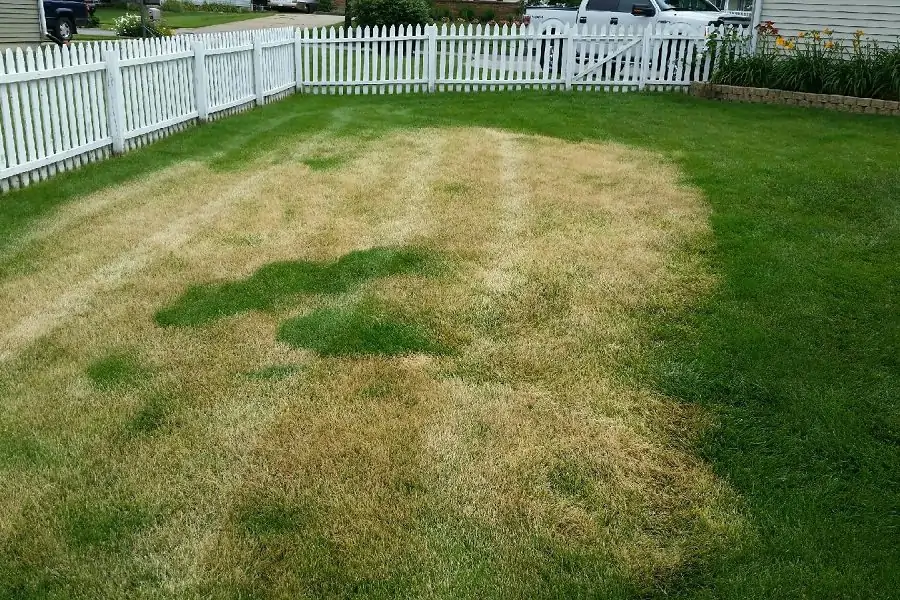
In 90°F heat with dry soil, that same salt load becomes concentrated. That's when you see the classic yellow and brown stripes of fertilizer burn.
Grass itself is under stress at 90°F. Cool-season grasses like Kentucky bluegrass, perennial ryegrass, and tall fescue struggle once soil temps climb above 85°F. Their root growth slows, and the plant goes into survival mode.
Warm-season grasses like Bermuda, Zoysia, and St. Augustine handle heat much better. They're actively growing in 90°F, which means they can actually use the nitrogen you feed them.
Here's the catch most homeowners miss: air temperature and soil temperature are not the same thing. A 90°F day in spring with 65°F soil is very different from a 90°F day in July with 88°F soil. Soil holds heat longer than air.
Shaded areas stay cooler. South-facing slopes bake.
| Factor | Cool-Season Grass | Warm-Season Grass |
|---|---|---|
| Active growth in 90°F | No, going dormant | Yes, peak growth |
| Fertilizer burn risk at 90°F | High | Moderate |
| Best summer feeding window | Early fall | Late spring through summer |
| Root depth in summer | Shallow | Deep |
The University of Florida IFAS Extension turfgrass program has documented that warm-season turfgrasses can take nitrogen applications even during peak summer heat, as long as soil moisture stays consistent. Cool-season grasses need a different approach. Feed them lightly or wait.
Microbial activity also slows in extreme heat. Soil microbes help break down organic fertilizers. When soil temps exceed 95°F, that breakdown can stall.
Fertilizer sits on the surface longer, raising burn risk.
The Right Conditions: When 90°F Is Safe vs. When It Isn't
Ninety degrees on its own doesn't mean danger. The full picture includes humidity, recent rainfall, soil moisture, and how long the heat has been going on.
Safe to Fertilize at 90°F When:
- The lawn has been deeply watered within 24 to 48 hours
- Humidity is above 40% (helps keep leaf tissue cool)
- It's day one or two of a short heat spike, not week three of a heatwave
- Your soil temp is under 85°F (check with a soil thermometer at 4 inches deep)
- The grass is actively growing and not wilted
- You're using a slow-release product at half the normal rate
Skip the Fertilizer at 90°F When:
- The lawn is drought-stressed or showing wilt signs
- Local watering restrictions are in place
- You've had 5+ consecutive days above 95°F
- Soil temperature reads above 90°F at 4-inch depth
- The forecast shows no rain for 7 to 10 days
- Your cool-season lawn has already gone semi-dormant
A simple soil thermometer costs under $10 and removes the guesswork. Stick it 4 inches into the soil mid-afternoon. If it reads under 85°F, you're in a safer zone even when the air is 90.
Shade matters too. A lawn that gets afternoon shade from a tree line is dealing with 5 to 10 degrees less heat stress than a full-sun lawn across the street. Adjust your timing based on what your specific yard is experiencing.
Fertilizer Type Matters More Than the Thermometer
The product you choose makes a bigger difference than the temperature on your phone. Two bags of fertilizer with the same N-P-K numbers can behave completely differently in heat.
Slow-Release Nitrogen (Polymer-Coated, Sulfur-Coated, or Organic)
These release nitrogen over 6 to 12 weeks. The plant takes up small amounts at a time, matching its slower summer growth. Burn risk drops dramatically because there's never a flood of salt hitting the roots at once.
Examples include Milorganite, urea-formaldehyde, IBDU, and polymer-coated urea. Per Texas A&M AgriLife Extension turfgrass guidelines, slow-release nitrogen is the recommended option for any summer feeding above 85°F.
Quick-Release Nitrogen (Urea, Ammonium Sulfate, Ammonium Nitrate)
These release 70% to 100% of their nitrogen within the first week. They're cheap and they green fast, but that sudden salt load in hot soil is exactly what causes burn. Yellow tips, brown patches, and dead stripes can show up within 48 hours.
Reserve these for spring and fall when soil temps are below 75°F.
Organic Fertilizers
Compost-based products, bone meal, feather meal, and biosolids release nitrogen very slowly. They're the safest option in heat, but they work slowly and may not deliver visible results during a hot stretch. Best for building long-term soil health.

Liquid vs. Granular
Liquid feeds absorb fast and give quick green-up, but they also pass through the root zone quickly in sandy soil. Granular slow-release stays put and feeds over time. For 90°F conditions, granular slow-release wins on safety.
| Fertilizer Type | Heat Safety | Speed of Green-Up | Burn Risk at 90°F |
|---|---|---|---|
| Slow-release granular | High | Slow | Low |
| Quick-release granular | Low | Fast | High |
| Organic granular | Very high | Very slow | Very low |
| Liquid (any type) | Moderate | Fast | Moderate |
How to Fertilize in Hot Weather Without Burning Your Lawn
The right process makes 90°F feeding safe. Skip a step and you'll be repairing damage for weeks.
Step 1: Water Deeply 24 to 48 Hours Before
Give the lawn a deep soak the day before you plan to feed. This rehydrates grass tissue and dilutes soil salts. Target about 0.5 to 1 inch of water.
Skip this step and you're applying dry fertilizer onto thirsty roots.
Step 2: Check Soil Temperature and Forecast
Soil temp under 85°F at 4 inches? Good. Forecast shows a break in the 90s within 3 to 5 days?
Even better. If the heatwave is just starting, you have a window. If it's been brutal for a week, wait.
Step 3: Mow First, But Not Too Short
Cut the lawn the day before, but raise your mower to 3 to 3.5 inches for cool-season grass. Taller blades shade the soil and reduce stress. Don't mow right after fertilizing.
You want the granules to settle into the canopy, not get bagged up.
Step 4: Apply at Half the Normal Rate
Read the bag for the full coverage rate. Cut it in half. So if the bag says 4 pounds per 1,000 square feet, you're putting down 2 pounds.
You're feeding the lawn, not force-growing it. Summer is about maintenance, not pushing top growth.
Step 5: Use a Spreader, Not Your Hand
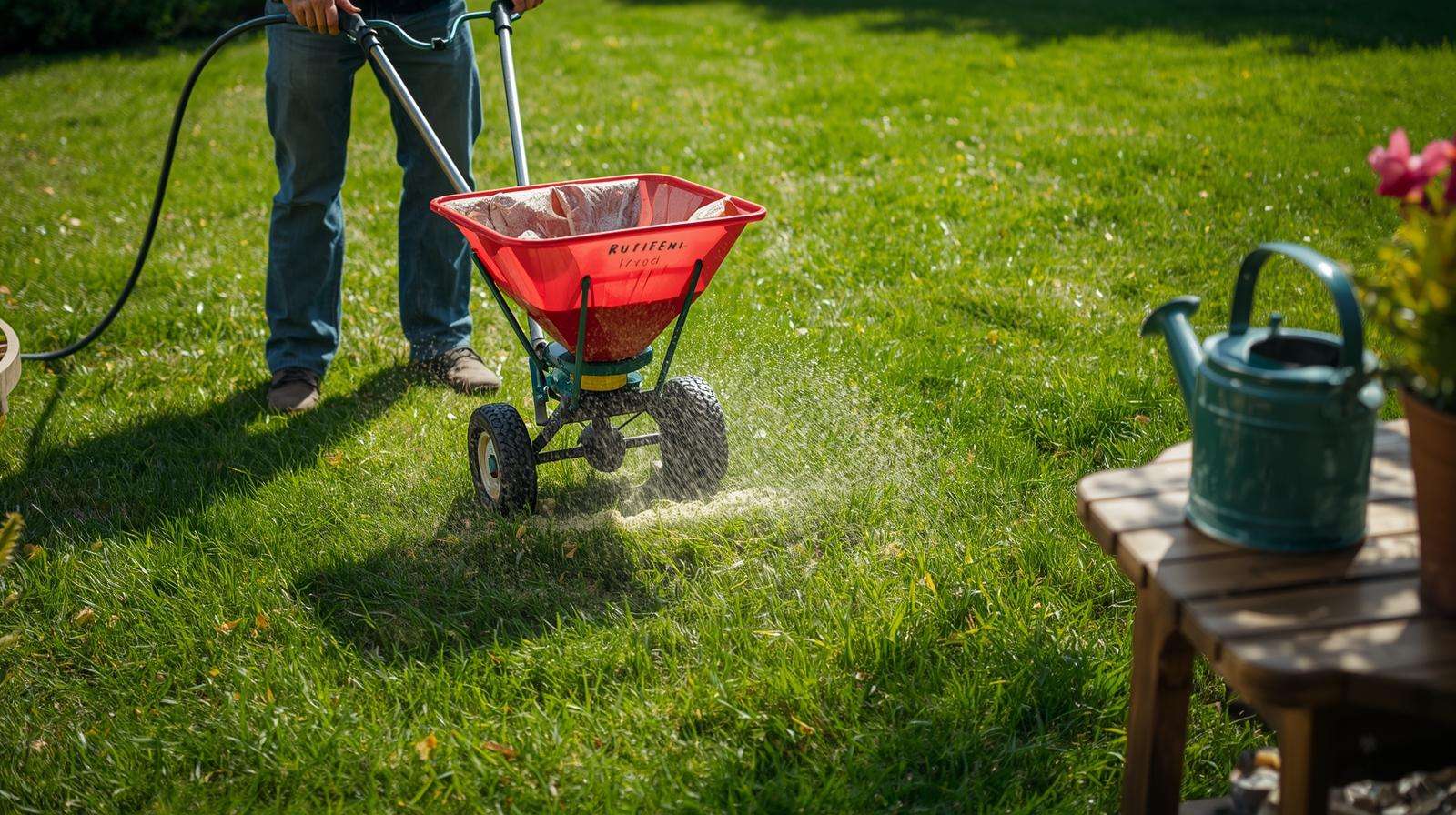
A broadcast or drop spreader gives even coverage. Uneven application is the #1 cause of stripe burn. Calibrate the spreader setting based on your reduced rate.
Overlap patterns slightly to avoid stripes.
Step 6: Apply in Early Morning or Dusk
Avoid mid-day. The cooler window lets the granules settle before peak evaporation. Dew on the grass in the morning can help granules stick to the soil surface.
Step 7: Water In Within 24 Hours
Apply 0.25 to 0.5 inches of water after spreading. This activates the fertilizer and moves it off the leaf blades into the soil. Don't flood the lawn.
Just a gentle, even watering to wash it in.
Step 8: Hold Off on the Next Mowing
Wait 48 to 72 hours before mowing again. You want the fertilizer to settle and start breaking down before you remove any leaf tissue.
Step 9: Watch for Stress Signs
For the next 5 to 7 days, check the lawn daily. If you see yellowing or browning at the tips, water immediately and skip your next scheduled feeding. Watch Penn State Extension turfgrass care guides for visual identification of common heat stress symptoms versus actual burn.
Mistakes That Cause Fertilizer Burn in Summer
Most summer burn cases trace back to the same handful of errors. Knowing them upfront saves you from being the next lawn in the neighborhood with brown stripes.
Applying Quick-Release on a Hot Day. A 19-19-19 analysis with fast urea on a 90°F afternoon is a burn waiting to happen. The nitrogen releases into dry soil within hours and the salt load is too much for stressed roots. Switch to a slow-release formula or wait for cooler weather.
Skipping the Pre-Watering. Dry soil can't dilute fertilizer salts. Always water the lawn the day before you feed. The soil should be moist 4 inches down before any granules touch the surface.
Overlapping Spreader Passes. Walking the same strip twice doubles the nitrogen in that band. You'll see bright green stripes that turn brown in 48 hours. Calibrate your spreader and close the hopper at the end of each pass.
Bagging Clippings Right After. If you mow the next day and bag the clippings, you're catching fertilizer granules that haven't settled yet. Let the spread sit 48 to 72 hours before the first post-application mow.
Feeding Dormant Grass. Cool-season lawns go semi-dormant in peak summer. Pushing nitrogen onto dormant turf doesn't green it up. It feeds the weeds and sits there as salt, waiting to burn the first new growth when cooler weather returns.
Ignoring Local Blackout Dates. Many coastal and mid-Atlantic states have summer fertilizer blackout periods, typically June through September. Check your state rules before applying anything.
What to Do If You Already Burned the Lawn
Water deeply for the next 3 to 5 days. This leaches salts past the root zone. Rake out dead grass.
Top-dress with a quarter-inch of compost to introduce microbes. Most lawns recover within 4 to 6 weeks if the crowns and roots are still alive. If the burn is severe, plan on reseeding in fall.
Local Rules and Summer Blackout Dates to Know About
Summer fertilizer restrictions aren't suggestions in many states. They're law, and violations can carry real fines.
Florida, Maryland, New Jersey, Virginia, and several other coastal states restrict nitrogen and phosphorus applications between roughly June 1 and September 30. The exact dates vary by county and year. The reason is simple.
Summer rain washes lawn fertilizer into storm drains, which feed directly into bays, rivers, and the ocean. The nitrogen feeds algae blooms that kill fish and close shellfish beds.
Before you spread anything, check your state Department of Agriculture website or local extension office. Blackout periods can shift, and exemptions exist for new lawns, golf courses, and athletic fields. Homeowners usually don't qualify.
Watershed protection rules may also limit how close to waterways you can apply phosphorus. The EPA's nutrient pollution guidance outlines how states manage these restrictions.
Even where blackouts aren't in effect, local drought declarations can restrict outdoor watering. Fertilizing without the ability to water in is a burn guarantee. Wait until watering rules allow deep irrigation before feeding.
HOAs sometimes add their own seasonal rules. Some prohibit summer fertilization entirely to keep lawns from going brown during neighborhood dry spells. Check your covenants before you order that bag of fertilizer.
Summer Lawn Feeding FAQs
Is 90°F Too Hot to Put Down Starter Fertilizer?
Starter fertilizer is high in phosphorus to support new root development. It has a higher salt index than regular lawn food. At 90°F, hold off.
New seed or sod is already stressed. Feed it in early fall when soil temps drop below 80°F for best results.
Can I Use Liquid Fertilizer at 90°F Without Burning?
Liquid feeds are safer than quick-release granulars, but they're not risk-free. The nitrogen is still readily available. If you go liquid, dilute it to half the label rate and apply at dusk into a pre-watered lawn.
Foliar burn can still happen if droplets sit on leaves under direct midday sun.
How Long Should I Wait After a Heatwave to Fertilize?
Wait 5 to 7 days of normal temperatures (under 85°F) before feeding. This gives the grass time to recover from stress and resume active growth. Fertilizing too soon after a heatwave pushes nutrients into a plant that can't use them yet.
Will Fertilizing at 90°F Kill My Lawn Completely?
Full kill is rare unless the burn is severe and the lawn was already drought-stressed. Most cases yellow out and recover with deep watering. The real risk is long-term root damage, which makes the lawn vulnerable to fall diseases and winter kill.
Patience and water fix most summer feeding mistakes.
Should I Use Iron Instead of Nitrogen in Summer?
Yes, iron supplements (chelated iron or iron sulfate) green up grass without pushing growth. They're a great summer alternative when you want color without the burn risk of nitrogen. Apply at label rates, water in, and you'll see greening within a week.
Nitrogen can wait for fall.
What Grass Type Handles Summer Fertilizer Best?
Warm-season grasses like Bermuda, Zoysia, Bahia, and St. Augustine are built for 90°F feeding. They're photosynthesizing at peak rates in summer heat.
Cool-season grasses (fescue, bluegrass, ryegrass) do much better with fall and spring feeding. Know your grass type before you set a feeding schedule.

Similar Posts