Do Aerator Shoes Actually Work or Just Compact Soil?
Lead Turfgrass & Lawn Care Specialist at Totally Green Lawn · Certified Turfgrass Specialist (CTS), Master Gardener, B.S. in Agronomy & Turf Science · 14+ years in residential turf management, organic fertilization, and weed science

The short version on "do aerator shoes actually work or do they compact soil": they punch tiny holes in your lawn, but in heavy clay those holes can actually press the surrounding soil tighter, making compaction worse. In loose or sandy ground, the same shoes offer a small dose of airflow that beats doing nothing at all, as long as you water the day before and take it slow. The trick is matching the tool to your soil type, and skipping it entirely when the ground is hard and dry.
Most designs ship with 13 spikes around 1.5 to 2 inches long, and that's both the appeal and the limit. University extension services like Purdue Extension note that shallow spike penetration rarely fixes a real compaction problem. That's why the next question matters far more than the tool itself: what's your soil actually doing underneath the grass?
Let's break it down.
Quick Answer
Aerator shoes work on loose, sandy, or loamy soil with shallow thatch. They often worsen compaction in dense clay. They can't replace a core aerator.
Results depend entirely on soil type, moisture, and how you use them.
How Aerator Shoes Work and Why Soil Compaction Is the Real Problem
Soil compaction is what happens when air pockets in the topsoil get squeezed shut by foot traffic, mowing, rain, or just the weight of wet earth settling. Roots can't breathe, water runs off instead of soaking in, and fertilizer kind of sits there instead of reaching the root zone.
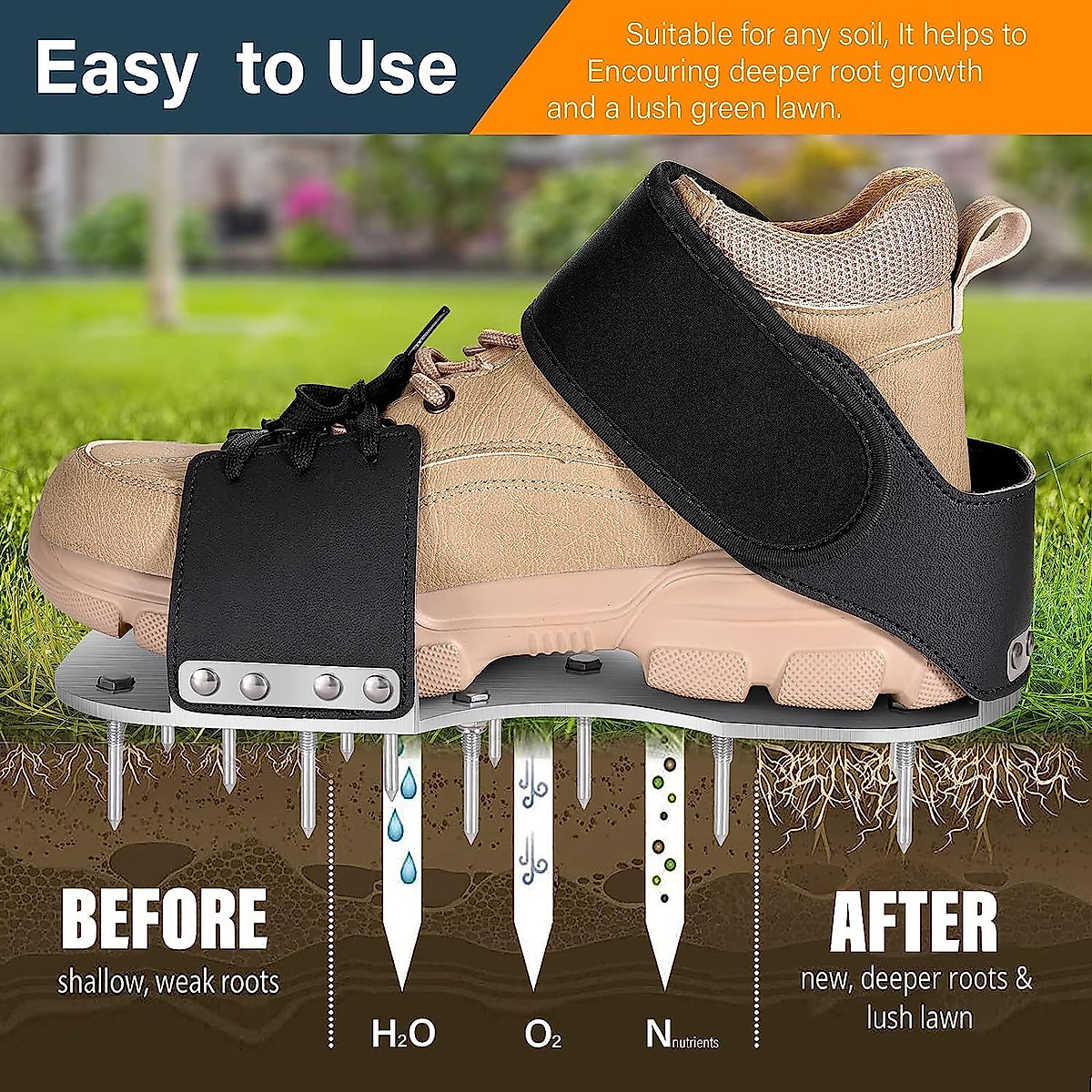
Aerator shoes tackle this by strapping a series of solid metal spikes to the bottom of your boots. Each step pushes those spikes about 1.5 to 2 inches into the ground, opening narrow channels for air and water.
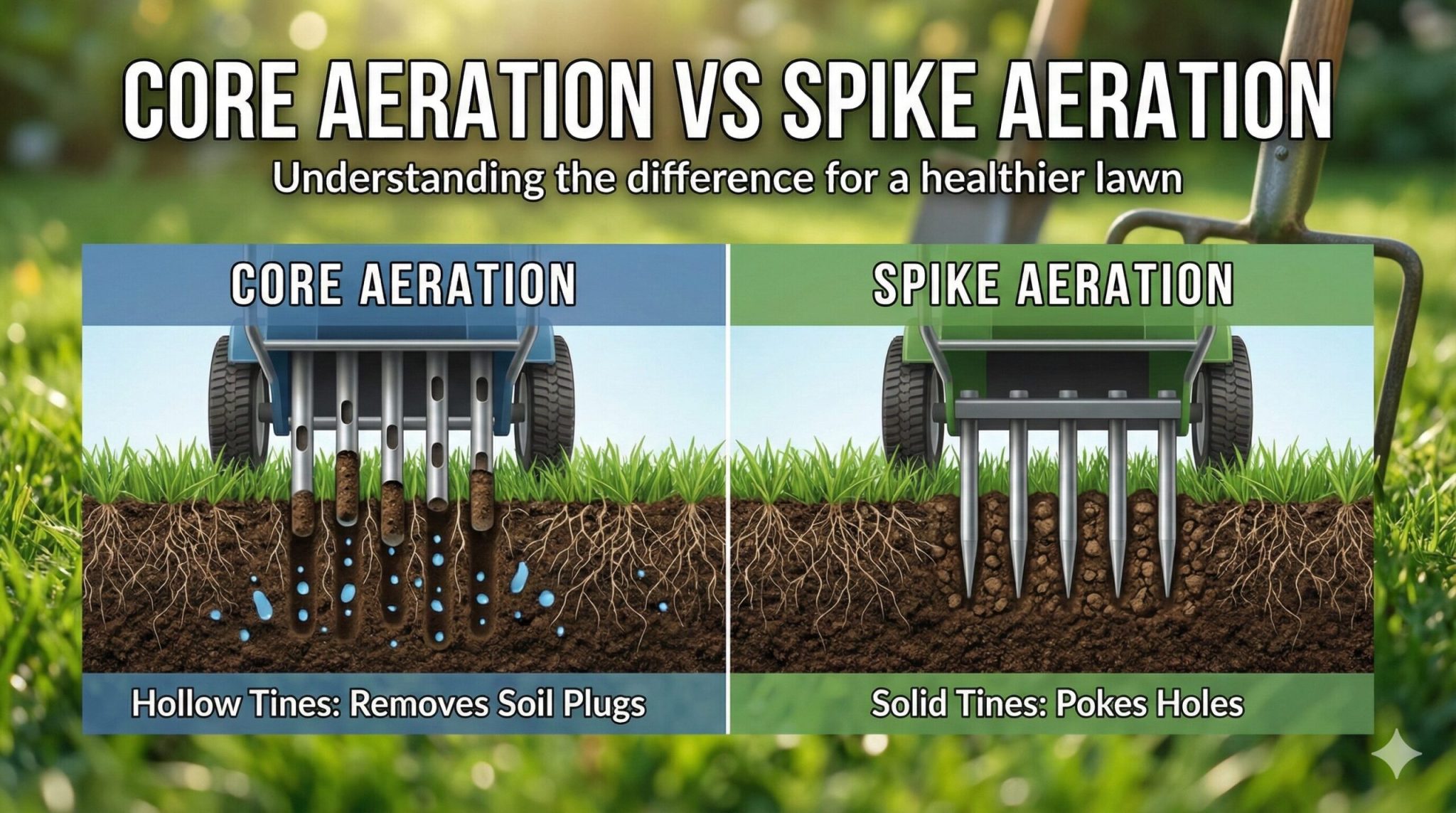
That sounds great in theory. The catch is what's happening around the spike as it goes in. In soft soil, the spike parts the earth cleanly and the surrounding dirt relaxes once it's pulled out.
In dense soil, the spike has nowhere to go, so it just compresses everything to the side. You've punched a hole, and you've also pressed the surrounding soil tighter. The hole may even close back up within a few weeks, especially if the ground is wet or clay-heavy.
There's a real difference between the two main types on the market today:
| Type | How It Works | Best Soil Type | Main Limitation |
|---|---|---|---|
| Spike aerator shoes | Solid spikes push into ground, no soil removed | Sandy or loamy | Can press clay tighter |
| Core (plug) aerators | Hollow tines pull out small soil plugs | Clay or compacted | Heavy, often rented |
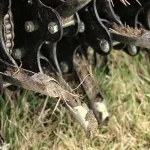
Manufacturer specs on most 13-spike sandals list individual spike diameters around 1/2 inch. That's a lot of metal pushing into already-tight clay. Core aerators, by contrast, actually remove material and relieve pressure instead of just shifting it sideways.
The Compaction Triangle (What You're Really Up Against)
Three factors decide whether a spike aerator helps or hurts: soil texture, moisture level, and how much existing thatch you've got.
Sandy and loamy soils have larger particles with air gaps between them. Spikes slip in cleanly and stay open long enough to do some good. Clay soils are tiny, flat particles that lock together under pressure.
Spikes push them around, but they don't create lasting channels.
Moisture is the lever most people miss. Soil at roughly 50 to 75% of field capacity (damp but not soggy, think wrung-out sponge) lets spikes penetrate without shattering the structure. Dry ground resists the spike and shatters when it finally gives.
Saturated ground smears and seals shut the moment you pull out.
Thatch is the third piece. A thin thatch layer under 1/2 inch helps. A thick matted layer over 1 inch blocks the spike before it ever reaches the soil, defeating the whole point.
So when folks ask whether aerator shoes work, the honest answer is: it depends on which side of that triangle your lawn sits on.
The Conditions That Decide Whether Aerator Shoes Help or Harm Your Lawn
Stop and run through this short checklist before you strap them on. If more than two answers point you toward "skip," grab a core aerator instead.
Is Your Soil Sandy or Loamy?
Step on a bare patch after a decent rain. Water soaks in fast, and the ground feels crumbly? That's a great match for spike shoes.
Water beads and sits on top? You're looking at high clay content, and spike shoes will press it tighter.
Did You Water 24 to 48 Hours Before?
Manufacturer instructions on nearly every pair call for a pre-watering the day before. Dry soil won't accept the spike cleanly. Soaked soil smears and reseals.
Damp to the depth of your spikes is the sweet spot. As of 2026, most updated manufacturer guides now recommend this step explicitly.
Is the Thatch Layer Under 1/2 Inch?
Pull up a small plug or scratch with a knife. Thin layer, mostly green and stemmy? Spikes will reach the soil.
Thick spongy mat? You're walking on a sponge and the spikes won't get to where they need to go.
What Grass Are You Growing?
Cool-season grasses like Kentucky bluegrass, fescue, and ryegrass respond well to fall spike aeration in loose soils. Warm-season grasses such as Bermuda, zoysia, and St. Augustine are best treated during their active growth window in late spring to early summer.
If you can say yes to sandy or loamy soil, recent watering, thin thatch, and the right grass type in active growth, spike shoes will give you a small but real benefit. If any of those answers don't line up, you'll likely make compaction worse or waste your time.
How to Use Aerator Shoes the Right Way (Step by Step)
Assuming your lawn actually fits the right profile, here's the workflow that gets the most out of a pair of spike sandals without making things worse.
Step 1: Water the Lawn
Give the lawn a deep watering the day before. You want the top 4 to 6 inches damp, not flooded. Stop watering when you see a slight sheen on the surface in clay areas, or when a screwdriver pushes in easily in sandy areas.
Step 2: Mow Shorter Than Normal
Drop your mower a notch or two lower than your usual cut. Short grass lets you see your pattern and prevents the blades from wrapping around the straps. Bag the clippings so they don't clog your work area.
Step 3: Strap Them on Tightly
Adjust the buckles so the base plate sits flat against your sole. A loose fit means sloppy holes and spike drag. Make sure the spikes all start every step at the same depth.
Step 4: Walk in Slow, Even Steps
Short steps, weight centered. Don't stomp. Let the spikes do the work.
Aim for 8 to 10 holes per square foot on the first pass, which works out to a slow walk across a small yard.
Step 5: Make 2 to 3 Passes in Different Directions
One pass only hits about 25% of the surface effectively. A second pass at a 45-degree angle fills in the gaps, and a third cross-direction pass gives you decent coverage on a tight budget.
Step 6: Rake and Follow Up
Loosen any soil plugs or compressed bits with a leaf rake, then overseed and top-dress if that's on your agenda. The opened holes are perfect entry points for seed and fertilizer.
Step 7: Clean and Dry the Spikes
Knock off dirt, wipe with a dry rag, and store indoors. Rust kills cheap spikes within a season or two.
This whole process takes about 30 to 45 minutes for 1,000 square feet, which is much faster than renting a machine but also far less thorough than a core plug job.
Aerator Shoes vs Core Aerators, Liquid Aeration, and DIY Alternatives
Spike shoes are not the only game in town. Here's how they stack up against the methods homeowners usually compare them with.
| Method | Cost Range (USD) | Best For | Main Limitation |
|---|---|---|---|
| Spike aerator shoes | 20 to 50 | Small lawns, loose soil | Limited depth, can compact clay |
| Manual core aerator | 40 to 100 | Small yards, all soil types | Labor intensive |
| Tow-behind core aerator | 80 to 200 (plus mower) | Medium to large lawns | Needs a riding mower |
| Liquid aeration | 30 to 50 per application | Lawns with irrigation | Variable results, slower |
| Garden fork | 10 to 25 (DIY) | Spot treatment | Backbreaking on big lawns |
Core aerators pull actual soil cores out of the ground, which relieves pressure instead of just shifting it. They're the gold standard recommended by the USDA Natural Resources Conservation Service for serious compaction. Spike shoes are the cheaper, easier, lighter option.
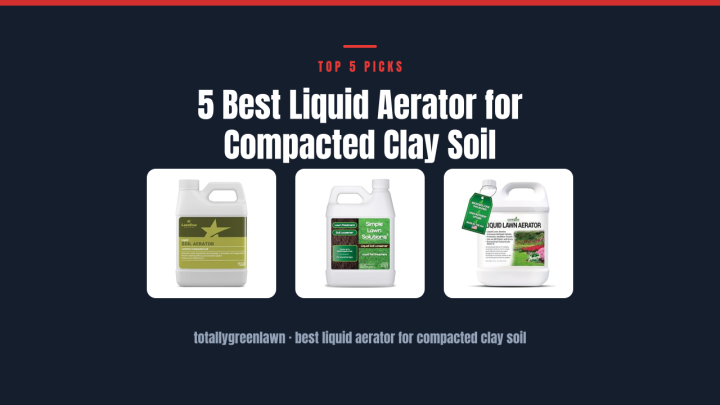
Liquid aeration products (often surfactant-based, with ammonium lauryl sulfate as the active ingredient) work slowly over weeks by helping water penetrate tight soil. They don't punch holes; they change how water moves through the soil. They can pair nicely with spike shoes but shouldn't replace them when real compaction exists.
A garden fork is the budget backup. Step on it, lean back, lift. Same risk as shoes in clay, but at least you feel what's happening underground.
Common Mistakes That Make Aerator Shoes Compact Your Soil
Most of the bad reviews of spike sandals trace back to a handful of predictable errors. If your lawn got worse instead of better, it's almost certainly one of these.
Skipping the Pre-Water
Dry ground is the single biggest culprit. Spike shoes on parched clay don't penetrate; they scrape and shatter. The soil around each hole gets crushed under the pressure.
Always water deeply the day before.
Treating the Lawn During Peak Heat
Aerating during summer dormancy stresses cool-season grasses badly. The open holes dry out roots fast, and recovery is slow. Stick to fall for cool-season lawns and late spring for warm-season ones.
Walking Too Fast
A quick stride skips over the soil instead of stepping into it. The spikes graze the surface and barely leave a mark. Slow, deliberate steps are the difference between real holes and scratched paint.
Ignoring Strap Tension
Loose straps shift during the stride. That means uneven spike depth and dragging that tears turf instead of piercing it. Buckle down until the base plate doesn't rock on your foot.
Aerating When the Ground Is Already Saturated
Soaked soil smears and seals shut. The spike enters, the soil wraps around it, and the hole closes the moment the spike exits. Damp is fine.
Sopping wet is not.
Trying to Fix Real Compaction with Shoes Alone
If your lawn is more than 2 to 3 years old and has heavy clay or constant foot traffic, spike shoes are a band-aid. Rent or buy a core aerator. Shoes were never designed to fix serious compaction, no matter how many passes you make.
Best Situations for Aerator Shoes (and When to Skip Them Entirely)
So who's the actual buyer here? Spike sandals aren't useless, they're just narrow.
Great Fit for These Lawns
Sandy or loamy soil in a small yard, under 2,000 square feet. Newly seeded lawns in active growth that need light airflow. Spot treatment of a worn patch by the mailbox or path.
Aeration prep before a light overseeding pass.
Decent Fit With Caveats
Cool-season grass in fall, when growth is strong and recovery is fast. Warm-season lawns in late spring, during peak growth. Light thatch under 1/2 inch.
Lawns with mostly cosmetic compaction (slight surface hardening, not deep hardpan).
Skip Them If…
Your soil is heavy clay and you haven't core-aerated in years. The lawn sits on hardpan or construction backfill. Thatch is over 1 inch thick.
You have buried sprinkler lines or shallow utility runs and can't confirm depth. Kids or pets use the lawn daily and the surface is visibly hard.
A simple field test helps: push a screwdriver 4 inches into the lawn with one hand. If it goes in easily, shoes can help. If you have to lean on it with both hands, you need a core aerator.
Frequently Asked Questions
How Deep Do Aerator Shoes Actually Go?
Most spikes reach 1.5 to 2 inches, depending on your weight, stride, and soil softness. That's shallow compared to core aerators, which pull 3 inch plugs. Shallow depth limits how much real compaction relief you get.
Do Aerator Shoes Work on Clay Soil?
Not well. Aggregate user reviews consistently report clay lawns getting worse after spike aeration, because the spikes compress rather than relieve. Core aeration or liquid aeration is the better clay strategy.
Can You Overseed Right After Using Aerator Shoes?
Yes, and it's actually one of the best uses for them. The small holes are perfect entry points for grass seed. Rake lightly, broadcast seed, water, and you'll usually see germination within 7 to 14 days.
How Often Should You Use Aerator Shoes?
Once per growing season is plenty for most lawns. Twice a year at most, in spring and fall, if your grass grows aggressively. More than that risks over-stressing the turf without giving it meaningful new benefit.
Are Aerator Shoes Worth It for Small Lawns?
For small, sandy, well-maintained lawns, yes. They cost less than a single rental and work fine for the right soil. For anything compacted or clay-heavy, save the money and rent a core aerator instead.
Will Aerator Shoes Damage Sprinkler Lines or Pet Fences?
Yes, if lines run shallow. Check with your local utility locator service before aerating, even with shoes. A single spike through a shallow irrigation lateral costs more to repair than any aerator ever saved.
🧪 Agronomist Recommended: Soil pH Testing & Aeration Gear
Healthy root systems require balanced soil chemistry and loose structure. Our field testing recommends calibrated digital testers and biological aerators:
- Digital Soil pH & Moisture Tester:Check Digital Lawn Soil pH Testers on Amazon →
- Liquid Soil Aerator & Penetrant:Check Liquid Soil Aerators & Conditioners on Amazon →
*FTC Disclosure: As an Amazon Associate, Totally Green Lawn earns from qualifying purchases.*

Similar Posts