Kentucky Bluegrass vs Tall Fescue: Which Grass Wins?
Lead Turfgrass & Lawn Care Specialist at Totally Green Lawn · Certified Turfgrass Specialist (CTS), Master Gardener, B.S. in Agronomy & Turf Science · 14+ years in residential turf management, organic fertilization, and weed science
Picking between these two cool-season grasses is one of the most common decisions homeowners face, and the kentucky bluegrass vs tall fescue comparison comes down to your climate, soil, and how much babysitting your lawn actually gets. Both look great in a magazine, but they behave nothing alike once they're living in your yard.
In our research, the NTEP (National Turfgrass Evaluation Program) trials show tall fescue rooting up to 2.5 feet deep while Kentucky bluegrass stays mostly in the top 6 to 12 inches, and that single root-depth gap changes everything about water needs, heat survival, and which grass belongs in your zip code. As of 2026, regional extension services continue to recommend them for very different conditions, so let's break down what actually separates them.
Quick Answer
Kentucky bluegrass is a rhizome-spreading, self-repairing grass. It prefers cooler northern climates. Tall fescue is a deep-rooted bunch grass.
It handles heat, drought, and clay far better. Pick Kentucky bluegrass for cold northern zones. Pick tall fescue for transition zones and hot, dry summers.
Both work as blends.
How Kentucky Bluegrass and Tall Fescue Actually Differ
The biggest difference between these two grasses isn't color or blade width. It's how they grow and spread.
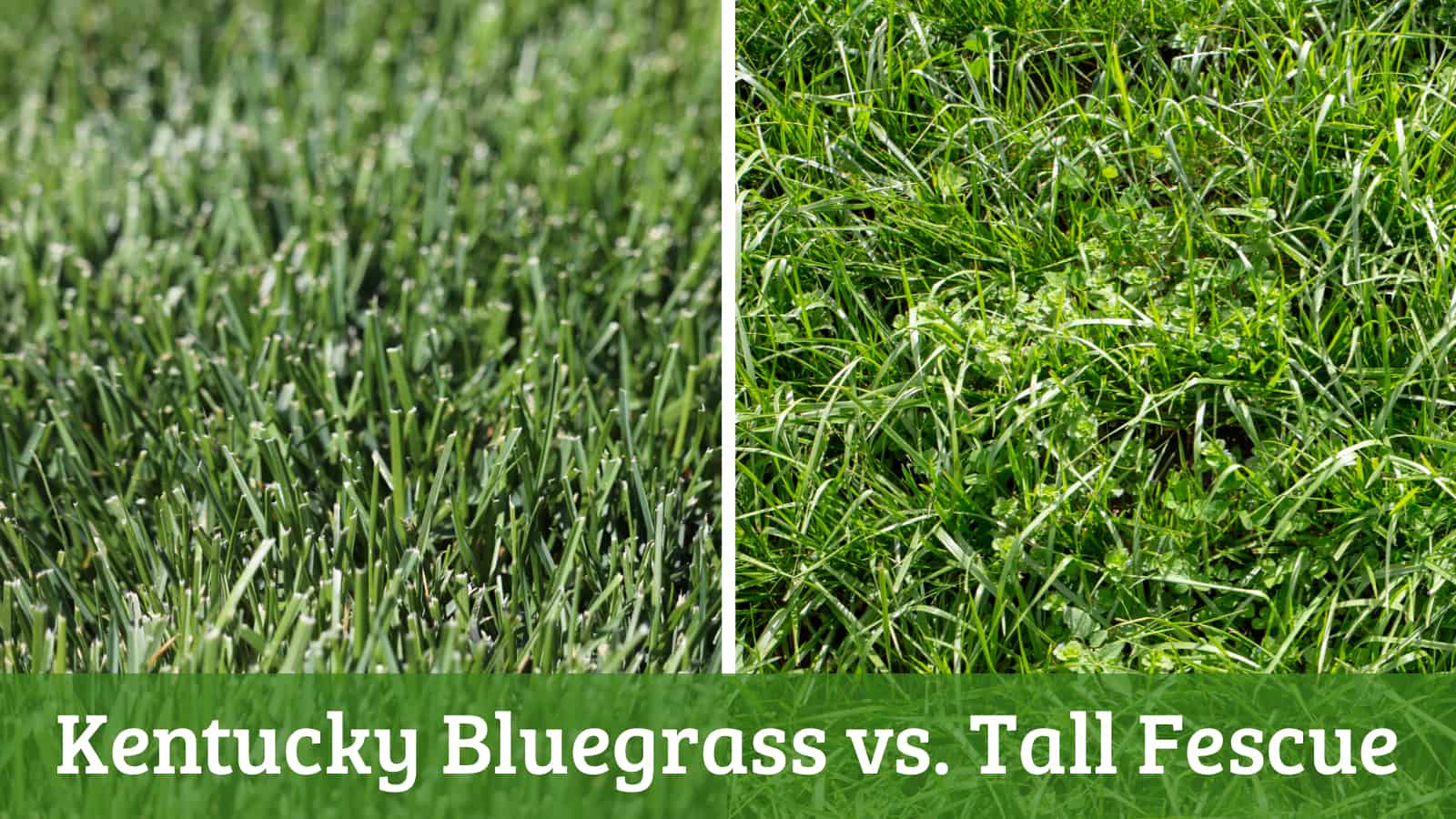
Kentucky bluegrass (Poa pratensis) spreads underground through rhizomes. Think of rhizomes as little horizontal stems that send up new shoots as they creep along. This is why a Kentucky bluegrass lawn slowly knits itself back together after bare spots, dog damage, or divots.
It's a sod-forming grass, and that's a huge deal if your yard gets traffic.
Tall fescue (Festuca arundinacea, sometimes called Schedonorus arundinaceus) is a bunch-type grass. It grows in clumps and does not spread sideways. If a patch dies, you have to reseed or overseed to fill it in.
Modern turf-type tall fescues have been bred for finer blades and darker color, but the bunch habit is still the defining trait.
Here's a side-by-side look at the core biology:
| Trait | Kentucky Bluegrass | Tall Fescue |
|---|---|---|
| Growth habit | Rhizomatous, sod-forming | Bunch-type, clumping |
| Blade texture | Medium-fine, boat-shaped tip | Coarse to medium, ribbed |
| Root depth | 6 to 12 inches typical | 2 to 3 feet possible |
| Color | Rich, dark blue-green | Medium to dark green |
| Self-repair | Yes, via rhizomes | No, must reseed |
| Establishment speed | Slow (14 to 30 days) | Fast (7 to 14 days) |
That root depth row is worth circling back to. A tall fescue plant reaching 2 to 3 feet deep can pull moisture from soil layers a Kentucky bluegrass plant can't even touch. That's the whole drought-tolerance story in one line.
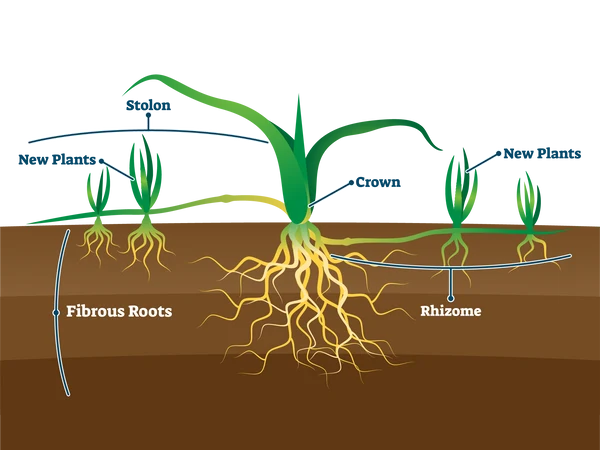
If you could slice into the soil under each lawn, you'd see tall fescue roots diving deep while Kentucky bluegrass forms a dense, shallow mat. That mat is great for choking out weeds, but it's also the first thing to brown out during a dry July.
Side-by-Side Comparison: Climate, Maintenance, and Performance
Looking at these grasses head-to-head across the categories homeowners actually care about makes the choice a lot easier.
Climate and Hardiness
Kentucky bluegrass thrives in USDA Zones 3 through 7. It loves cold winters and mild summers. Once daytime temps stay above 85°F for weeks, it goes dormant or struggles.
It can take brutal cold, down to well below zero, without flinching.
Tall fescue handles Zones 4 through 8, including the dreaded transition zone where neither warm nor cool-season grasses feel fully at home. It tolerates heat better than Kentucky bluegrass and still survives cold winters in most of the Midwest and Mid-Atlantic. Per university extension data, tall fescue is the most widely recommended cool-season grass in the transition zone.
Drought and Heat Tolerance
Tall fescue wins this one clearly. Its deep root system mines subsoil moisture, and modern cultivars stay green longer between waterings. Once established, it can survive a couple of weeks of dry weather without irrigation.
Kentucky bluegrass goes dormant fast under heat and drought stress. Dormancy isn't death, and the crown can survive for 4 to 6 weeks without water, but your lawn will look dead brown until cooler weather returns. If you want a green lawn through August in Missouri, Kentucky bluegrass is the wrong pick.
Shade Tolerance
Both grasses handle partial shade, but neither loves deep shade. Tall fescue handles 3 to 4 hours of filtered light a bit better. Kentucky bluegrass needs at least 4 to 6 hours of direct sun to stay thick.
Under heavy tree canopy, both thin out, and you're better off with a fine fescue blend.
Wear and Traffic
Kentucky bluegrass wins on traffic recovery, thanks to those rhizomes. A baseball game or a dog tearing through the yard will fill back in over a few weeks. Tall fescue takes wear about as well, but it doesn't recover from damage on its own.
High-traffic yards with kids and dogs often do best as a blend.
Disease Pressure
This one's a wash in the wrong direction. Kentucky bluegrass struggles with dollar spot, summer patch, and rust. Tall fescue is the textbook victim of brown patch during hot, humid summers.
Neither is bulletproof, and both reward proper mowing height, watering in the morning, and fall fertilization.
Maintenance Needs
| Task | Kentucky Bluegrass | Tall Fescue |
|---|---|---|
| Mowing height | 2.5 to 3.5 inches | 3 to 4 inches |
| Annual nitrogen | 3 to 4 lb per 1,000 sq ft | 2 to 3 lb per 1,000 sq ft |
| Irrigation demand | Moderate to high | Low to moderate |
| Thatch risk | Moderate to high | Low |
| Overseeding needed | Rarely | Every 2 to 3 years |
Tall fescue is genuinely the lower-maintenance grass of the two. Less fertilizer, less water, no thatch removal every few years. The trade-off is the occasional overseeding to keep the stand thick.
Cost to Establish
Seed prices shift by region and cultivar, but tall fescue seed typically runs $3 to $5 per pound while Kentucky bluegrass sits around $5 to $8 per pound. Seeding rates differ too, so do the math for your square footage before assuming one is cheaper.
Where Each Grass Wins (And Where It Falls Apart)
Let's pin down the exact conditions where each grass is the right call, and where it absolutely isn't.
Kentucky Bluegrass Is the Right Pick If You Live In
- USDA Zones 3 to 6 with cold winters and mild summers
- The Upper Midwest, Northeast, or Pacific Northwest
- A yard with good loamy soil and reliable rainfall or irrigation
- A high-traffic lawn that needs self-repair
- A homeowner willing to water during dry spells and feed 3 to 4 times a year
Kentucky Bluegrass Falls Apart When
- Summer temps stay above 85°F for extended stretches
- The lawn gets less than 4 hours of direct sun
- Watering restrictions hit during July and August
- The soil is heavy clay with poor drainage (rhizomes rot in soggy soil)
Tall Fescue Is the Right Pick If You Live In
- The transition zone (roughly Zones 6 to 7, including Virginia, Kentucky, Tennessee, the Carolinas, Missouri, Kansas)
- Areas with hot, dry summers and clay soils
- A region with periodic drought or watering restrictions
- A homeowner who wants a lower-maintenance lawn with fewer fertilizer passes
- A coastal or Mid-Atlantic yard with humidity swings
Tall Fescue Falls Apart When
- The lawn takes heavy wear and you don't overseed (bare spots stay bare)
- You mow it short like a golf green (it needs 3 to 4 inches)
- Brown patch pressure is severe in your area and you can't spray fungicide
- You're north of Zone 4 and want the deepest cold tolerance
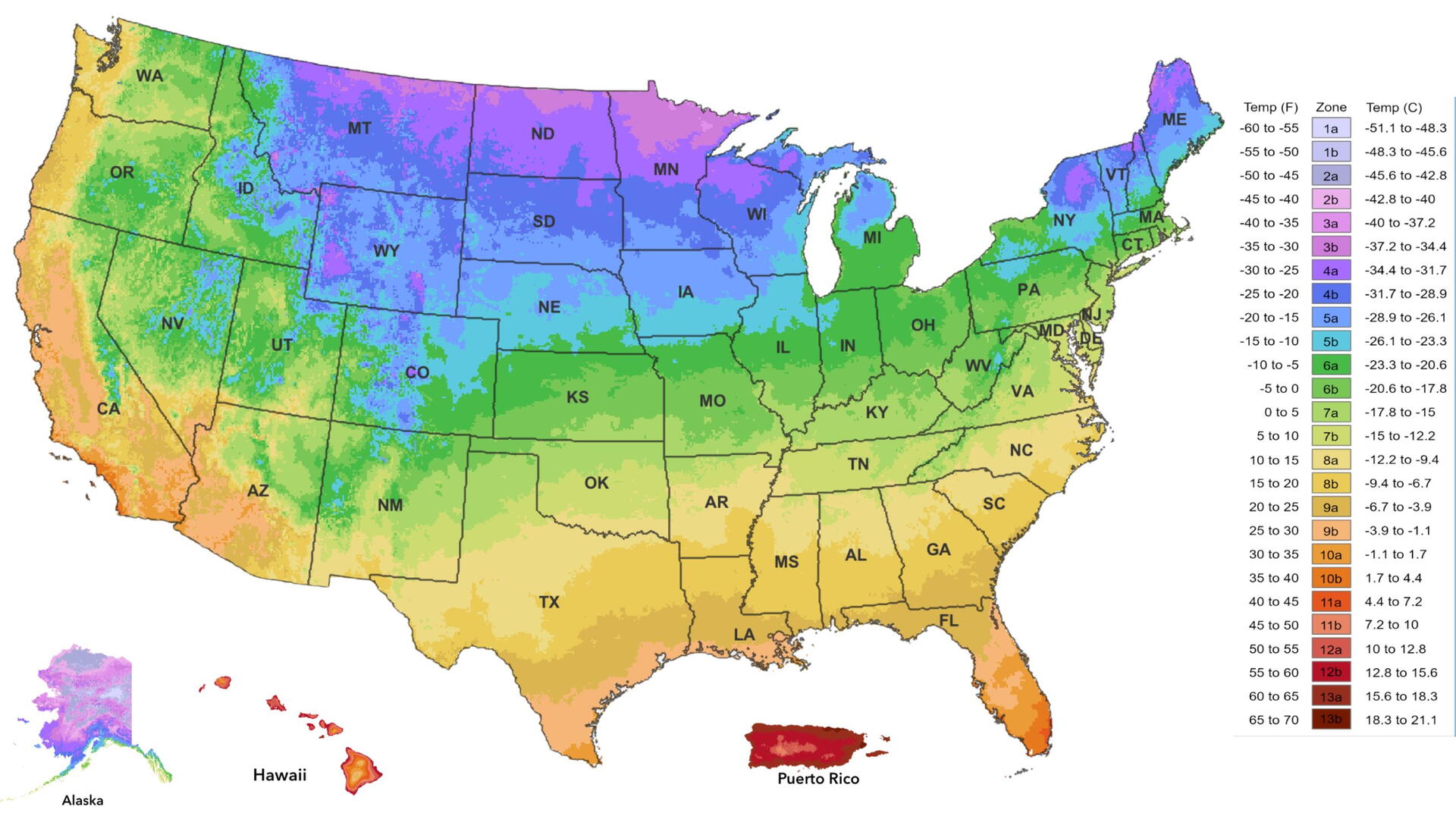
The climate zone map tells the real story. Anywhere in deep blue (cold) is Kentucky bluegrass country. The band running through the middle is tall fescue's sweet spot, and the warm green band to the south is where neither cool-season grass thrives long-term.
The USDA Plant Hardiness Zone Map is the right reference if you're not sure where your zip code falls.
How to Choose the Right Grass for Your Lawn
Five questions cut through the marketing and tell you which grass to seed.
- What's your USDA zone? Below Zone 6 with cold winters, lean Kentucky bluegrass. Zones 6 to 8 with hot summers, lean tall fescue.
- How much water can you commit to? If you're on a well or have summer restrictions, tall fescue is the safer bet.
- What's your soil like? Heavy clay loves tall fescue. Sandy or loamy soil supports either grass.
- How much traffic does the lawn take? Kids, dogs, and play areas benefit from a Kentucky bluegrass base or a KBG/tall fescue blend.
- How much do you want to mow and feed? Tall fescue needs less of both.
If you're still on the fence, a 90/10 or 80/20 tall fescue/Kentucky bluegrass blend gives you tall fescue's tough roots and Kentucky bluegrass's self-repair. That's the most popular transition-zone mix sold by university extension services right now.
For a more detailed regional breakdown, the Cooperative Extension System puts out state-specific lawn guides that match grass type to local conditions. It's the most reliable free resource most homeowners never click on.
Establishment, Seeding Rates, and First-Year Care
Putting either grass in starts the same way, but the numbers diverge quickly.
Always begin with a soil test. Target a pH between 6.0 and 7.0. Lime or sulfur adjustments take 2 to 3 months to work, so test in summer for a fall seeding.
Seeding Rates and Timing
| Step | Kentucky Bluegrass | Tall Fescue |
|---|---|---|
| Best seeding window | Late summer to early fall | Late summer to early fall |
| Seed rate (new lawn) | 2 to 3 lb per 1,000 sq ft | 6 to 8 lb per 1,000 sq ft |
| Seeding depth | 1/4 inch | 1/4 to 1/2 inch |
| Days to germinate | 14 to 30 | 7 to 14 |
| Time to full cover | 6 to 12 months | 4 to 8 weeks |
Fall seeding beats spring every time. Soil is warm, air is cooling, and weeds are fading. That combo lets young grass root deep before winter without competing against crabgrass.
Watering Through Establishment
Keep the top inch of soil moist until germination. That usually means 2 to 4 short waterings per day for the first 2 weeks. Once blades hit 2 inches, back off to deeper, less frequent soakings.
This trains roots to chase moisture downward.
First Mowing
For Kentucky bluegrass, mow when most of the lawn hits 3.5 inches and cut no more than the top third. For tall fescue, wait until 4 inches and cut to about 3. Sharp blades matter more than brand.
Dull blades shred young grass and open the door to disease.
Common Mistakes Homeowners Make With Each Grass
Most lawn problems trace back to one of these missteps. Skip them and you'll save yourself a season of frustration.
Mowing Too Short
This is the single biggest mistake with tall fescue. Cutting at 2 inches scalps the crown, lets soil bake, and invites crabgrass. Stay at 3 to 4 inches.
Kentucky bluegrass gets scalped for the opposite reason. People want a golf-course look and mow at 1.5 inches, which weakens the rhizomes and burns the lawn in summer. Hold the line at 2.5 to 3.5 inches.
Watering at Night
Both grasses hate sitting wet overnight. Brown patch loves tall fescue with wet leaves after dark. Dollar spot loves Kentucky bluegrass the same way.
Water in the early morning, between 5 a.m. and 9 a.m., so blades dry by noon.
Skipping Overseeding on Tall Fescue
Because tall fescue doesn't spread, the stand thins every year. Plan to overseed at 3 to 4 lb per 1,000 sq ft every 2 to 3 years in early fall. Skip this and you'll see clumping and bare patches by year four.
Over-Fertilizing Kentucky Bluegrass
More nitrogen doesn't mean a thicker lawn. Pushing more than 4 lb per 1,000 sq ft per year creates thatch, fuels disease, and burns roots. Stick to 2 to 3 fall applications and a light spring feeding.
Ignoring the Transition Zone Reality
Planting Kentucky bluegrass in Atlanta or tall fescue in northern Minnesota sets you up for failure. Match the grass to your zone first, then worry about cultivar selection.
Frequently Asked Questions
Can you mix Kentucky bluegrass and tall fescue in the same lawn?
Yes, and many extension services recommend it. A 90/10 or 80/20 tall fescue to Kentucky bluegrass blend gives you deep roots plus self-repair. The Kentucky bluegrass fills gaps left by wear, while tall fescue carries the heat and drought load.
Which grass is better for dogs and heavy traffic?
Kentucky bluegrass wins on recovery thanks to its rhizomes. Tall fescue takes wear about as well, but damage stays visible until you reseed. For active yards, a blend is usually the smartest move.
How often do you need to water each grass?
Tall fescue needs about 1 inch of water per week, including rain, once established. Kentucky bluegrass prefers 1 to 1.5 inches per week, especially in summer. Both benefit from deep, infrequent soakings rather than daily sprinkles.
Will Kentucky bluegrass survive a hot southern summer?
It survives in a dormant state for 4 to 6 weeks without water, but it'll look brown and dead. If you want green through July and August in the South, tall fescue is the better pick, or consider a warm-season grass for that zone.
How long does each grass take to look like a real lawn?
Tall fescue reaches full coverage in 4 to 8 weeks under good conditions. Kentucky bluegrass takes 6 to 12 months because of its slower germination. Plan Kentucky bluegrass seeding in early fall if you want the lawn to look reasonable by the following spring.
Which grass is cheaper to maintain long term?
Tall fescue costs less in fertilizer, water, and thatch control. Annual nitrogen needs run about a third lower, and irrigation can drop by 20 to 30 percent in many regions. Kentucky bluegrass costs more to maintain but offers a denser, self-repairing stand.
🚜 Agronomist Recommended: Dethatching & Disease Management Tools
Combat thatch suffocating your turf and stop rapid fungal spread with tested maintenance equipment and systemic fungicides:
- Electric Power Dethatcher & Scarifier:Check Electric Dethatchers & Scarifiers on Amazon →
- Broad-Spectrum Systemic Fungicide:Check Scotts DiseaseEx Lawn Fungicide on Amazon →
*FTC Disclosure: As an Amazon Associate, Totally Green Lawn earns from qualifying purchases.*

Similar Posts