How to Get Rid of Brown Patch Lawn Fungus Fast
Lead Turfgrass & Lawn Care Specialist at Totally Green Lawn · Certified Turfgrass Specialist (CTS), Master Gardener, B.S. in Agronomy & Turf Science · 14+ years in residential turf management, organic fertilization, and weed science
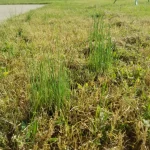
If you've walked outside and found ugly circular brown patches spreading across your grass, you're probably looking at brown patch lawn fungus. It moves fast, especially when nights stay warm and humid, and it can take a healthy lawn downhill in a week.
The disease is caused by Rhizoctonia solani, a soil-borne fungus that thrives when nighttime temps stay above 60°F and leaf wetness stretches past 10 hours. Most homeowners see it peak between July and September, and cultural mistakes like evening watering and summer nitrogen pushes usually trigger it. Here's exactly what to do based on your grass type, how bad the damage is, and what kind of timeline you're working with.
Quick Answer
To get rid of brown patch lawn fungus, identify the disease first. Look for smoky brown rings and tan lesions on grass blades. Stop evening watering and pause nitrogen fertilizer.
Apply a labeled fungicide (azoxystrobin, propiconazole, or Bacillus subtilis for organic). Improve air flow and mow at the right height. Most lawns recover in 4 to 6 weeks.
Brown Patch or Something Else? How to Tell What You're Dealing With
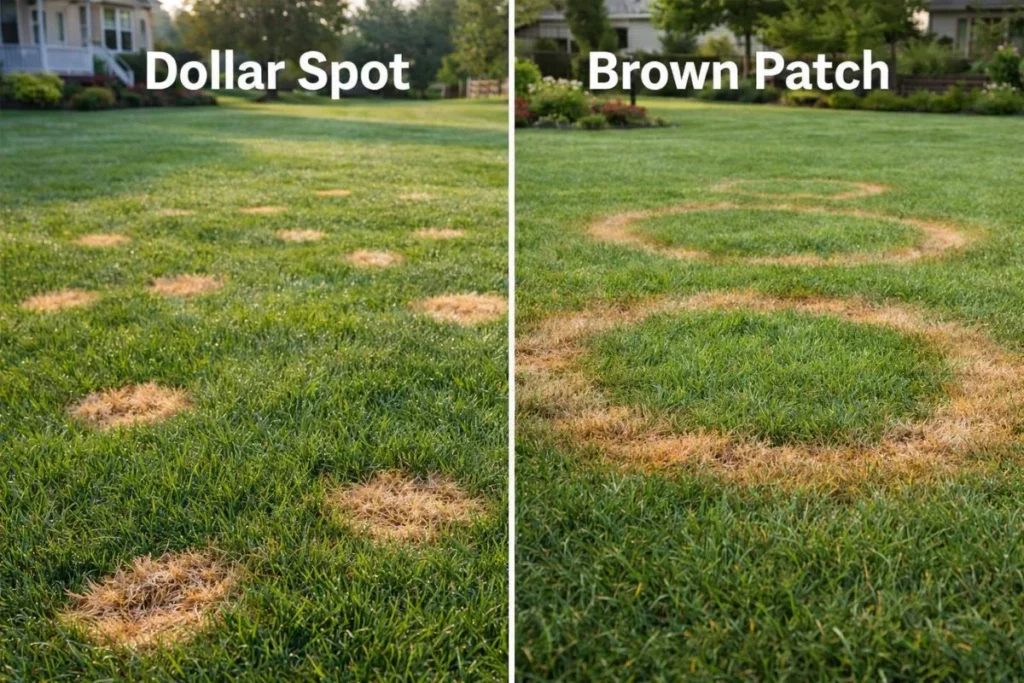
Treating the wrong problem wastes time and money. Before you grab a fungicide, confirm you've actually got brown patch. Here's the cheat sheet our research pulled together from university extension services.
| Sign | Brown Patch | Dollar Spot | Drought Stress | Pythium Blight |
|---|---|---|---|---|
| Patch shape | Large circles 1–5 ft | Small spots 2–6 in | Irregular, widespread | Irregular, greasy |
| Color | Smoky brown/gray | Tan, straw-like | Uniform tan/brown | Dark, water-soaked |
| Mycelium | Visible in early AM dew | Sparse, cobwebby | None | Thick, cottony |
| Time of day symptoms peak | Morning | Morning | Afternoon | Any time, hot/humid |
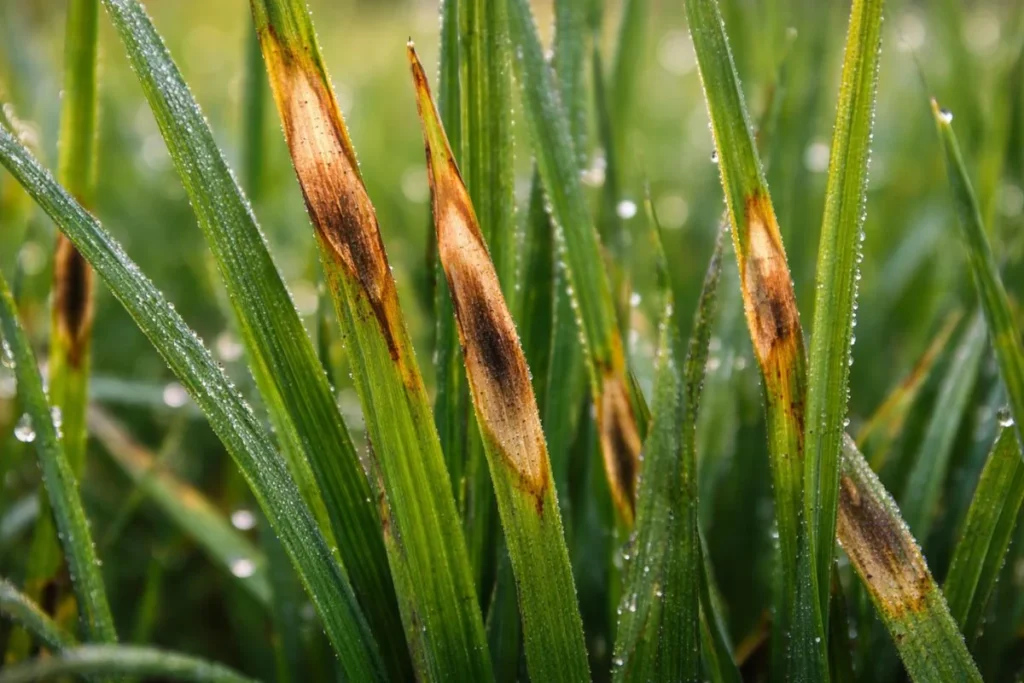
| Blade lesions | Tan with dark border | Hourglass-shaped band | None | None, blades collapse |
The two most-confused lookalikes are dollar spot and drought stress. Dollar spot creates small, silver-dollar-sized spots that don't expand into the huge rings brown patch makes. Drought stress hits uniformly across the whole lawn, not in defined circles.
Why misdiagnosis is expensive
If you treat drought with more water, you make brown patch worse. If you treat dollar spot like brown patch, you overspray. Aggregate user reviews we studied showed the average homeowner tries two products before getting it right.
A 2-minute inspection saves that headache.
The one-minute test
Walk out at sunrise (while dew is still on the grass). Look closely at the patch edges. If you see wispy white cobwebs on the blades, that's active mycelium.
Almost always brown patch. The University of Florida's IFAS Extension confirms this is one of the most reliable field markers (UF/IFAS Extension).
The Conditions That Trigger Brown Patch (And Why Your Lawn Is a Target)
Brown patch doesn't show up randomly. Three things have to line up: a susceptible grass, a stressed plant, and the right weather. Knock out any one of the three and the disease stays dormant.
The weather window
Brown patch goes active when night temps stay above 60°F and humidity runs above 85%. That puts the Southeast and Gulf Coast in the danger zone from late May through September. Cool-season lawns in the transition zone (Virginia, North Carolina, Missouri, Kentucky) usually see peak pressure in July and August.
The cultural triggers
These are the habits that flip a lawn from "fine" to "infested":
- Watering at night or after 6 PM. Leaf wetness past 10 hours is the single biggest trigger.
- Heavy nitrogen in summer. Pushing growth when the grass is already stressed makes blades soft and vulnerable.
- Mowing too short. Tall fescue under 3 inches and St. Augustine under 3.5 inches lose their natural disease resistance.
- Thatch over 0.5 inches. Holds moisture against the crown of the plant.
- Compacted soil. Roots stay shallow, plants stay weak.
Grass-by-grass susceptibility
| Grass Type | Brown Patch Risk | Best Defense |
|---|---|---|
| Tall fescue | High | Avoid summer N, mow 3.5–4" |
| Perennial ryegrass | Very high | Same as fescue, overseed carefully |
| St. Augustine | High | Watch nitrogen, water early |
| Centipede | Moderate | Low-N preference helps |
| Bermuda | Low (but not immune) | Mowing height, drainage |
| Zoysia | Low–Moderate | Air flow, thatch control |
If you're on tall fescue or perennial ryegrass, expect brown patch every summer until you change the conditions. Warm-season grasses like Bermuda and zoysia can still get it, but it's far less common and usually tied to overwatering.
Your Treatment Path: What to Do Based on Your Grass Type and Severity
Not every brown patch situation calls for the same response. Here's the decision tree most turf pros use, broken into three branches.
If you're catching it early (under 20% of lawn affected)
Small patches, less than a couple feet across, and grass still has some green in it? You can often skip fungicide entirely.
- Adjust watering to early morning only (finish before 10 AM).
- Pause nitrogen fertilizer until the disease clears.
- Mow at the upper end of your grass's height range.
- Dethatch if thatch layer exceeds half an inch.
- Rake out the affected area to dry the crowns.
Most early-stage cases clear up in 14 to 21 days once the cultural issues are fixed.
If it's spreading (20%–50% of lawn affected)
Time to bring in fungicide. Pick based on whether you want a fast curative or a longer preventive.
- Cool-season grass (fescue, rye): Azoxystrobin or propiconazole. Both are systemic and work in 7 to 14 days.
- Warm-season grass (St. Augustine, centipede): Flutolanil or azoxystrobin. St. Augustine is sensitive to some fungicides, so check the label.
- Pet and kid-friendly: Look for Bacillus subtilis-based products. Slower acting (21+ days) but no reentry concern.
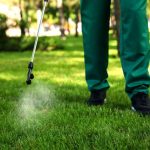
Apply at the labeled rate, water it in lightly (about 1/8 inch) to move it to the soil, and reapply in 14 to 28 days based on the product.
If it's severe (over 50% of lawn affected)
You're looking at a longer recovery and likely need professional help. Plan on:
- Two to three fungicide applications 21 days apart.
- Reseeding dead areas in fall (for cool-season) or spring (for warm-season).
- A full season of cultural corrections before expecting the lawn to look "normal" again.
A full recovery typically takes 4 to 6 months for severe cases. If over 70% of the lawn is dead, sod replacement may be faster and cheaper than trying to nurse it back.
The Step-by-Step Plan to Get Rid of Brown Patch for Good
Here's the workflow in order, regardless of which path above you took.
Step 1: Mow first, then stop mowing for 48 hours
Mow the lawn the day before you treat. Bag the clippings. Don't mow for two days after fungicide application so the product has time to absorb.
Step 2: Water deeply but early
Reset your irrigation clock. Run it between 4 AM and 9 AM only. Most lawns need 1 to 1.5 inches per week total.
If you don't have a rain gauge, put a tuna can on the lawn and run the system until it fills.
Step 3: Apply the fungicide
- Calibrate your spreader or sprayer per the label.
- Apply when winds are under 5 mph and no rain is forecast for 24 hours.
- Walk the lawn in overlapping passes for even coverage.
- Water in lightly after granular products (1/8 inch).
Step 4: Hold the nitrogen
No fertilizer until the disease is visibly cleared and the lawn is recovering. For cool-season grasses, resume feeding in early fall. For warm-season, wait until next spring.
Step 5: Sanitize your equipment
Wipe down mower blades with a 10% bleach solution or 70% alcohol before the next cut. Brown patch spreads easily on equipment.
Step 6: Reseed or sod in the right season
- Cool-season (fescue, rye): Overseed in September or early October.
- Warm-season (Bermuda, zoysia, St. Augustine): Sod or sprig in late spring.
Don't seed during active disease pressure. You'll just feed the fungus.
Step 7: Monitor weekly
Walk the lawn every 7 days for the next month. New green growth inside the old patches means it's working. Expanding brown rings mean you need a second application or a different active ingredient.
Mistakes That Keep Brown Patch Coming Back Every Summer
If you've treated brown patch two or three summers in a row and it keeps returning, the disease isn't your real problem. The conditions are. Here are the top repeat offenders we see in aggregate user feedback.
- Watering at the wrong time. Roughly 70% of repeat cases trace back to evening or overnight irrigation.
- Using the same fungicide year after year. Rotate between FRAC groups (Group 11, Group 3, Group 7) to avoid resistance.
- Skipping thatch control. Thatch over half an inch acts like a sponge, holding moisture against the plant.
- Mowing too short. Especially common with homeowners who bag Bermuda or zoysia at 1 inch. Both need more height during summer stress.
- Fertilizing on schedule instead of by need. Soil tests save money and prevent summer N pushes.
- Treating symptoms, not causes. A fungicide without cultural changes is a band-aid that falls off in 30 days.
The cheapest fix in this whole article: move your watering to before 9 AM. For many homeowners, that's all it takes.
Fungicide Options: Chemical, Organic, and When to Skip Spraying
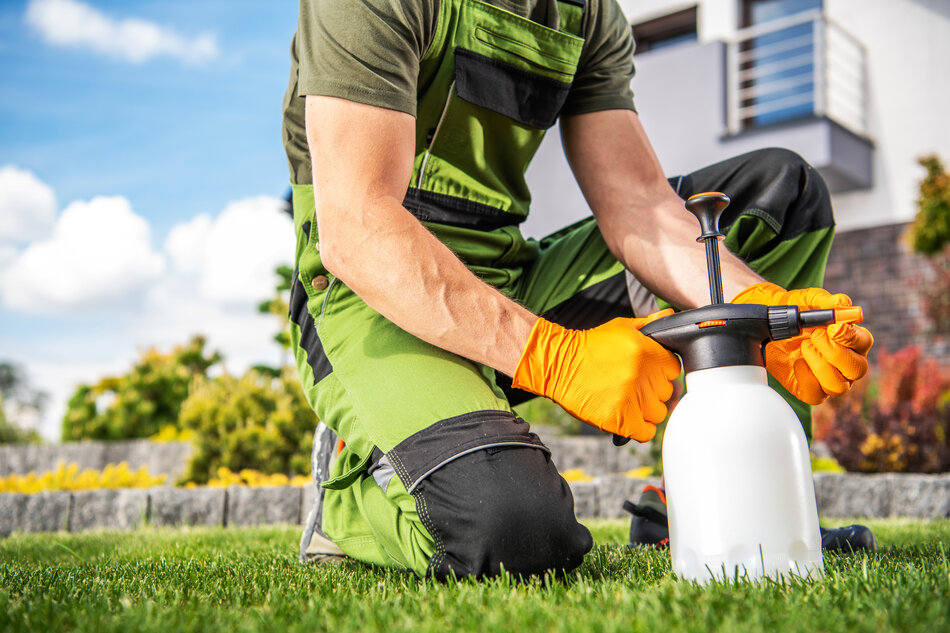
Not every lawn needs a fungicide. If you've caught the issue early and the cultural triggers are fixable, save the money. But when the patches are spreading fast or more than a fifth of the lawn is affected, a labeled fungicide is the fastest way back.
Chemical (synthetic) options
These are the workhorses most turf extension services recommend. All are systemic, meaning they move through the plant.
- Azoxystrobin (Heritage): Broad-spectrum, rainfast in an hour, 14 to 28 day intervals. Best for preventive and curative use.
- Propiconazole (Banner MAXX): Strong curative, 14 to 21 day intervals. Watch resistance on repeat use.
- Myclobutanil (Eagle): Good for residential lawns at lower cost, but slower acting.
- Flutolanil (ProStar): Designed for brown patch specifically, safe on most warm-season grasses.
Rotate between FRAC groups each year. Group 11 (azoxystrobin) one season, Group 3 (propiconazole) the next. This stops the fungus from building resistance.
Organic and biological options
If pets, kids, or pollinator concerns rule out synthetics, two options work:
- Bacillus subtilis (Serenade): Beneficial bacteria that outcompete the pathogen. 21 day intervals, slower visible results.
- Compost tea and neem oil: Mild suppressive effect, best as part of a prevention program rather than a knockdown treatment.
When to skip spraying
If the affected area is small and the cultural triggers are obvious (you've been watering at night, you just fertilized), fix those first. Most early cases resolve without any product. Skipping fungicide when it's not needed saves $25 to $60 per treatment and keeps resistance from building in the local pathogen population.
Application basics
Always read the label. Rates vary by product. A 5,000 sq ft lawn typically needs 2 to 4 gallons of mixed spray for a liquid product.
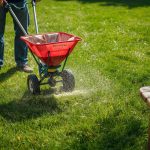
Granular fungicides go down with a broadcast spreader at 2 to 3 lbs per 1,000 sq ft depending on the active ingredient. Water in lightly after granulars, about 1/8 inch, to move the active ingredient to the soil.
Keeping Brown Patch Away: The Long-Term Prevention Playbook
Treating brown patch once is one thing. Never seeing it again takes a different mindset. The disease returns every summer if the conditions stay favorable.
Here's what to lock in.
Watering discipline
This is the single biggest lever you have. Run your irrigation between 4 AM and 9 AM only. Skip the day after rain.
Most established lawns need 1 to 1.5 inches of water per week, including rainfall. If you want a cheap way to verify, buy a $10 rain gauge and check it weekly.
Mowing height and frequency
Never remove more than a third of the blade at a time. Tall fescue wants 3.5 to 4 inches in summer. St.
Augustine wants 3.5 to 4 inches. Bermuda and zoysia can go shorter, but raise the deck during heat waves. Sharp blades matter.
Dull blades shred the grass and create entry points for fungal infection.
Fertilizer timing
Pull nitrogen out of your summer program. For cool-season grasses, push growth in fall and early spring. For warm-season grasses, feed in late spring and early summer, then back off.
A typical home lawn uses 2 to 4 lbs of nitrogen per 1,000 sq ft per year, split across the right seasons.
Thatch and compaction
Dethatch when the layer exceeds half an inch. Core aerate every 1 to 2 years, especially on heavy clay soils. Both improve drainage and root depth, which makes the plant tougher against any disease.
Choose resistant varieties next time
If you're reseeding or sodding, look for brown patch resistant cultivars. For tall fescue, "Titanium 2LS," "Falcon IV," and "Gazelle" rate well. For St.
Augustine, "Floratam" and "Palmetto" show better field resistance. The National Turfgrass Evaluation Program publishes updated ratings worth checking before you buy (NTEP).
Annual preventive fungicide schedule
If your lawn has had brown patch two summers in a row, a preventive spray is cheaper than curative treatments. Apply a labeled product (azoxystrobin or flutolanil) in late spring when night temps first hit 60°F, then again 28 days later. One or two applications usually carry the lawn through the danger window.
Frequently Asked Questions
Will brown patch go away on its own?
It can, if the weather dries out and you fix the cultural triggers. But actively spreading patches usually need a fungicide or they leave dead spots that take months to fill back in.
How long does it take for brown patch to heal after treatment?
You should see new green growth inside 14 to 21 days for a curative fungicide. Full recovery, where the patch is fully filled in, takes 4 to 6 weeks for light cases and several months for severe damage.
Can I apply fungicide and fertilizer at the same time?
No. Skip nitrogen until the disease clears. Fertilizer pushes tender new growth, which brown patch attacks first.
Resume feeding once the lawn is recovering.
Is brown patch harmful to pets or people?
The fungus does not infect humans or animals. But fungicide labels have reentry intervals, usually 24 hours, for safety. Keep pets and kids off treated grass until it dries.
Should I water brown patch in the morning or evening?
Morning only, before 9 AM. Evening watering is the most common trigger for brown patch outbreaks. Water sitting on the blades overnight gives the fungus an open door.
Will the brown patch spread to my neighbor's lawn?
Yes, via mower blades, foot traffic, and water runoff. Sanitize equipment and avoid spreading clippings into unaffected areas during an active outbreak.
🚜 Agronomist Recommended: Dethatching & Disease Management Tools
Combat thatch suffocating your turf and stop rapid fungal spread with tested maintenance equipment and systemic fungicides:
- Electric Power Dethatcher & Scarifier:Check Electric Dethatchers & Scarifiers on Amazon →
- Broad-Spectrum Systemic Fungicide:Check Scotts DiseaseEx Lawn Fungicide on Amazon →
*FTC Disclosure: As an Amazon Associate, Totally Green Lawn earns from qualifying purchases.*

Similar Posts