Manual Thatch Rake vs Electric Dethatcher: Which Is Easier?
Lead Turfgrass & Lawn Care Specialist at Totally Green Lawn · Certified Turfgrass Specialist (CTS), Master Gardener, B.S. in Agronomy & Turf Science · 14+ years in residential turf management, organic fertilization, and weed science
If you're staring at a spongy, brown-tinged lawn wondering whether a manual thatch rake vs electric power dethatcher which is easier for your situation, you're not alone. Most homeowners only think about dethatching when the grass starts looking tired, and by then they're already dreading the workout. The good news: one of these tools is dramatically easier.
It just depends on the size of your yard and how thick your thatch really is.
Here's the practical reality, as of 2026: a manual thatch rake costs around $25 to $50 and works best on lawns under about 1,500 square feet, while an electric dethatcher runs $120 to $300 and shines on anything bigger. University extension research from places like Penn State's College of Agricultural Sciences confirms thatch only needs removal once it passes about half an inch in thickness. Below that, neither tool really earns its keep, and the "easier" question answers itself.
Let's break down which one fits your lawn.

Quick Answer
An electric power dethatcher is easier for most homeowners. It covers roughly 1,000 to 2,000 square feet per hour. A manual thatch rake covers only 250 to 500 square feet in the same time.
Choose the manual rake only for small lawns or thin thatch. Choose the electric dethatcher for anything over 1,500 square feet.
Quick Answer: Which One Is Actually Easier?
Short version: the electric power dethatcher is easier, full stop. It does the same job a manual rake does, but with spinning tines and consistent depth, so you walk behind it instead of ripping into the lawn with your arms and back.
That doesn't mean it's right for everyone. A manual thatch rake is easier in different ways. It's lighter, cheaper, quieter, and never needs an outlet or a charged battery.
For a tiny patch of grass or a quick touch-up, dragging a rake across the lawn beats hauling a 30-pound machine out of the garage.
Here's how to think about it:
- Pick the manual rake if your lawn is under 1,500 sq ft, your thatch is light, or you want zero maintenance and zero storage hassle.
- Pick the electric dethatcher if your lawn is bigger than that, the thatch layer is visibly thick, or your body simply isn't up for hours of pulling a rake through matted grass.
The "easier" question really comes down to how much work your lawn demands, and your tolerance for physical effort. Everything else is just detail.
What Dethatching Actually Involves (and Why "Easy" Depends on Your Lawn)
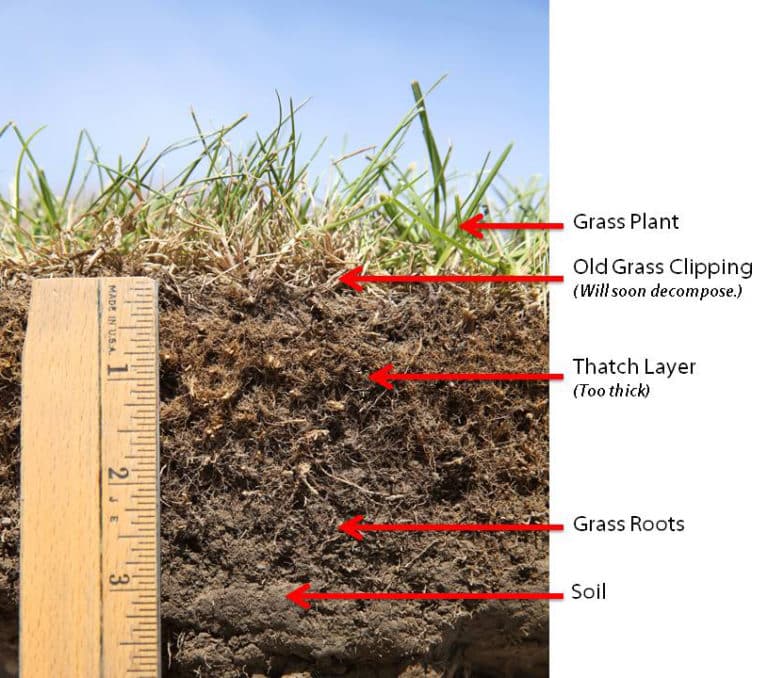
Dethatching is the process of pulling up the layer of dead grass stems, roots, and debris that builds up between your green grass and the soil. That layer is called thatch. A little thatch is normal and even healthy.
It insulates the soil and cushions foot traffic. The trouble starts when it gets thicker than about half an inch.
Once thatch passes that threshold, it starts blocking water, fertilizer, and air from reaching the soil. Your grass struggles. Rain runs off instead of soaking in.
Pests move in. That's when dethatching earns its reputation as a lawn-saving chore.
So what makes one tool easier than the other? Three things:
- How much thatch you actually have
- How big your lawn is
- How much physical effort you want to put in
Manual thatch rakes use short, curved steel tines that you drag through the grass. You're doing all the work. The tines slice into the thatch and pull it up to the surface, where you bag it or rake it away.
It works, but it's slow and tiring, especially on thick thatch.
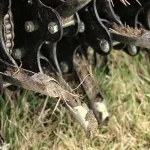
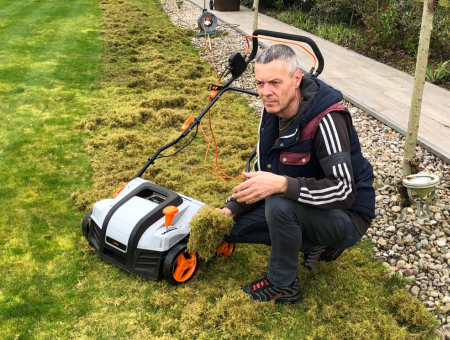
Electric power dethatchers do the same thing with a motorized reel of tines or blades. You push the machine, and the tines spin at a set depth. The machine does the heavy lifting.
You just walk and steer.
The "easy" factor flips based on your situation. If your lawn is small and your thatch is thin, the manual rake is easier because there's no setup. If your lawn is medium-to-large or your thatch is thick, the electric dethatcher is easier because it does in 30 minutes what would take you 2 to 3 hours of back-breaking raking.
Manual Thatch Rake vs. Electric Power Dethatcher: The Real Differences
Both tools remove thatch. They just go about it very differently, and those differences show up in everything from cost to storage to how your arms feel the next day.
How Each Tool Works
A manual thatch rake looks like a bow rake but with sharper, thinner tines designed to slice into thatch. You use a pulling motion, dragging the tines toward you through the grass. The thatch comes up in clumps that you then bag or compost.
An electric power dethatcher is a walk-behind machine with a rotating reel of tines or blades. The motor spins the reel while you push the unit forward, similar to mowing. Some models have a collection bag.
Others just leave the debris on the lawn for you to rake up afterward.
Side-by-Side Comparison
| Feature | Manual Thatch Rake | Electric Power Dethatcher |
|---|---|---|
| Price range | $20–$50 | $100–$300 |
| Weight | 3–5 lbs | 25–40 lbs |
| Coverage per hour | 250–500 sq ft | 1,000–2,000 sq ft |
| Power source | None | Corded electric or battery |
| Noise level | Silent | 75–90 dB |
| Storage | Hangs on a wall | Needs garage space |
| Setup time | Zero | 5–10 minutes |
| Physical effort | High | Moderate |
| Best lawn size | Under 1,500 sq ft | Over 1,500 sq ft |
| Thatch thickness handled | Light to moderate | Moderate to heavy |
Key Differences That Matter
- Speed: The electric dethatcher wins by a wide margin. Aggregate user reviews consistently report finishing a 2,000 sq ft lawn in under an hour with a power dethatcher, versus 3 to 4 hours of raking.
- Effort: With a manual rake, you're doing all the work. Your shoulders, back, and forearms will feel it. The electric dethatcher turns that into a walking job.
- Control: The manual rake gives you more feel for the lawn. You can adjust pressure on the fly and target problem spots. The machine treats the whole lawn the same.
- Cost: The manual rake is 3 to 6 times cheaper upfront. No batteries, no motors, nothing to break.
- Maintenance: Rakes need almost nothing. Electric dethatchers need tine replacement, belt checks, and battery care if cordless.
- Storage: A rake hangs on two hooks. A dethatcher takes up floor space in a garage or shed.
Who Should Grab a Manual Thatch Rake (and When It's the Smarter Call)
A manual thatch rake isn't the "older, worse" version of an electric dethatcher. It's a different tool for a different job. In the right situation, it's genuinely the easier choice.
Best Scenarios for a Manual Rake
- Small lawns: Anything under 1,500 sq ft, like a city yard or a side strip, is faster to rake than to set up, drag out, and clean a machine for.
- Light thatch: If your thatch layer is under half an inch, a manual rake pulls it up quickly with one or two passes. No need for a machine.
- Tight budgets: At $25 to $50, a good manual rake pays for itself the first time you use it. No ongoing costs.
- Storage limitations: Apartment dwellers, renters, and anyone without a garage benefit from a tool that hangs on a wall.
- No power access: If your lawn is far from an outlet and you don't want to deal with extension cords or battery charging, the manual rake just works.
- Quiet neighborhoods: Manual rakes are silent. Electric dethatchers run at 75 to 90 dB, which can upset neighbors on Saturday morning.
When the Manual Rake Is the Clear Winner
If you're only dethatching a small area once a year, the manual rake is easier in every practical sense. There's no setup. There's nothing to plug in.
You grab it, rake for 20 minutes, and you're done. Manufacturer specs for electric dethatchers often recommend them for lawns 1,500 sq ft and up, which tells you the industry doesn't really see them as the right tool for tiny yards.
The other case where the manual rake wins: precision work. If you're targeting a specific bare patch or a section where the thatch is thick but the rest of the lawn is fine, a rake lets you focus your effort without firing up a machine.
Who Should Use an Electric Power Dethatcher (and When It Pays for Itself)
Once your lawn passes roughly 1,500 square feet, the math flips. Manual raking stops being "easy" and starts feeling like a punishment. That's where an electric power dethatcher earns its keep.
Best Scenarios for an Electric Dethatcher
- Medium to large lawns: Anything from 1,500 sq ft up to a half-acre is the sweet spot. You'll finish in a fraction of the time.
- Heavy thatch buildup: If your thatch layer is over half an inch, a manual rake will wear you out before you finish. The motorized tines power through it.
- Limited physical ability: Anyone with back, shoulder, or joint issues gets a real break with a powered unit. You walk. The machine pulls.
- Annual maintenance: If you dethatch every year, the time savings compound. A tool that takes 45 minutes instead of 4 hours is worth the investment.
- Consistent depth: Electric dethatchers maintain a set tine depth across the whole lawn. Manual raking tends to vary in pressure, which leaves uneven results.
When the Electric Dethatcher Is the Clear Winner
Picture a 5,000 sq ft lawn with a thick thatch layer. With a manual rake, you're looking at 8 to 10 hours of work, spread over a weekend, with sore arms to show for it. With an electric dethatcher, the same job takes about 2 to 3 hours, and most of that is walking.
The other win is lawn health. Consistent tine depth means you're removing thatch evenly, without gouging or missing patches. Manufacturer specs for models like the Greenworks and Sun Joe lines consistently highlight adjustable depth settings as the key feature for protecting grass roots.
Cost vs. Value
An electric dethatcher costs more upfront, but renting one runs $40 to $80 per day at most tool rental shops. If you dethatch annually, buying pays for itself in 2 to 3 uses. If it's a one-time job for a neglected lawn you're restoring, renting often makes more sense.
Step-by-Step: Dethatching the Right Way With Either Tool
The tool matters less than the technique. Done wrong, even an electric dethatcher can tear up your lawn. Done right, both tools leave your grass ready to recover and thrive.
Before You Start
- Measure your thatch: Use a trowel to cut a small wedge of turf. If the brown spongy layer is under half an inch, skip dethatching entirely. If it's over that, proceed.
- Mow low: Cut your grass shorter than usual, around 1.5 to 2 inches. This lets the tines reach the thatch without getting tangled in tall grass.
- Water lightly: Moisten the soil the day before. Dry soil is hard on tines and roots. Soggy soil turns into mud. Aim for slightly damp, not wet.
Dethatching Process
- Set the depth: Adjust the tine depth so the blades reach into the thatch but not more than half an inch into the soil.
- Make your first pass: Go in straight lines, similar to mowing. Overlap each pass by about 2 inches for full coverage.
- Cross-hatch if needed: For thick thatch, a second pass at a 45-degree angle catches what you missed.
- Bag or rake debris: Electric dethatchers with collection bags save time. Manual raking always requires follow-up cleanup.
- Water and feed: Soak the lawn lightly after dethatching. Apply a balanced fertilizer to support recovery.
- Overseed bare spots: If dethatching exposed thin areas, overseed now while the soil is exposed and ready.
Timing Matters
Dethatch cool-season grasses in early fall or early spring when growth is active. Dethatch warm-season grasses like Bermuda and zoysia in late spring through early summer. Avoid dethatching during heat waves or drought stress, when grass can't recover quickly.
Mistakes That Make Dethatching Harder Than It Needs to Be
Most dethatching disasters come from rushing the job or skipping prep. These are the mistakes we see over and over in extension service bulletins and homeowner forums alike.
Dethatching at the Wrong Time
Dethatching during peak summer heat stresses grass that can barely handle the temperature. University extension guidance from Michigan State University Extension consistently warns against dethatching cool-season lawns in summer. You'll pull up thatch and your grass will struggle to recover.
Setting the Depth Too Aggressive
Dialing the tines too deep rips into the soil and tears out healthy roots along with the thatch. Half an inch into the soil is the max. If you see bare dirt after a pass, you've gone too deep.
Skipping the Pre-Mow
Trying to dethatch a lawn that's 4 inches tall is a mess. The tines can't reach the thatch, and long grass wraps around everything. Mow first, then dethatch.
Dethatching Every Year Out of Habit
Thatch builds slowly. Most lawns only need dethatching every 2 to 3 years. Doing it annually when it's not needed strips the lawn and disrupts soil biology.
Measure first. If thatch is under half an inch, skip it.
Ignoring Cleanup
Leaving thick thatch clumps on the lawn smothers the grass underneath. Bag it, compost it, or rake it up. Don't leave it sitting.
Not Following Up With Water and Fertilizer
Dethatching stresses grass. Skipping post-care means a thin, weedy lawn in 4 to 6 weeks. Water and feed right after to bounce back fast.
FAQs: Manual Rake vs. Electric Dethatcher Questions Answered
Is a manual thatch rake easier than an electric dethatcher?
For lawns under about 1,500 sq ft or light thatch, yes. A manual rake has no setup, no power cord, and no noise. For anything bigger or thicker, the electric dethatcher is dramatically easier because it cuts the job time by 60 to 70 percent.
How do I know if my lawn actually needs dethatching?
Cut a small wedge of turf with a trowel and measure the brown spongy layer between the grass and the soil. If it's under half an inch, your lawn doesn't need dethatching. If it's over that, you have a thatch problem worth solving.
Can I damage my lawn with an electric dethatcher?
Yes, if you set the depth too aggressive or dethatch during the wrong season. Keep tines set to no more than half an inch into the soil, and dethatch only during active growth periods. Done right, your lawn recovers in 3 to 4 weeks.
How often should I dethatch my lawn?
Most lawns need dethatching every 2 to 3 years. Warm-season grasses like Bermuda and zoysia may need it annually because they produce more stem material. Cool-season grasses like fescue and Kentucky bluegrass build thatch more slowly.
Should I rent or buy an electric dethatcher?
Rent if you only have a one-time project, especially a full lawn restoration. Buy if you maintain a medium-to-large lawn and plan to dethatch every 2 to 3 years. Rental runs $40 to $80 per day.
Buying pays for itself in 2 to 3 uses.
What's the difference between a dethatcher and a scarifier?
They're nearly the same tool. "Scarifier" is the term more common in the UK and Europe, and scarifiers often have vertical blades instead of tines. In North America, "dethatcher" is the standard term.
Both remove thatch. Both work the same way.
🚜 Agronomist Recommended: Dethatching & Disease Management Tools
Combat thatch suffocating your turf and stop rapid fungal spread with tested maintenance equipment and systemic fungicides:
- Electric Power Dethatcher & Scarifier:Check Electric Dethatchers & Scarifiers on Amazon →
- Broad-Spectrum Systemic Fungicide:Check Scotts DiseaseEx Lawn Fungicide on Amazon →
*FTC Disclosure: As an Amazon Associate, Totally Green Lawn earns from qualifying purchases.*

Similar Posts