Why Pulling Nutsedge Spreads It Worse (And What Kills It)
Lead Turfgrass & Lawn Care Specialist at Totally Green Lawn · Certified Turfgrass Specialist (CTS), Master Gardener, B.S. in Agronomy & Turf Science · 14+ years in residential turf management, organic fertilization, and weed science
Why does pulling nutsedge by hand make it spread worse? It usually comes down to one thing: a single nutsedge plant can send out a network of underground tubers that snap apart when you pull, and each broken piece is capable of growing a whole new plant. The action meant to remove the weed actually multiplies it.
Most people who battle nutsedge don't realize that a single plant can produce hundreds of tubers in a season, with some surviving dormant in the soil for up to 10 years, per university extension research. That underground stockpile is the reason a quick hand-pull feels useless. The first thing to understand before grabbing a glove is what's happening below the surface.
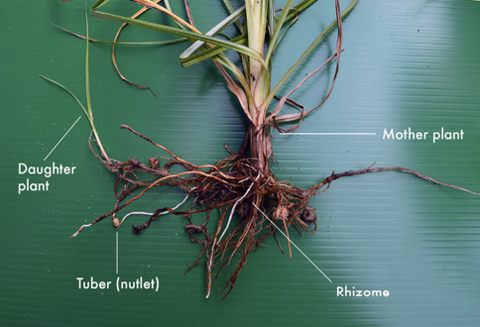
Image source: Bing (Web (fair-use with source credit))
Quick Answer
Pulling nutsedge by hand usually makes it spread because the plant reproduces from underground tubers that snap off and stay in the soil. Each broken tuber resprouts into a new plant within days. The visible green top comes back, often thicker than before, because the tuber chain got fragmented, not removed.
Why Hand-Pulling Nutsedge Usually Backfires
The frustration of pulling a nutsedge plant only to watch it return stronger is one of the most common complaints we hear from homeowners. It's not bad luck. It's biology working against you.
Here's the core problem: nutsedge isn't anchored by a single root the way most weeds are. It grows from a chain of underground tubers (sometimes called nutlets) that can run 4 to 18 inches deep, branching outward in every direction. When you grab the green top and pull, the stem usually snaps right at or just below the soil line.
The visible plant comes up, but the tuber chain stays put.
And it gets worse. In our research, we found that even gentle pulling can break the tuber chain into multiple pieces. Each fragment that's left behind, and there are usually several, has enough stored energy to push up a new shoot within 7 to 14 days.
What looked like "one weed" becomes a small colony.
There's also a soil disturbance problem. Pulling loosens the top layer of soil and opens up space for new nutsedge shoots to emerge. In compacted or irrigated lawns (conditions nutsedge loves), that disturbed patch becomes a welcome mat for the next generation.
The takeaway: Hand-pulling doesn't remove the plant. It prunes the visible part and fragments the reproductive structure underground. As of 2026, this remains the most common reason nutsedge infestations grow worse after well-intentioned hand removal.
How Nutsedge Actually Grows Underground
To beat nutsedge, you've got to picture what's happening out of sight. The green shoots you see are basically the tip of an iceberg, and the real plant lives below.
The Tuber Chain
Nutsedge spreads through a connected chain of tubers, linked by thin rhizomes. One mature plant can send out dozens of these chains in a single growing season. Each tuber can:
- Sit dormant in the soil for 3+ years (some sources cite up to 10).
- Sprout a new shoot when soil temps hit around 70°F.
- Produce its own tuber chain within weeks of emerging.
That last point is the one that catches people off guard. A nutsedge shoot that emerges in June can be laying down new tubers by July. Pull it in August, and you've already left behind a fresh generation of next year's problem.
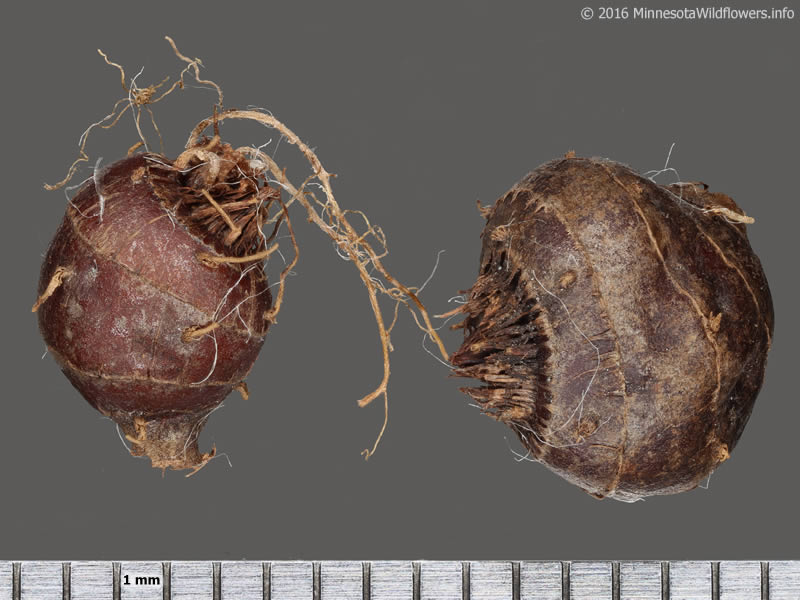
Image source: Web (Bing) / minnesotawildflowers.info (Web image (fair-use with source credit))
Why the Green Top Is the Least Important Part
When you pull a dandelion, you usually get the taproot. Problem solved. With nutsedge, the green top is the disposable part.
The real engine of the plant is the tuber bank underground. Removing the foliage actually triggers a survival response: the tubers send up new shoots faster to replace the lost leaf area.
Think of it like cutting the top off a potato that's already growing eyes. You didn't kill the potato. You just gave it a reason to sprout more aggressively.
Soil Conditions That Make It Worse
Nutsedge thrives where turf struggles. Poorly drained soil, low spots, over-irrigated areas, and compacted ground are all favorite spots. If your lawn has any of these conditions and you've been pulling nutsedge, the disturbed soil and extra moisture from watering nearby stressed turf create a perfect storm for the next round of shoots.
For a deeper look at the biology, university extension publications from Mississippi State University Extension and other land-grant schools confirm the same tuber-driven reproduction pattern across both yellow and purple nutsedge species.
The Moment Hand-Pulling Makes Things Worse
Not every pull makes things worse. The danger window is when the plant is mature enough to have produced tubers, which in most regions is mid-summer onward. Pulling a young shoot in late spring before tuber formation can reduce that plant's spread.
The problem is, most people don't notice nutsedge until the shoots are already tall and obvious, by which point the tubers are already in place.
Here's a quick breakdown of how pulling affects the plant at different stages:
| Growth Stage | Tuber Status | Pulling Effect |
|---|---|---|
| Early shoot (pre-tuber) | No tubers yet | Removal can work, plant is young |
| Mature plant | Tubers forming or formed | Pull fragments the chain, multiplies plants |
| Flowering/seed head | Tubers fully developed, seeds viable | Worst case: spreads both by tuber and seed |
| Dormant season | Tubers alive underground | Pulling has no effect, shoots are absent |
The table shows why timing matters. By the time most homeowners decide to "do something" about nutsedge, the plant is already in the mature stage, where pulling is counterproductive.
There's another moment that makes things worse: pulling when the soil is dry. Dry soil doesn't release the tubers cleanly. They snap and stay behind.
Wet soil (after a rain or irrigation) gives the tubers a better chance of coming up intact, but even then, you're relying on getting the full chain, which is almost never realistic for a 12-inch-deep network.
How to Know It's Nutsedge (And Not Something Else)
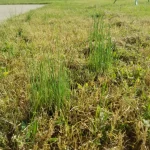
Misidentification is a huge reason people pull the wrong thing and feel like nothing works. Nutsedge often gets mistaken for grass, crabgrass, or a few other sedge species. Knowing the difference changes what you should do next.
The Fastest Identification Checks
- Stem shape: Roll the stem between your fingers. Nutsedge has a triangular stem (a "sedge has edges"). Grass stems are round or flat.
- Growth rate: Nutsedge grows visibly faster than surrounding turf, especially in summer heat. It's usually a lighter, brighter green.
- Leaf arrangement: Three leaves per plant, coming from the base in a distinctive "Y" or umbrella shape. Grass leaves alternate up the stem.
- Feel: The leaves feel stiffer and waxier than grass blades. Some people describe them as "shiny."
Yellow vs. Purple Nutsedge
| Feature | Yellow Nutsedge (Cyperus esculentus) | Purple Nutsedge (Cyperus rotundus) |
|---|---|---|
| Color | Yellow-green | Dark green |
| Seed head | Yellow, branched | Purple-red, tighter |
| Tuber depth | Shallower (4–12 inches) | Deeper (up to 18+ inches) |
| Climate | More common in northern/cooler zones | More common in southern/warm zones |
| Difficulty to control | Moderate | Harder, deeper tubers |
The reason this matters: purple nutsedge has deeper tubers, which means hand-pulling is even less effective, and the window for control is tighter. If you're in a warm-season region and the plant has a reddish-purple seed head, assume deeper tubers and adjust expectations.
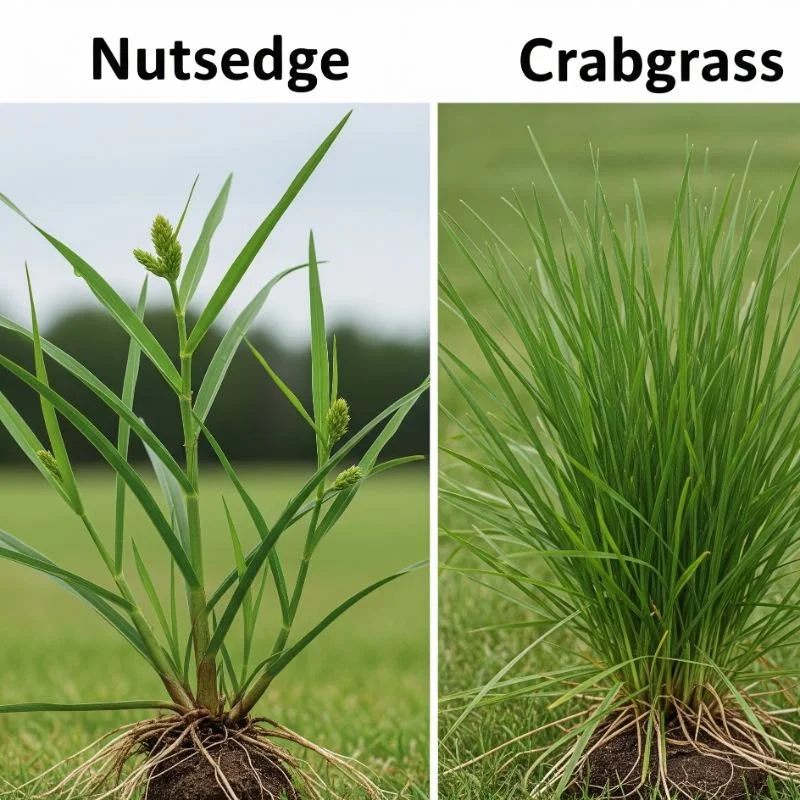
Image source: Web (Bing) / outdooreden.com (Web image (fair-use with source credit))
Why Misidentification Costs You Time
If you're treating what you think is crabgrass with a pre-emergent, you're missing the nutsedge window entirely. Crabgrass preventers don't work on nutsedge because nutsedge isn't a true grass. It's a sedge, with completely different biology.
Same goes for broadleaf weed killers. They roll right off nutsedge's waxy cuticle.
What Actually Works to Get Rid of Nutsedge
Now that the biology makes sense, the control strategy becomes clearer. The goal isn't to pull the green top. It's to exhaust the underground tuber bank or kill it outright.
The Two-Track Approach That Works
Track 1: Cultural controls (slow but real)
- Fix drainage issues. Nutsedge loves wet feet. Aerate compacted areas and correct irrigation runoff.
- Mow at the right height for your turf species. Dense, healthy turf outcompetes nutsedge seedlings.
- Overseed thin areas in fall to close the canopy and reduce open soil where nutsedge can establish.
- Hand-pull only when shoots are young (pre-tuber) and you've soaked the soil first. Even then, expect to repeat every 2 weeks for a full season.
Track 2: Chemical controls (faster, more reliable)
- Selective post-emergent herbicides labeled for nutsedge are the most consistent option. Active ingredients to look for include halosulfuron and sulfentrazone, both of which are taken up by the foliage and transported down into the tubers.
- Timing matters. Apply when nutsedge is actively growing (soil temps above 70°F) and the plant is at the 3-to-5 leaf stage, but before full tuber maturity.
- Expect repeat applications. One spray rarely finishes the job, because not all tubers are in the same growth stage at the same time. A typical program runs 2 to 3 applications, 21 to 30 days apart.
- Pre-emergent options exist but are limited. They suppress new nutsedge from seed but don't touch existing tubers.
Why Pulling Can Still Have a Place
We're not saying never pull. The rule of thumb is this: pulling is useful only when combined with herbicide treatment and only on young shoots before tubers form. In that case, pulling reduces the above-ground surface area, which helps the herbicide penetrate more evenly.
Pulling alone, in any stage beyond early shoot growth, is a waste of time. Worse, it's often the reason the infestation grows.
Managing Expectations
The honest truth: a serious nutsedge infestation is a multi-year project, not a weekend fix. Even with proper herbicide use, expect:
- Season 1: Significant reduction in visible plants, but not elimination.
- Season 2: Continued retreat, with spot treatments for survivors.
- Season 3: Mostly gone if the program is consistent and turf density has improved.
Skipping years, switching methods halfway, or relying on hand-pulling resets the clock. The tuber bank in the soil doesn't care about your timeline. It just waits.
When to Call a Pro (And When DIY Is Fine)
Most nutsedge problems can be handled without a professional. A few situations cross the line where DIY starts costing more than hiring help.
DIY Makes Sense If
- The infestation is small and contained to one or two patches.
- You can correctly identify the species (yellow vs. purple).
- You're willing to commit to a 2-to-3 year treatment program.
- You're comfortable applying selective herbicides and following the label.
- The affected area is in a standard home lawn with no nearby sensitive plants.
In these cases, an over-the-counter nutsedge herbicide, applied according to label directions, combined with cultural fixes (drainage, mowing height, overseeding) will get you there. It just takes patience.
Call a Pro If
- More than 25 to 30 percent of the lawn is affected.
- You're in a warm-season region dealing with purple nutsedge, which resists most homeowner-grade products.
- There's drift risk to a vegetable garden, neighbor's yard, or desirable ornamentals.
- Local rules restrict certain herbicide active ingredients.
- You've already tried two seasons of DIY treatment with no real progress.
A licensed turf pro has access to restricted-use products and calibrated spray equipment. They also know the local soil and climate patterns that change which treatment works when. For most homeowners, that expertise pays for itself once you're past the "small patch" stage.
FAQs About Nutsedge and Hand-Pulling
Does pulling nutsedge once make it spread?
Yes, if the plant has already formed tubers, which is most of the growing season. The visible plant comes up, but the tuber chain fragments and stays in the soil. Each fragment resprouts, often producing more shoots than the original plant.
How deep do nutsedge tubers go?
Yellow nutsedge tubers typically run 4 to 12 inches deep. Purple nutsedge tubers can reach 18 inches or more. Hand-pulling almost never gets the full chain, especially for purple nutsedge in warm-season zones.
Will nutsedge eventually go away on its own?
No. The underground tuber bank can stay viable for 3 to 10 years, depending on species and soil conditions. Without active control (cultural or chemical), the infestation usually expands each season.
What's the fastest way to kill nutsedge?
A selective post-emergent herbicide labeled for nutsedge, applied during active growth at the 3-to-5 leaf stage, is the fastest reliable option. Plan on repeat applications 21 to 30 days apart for a full season.
Can I prevent nutsedge before it shows up?
Partially. Pre-emergent products labeled for nutsedge can reduce seed-based germination. They don't touch existing tubers.
Improving drainage, raising mowing height, and thickening turf density all help reduce the open soil and stressed conditions nutsedge needs to take hold.
Is nutsedge poisonous to pets or kids?
Nutsedge isn't toxic, but it's not edible either. The bigger concern with pets and kids is herbicide exposure right after application. Always follow the label's re-entry interval (REI), which is usually 24 hours for most homeowner products, before letting anyone onto the treated area.

Similar Posts