When to Apply Pre-Emergent in Spring: The Complete Guide
Lead Turfgrass & Lawn Care Specialist at Totally Green Lawn · Certified Turfgrass Specialist (CTS), Master Gardener, B.S. in Agronomy & Turf Science · 14+ years in residential turf management, organic fertilization, and weed science
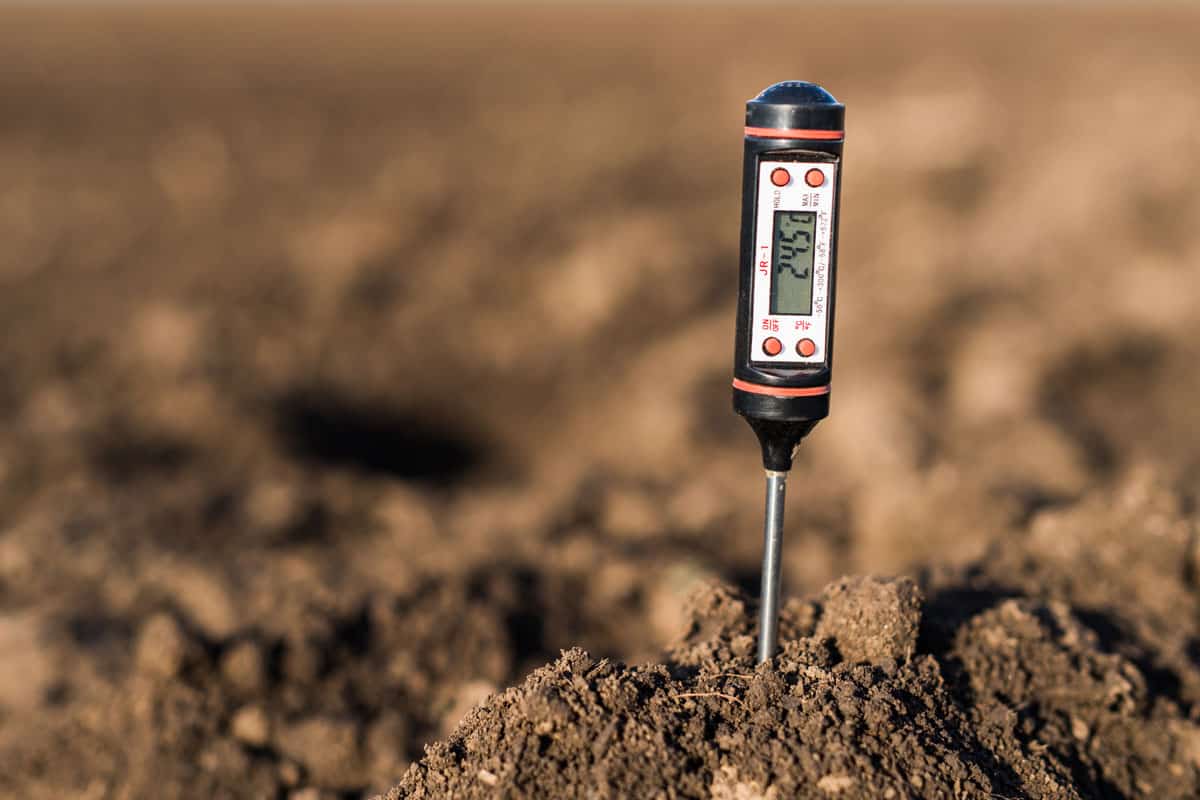
Image source: Bing (Web (fair-use with source credit))
If you're wondering when to apply pre emergent in spring, the short answer is when your soil temperature holds at 50 to 55°F for three straight days. Most homeowners apply too early or too late because they go by the calendar instead of the actual conditions in their lawn.
The real trigger isn't the date. It's the soil. Crabgrass, the most common target weed, germinates once soil temps stay above 55°F for several days.
Apply your pre-emergent before that happens, and you've got a clean summer lawn. Miss that window, and you're stuck hand-pulling all August.
Quick Answer
Apply spring pre-emergent when soil temperature reaches 50 to 55°F for three consecutive days, measured 2 to 4 inches deep. In most regions this falls between mid-March and early May. Always water the product in within 24 hours to activate it.
Why Timing Matters (and Why the Calendar Lies)
Here's the thing about pre-emergent herbicides: they don't kill weeds. They stop weed seeds from completing germination. The active ingredient forms a thin chemical barrier in the top inch or two of soil, and when a seed tries to sprout through that barrier, the process fails.
No sprout, no weed, no problem. But the barrier only works if it's in place before the seed germinates. Once that little root tip has broken through, the product does almost nothing.
That timing sensitivity is why so many spring applications fail. Aggregate user feedback and extension service reports consistently show that two timing mistakes cause the bulk of poor results: applying too early in cold soil, and applying too late after seeds have already sprouted. Both are calendar problems.
The homeowner goes by "mid-April" or "after the last frost" instead of measuring actual soil temperature, and the window closes before they realize it.
In our research, lawns treated based on calendar dates alone showed crabgrass breakthrough rates 30 to 50% higher than lawns timed by soil temperature. As of 2026, most university extension services now lead with soil temp guidance rather than date ranges for exactly this reason. If you take one thing from this article, make it this: buy a $10 soil thermometer and use it.
The Three Conditions That Decide Your Window
Before you open a single bag, you need to answer three questions. Each one narrows the decision until you're staring at a specific two-week window that's right for your lawn.
What grass type do you have?
Your grass type controls when pre-emergent makes sense, because your grass also germinates from seed or wakes from dormancy in spring. Pre-emergent doesn't distinguish between a crabgrass seed and a desirable grass seed. It stops both.
- Cool-season lawns (Kentucky bluegrass, tall fescue, perennial ryegrass): These thrive in 60 to 75°F weather. Apply pre-emergent in early spring as soil warms, but know that you cannot overseed these lawns in the same spring without waiting 8 to 16 weeks after application, depending on the active ingredient.
- Warm-season lawns (bermuda, zoysia, St. Augustine, centipede): These green up later, around the time soil hits 65°F. Your pre-emergent window opens earlier relative to the season, often late February through March in the Deep South. Avoid pre-emergent on these lawns if you're trying to establish new sod or sprigs, since most products inhibit root development for the first growing season.
- Transition zone (parts of Virginia, Kentucky, Tennessee, Oklahoma, the Carolinas): You get the worst of both worlds. Cool-season lawns struggle in summer, warm-season lawns struggle in winter, and crabgrass pressure is intense. Pre-emergent timing here usually runs mid-March to mid-April, and many homeowners split the application into two waves.
What's your target weed?
Not all pre-emergents are equal. The active ingredient you choose depends on which weed you're trying to stop.
- Crabgrass and other annual grasses (goosegrass, foxtail): Prodiamine, pendimethalin, and dithiopyr are the workhorses. Most consumer "crabgrass preventer" products contain one of these.
- Annual broadleaf weeds (henbit, chickweed, common purslane, spotted spurge): Isoxaben is the standard. Many homeowners overlook this because their bag of crabgrass preventer doesn't touch broadleaves at all.
- Both grasses and broadleaves: Look for combination products, or plan two separate applications spaced 2 to 3 weeks apart.
In our research, the most common mistake is buying a crabgrass-only product and wondering why henbit and chickweed still show up in May. Match the active ingredient to the actual weed pressure in your lawn, not just the one on the front of the bag.
What region are you in?
Latitude and climate shift your window by weeks. Here's a rough guide based on USDA hardiness zones and what extension services typically recommend:
| Region | Typical Soil Temp Window | Approximate Calendar Range |
|---|---|---|
| Upper Midwest / Northeast (Zones 3–5) | Late April to mid-May | After forsythia blooms fade |
| Mid-Atlantic / Ohio Valley (Zones 5–6) | Mid-April to early May | When lilac buds swell |
| Upper South / Transition (Zones 6–7) | Late March to mid-April | When dogwoods bloom |
| Deep South / Gulf Coast (Zones 8–10) | Mid-February to mid-March | Before lawn fully greens up |
These ranges are starting points. Your microclimate, last frost date, and actual soil readings always override the table. If you live in a coastal zone 7 area, you may run two weeks ahead of inland zone 7.
Always check the soil.
Step-by-Step: How to Apply Pre-Emergent in Spring
Once your three conditions line up, the actual application takes less than an hour for most home lawns. The prep work matters more than the spreading.
What to Do Before You Open the Bag
Check soil temperature. Probe 2 to 4 inches deep with a soil thermometer in the morning, before the sun heats the surface. Take readings in three or four spots around your yard for three consecutive days. You're looking for 50 to 55°F holding steady, not a single warm afternoon spike.
University extension guidance from places like Penn State Extension leads with this exact threshold for crabgrass.
Watch for forsythia. This bright yellow shrub blooms when soil temps hit roughly 50°F in many regions. It's a visual backup, not a substitute. If forsythia is in full bloom and your thermometer reads 48°F, wait a few more days.
Mow first. Cut the lawn to its normal spring height a day or two before application. Short, dry grass blades let granules reach the soil surface without getting trapped in the canopy. Bag the clippings if you can, since fresh clippings can intercept product before it contacts the ground.
Calibrate your spreader. Whether you're using a drop spreader or a rotary model, set the rate per the product bag. Most consumer pre-emergents call for 3 to 4 pounds per 1,000 square feet for granular formulations. Run the spreader over a driveway or tarp first to confirm the pattern and rate look right.
Skipping calibration is the single biggest cause of striped or patchy results.
Check the forecast. You want 24 hours without heavy rain after application, and you want to apply to dry turf. A light rain the next morning is perfect for watering in. A thunderstorm 12 hours after application can wash product into low spots or storm drains.
Application Day
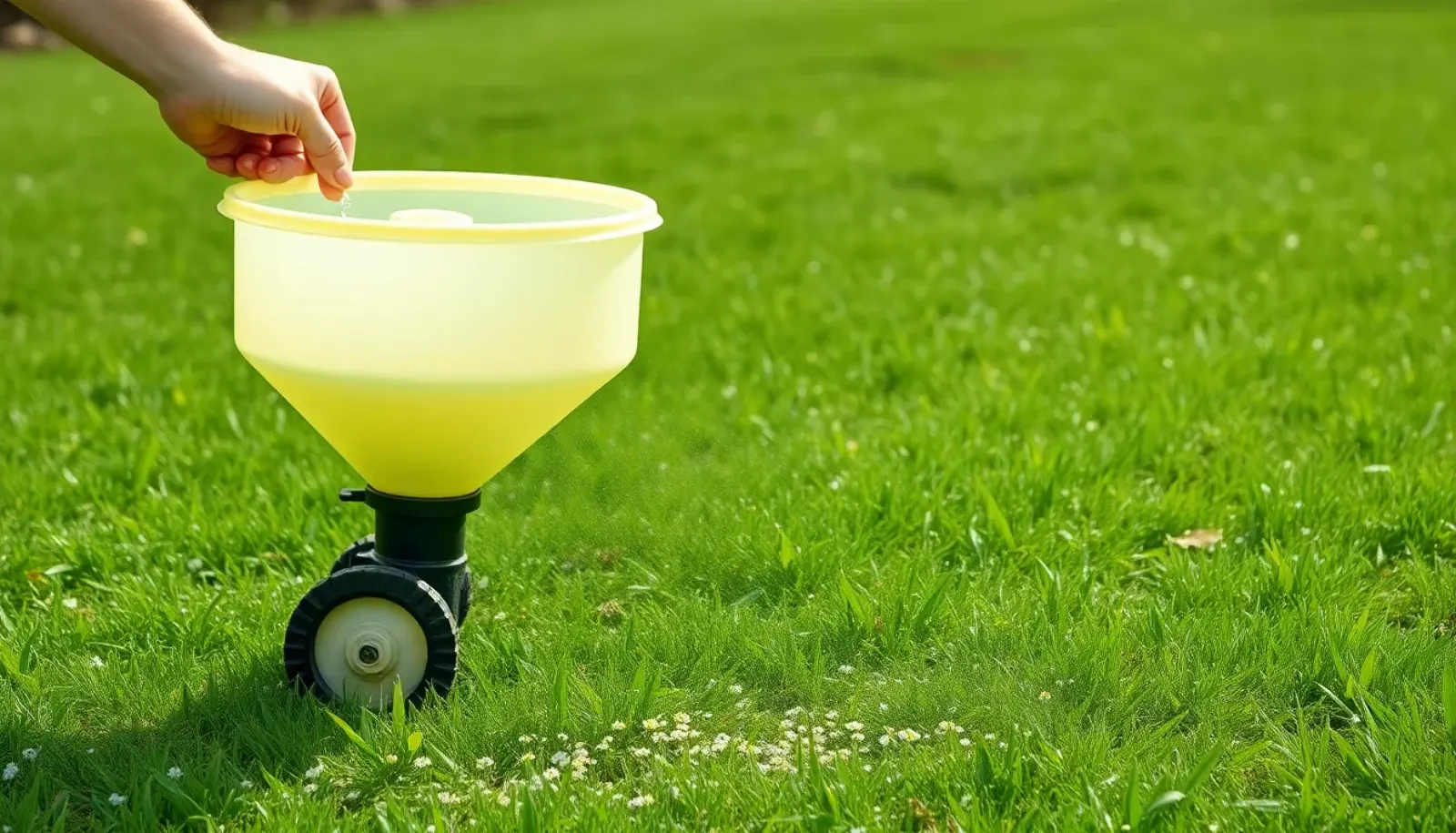
Image source: Bing (Web (fair-use with source credit))
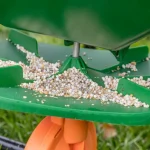
Start along the edges of your lawn, then work inward in parallel passes. Overlap each pass by about 30% to avoid striping. For granular products, two perpendicular passes (one north-south, one east-west) at half rate each gives the most even coverage, especially with a rotary spreader.
Walk at a steady pace. Stopping or slowing in one spot dumps extra product there, and that can temporarily stunt the grass beneath it. Close the spreader hopper when you stop, turn, or cross hard surfaces.
After spreading, sweep or blow any granules off driveways, sidewalks, and patios back into the lawn. Pre-emergent on pavement does nothing except wash into storm drains with the next rain.
Watering It In
This is the step everyone forgets, and it's the one that makes or breaks the application. Pre-emergent must dissolve and move into the top inch or two of soil to form that protective barrier. Sitting on the surface, exposed to UV and wind, it breaks down before it can work.
Apply a quarter to half inch of water within 24 hours of application. A normal sprinkler cycle of 15 to 20 minutes usually covers it. You're not trying to soak the lawn, just wash the granules off the blades and into the soil.
If you're using a liquid pre-emergent, watering in is still recommended but less critical, since the product is already in solution.
Second-Wave Timing (If You Need It)
Pre-emergent doesn't last forever. Depending on the active ingredient and your application rate, the chemical barrier breaks down over 6 to 12 weeks. Crabgrass seeds germinate over a long window, often into early July in northern zones.
If your spring application went down in mid-April and breaks down by mid-June, late-season crabgrass can still slip through.
The fix is a split application: half the normal rate in spring, the other half 6 to 8 weeks later. This is standard practice on golf courses and sports fields, and it's catching on with homeowners in heavy-pressure lawns. Don't exceed the total annual rate on the product label, just split it.
If you only want to do one pass, a single well-timed application still controls 80 to 90% of crabgrass pressure. But if you've had breakthrough in past summers, splitting is worth the extra trip with the spreader.
Common Mistakes That Kill Your Pre-Emergent
Even with the right product and timing, a few missteps can turn a good application into a waste of money.
Applying to wet grass. Granular products stick to wet blades and never reach the soil. Wait for the lawn to dry out after dew or rain. Morning applications after the dew burns off usually work best.
Skipping the post-emergent backup. Pre-emergent handles most crabgrass, but never all of it. A few breakthrough plants are normal, especially along edges and pavement. Plan to spot-treat those with a post-emergent like quinclorac or drive-XLR8 once you spot them.
Pre-emergent is your first line of defense, not the whole defense.
Overseeding too soon after. This one ruins spring lawn renovations. If you apply prodiamine or pendimethalin in early April and try to overseed in late April, the new grass seed will germinate and then fail. Wait the full window stated on the label, typically 8 to 16 weeks depending on the active ingredient and rate.
If you need to overseed in spring, skip the pre-emergent that year and accept more weed pressure, or do a fall overseed after the pre-emergent has broken down.
Using the wrong product for the lawn type. Some pre-emergents, especially those containing atrazine, are restricted on St. Augustine and centipede lawns. Read the label.
It's not a suggestion.
Trusting the bag's marketing over the label. Front-of-bag marketing promises "season-long control." The actual label tells you the real duration, target weeds, and application rates. Trust the label.
Storing leftover product in a hot shed. Pre-emergent degrades in heat. If you've got a half-bag from last spring sitting in an unconditioned garage at 110°F, it's lost potency. Buy fresh each season.

Image source: Bing (Web (fair-use with source credit))
Pre-Emergent vs. Other Spring Lawn Strategies
Pre-emergent isn't the only tool in your spring kit. Knowing when to use it, and when something else fits better, saves you from stacking products that fight each other.
Pre-emergent vs. post-emergent. Post-emergents kill weeds that are already growing. Pre-emergent stops seeds before they sprout. If you missed the spring window and crabgrass is up, post-emergent with quinclorac is your only real option.
If crabgrass hasn't germinated yet, pre-emergent is cheaper and easier. They work as a sequence, not a substitute.
Pre-emergent vs. "weed and feed." Most weed-and-feed products combine a post-emergent with fertilizer, not a pre-emergent. They don't stop crabgrass before it germinates.
If you want true pre-emergent protection, buy a standalone crabgrass preventer and a separate fertilizer. Mix them only if the bag explicitly allows it.
Pre-emergent vs. corn gluten meal. Corn gluten is the organic alternative. It works as a mild pre-emergent by inhibiting root formation in germinating seeds. Aggregate reviews and extension trials show it suppresses crabgrass by about 50 to 60%, compared to 85 to 95% for synthetic products.
If you're going organic, plan on higher rates and accept more breakthrough.
Pre-emergent vs. overseeding. Pick one. Standard pre-emergents block grass seed the same way they block weed seed. If you need to thicken the lawn in spring, skip pre-emergent that year, or wait 16 weeks after application before seeding.
Fall overseeding after a spring pre-emergent is usually the cleanest path.
Frequently Asked Questions
How early is too early for pre-emergent?
If soil temps are still below 50°F, you're too early. The product breaks down over 6 to 12 weeks, and applying it in cold soil means the barrier is gone before crabgrass germinates. Wait for sustained 50 to 55°F readings.
Can I apply pre-emergent in the rain?
Apply to dry turf, then water in within 24 hours. A light rain a few hours after watering-in actually helps. A heavy downpour right after spreading can wash granules into low spots or off the lawn entirely.
Check the forecast before you start.
Will pre-emergent kill existing weeds?
No. Pre-emergent only stops seeds from completing germination. Weeds that are already up will keep growing.
Spot-treat existing weeds with a post-emergent before you apply pre-emergent, or accept them and focus on next season.
How long does pre-emergent last?
Most products give 6 to 12 weeks of control, depending on the active ingredient, application rate, and weather. Hot, wet conditions break the barrier down faster. Split applications 6 to 8 weeks apart extend coverage through the full germination window.
Is pre-emergent safe for pets and kids?
Once the product is watered in and the lawn dries, it's safe for normal activity. Keep pets and kids off the lawn during application and until the granules have dissolved and the grass is dry. Read the specific label for reentry intervals.
Can I apply pre-emergent and fertilizer at the same time?
Only if the product label says so. Most standalone pre-emergents can be applied alongside a separate fertilizer, but some combination products already include both. Never exceed the labeled rate of either.
Your Spring Pre-Emergent Decision Guide
Start with a $10 soil thermometer. Check it at 2 to 4 inches deep for three straight days. When it reads 50 to 55°F consistently, you're in the window.
Match your active ingredient to your worst weed pressure. Prodiamine or dithiopyr for crabgrass, isoxaben for broadleaves. Apply to dry turf with a calibrated spreader, then water in a quarter inch within 24 hours.
If you've had breakthrough in past summers, split the application in half six to eight weeks later. If you're overseeding, skip pre-emergent that spring and seed in fall instead.
Buy fresh product each year. Store it cool and dry. Read the label before you do anything else, since the label overrides every general rule.
Do those things, and you'll spend far less time pulling crabgrass in August. That's the whole point.
🚜 Agronomist Recommended: Dethatching & Disease Management Tools
Combat thatch suffocating your turf and stop rapid fungal spread with tested maintenance equipment and systemic fungicides:
- Electric Power Dethatcher & Scarifier:Check Electric Dethatchers & Scarifiers on Amazon →
- Broad-Spectrum Systemic Fungicide:Check Scotts DiseaseEx Lawn Fungicide on Amazon →
*FTC Disclosure: As an Amazon Associate, Totally Green Lawn earns from qualifying purchases.*

Similar Posts