How to Get Rid of Creeping Yellow Woodsorrel in Your Lawn
Lead Turfgrass & Lawn Care Specialist at Totally Green Lawn · Certified Turfgrass Specialist (CTS), Master Gardener, B.S. in Agronomy & Turf Science · 14+ years in residential turf management, organic fertilization, and weed science
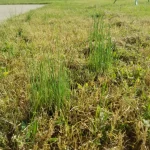
If creeping yellow woodsorrel has taken over your lawn, you're not alone. This stubborn little weed (Oxalis corniculata) is one of the most persistent broadleaf invaders in home turf, and it spreads fast. The good news: you can get rid of it for good if you follow the right sequence at the right time of year.
Most homeowners fight this weed for three or four seasons before winning. That's because each plant can fling seeds up to 10 feet from its pod, and seeds stay viable in soil for up to five years. The trick is hitting it before seed set in spring, then staying on it through fall with a thick, healthy lawn that chokes out new growth.
As of 2026, university extension services still recommend the same integrated approach: cultural fixes, targeted herbicide use, and patience.
Quick Answer
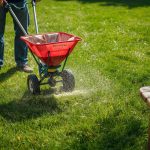
Eradicate creeping yellow woodsorrel with a three-part plan. Apply pre-emergent herbicide in early spring before soil temps hit 55°F. Spot-treat active plants with a selective broadleaf herbicide in fall.
Then thicken your turf through proper mowing, watering, and overseeding. Expect two to three seasons for full control.
Identify the Weed First — Woodsorrel vs. Lookalikes
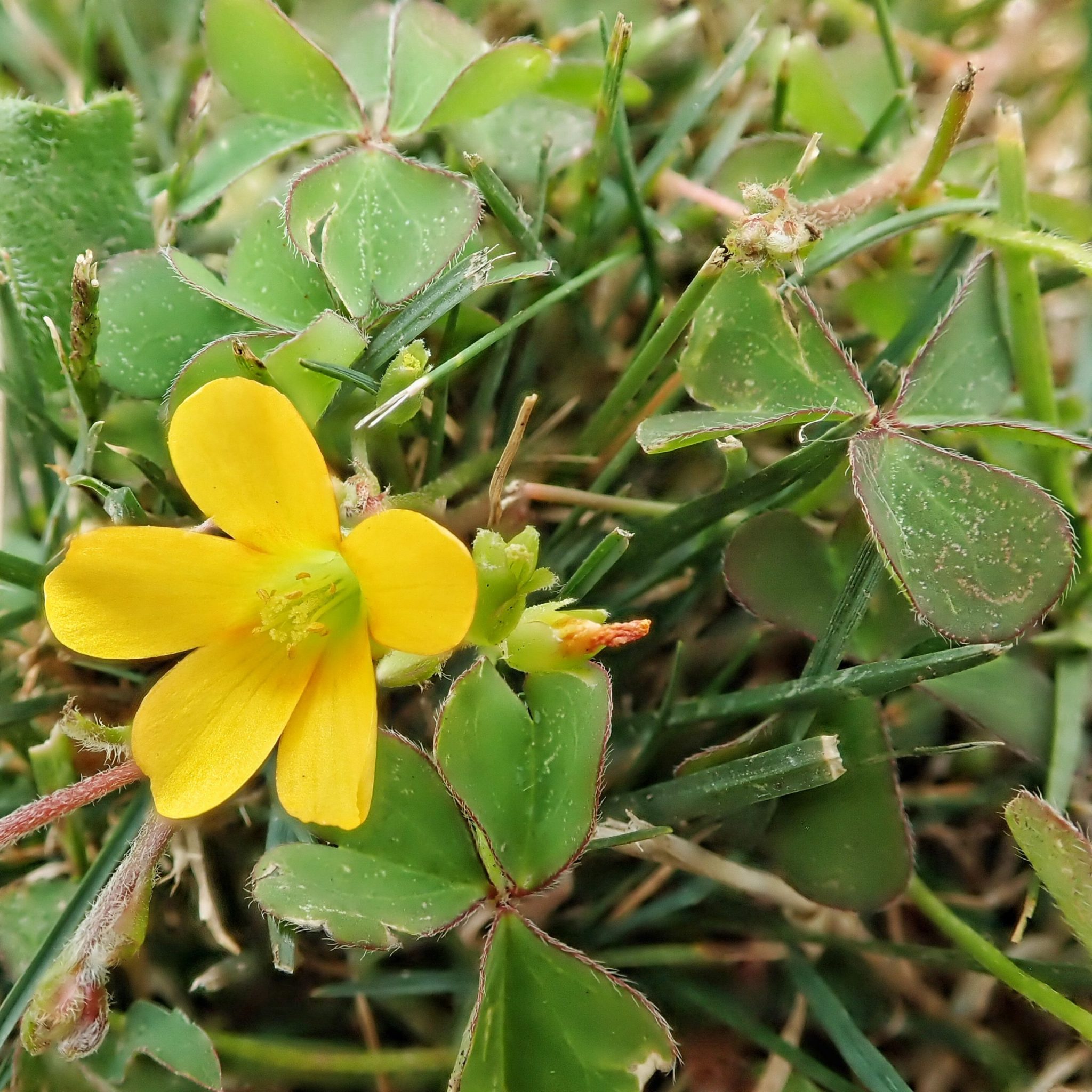
If you've never seen woodsorrel up close, it looks a lot like clover. Three heart-shaped leaflets. Low-growing habit.
Pops up in thin or disturbed turf. But there are a few differences you can spot right away. Look at the leaf color: woodsorrel has a slightly bronzed or purplish tint, especially in full sun.
Clover stays bright green. Check the flower: woodsorrel has tiny five-petaled yellow blooms. Clover has white or pink puffball heads.
Feel the stem: woodsorrel is fine-hairy and delicate. Clover has thicker, smoother stems.
There's also a lookalike that confuses homeowners more than clover: black medic. It has three leaflets too, but with a small yellow flower and a tiny black seed pod. Same general control methods apply, so misidentifying it won't hurt your plan much.
Creeping yellow woodsorrel (Oxalis corniculata) grows flat to the ground and roots at the nodes. Common yellow woodsorrel (Oxalis stricta) grows more upright. Both respond to the same treatment, so the ID step matters most for confirming you don't have a clover or medic problem.
Why does identification matter? Because broadleaf herbicides that kill woodsorrel also kill clover. If you treat the wrong plant, you've wasted product and time.
And if you're aiming for a selective post-emergent spray, you need to know the weed is in the Oxalis family, not Trifolium (clover) or Medicago (black medic).
Choose Your Control Path Based on Your Lawn and Infestation Level
There's no single right way to kill this weed. The best method depends on three things: your grass type, how bad the infestation is, and whether you want to use chemicals. Here's how to think it through.
If You Have a Cool-Season Lawn (Fescue, Bluegrass, Ryegrass)
These grasses handle a wide range of broadleaf herbicides. You can use triclopyr, fluroxypyr, or a 2,4-D + dicamba combo without worrying about turf damage. Fall is the best time to spray.
The weed is moving energy to its roots, so the herbicide travels down and kills the crown. Spring applications work too, but you'll often need a second pass six weeks later.
If You Have a Warm-Season Lawn (Bermuda, Zoysia, St. Augustine, Centipede)
This is where it gets tricky. St. Augustine and centipede are sensitive to many broadleaf herbicides.
Dicamba and 2,4-D can yellow or thin these grasses, especially in hot weather. For these lawns, spot-treat with a product labeled safe for your specific grass. Atrazine works well on St.
Augustine and centipede and gives good woodsorrel control. Bermuda and zoysia handle most broadleaf herbicides without issue.
If You Prefer Organic Control
You can win without synthetic chemicals, but it takes longer and requires more labor. Hand-pulling works only if you catch plants before they flower. The moment those seed pods form, pulling actually spreads the problem.
Use a hand fork or weeding knife to get the roots. Bag the plants. Do not compost them.
Apply corn gluten meal in early spring as a natural pre-emergent. It won't stop everything, but it reduces germination by 40 to 60 percent in most university trials.
If the Infestation Is Widespread (More Than 30% of the Lawn)
A single treatment won't fix a heavy outbreak. You'll need a two-season commitment: pre-emergent in spring, post-emergent in fall, then overseed to fill bare spots. The University of Maryland Extension recommends this layered approach for severe Oxalis pressure in mid-Atlantic lawns.
Step-by-Step Eradication Workflow
Here's the actual sequence that works. Skip a step, and you'll fight this weed for years.
Step 1: Confirm soil temperature timing (late winter to early spring). Watch for soil temps at 50 to 55°F for three straight days. That's your trigger to apply pre-emergent. Prodiamine and dithiopyr both work well.
Apply before seeds germinate. Once you see yellow flowers, you've missed the pre-emergent window.
Step 2: Mow high and bag clippings. Raise your mower to 3 to 4 inches for cool-season grass, 2 to 2.5 inches for warm-season. Taller grass shades out woodsorrel seedlings. Bag your clippings for the next few mowings so you don't spread seeds.
Step 3: Spot-treat with selective post-emergent in fall. Fall timing (September to early October in most regions) hits the plant when it's pulling energy to roots. Use a product labeled for your grass type. Spot-treat, do not broadcast, unless the infestation is severe.
Step 4: Hand-pull escape plants before they set seed. After spraying, walk the lawn weekly. Pull any new plants while they're small. Get them before the seed pods form.
If pods are already present, clip the plant at the base and bag it. Do not pull.
Step 5: Overseed thin areas. Late summer to early fall is the best time for cool-season overseeding. Spring works for warm-season. A dense lawn crowds out new woodsorrel germination.
Step 6: Repeat pre-emergent next spring. Don't skip this. Seeds last five years in the soil. Two to three years of pre-emergent applications will exhaust most of the seed bank.
Step 7: Maintain thick turf year-round. Mow at the right height. Water deeply but infrequently. Fertilize on a soil-test-based schedule.
Healthy turf is your best long-term defense.

Mistakes That Make Creeping Woodsorrel Worse
Some of the most common control efforts backfire. Here are the errors that keep this weed coming back.
Pulling mature plants. This is the single biggest mistake. The seed pods explode on contact. One tug can scatter 50+ seeds across your lawn.
If pods are visible, cut the plant at the soil line with a knife or pruner. Bag it. Do not pull.
Mowing too short. Short turf lets sunlight reach the soil. Woodsorrel seeds need light to germinate. Mow at 3+ inches for cool-season grass, and you'll block 60 to 70 percent of new germination.
Watering daily. Light, frequent watering keeps the surface moist. Woodsorrel loves that. Water deeply once or twice a week instead.
Train the grass roots to grow down.
Skipping the pre-emergent. Post-emergent sprays kill what's growing. They don't stop new seeds from sprouting. Without pre-emergent, you're always playing catch-up.
Treating once and quitting. This weed has a long seed bank. One application of anything won't fix it. Plan for two to three seasons of consistent treatment.
Stopping early guarantees a rebound.
Using the wrong herbicide for your grass. Dicamba can damage St. Augustine. 2,4-D can yellow centipede. Read the label.
Match the product to your turf type. When in doubt, spot-treat instead of broadcasting.
Comparing Control Methods: Chemical, Organic, and Mechanical
Not every approach works for every lawn. Here's how the three main methods stack up against each other.
Chemical Control: Fastest Results, Highest Cost
Selective post-emergents (triclopyr, fluroxypyr, 2,4-D combos) kill existing plants within 7 to 14 days. Pre-emergents (prodiamine, dithiopyr) stop new seeds from germinating for 8 to 12 weeks per application. You'll spend $30 to $80 per season on products for a typical home lawn.
Best for: moderate to heavy infestations where speed matters.
Organic Control: Slowest, Most Labor
Corn gluten meal at 20 lbs per 1,000 sq ft in early spring suppresses germination by 40 to 60%. Hand-pulling works only on small, pre-flower plants. You'll spend $40 to $60 on corn gluten plus many hours of labor.
Best for: light infestations, homeowners avoiding synthetic chemicals, or lawn areas near vegetable gardens.
Mechanical Control: No Chemicals, No Cost
Hand removal, bagging, and improved mowing height alone. Effective only with very small outbreaks and consistent follow-up. Best for: new infestations caught early, or lawns with fewer than 20 plants total.
| Method | Time to See Results | Cost per Season | Best For |
|---|---|---|---|
| Selective post-emergent | 7–14 days | $30–$80 | Heavy infestations |
| Pre-emergent | Prevents new growth | $25–$60 | Long-term suppression |
| Corn gluten meal | 4–6 weeks | $40–$60 | Organic programs |
| Hand-pulling | Immediate | $0–$20 (tools) | Light, new outbreaks |
Most successful eradication plans combine at least two methods. Chemical for the bulk kill, cultural practices to keep it from coming back.
Long-Term Lawn Care to Prevent Re-Infestation
Killing existing woodsorrel is only half the job. A thin, stressed lawn is an open invitation for it to return. The long-term fix is building turf so dense that woodsorrel seeds can't reach the soil or get enough light to germinate.
Mow at the right height for your grass. Tall fescue wants 3 to 4 inches. Kentucky bluegrass does best at 2.5 to 3.5 inches.
Bermuda and zoysia prefer 1.5 to 2.5 inches. St. Augustine likes 2.5 to 3 inches.
Mowing short scalps the lawn and exposes soil. That bare soil is where woodsorrel seeds wait.
Water deeply but rarely. Give your lawn 1 to 1.5 inches of water per week, in one or two sessions, rather than daily sprinkles. Deep watering trains roots to grow down.
Shallow watering keeps the surface moist, which favors woodsorrel.
Fertilize based on a soil test. Most home lawns need nitrogen in fall (cool-season) or late spring (warm-season). A soil test from your local cooperative extension office tells you exactly what your lawn needs.
Guessing leads to over-application, which feeds weeds as much as grass.
Overseed thin spots every fall. Cool-season grasses should be overseeded in September or early October. Warm-season grasses in late spring.
Use a quality seed blend matched to your existing turf. Rake the seed into the soil. Keep it moist until germination.
A thick stand of grass is your best defense.
Control thatch. Thatch over 0.5 inches thick creates a moist layer that woodsorrel loves. Dethatch in early fall for cool-season lawns.
Vertical mow or topdress warm-season lawns in late spring.
Fix drainage problems. Low spots that hold water are prime woodsorrel habitat. Grade the soil to shed water.
Add topsoil to fill depressions.
Expect this maintenance phase to take two to three seasons before you see a real drop in new weeds. Once your lawn is dense and healthy, you'll spot-treat only a handful of escape plants each year instead of fighting a full invasion.
🌾 Agronomist Recommended: Pre-Emergent & Weed Control Supplies
To prevent weed breakthroughs and protect desirable turfgrass from foliar injury, our agronomy field trials recommend calibrated pre-emergents and non-ionic surfactants:
- Professional Pre-Emergent:Check Prodiamine 65 WDG Pre-Emergent on Amazon →
- Non-Ionic Spray Surfactant:Check Non-Ionic Foliar Surfactants on Amazon →
*FTC Disclosure: As an Amazon Associate, Totally Green Lawn earns from qualifying purchases.*

Similar Posts