Surfactant Per Gallon: Exact Rates for Weed Killer Mixes
Lead Turfgrass & Lawn Care Specialist at Totally Green Lawn · Certified Turfgrass Specialist (CTS), Master Gardener, B.S. in Agronomy & Turf Science · 14+ years in residential turf management, organic fertilization, and weed science
Most folks who ask how much surfactant per gallon of weed killer mix just want a number they can measure and pour. The real answer is a range, because the right rate depends on which surfactant you're using, which herbicide you're tank-mixing, and what kind of weed you're trying to kill. Land-grant extension research and manufacturer labels, as of 2026, still point to a few well-tested rate windows that handle the vast majority of home and farm spray jobs.
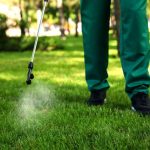
The standard non-ionic surfactant rate sits between 0.25% and 0.5% by volume, which works out to roughly 2 teaspoons to about 1 tablespoon per gallon of finished spray. Silicone-based surfactants are more potent, so the rate drops to 0.05% to 0.25%, often under 1 teaspoon per gallon. That single number is your starting point, and the rest of this article walks you through which one to pick, when to adjust it, and how to mix it without ruining the batch.

Image source: Bing (Web (fair-use with source credit))
Quick Answer
Most spray mixes use 2 to 4 teaspoons of non-ionic surfactant per gallon. That equals about 0.25% to 0.5% by volume of the finished spray. Silicone surfactants need less, usually 0.4 to 2 teaspoons per gallon.
Always confirm the rate on the herbicide label first.
Why the Right Surfactant Rate Changes With Your Setup
If you've ever sprayed a weed and watched the droplets bead up and roll off the leaf like water off a truck hood, you've seen surfactant working in reverse. A surfactant, short for surface-active agent, lowers the surface tension of the spray solution so it spreads across the waxy cuticle of the leaf instead of sitting in little balls. Without it, a lot of your herbicide never makes it inside the plant.
With too much, you can burn the leaf before the chemistry does its job, and in some cases you damage the crop you're trying to protect.
The catch is that "how much" isn't one number. Three things change the answer:
- The type of surfactant (non-ionic, silicone, crop oil, or seed oil)
- The herbicide it's being mixed with (glyphosate, 2,4-D, triclopyr, dicamba, etc.)
- The target weed and its leaf surface (hairy, waxy, or grass-like)
Treat the rate as a small decision tree, not a fixed recipe. If you're spraying a waxy broadleaf like kochia or blackberry, you push toward the higher end. If you're spraying a thin-leaf grass weed with a silicone surfactant, you stay near the low end.
The rest of this guide walks each branch.
The Variables That Drive Your Mix Ratio
Start by reading the herbicide label. Manufacturer specs confirm a per-100-gallon rate for the adjuvant, and you scale that down to your tank size. If your label is silent on surfactants, that's also a signal: some formulations already have them built in, and adding more can push the mix into phytotoxic territory.
Next, look at your water. Hard water above 200 ppm of calcium and magnesium can tie up herbicide molecules, which is why many labels call for ammonium sulfate or a water conditioner alongside the surfactant. The surfactant still helps coverage, but the rate may need to climb slightly to compensate for weaker uptake.
Finally, consider weed size. Small, actively growing weeds in spring take up chemistry fast, so a standard rate is fine. Mature, drought-stressed, or dusty weeds need better coverage, and that's where silicone surfactants earn their keep.
Why the Herbicide Label Comes First
Every herbicide label approved by the U.S. Environmental Protection Agency is a legal document, and the adjuvant rate printed on it overrides any general advice you find online. Extension publications from land-grant universities, including Texas A&M AgriLife and Penn State Extension, reinforce the same point: the label is the source of truth, and the adjuvant rate is part of the legal use pattern.
If the label says "add 0.25% v/v non-ionic surfactant," that's your number. If it says "1 to 2 pints per 100 gallons," divide by 100 to get your per-gallon rate. Skipping this step is the single most common reason a spray job underperforms or causes off-target damage.
Types of Surfactants and When to Use Each
Walk into any farm supply store and you'll see three or four categories of adjuvants on the shelf. Each has a job, and the wrong one can cost you a kill or burn a crop. The choice comes down to the herbicide chemistry, the weed type, and your tolerance for cost per acre.
Non-Ionic Surfactants (NIS) — The All-Purpose Default
Non-ionic surfactants are the workhorses of the spray world. They carry no electrical charge, so they mix cleanly with most herbicides without reacting. They lower surface tension and help the spray droplet spread across the leaf, but they don't penetrate the cuticle as aggressively as oils or silicones.
Use an NIS when:
- The label calls for "non-ionic surfactant" or "spreader-sticker"
- You're spraying broadleaf weeds in turf, pastures, or right-of-way
- You're mixing glyphosate, 2,4-D, or dicamba on broadleaf targets
Standard rate: 0.25% to 0.5% v/v, or about 2 teaspoons to 1 tablespoon per gallon. A common 80/20 NIS blend (80% active surfactant) is a safe default for most homeowner and small-acreage applications.

Image source: Bing (Web (fair-use with source credit))
Silicone Surfactants — For Waxy, Hard-to-Wet Weeds
Silicone-based surfactants (organosilicones) are the premium spreaders. They reduce surface tension far more aggressively than NIS, so the spray flattens into a thin film across waxy or hairy leaves. That makes them ideal for tough customers like kochia, Russian thistle, blackberry, and many brush species.
The trade-off is concentration. Silicones work at 0.05% to 0.25% v/v, often under 1 teaspoon per gallon. At higher rates they can cause the spray to run off the leaf or even penetrate so fast that you see leaf burn within hours.
Stick to the low end unless the label says otherwise.
Crop Oil and Seed Oil Concentrates
Crop oil concentrate (COC) and methylated seed oil (MSO) are petroleum- or seed-based adjuvants that do double duty: they spread the spray and help it penetrate the leaf's waxy cuticle. You'll see them called out on labels for herbicides like sethoxydim, clethodim, and some ALS inhibitors.
Typical rate: 1% v/v, which works out to about 2.5 tablespoons per gallon. MSO is more aggressive than COC, and labels often warn against MSO on sensitive crops like alfalfa or certain vegetables. If the label lists a specific oil, follow it.
Don't swap one for the other.
How to Calculate Surfactant Per Gallon: Step by Step
Here's the workflow most applicators use when they're standing in front of a partially filled spray tank with a measuring cup in one hand. It works whether you're filling a 1-gallon pump sprayer for the backyard or a 100-gallon tank for a pasture.
Step 1: Confirm Gallons and Concentration
Know your finished spray volume. For a handheld pump sprayer, that's the tank's listed capacity. For a larger tank, fill it with most of the water first, mark the level, and measure to confirm.
The math only works if your "per gallon" is really a full gallon of finished mix, not a gallon of water before you add herbicide and surfactant.
Step 2: Pick the Rate From the Table Below
The table below covers the most common combinations you'll see on residential and light-ag labels. Use the surfactant type called out on the herbicide label, then read across to find the volume per gallon.
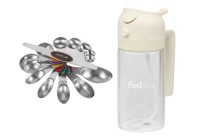
Image source: Web (Bing) / fedex.totalsales.com (Web image (fair-use with source credit))
Step 3: Mix in the Right Order
Order matters more than most people realize. The standard sequence is:
- Fill the tank about halfway with water
- Start agitation
- Add ammonium sulfate or water conditioner if the label calls for it
- Add herbicide
- Add surfactant last
Surfactant added to concentrated herbicide without water can cause gelling or precipitation, especially with wettable powder formulations. Adding it last, into a diluted mix, keeps everything in solution.
Step 4: Calibrate and Spray
Before you walk a whole pasture, spray a small test area and watch the leaf surface for 30 to 60 seconds. If the droplets flatten and spread instead of beading, the mix is working. If they sit up like tiny domes, add a touch more surfactant or switch to a silicone blend.
University extension services, including University of Nebraska-Lincoln, recommend this visual check as a quick field calibration step.
Surfactant Mixing Rate Chart by Herbicide
Different herbicides call for different surfactant rates, and the table below maps the most common active ingredients to a per-gallon surfactant volume. Always cross-check with the actual product label, since formulations change.
| Herbicide | Common Use | Surfactant Type | Rate Per Gallon |
|---|---|---|---|
| Glyphosate (41% IPA) | General broad-spectrum | NIS | 2 tsp (0.25% v/v) |
| 2,4-D amine | Broadleaf in turf | NIS | 1 tbsp (0.5% v/v) |
| Triclopyr ester | Brush, woody plants | NIS or COC | 1 to 2 tbsp (0.5 to 1% v/v) |
| Dicamba | Broadleaf in pastures | NIS | 2 tsp (0.25% v/v) |
| Sethoxydim / Clethodim | Grass weeds in broadleaves | COC or MSO | 2.5 tbsp (1% v/v) |
| Imazapyr | Right-of-way, invasive species | NIS or silicone | 2 tsp to 1 tbsp |
| Pelargonic acid | Burndown, organic | Usually none | N/A |
A quick conversion trick: 1 fluid ounce per gallon equals roughly 0.78% v/v. So if a label says "1 quart per 100 gallons," that's 1 oz per 12.5 gallons, or about 0.25 teaspoons per gallon of finished spray. Keep a small conversion card in the shed until the math feels automatic.
Common Mistakes That Ruin the Mix
Most surfactant failures fall into a handful of repeatable mistakes. None of them are exotic, and all of them are easy to avoid once you know what to watch for.
- Adding surfactant before the herbicide is diluted, which can cause gelling
- Doubling the rate because "more is better" (it usually isn't)
- Using dish soap instead of a true agricultural surfactant (the pH is wrong and the fatty acids can react with herbicides)
- Skipping the label check on formulations that already contain a built-in adjuvant
- Mixing with hard water and watching the herbicide tie up before it ever hits the leaf
- Letting the mix sit overnight without agitation, which lets the surfactant settle out
- Spraying in the heat of the day, when droplets evaporate before the surfactant can spread them
The dish soap mistake is worth calling out. Aggregate user feedback and several extension publications confirm that homemade soap substitutes give inconsistent results and can actually reduce control on certain chemistries. A $10 bottle of generic 80/20 NIS is cheap insurance by comparison.
Pro Tips From Applicators Who Get Consistent Kills
A few habits separate the folks who spray once and clean up the weeds from the folks who spray the same patch three times. Most of them cost nothing.
- Add a marker dye to the tank so you can see where you've sprayed and where you haven't
- Spray in the early morning or evening when humidity is higher and the cuticle is hydrated
- Keep the mix agitated, especially with dry formulations and silicone surfactants
- Use flat-fan nozzles for broadcast work and adjust pressure to keep droplets in the 200 to 400 micron range
- Rinse the tank thoroughly between products, especially when switching between herbicides with opposite adjuvant needs
One more tip that pays off: keep a spray log. Note the date, mix rate, surfactant type, weather, and kill rate after 7 and 14 days. After a season you'll have a personal dataset that beats any generic recommendation, because it's tuned to your weeds, your water, and your climate.
Frequently Asked Questions
Can I use dish soap as a surfactant for weed killer?
Dish soap can lower surface tension, but its pH and fatty acid content can react with herbicides and reduce effectiveness. Manufacturer labels and university extension publications both recommend a commercial non-ionic surfactant instead, since it's formulated for tank-mix stability and consistent spread.
How much surfactant per gallon for glyphosate?
The standard glyphosate label calls for 2 teaspoons (0.25% v/v) of non-ionic surfactant per gallon of finished spray. For tough weeds or hard water, push to 1 tablespoon (0.5% v/v), but don't exceed the maximum listed on the specific product label.
Do I need a surfactant with 2,4-D?
It depends on the formulation. Many 2,4-D amine products already contain surfactants, so adding more can burn the turf. Ester formulations often benefit from 0.5% v/v NIS, especially when targeting woody brush or waxy broadleaves.
What happens if I use too much surfactant?
Over-surfactanting can cause the spray to run off the leaf before it's absorbed, and in severe cases it can burn the leaf tissue on contact. Sticking to the lower end of the label range, especially with silicone surfactants, prevents both problems.
Is silicone surfactant better than non-ionic for weeds?
Silicone surfactants spread better on waxy or hairy leaves, but they cost more and can damage sensitive crops at high rates. Non-ionic surfactants are cheaper, more forgiving, and the right default for most home and pasture applications.
Safety, Drift, and What to Watch Before You Spray
Surfactants are designed to make sprays stick, which is exactly why mishandling them causes problems. Once a droplet has been spread flat against a leaf, any herbicide in it goes along for the ride, including drift onto non-target plants. A few habits keep the spray where it belongs.
- Spray when wind speeds are under 10 mph, ideally 3 to 7 mph
- Use coarse droplets and lower pressure to reduce fine drift
- Maintain a buffer near sensitive crops like grapes, tomatoes, and cotton
- Wear gloves, eye protection, and a long-sleeve shirt when handling concentrates
- Triple-rinse the tank and spray surfaces before switching products
The surfactant itself is generally low-toxicity, but the herbicide it carries can be anything from caution to danger labeled. The surfactant just makes the active ingredient harder to wash off, so PPE and good hygiene matter more, not less, when an adjuvant is in the mix.
Choosing the Right Water for the Mix
Water is the carrier, and most applicators never think twice about it. That can be a quiet source of weak performance, especially in regions with hard well water. Calcium, magnesium, and iron cations in the water can bind to herbicide molecules, particularly glyphosate, and form salts that the plant can't absorb.
If your water tests above 200 ppm hardness, or if you see scale buildup in your sprayer, add ammonium sulfate at 1 to 2 pounds per 100 gallons (about 1 to 2 teaspoons per gallon). AMS sequesters the cations before they can react with the herbicide. Adding surfactant on top of AMS-treated water gives the mix its best chance of full uptake.
If you can, use rainwater or filtered water for small jobs. The chemistry is cleaner and the surfactant spreads more predictably across the leaf.
Storage, Shelf Life, and Keeping the Mix Stable
Surfactants are stable for years if you store them properly, but a few rules of thumb extend their life. Keep the container sealed and out of direct sunlight. Avoid freezing, which can break the emulsion in some NIS blends and cause separation.
Store between 40°F and 100°F, and shake the jug before pouring if it's been sitting for a few months.
Mixed spray solution is a different story. Most labels call for using the mix within 24 hours, especially if it contains glyphosate or amine-based herbicides. Letting it sit overnight in the tank lets the surfactant drift, the herbicide degrade, and in some cases microbes start breaking down the active ingredient.
If you absolutely have to hold a mix, keep the tank agitated and out of the sun, and use it within 12 hours.
For longer storage, rinse the tank thoroughly, flush the lines, and run a dilute ammonia solution through the system if you're switching to a sensitive crop. Residue from a previous surfactant plus herbicide can wreck the next mix, especially with growth regulator herbicides like 2,4-D and dicamba, which are notoriously hard to fully clean out of spray equipment.
🌾 Agronomist Recommended: Pre-Emergent & Weed Control Supplies
To prevent weed breakthroughs and protect desirable turfgrass from foliar injury, our agronomy field trials recommend calibrated pre-emergents and non-ionic surfactants:
- Professional Pre-Emergent:Check Prodiamine 65 WDG Pre-Emergent on Amazon →
- Non-Ionic Spray Surfactant:Check Non-Ionic Foliar Surfactants on Amazon →
*FTC Disclosure: As an Amazon Associate, Totally Green Lawn earns from qualifying purchases.*

Similar Posts