Decoding Fertilizer Bags: What the Third Number Means for
Lead Turfgrass & Lawn Care Specialist at Totally Green Lawn · Certified Turfgrass Specialist (CTS), Master Gardener, B.S. in Agronomy & Turf Science · 14+ years in residential turf management, organic fertilization, and weed science
Ever stood in the garden center, staring at a fertilizer bag and wondering what the third number on a fertilizer bag means for lawns? You're not alone. Most folks recognize the first number as nitrogen, the second as phosphorus, but that third number is a mystery, and it's the one that decides whether your grass toughs out a brutal summer or a hard freeze.
That third number is potassium, and as of 2026, university extension services still rank it as one of the most misunderstood lawn nutrients. On a typical 24-0-12 bag, the 12 means 12% potassium oxide (K₂O) by weight, a labeling convention set by the Association of American Plant Food Control Officials. Potassium doesn't green up your lawn the way nitrogen does, but it's the difference between a lawn that survives stress and one that doesn't.
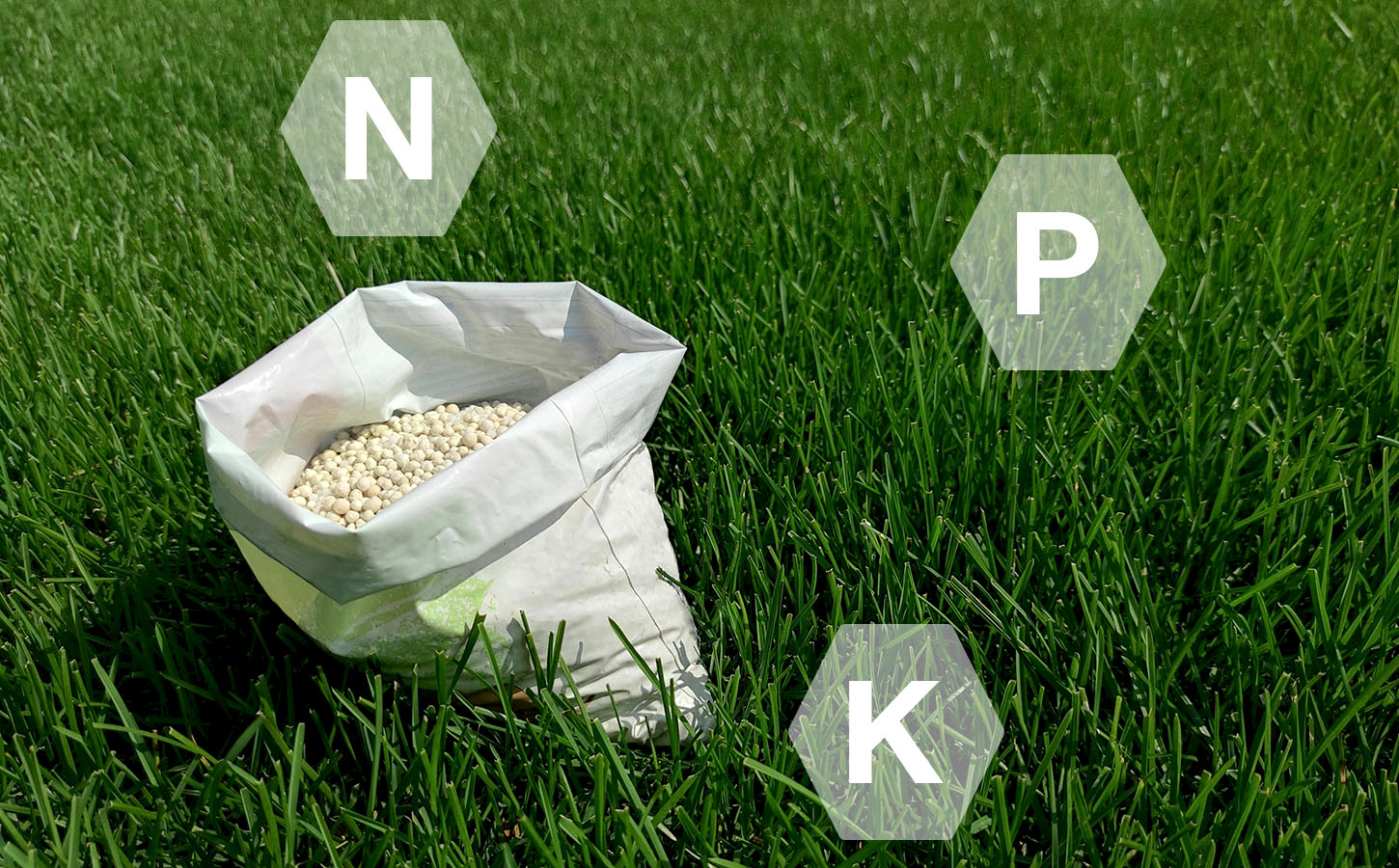
Image source: Web (Bing) / lawncentral.com (Web image (fair-use with source credit))
Quick Answer
The third number on a fertilizer bag is potassium, shown as K₂O. It builds cell strength, drought tolerance, and cold hardiness in grass. It does not push green top growth like nitrogen.
Whether your lawn needs it depends on a soil test, your grass type, and the season.
Why Potassium Matters: What That Third Number Actually Does in the Soil
Potassium works behind the scenes, and that's exactly why it gets ignored. It doesn't make your grass taller or greener. What it does is regulate water movement inside the plant, strengthen cell walls, and activate dozens of enzymes that keep turf functioning under stress.
Here's what potassium actually controls in your lawn:
- Water regulation. Potassium opens and closes the stomata, the tiny pores on grass blades. That controls how much water the plant loses on a hot day. More K means better water-use efficiency, so your lawn stays hydrated longer between rain events.
- Cold tolerance. In northern climates, potassium gets stored in the crown and roots before winter. Lawns with adequate K handle freeze-thaw cycles better and come out of dormancy faster in spring. University trials from Penn State Extension consistently show reduced winter injury on K-sufficient turf.
- Disease resistance. Brown patch, dollar spot, and red thread all hit harder on K-deficient turf. Potassium thickens cell walls, making it harder for fungal pathogens to break in.
- Wear tolerance. Got kids, dogs, or a backyard football habit? Potassium helps grass blades bounce back from foot traffic by maintaining turgor pressure, the internal firmness that keeps blades from collapsing.
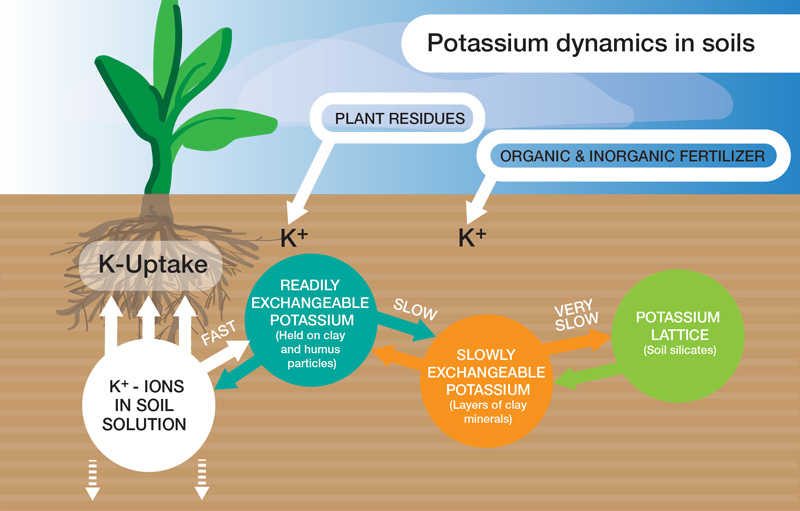
Image source: Bing (Web (fair-use with source credit))
The key thing most people miss: potassium is mobile in the plant but relatively stable in the soil. It doesn't leach as fast as nitrogen, especially in clay or loam soils, but sandy soils can lose it quickly. That mobility difference matters when you're deciding how often to apply it and in what form.
Reading the Bag: How N-P-K Numbers, K₂O, and "Guaranteed Analysis" Work
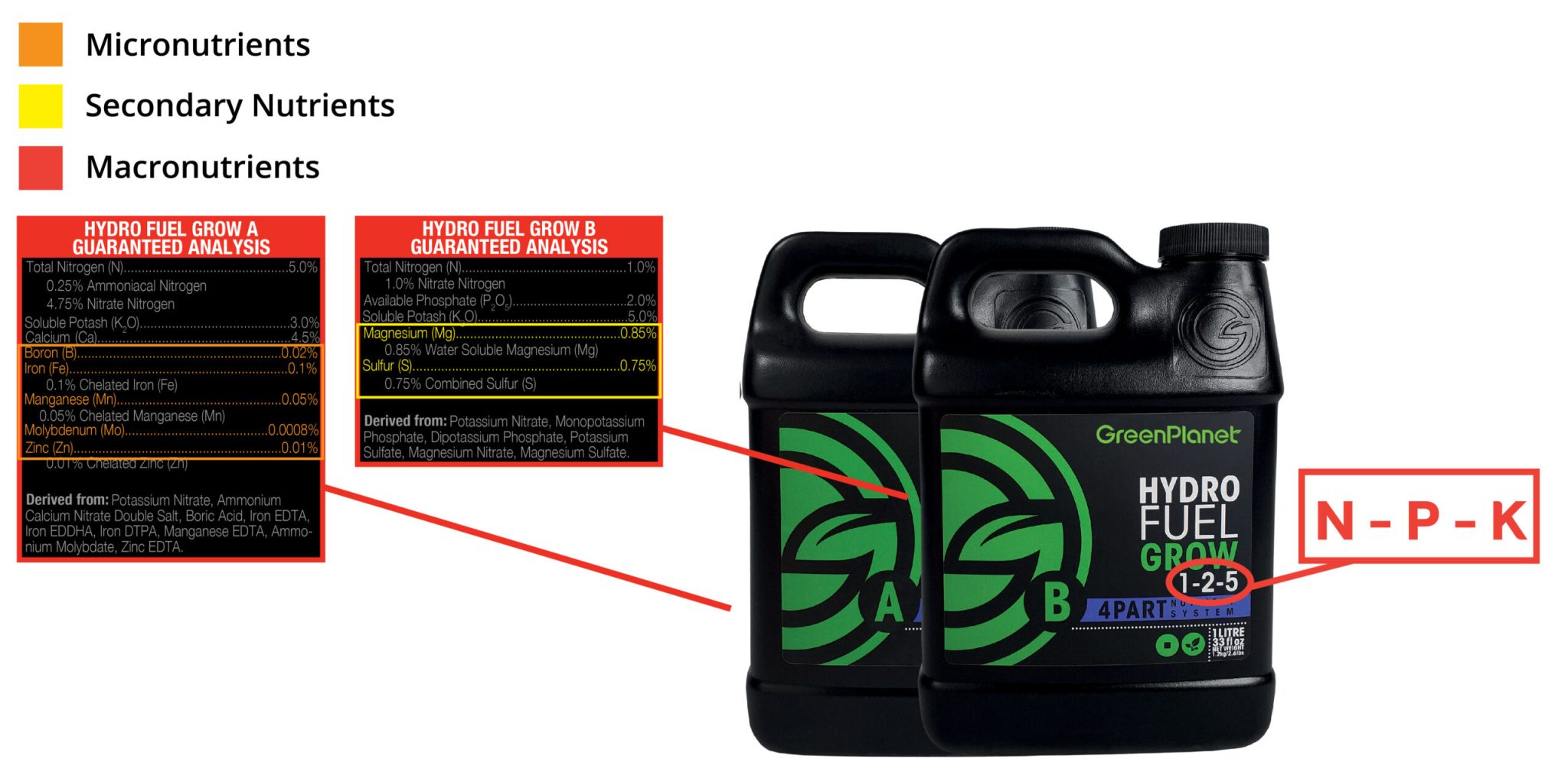
Image source: Web (Bing) / greenplanetnutrients.ca (Web image (fair-use with source credit))
Every fertilizer bag in the US carries a guaranteed analysis panel. It's the three (sometimes four) numbers you see in big print, like 30-0-10 or 16-4-8. Here's how to decode it.
| Number | Nutrient | Role in Lawn Health |
|---|---|---|
| First (N) | Nitrogen | Top growth, green color, density |
| Second (P) | Phosphorus | Root development, seedling establishment |
| Third (K) | Potassium (as K₂O) | Stress tolerance, disease resistance, winter hardiness |
A few things trip people up about that third number:
- K₂O vs. elemental K. The bag shows potassium as K₂O, potassium oxide, because that's the old agronomic convention. Actual elemental potassium is about 83% of the K₂O value. So a 10% K₂O fertilizer contains roughly 8.3% real potassium. You don't need to do this math for home use, but it explains why some soil reports list "K" in parts per million while bags list "K₂O" as a percentage.
- Zero is a real number. A 24-0-12 bag has no phosphorus, which is common in established lawns where phosphorus laws restrict its use. The third number being 12 still means you get potassium, just no P.
- The numbers add up to less than 100. That's normal. The rest of the bag is carrier material, fillers, and sometimes slow-release coatings. A 20-5-10 product is 35% nutrients and 65% other stuff.
When you pick up a bag, the guaranteed analysis tells you exactly what percentage of each nutrient you're paying for. Multiply that by the bag weight to figure out total nutrient pounds. A 50-pound bag of 24-0-12 has 6 pounds of K₂O in it.
Do You Even Need Potassium? Soil Tests, Grass Type, and Seasonal Timing
Potassium isn't a "more is better" nutrient. Over-applying it can tie up magnesium and calcium, waste money, and contribute to runoff. Before you grab a high-K fertilizer, figure out if your lawn actually needs it.
Start with a soil test. Most university extension offices offer soil testing for $15 to $30, and the report tells you your exact potassium level in ppm (parts per million). As of 2026, most extension labs use the Mehlich-3 extraction method, and the general sufficiency range for home lawns falls between 100 and 160 ppm K.
If your soil test comes back in that range, your lawn already has enough potassium and you don't need a high-K product. You can use a balanced fertilizer or even a nitrogen-only product like urea or ammonium sulfate.
If it's below 100 ppm, you're in the deficient zone, and a fertilizer with a meaningful third number makes sense. Here's how timing shifts based on your grass type:
| Grass Type | Best K Timing | Why |
|---|---|---|
| Cool-season (fescue, bluegrass, rye) | Late summer to early fall | Builds winter hardiness before dormancy |
| Warm-season (bermuda, zoysia, St. Augustine) | Late spring to early summer | Supports summer stress tolerance |
| Transition zone | Split apps, spring and fall | Manages both summer heat and winter cold |
One thing the research shows: fall potassium on cool-season lawns is one of the highest-return moves in lawn care. You're feeding the plant right when it's storing energy in the roots for winter, and most of the top growth has slowed so the K goes where it needs to go.
Choosing the Right Fertilizer: High-K Blends, Balanced Blends, and Specialty Winterizers
Once you know your soil test results and your grass type, picking a fertilizer gets a lot simpler. Here's how the main options stack up.
| Fertilizer Type | Example Ratio | Best For | Watch Out For |
|---|---|---|---|
| Balanced | 10-10-10 or 16-16-16 | General use, new lawns, low-maintenance turf | Often unnecessary phosphorus in established lawns |
| High-K winterizer | 10-0-20 or 24-0-12 | Cool-season lawns heading into winter | Salt burn risk on young grass |
| Starter fertilizer | 18-24-12 or similar | New seed or sod | High phosphorus, restricted in many states |
| Nitrogen-only | 46-0-0 (urea) or 21-0-0 (ammonium sulfate) | Lawns with adequate K and P | Doesn't address stress tolerance |
| Organic options | Compost, kelp meal, greensand | Long-term soil building | Lower N-P-K numbers, slower results |
If you're in a northern state with a phosphorus ban (most states restrict P on established lawns), you'll often see 24-0-12 or 32-0-10 on the shelf. Those products are built around potassium because it's the one nutrient that, along with nitrogen, established lawns actually need regularly.
A quick note on potassium sources. The two most common are potassium chloride (muriate of potash) and potassium sulfate. Chloride is cheaper and more common in home-use products.
Sulfate is gentler on sensitive turf and adds a small amount of sulfur, which is often deficient in sandy soils. For most home lawns, either works fine. If you've had salt-burn issues before, go with potassium sulfate.
How to Apply Potassium Safely Without Burning Your Lawn or Wasting Money
Application rate is where most homeowners go wrong. More potassium doesn't mean more benefit, and pushing past the recommended rate risks salt injury, especially on young turf or in hot, dry conditions.
Here's a straightforward approach that works for most home lawns:
- Calibrate your spreader. Check the bag for the recommended setting for your spreader model. Settings vary widely between brands, so don't guess.
- Calculate the actual nutrient. A 50-pound bag of 24-0-12 has 6 pounds of K₂O. If your soil test recommends 2 pounds of K₂O per 1,000 sq ft, you're applying 16,500 sq ft of coverage from that bag.
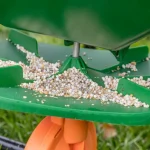
- Apply to dry grass. Spreader granules stick to wet blades and burn the tissue. Mow first, then apply the next day.
- Water it in lightly. A quarter-inch of irrigation moves the potassium off the leaf surface and into the root zone where it actually works.
- Sweep hard surfaces. Any fertilizer on a driveway or sidewalk washes straight into storm drains. Sweep it back onto the lawn before you water.
Split applications beat single heavy doses. Two pounds of K₂O in early September and another pound in late October is gentler on the turf and more efficient than three pounds in one shot.
Common Mistakes, Runoff Risks, and When to Skip Potassium Entirely
Even with the right product, timing and technique matter. Here are the most common errors our research turns up, and how to avoid them.
| Mistake | What Happens | How to Avoid It |
|---|---|---|
| Applying without a soil test | Wastes money, can cause K buildup | Test every 2 to 3 years |
| Heavy summer application | Salt burn on stressed turf | Push K to fall on cool-season lawns |
| Overlapping spreader passes | Double rate, striped burn | Close spreader on turns, use a marker |
| Ignoring phosphorus laws | Fines in restricted watersheds | Check state rules before applying P |
| Watering too much after | Leaches K below the root zone | A quarter inch is plenty |
Skip potassium entirely if your soil test shows K above 160 ppm. Adding more at that point doesn't help the lawn and adds to runoff risk. The same goes for lawns within 20 feet of a waterway, where many municipalities have stricter rules.
FAQs on the Third Fertilizer Number for Lawns
Is the third number on fertilizer always potassium?
Yes. The N-P-K ratio always lists nitrogen first, phosphorus second, and potassium third. The value shown is the percentage of K₂O by weight, following AAPFCO labeling standards.
Can a high third number burn my lawn?
It can, especially if you're using potassium chloride at high rates during hot weather. Salt index is the real risk. Sticking to recommended rates and watering in after application prevents most burn issues.
Should I use a 10-10-10 or a high-K fertilizer for my lawn?
It depends on your soil test. If potassium is already adequate, a balanced fertilizer just adds unneeded P and K. If K is low, a product with a meaningful third number like 24-0-12 is a more targeted choice.
When is the best time to apply potassium to a lawn?
Late summer through early fall is the sweet spot for cool-season grasses. Warm-season grasses benefit most from late spring applications going into summer stress. Avoid heavy K applications during peak summer heat.
Does organic fertilizer have potassium in the third number?
Yes, the same N-P-K labeling rules apply. Organic sources like kelp meal, greensand, and compost-based fertilizers list K the same way, usually as a smaller percentage than synthetic products.
How do I know if my lawn is low in potassium?
A soil test is the only reliable way. Visual symptoms like yellowing leaf margins and weak drought tolerance can suggest deficiency, but they overlap with other issues. A $25 soil test removes the guesswork.
🌱 Agronomist Recommended: Bio-Stimulants & Turf Nutrition
Achieve deep golf-course green color and root resilience without surge growth using lab-verified nutrients and bio-stimulants:
- Liquid Iron & Humic Acid:Check Liquid Iron & Humic Blends on Amazon →
- Stress-Blend High Potassium Fertilizer:Check High Potassium Lawn Fertilizers on Amazon →
*FTC Disclosure: As an Amazon Associate, Totally Green Lawn earns from qualifying purchases.*

Similar Posts