Spoon Feeding Lawn Nitrogen: The Complete Guide
Lead Turfgrass & Lawn Care Specialist at Totally Green Lawn · Certified Turfgrass Specialist (CTS), Master Gardener, B.S. in Agronomy & Turf Science · 14+ years in residential turf management, organic fertilization, and weed science
Spoon feeding lawn nitrogen is the practice of applying very small amounts of nitrogen to your turf on a frequent schedule, usually every 7 to 14 days through a liquid spray, instead of dropping a heavy granular dose once a month. Most home lawn programs call for roughly 0.1 to 0.5 pounds of actual nitrogen per 1,000 square feet per application, with a total seasonal budget of 2 to 4 pounds of nitrogen per 1,000 square feet for cool-season turf as of 2026.
Why does this matter? Because lawns fed in small doses hold steady color without the growth surges that force you to mow every third day, and the grass actually uses more of the nitrogen you put down. A 2024 Michigan State University Extension summary on turf fertilization notes that spoon-fed nitrogen reduces leaching losses and keeps top growth manageable, which is exactly the trade-off most homeowners want.
Quick Answer
Spoon feeding lawn nitrogen means applying small, frequent doses of liquid nitrogen, usually 0.1 to 0.5 pounds per 1,000 square feet, every 7 to 14 days. You mix a soluble nitrogen source like UAN or ammonium sulfate with water, spray it evenly over the turf, and let the grass absorb it through the leaves and roots. The goal is steady green color, controlled growth, and higher nitrogen use efficiency.
What Spoon Feeding Lawn Nitrogen Actually Means
Spoon feeding is a golf course term that has trickled down to serious home lawn care. On a golf green, superintendents rarely throw down a full pound of nitrogen at once. They meter it out, often through the irrigation system, in tiny weekly sips.
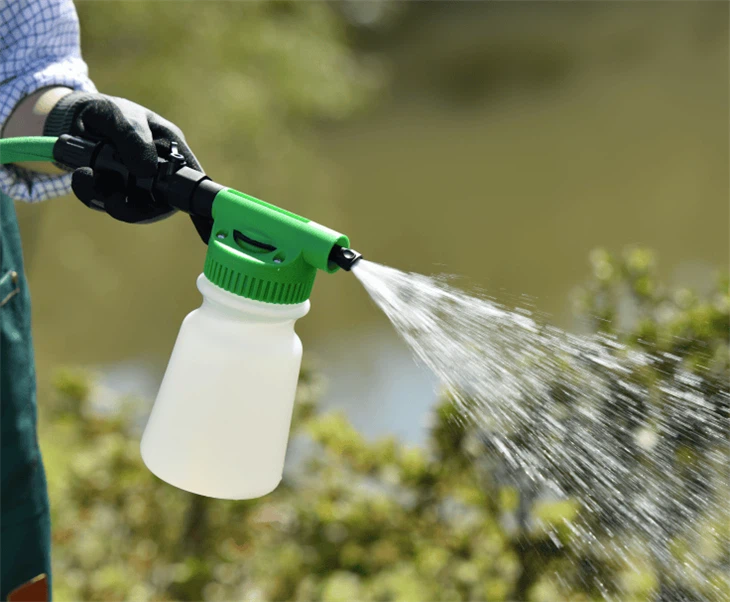
The same idea works at home, except you're usually doing it with a pump sprayer or hose-end applicator instead of an in-ground fertigation system.
The "spoon" in the name comes from the application rate. You're giving the lawn just enough nitrogen to keep it green, not enough to trigger a flush of top growth. Think of it as feeding your grass the way you'd snack through the afternoon, small amounts that keep your energy even, instead of a huge lunch that puts you in a food coma.
A few things separate spoon feeding from a normal fertilizer program:
- Frequency: every 7 to 14 days during the growing season, instead of every 6 to 8 weeks
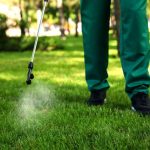
- Form: almost always liquid, mixed with water and sprayed
- Rate per pass: usually 0.1 to 0.5 pounds of actual nitrogen per 1,000 square feet
- Total seasonal N: stays the same as a conventional program, the same 2 to 4 pounds per 1,000 square feet for cool-season turf, just split into many smaller doses
The nitrogen source matters too. Quick-release sources like urea, ammonium sulfate, and UAN (urea-ammonium nitrate) work best because they dissolve in water and move into the plant within hours. Slow-release granulars are the opposite of what you want here.
When Spoon Feeding Makes Sense (and When It Doesn't)
Spoon feeding isn't a one-size-fits-all answer. It shines in some situations and wastes effort in others. The right call depends on your grass type, your goals, and how much time you actually want to spend walking around with a sprayer.
Spoon feeding is a strong fit if:
- You want consistent color without a sudden growth surge that doubles your mowing
- You're maintaining a high-value lawn (Bermuda, Zoysia, Kentucky bluegrass) where steady appearance matters
- Your lawn is recovering from stress, disease, or summer dormancy and needs gentle feeding
- You're already spraying the lawn for weeds or fungicides and can tank-mix nitrogen cheaply
- You live in a transition zone or coastal area with long growing seasons
Stick with granular or skip spoon feeding if:
- You have a large lawn (over 8,000 to 10,000 square feet) and limited time to spray every week
- Your grass is established and you only care about color in spring and fall
- You can't calibrate a sprayer reliably, uneven coverage gives you stripes
- Water restrictions in your area make frequent spraying impractical
- You want the lowest-fuss program possible
There's also a middle ground. Some homeowners spoon feed during the tough months (mid-summer heat, late fall color hold) and switch to granular the rest of the year. That's a totally valid hybrid approach.
How Spoon Feeding Works: The Science in Plain English
The reason spoon feeding works comes down to how turfgrass actually uses nitrogen. Grass pulls in nitrogen two ways, through the roots as nitrate and ammonium from the soil, and through the leaf cuticle as a foliar feed. Liquid nitrogen sprays take advantage of both.
When you spray a dilute nitrogen solution on the leaf, the plant absorbs a meaningful portion of it within 24 to 72 hours. That's why you see green-up fast, often by the next mowing. The rest drips down to the soil and gets taken up by roots over the following days.
This dual uptake is efficient. University research from programs like Purdue University turfgrass science and the USDA NRCS shows that smaller, more frequent nitrogen applications reduce the total nitrogen lost to leaching and volatilization. Heavy granular applications, by contrast, often dump more nitrogen than the plant can absorb in a week, and the excess either washes through the root zone or converts to gas.
A few quick principles worth keeping in your head:
- Leaf uptake peaks in the morning when the cuticle is hydrated and stomata are open
- Carrier water volume matters because too little water leaves concentrated droplets that can burn, too much just runs off
- Quick-release N drives foliar response, while a small amount of ammonium in the mix supports root uptake
- Total nitrogen still adds up, so you have to track what you're putting down across the whole season
The practical upshot: spoon feeding is a delivery method, not a magic fertilizer. Same nitrogen budget, but spread out so the plant actually uses more of it.
How to Spoon Feed Your Lawn Step by Step
The actual process isn't complicated, but it rewards a little setup. Here's the workflow that works for most home lawns.
1. Run a soil test first. A basic test from your state extension service tells you your pH, phosphorus, and potassium levels. If your pH is below 6.0, no amount of nitrogen will help much, lime first.
Most universities process soil tests for $15 to $30.
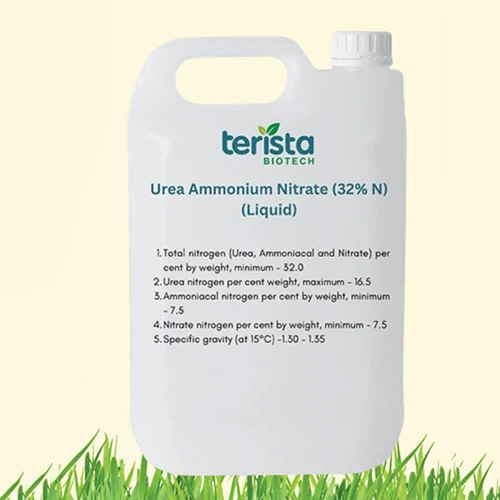
2. Pick your nitrogen source. UAN (32-0-0 or 28-0-0) is the workhorse for spoon feeding because it dissolves cleanly. Ammonium sulfate (21-0-0) works too and adds a little sulfur.
Straight urea (46-0-0) is the most concentrated but can burn if mixed too strong.
3. Calculate your rate. For UAN at 32% nitrogen, a 0.25 pound of N per 1,000 square feet rate works out to about 0.78 fluid ounces of product per 1,000 square feet. Always do the math on the product label and confirm it matches what you're trying to hit.
4. Mix with water. Most foliar applications use 0.5 to 2 gallons of carrier water per 1,000 square feet. For a 5,000 square foot lawn, that's 2.5 to 10 gallons of mixed solution.
Add a surfactant if your water has high surface tension or the leaves are waxy.
5. Calibrate your sprayer. Walk the lawn with just water and time how long it takes to cover 1,000 square feet at your pace. That tells you how fast to move when you spray the real mix.
A 1-gallon pump sprayer covers roughly 500 to 1,000 square feet depending on nozzle output.
6. Spray in two passes. Apply half the mix walking one direction (north-south) and the other half perpendicular (east-west). This pattern cuts down on streaks and missed strips.
7. Let it dry on the leaves. Don't water it in immediately. The foliar uptake window is the first few hours.
After that, any leftover nitrogen in the soil will catch the next watering or rain.
8. Log every application. Note the date, product, rate, and weather. Total seasonal N adds up fast, and you don't want to overshoot your annual budget.
9. Repeat every 7 to 14 days during active growth. Cool-season grasses usually run this program spring through mid-May, then again September through November.
Warm-season grasses run it from green-up in spring through early fall.
10. Adjust based on response. If the lawn turns dark green and growth jumps, you've overfed, drop the rate or stretch the interval. If you see yellowing and slow recovery, your rate is too low or your interval too long.
Spoon Feeding Rates, Products, and Timing by Grass Type
Not every grass wants the same program. Cool-season and warm-season turf respond differently to spoon feeding, and the timing windows shift with your climate.
| Grass type | N rate per app (per 1,000 sq ft) | Frequency | Best months | Preferred N source |
|---|---|---|---|---|
| Kentucky bluegrass | 0.25 to 0.5 lb | Every 14 days | April to mid-June, September to November | UAN or ammonium sulfate |
| Perennial ryegrass | 0.25 to 0.5 lb | Every 14 days | April to mid-June, September to November | UAN solution |
| Tall fescue | 0.2 to 0.4 lb | Every 14 days | April to mid-June, September to November | UAN or urea solution |
| Bermuda grass | 0.25 to 0.5 lb | Every 7 to 14 days | Late April to September | Ammonium sulfate or UAN |
| Zoysia | 0.2 to 0.4 lb | Every 14 to 21 days | May to September | UAN solution |
| St. Augustine | 0.25 to 0.5 lb | Every 14 to 21 days | April to September | Ammonium sulfate |
Two things to keep in mind with this table. First, these are starting points. Your lawn's response should drive the final rate.
Second, cool-season turf in summer heat often goes semi-dormant and won't use nitrogen well, so most extension programs recommend pausing spoon feeding in July and August in the North.
If you're adding iron for color without growth, the typical tank-mix rate is 1 to 2 ounces of iron sulfate or a chelated iron product per 1,000 square feet. Iron greens the lawn without pushing top growth, which is why it's a common companion to nitrogen spoon feeding in summer.
For the legal side, check your state and local fertilizer rules. Florida, New Jersey, Maryland, and several other states have summer blackout dates or phosphorus restrictions that affect home lawn applications. Your local cooperative extension office can confirm what's legal in your zip code.
Mistakes That Burn Lawns and Waste Nitrogen
The most common way spoon feeding fails isn't the concept, it's the execution. Here are the mistakes that show up over and over in extension service complaint files and homeowner forums.
Misreading "small dose per app" as "less total nitrogen"
Spoon feeding changes how you deliver nitrogen, not how much you deliver. A lawn getting 0.3 pounds of N every 10 days across six applications has still received 1.8 pounds of N per 1,000 square feet. Track your totals or you'll accidentally double your seasonal budget and end up with a thatch monster.
Spraying at the wrong time of day
Midday applications in summer heat evaporate the carrier water before the leaves absorb much. The nitrogen crystallizes on the grass and you get speckled burn. Early morning is best, with late afternoon as a backup.
Avoid spraying within two hours of sunset, because the leaf needs time to dry before disease pressure rises overnight.
Skipping the spreader pass
Pumps and hose-end sprayers can leave stripes if you don't double up. One pass north-south, one pass east-west. Miss this and you'll have visible dark and light bands within a week.
Mixing too strong for a foliar feed
Foliar nitrogen works because the solution is dilute. If you're putting down 0.5 pounds of N in less than a half gallon of water per 1,000 square feet, you're asking for leaf burn. Stick to the 0.5 to 2 gallons of carrier water range.
Feeding during stress
Don't spoon feed a lawn that's mid-drought or freshly heat-stressed. The roots aren't pulling, the leaf cuticle is closed up, and the nitrogen just sits there or burns. Wait for recovery before resuming.
Ignoring blackout dates and runoff rules
State and local fertilizer ordinances aren't suggestions. Many coastal and watershed counties ban summer nitrogen apps entirely. A quick check with your county extension office saves you a fine and keeps you legal.
Spoon Feeding FAQ
How often should I spoon feed my lawn?
Every 7 to 14 days during active growth is the standard window. Cool-season turf in northern climates usually gets 6 to 8 applications between April and mid-June, then another 4 to 6 between September and November. Warm-season turf in the South runs weekly or biweekly from spring green-up through early September.
Can I mix nitrogen with my weed killer in the same tank?
Yes, in most cases. UAN and ammonium sulfate are compatible with most broadleaf weed killers and many fungicides. Always do a jar test first, mix a small batch in a clear container, and look for any separation or curdling.
Check both product labels for tank-mix instructions, because some herbicides specifically warn against fertilizer blends.
Will spoon feeding make me mow more often?
It should do the opposite. The whole point of small frequent doses is steady color without growth flushes. If you're suddenly mowing every three days after starting a spoon feeding program, your rate is too high or your interval too short.
Drop back to 0.2 pounds of N per 1,000 square feet and stretch the interval to 14 days.
Is liquid nitrogen better than granular?
It's different, not automatically better. Liquid gives you faster response, easier calibration, and tank-mix flexibility. Granular is cheaper per pound of N, slower to release, and requires fewer trips across the lawn.
Many lawn care pros use both, granular as the base program, liquid to push color between applications or during stress recovery.
Can I spoon feed in summer without burning the lawn?
Yes, with two adjustments. Cut the rate to 0.1 to 0.2 pounds of N per 1,000 square feet, and always include iron at 1 to 2 ounces per 1,000 square feet for color without growth. Spray in the early morning only, and never apply to a lawn that's wilting.
Water the lawn the evening before if soil is dry.
How do I know if I'm overdoing it?
Watch for three signs. Growth spikes that double your mowing frequency. A dark, almost black-green color that looks artificial.
Or thatch buildup at the soil surface within a few weeks. If any of these show up, drop the rate by a third and stretch your interval to 14 to 21 days. The lawn should look like a healthy mid-green, not a putting green.
🌱 Agronomist Recommended: Bio-Stimulants & Turf Nutrition
Achieve deep golf-course green color and root resilience without surge growth using lab-verified nutrients and bio-stimulants:
- Liquid Iron & Humic Acid:Check Liquid Iron & Humic Blends on Amazon →
- Stress-Blend High Potassium Fertilizer:Check High Potassium Lawn Fertilizers on Amazon →
*FTC Disclosure: As an Amazon Associate, Totally Green Lawn earns from qualifying purchases.*

Similar Posts