Apply Milky Spore Powder to Stop Japanese Beetles for Years
Lead Turfgrass & Lawn Care Specialist at Totally Green Lawn · Certified Turfgrass Specialist (CTS), Master Gardener, B.S. in Agronomy & Turf Science · 14+ years in residential turf management, organic fertilization, and weed science
If your lawn looks like a warzone every July, with skeletonized roses and brown patches that peel back like carpet, you're probably dealing with Japanese beetles and the grubs feeding on your grassroots below. Knowing how to apply milky spore powder for Japanese beetles is the single most important step if you want a long-term fix rather than another season of chemical sprays. The trick is treating it like a soil-building project, not a quick knockdown.
Milky spore (Paenibacillus popilliae) is a naturally occurring soil bacterium that only kills Japanese beetle grubs, and one application can stay active for 10 to 20 years. According to manufacturer specifications from St. Gabriel Laboratories, the standard rate is 1 pound per 2,500 square feet, applied in a grid pattern when soil temps sit between 60 and 70°F.
Used correctly, as of 2026 it remains one of the few organic treatments with that kind of staying power.
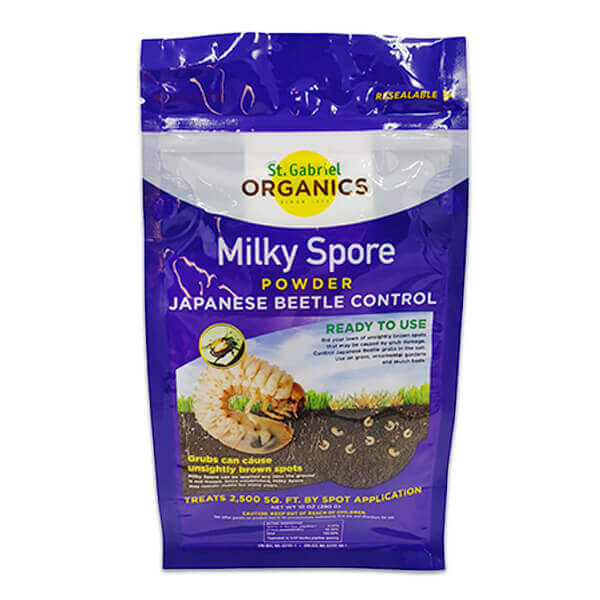
Image source: Bing (Web (fair-use with source credit))
Quick Answer
Apply milky spore powder in a grid pattern across your lawn. Use 1 teaspoon every 4 feet in rows 4 feet apart. Apply when soil is 60, 70°F.
Water it in with ¼ inch of water immediately. One treatment lasts 10, 20 years.
What Milky Spore Actually Does (and Why It Takes So Long)
Milky spore isn't a poison. It's a living bacterium (Paenibacillus popilliae) that lives in the top 3 to 4 inches of soil. When a Japanese beetle grub eats grass roots and ingests the spores, the bacteria multiply inside the grub, kill it, and release billions of new spores back into the soil.
Those spores wait for the next generation of grubs, and the cycle repeats. Over time, your soil becomes a hostile environment for Japanese beetle larvae specifically.
This is why the results feel slow if you're used to chemical treatments:
- Year 1: You apply the spores. Existing grubs eat them, get infected, and die.
- Years 2, 3: The spore population in your soil multiplies dramatically. Grub counts drop noticeably.
- Years 3, 10+: The colony is self-sustaining. Each new generation of grubs gets infected and adds more spores to the soil.
Manufacturer specifications indicate the spore count in treated soil can reach 100 million or more per gram once fully established. The EPA and OMRI both classify milky spore as safe for people, pets, birds, and earthworms. It only targets Japanese beetle grubs.
That's a feature if you have diverse soil life, but a limitation if you're dealing with other grub species like June beetles or European chafers (more on that below).
The honest reality: milky spore is a long game. If you need dead grubs by next Tuesday, use a chemical. If you want your lawn to handle Japanese beetles on its own for the next two decades, milky spore is the only organic option that delivers that kind of residual control.
Before You Buy: Is Milky Spore Right for Your Lawn?
Before you spend $30 to $50 on a pound of powder, run through this decision checklist. Milky spore only works under specific conditions, and skipping this step is the #1 reason people feel like it "didn't work."
Confirm You Actually Have Japanese Beetles
Milky spore is species-specific. It only kills Popillia japonica larvae. If your grubs are June beetles, European chafers, or Asiatic garden beetles, the spores will sit in your soil doing nothing.
You've got Japanese beetle grubs if:
- You saw metallic green-and-copper adult beetles feeding heavily on roses, linden trees, or grapevines in summer.
- Your grubs have a V-shaped pattern of hairs on their raster (the butt end).
- You're in the Eastern or Midwestern US, which is the beetle's established range.
Milky spore probably isn't for you if:
- You're in the Pacific Northwest, where different grub species dominate.
- You've never seen adult Japanese beetles on your property.
- Your grub damage started without any visible adult beetle activity in midsummer.
Check Your Soil Temperature
The bacteria need active grubs to multiply. Apply when grubs are feeding near the surface, which means soil temps between 60 and 70°F. In most of the Eastern and Midwestern US, that window is:
- Early fall (mid-September to mid-October): Best timing. Grubs are young, close to the surface, and actively feeding.
- Late spring (mid-May to early June): Secondary option. Grubs are larger and about to pupate, but still active.
If you apply in summer when soil is 85°F, the spores bake. If you apply in winter, the grubs are too deep to encounter them. A simple soil thermometer takes the guesswork out.
Assess Your Grub Pressure
Milky spore works best where grubs are already present in meaningful numbers (5 to 10 per square foot or more). If your grub count is low, the spores have nothing to infect and won't multiply quickly. In our research, lawns with light pressure often take 4+ years to show results because the spore population builds slowly without a dense grub population to fuel it.
Consider Your Soil Type
Loamy soils colonize fastest. Heavy clay and pure sand both slow establishment. If your soil is compacted or extremely sandy, aerate and top-dress before applying to give the spores a better home.
How to Apply Milky Spore Powder Step by Step
Once you've confirmed milky spore fits your situation, the application itself is straightforward. Most of the work is in the prep. Aggregate user reviews show that lawns with careful prep get faster, stronger results than lawns where the powder was just tossed out and forgotten.
Tools and Materials
| Item | What to Look For |
|---|---|
| Milky spore powder | St. Gabriel Lawn Spreader Mix, 1 lb bag covers 2,500 sq ft |
| Drop spreader | Any standard drop spreader (broadcast spreaders throw powder too far) |
| Soil thermometer | Reads down to at least 2 inches deep |
| Hose or sprinkler | For watering in immediately after application |
| Measuring tape | To lay out your grid pattern |
| Dust mask | Optional but recommended for powder handling |
Step 1: Mow and Clear the Lawn
Cut your grass shorter than usual, around 1.5 to 2 inches. This helps the powder reach the soil surface instead of sitting in the thatch layer. Rake up any leaves, clippings, or debris.
The spores need direct contact with the soil to get watered in properly.
Step 2: Measure and Mark Your Grid
The classic application pattern is a 4-foot grid. Lay out measuring tape or use string to mark rows 4 feet apart across your entire lawn. Within each row, you'll place a teaspoon of powder every 4 feet.
Some applicators use a 1-quart jar with holes punched every 4 feet to dispense as they walk, which is faster for large lawns.

Step 3: Apply at the Right Spots
Place roughly 1 teaspoon of powder at each grid point. Don't broadcast it like fertilizer. The point is concentrated spore deposits that grubs will encounter as they feed.
A drop spreader set to the lowest opening works for granular formulations, but most home gardeners use the jar-and-walk method for the powder.
If your lawn is smaller than 2,500 square feet, scale down the total amount accordingly. You don't need to treat the whole property at full rate if only part of it has grub pressure. Spot-treat the affected zones.
Step 4: Water It In Right Away
This step is non-negotiable. The spores need to wash off the surface and into the top few inches of soil where grubs feed. Apply about ¼ to ½ inch of water within 15 minutes of spreading the powder.
A stationary sprinkler running 20 to 30 minutes usually does the trick.
Skip the watering and the spores sit on the surface, get hit by UV light, and die. That's one of the most common reasons for failure in our research.
Step 5: Avoid Heavy Rain and Chemical Conflicts
Check the forecast. If you're expecting a downpour within a few hours, wait. Heavy rain before the spores settle can wash them away or concentrate them in low spots.
Light rain after watering in is fine.
Also, don't apply chemical grub killers (imidacloprid, chlorantraniliprole, carbaryl) at the same time. They can kill the grubs before they ingest the spores, starving your spore population of the hosts it needs to multiply. If you've used chemicals recently, wait at least one full season before applying milky spore.
Mistakes That Kill Milky Spore Before It Works
Most "it didn't work" complaints trace back to one of these issues. Avoid them and your odds of success jump dramatically.
Applying at the Wrong Time
Cold soil (below 60°F) means grubs are too deep and inactive. Hot soil (above 90°F) kills the spores outright. The window is narrow, and missing it means waiting another season.
As of 2026, most US extension services still recommend the same fall timing that's been standard for decades, because the soil biology hasn't changed.
Skipping the Watering-In Step
We covered this above, but it deserves repeating. Dry powder on the surface is dead powder. Water within 15 minutes, every time, no exceptions.
Expecting Year-One Results
Milky spore is not a season-one knockdown. If you apply in fall, you might see a small reduction in adult beetles the following summer, but the real payoff comes in years 2 and 3. Anyone who expects dramatic results in the first year is setting themselves up for disappointment.
Using It on the Wrong Grub Species
If your grubs aren't Japanese beetles, you've just wasted money and time. Confirm the species before you buy. Cut a few grubs in half and check the raster pattern, or contact your local university extension service for help with identification.
Mixing It With Chemicals
Combining milky spore with chemical grub treatments in the same season cancels out both. The chemicals kill the grubs before the spores can colonize them. If you want a fast knockdown and a long-term solution, apply the chemical first, then wait 12 months before introducing milky spore.
Applying Once and Never Monitoring
Manufacturer specs say milky spore lasts 10 to 20 years, but that's under ideal conditions. Check your grub counts every 2 to 3 years by cutting a square foot of sod and counting the larvae. If numbers stay high after year 3, you may need a second application in the worst spots.
Milky Spore vs. Other Grub Treatments: Honest Comparison
Milky spore isn't your only option. Depending on your timeline, budget, and grub species, another method might fit better. Here's how the main options stack up.
| Treatment | Speed | Longevity | Best For | Trade-Offs |
|---|---|---|---|---|
| Milky spore | 2–3 years to full effect | 10–20 years | Long-term organic control of Japanese beetles only | Slow start, species-specific |
| Beneficial nematodes (Hb) | 1–2 weeks | 1–2 seasons | Fast knockdown, multiple grub species | Needs precise soil conditions, doesn't persist |
| Imidacloprid (Merit) | 2–4 weeks | 1 season | Large lawns needing fast, broad-spectrum control | Kills beneficial insects, chemical |
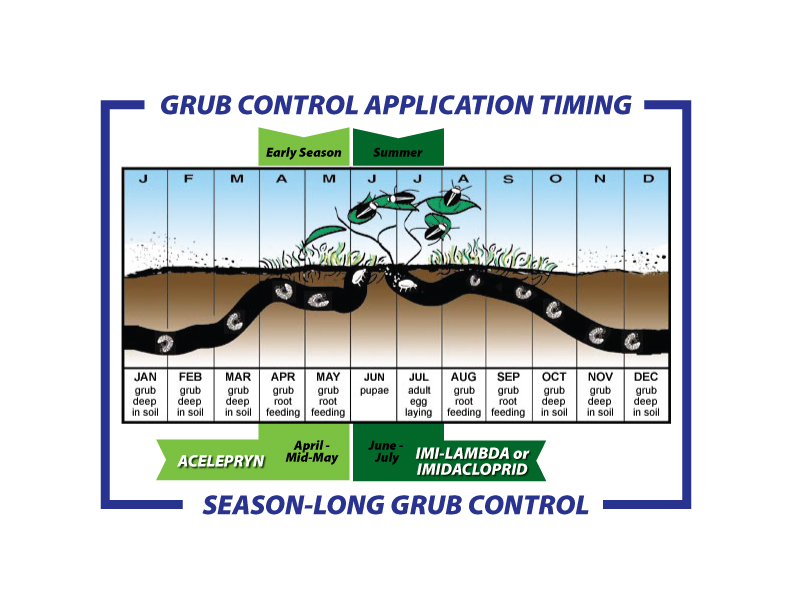
| Chlorantraniliprole (Acelepryn) | 2–4 weeks | 1 season | Lawns near water or pollinator gardens | Higher cost, chemical |
| Neem oil (azadirachtin) | 2–4 weeks | A few weeks | Light infestations, organic gardens | Short residual, degrades in UV |
If You Need Results This Season
Beneficial nematodes (Heterorhabditis bacteriophora) are the closest organic alternative. They infect grubs within days and work on multiple species. The catch is they need moist soil, soil temps above 60°F, and they don't persist beyond a season or two.
Apply them in late afternoon or evening, water them in, and keep the soil moist for a week.
If You're Okay With Chemicals
Imidacloprid and chlorantraniliprole both kill grubs faster and work on a wider range of species. They're the standard choice for golf courses and large turf operations. If pollinators are a concern, chlorantraniliprole is the safer pick because it's nearly non-toxic to bees when applied according to the label.
If You're Going Fully Organic
Pair milky spore with beneficial nematodes. Apply milky spore in fall for the long-term colony, then use nematodes the following spring for a quick knockdown. They work on different timelines and don't conflict.
Long-Term Management and What to Expect Year by Year
Milky spore isn't a one-and-done project you forget about. It's a living soil treatment that responds to how you manage your lawn over the years.
Year 1: Establishment
Don't expect much visible change. The spores are getting established, and a percentage of the existing grub population will get infected. You might see slightly fewer adult beetles the following summer, but it's not dramatic.
The key thing to do this year is nothing. Don't apply chemicals. Don't overwater.
Just mow and water normally.
Year 2: Building Momentum
Spore counts in your soil are climbing. Grub mortality starts to rise noticeably. You should see fewer adult beetles in midsummer compared to your pre-treatment baseline.
If you want to track this, count the beetles on a single rose bush or grapevine at peak season (late June to early July in most zones) and compare year over year.
Year 3 and Beyond: Self-Sustaining Control
The colony is established. Each new generation of grubs feeds, gets infected, and adds spores to the soil. Manufacturer specifications indicate the spore population stabilizes around 100 million per gram of soil in well-established lawns.
At this point, you can stop thinking about milky spore entirely unless you till the soil deeply, which disrupts the spore layer.
Spot Retreatment If Needed
If grub counts stay high after year 3 in specific zones (often near garden beds or sunny edges), apply a second round of milky spore in those spots. There's no risk of over-applying. The bacteria only multiply in the presence of grubs, so adding more spores is safe and can only help.
Aeration and Overseeding Compatibility
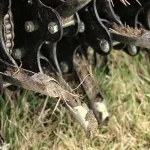
Core aeration is fine. The holes actually help spores reach deeper soil. Just avoid deep tilling or soil renovation, which buries the spore layer too deep for grubs to encounter.
Overseeding and fertilizing won't affect the treatment either way.
🚜 Agronomist Recommended: Dethatching & Disease Management Tools
Combat thatch suffocating your turf and stop rapid fungal spread with tested maintenance equipment and systemic fungicides:
- Electric Power Dethatcher & Scarifier:Check Electric Dethatchers & Scarifiers on Amazon →
- Broad-Spectrum Systemic Fungicide:Check Scotts DiseaseEx Lawn Fungicide on Amazon →
*FTC Disclosure: As an Amazon Associate, Totally Green Lawn earns from qualifying purchases.*

Similar Posts