Best Morning Time to Water Grass for a Lush Lawn
Lead Turfgrass & Lawn Care Specialist at Totally Green Lawn · Certified Turfgrass Specialist (CTS), Master Gardener, B.S. in Agronomy & Turf Science · 14+ years in residential turf management, organic fertilization, and weed science
If you're asking what is the best time of morning to water grass, here's the straight answer: aim for somewhere between 4 AM and 10 AM, with the sweet spot sitting right before sunrise through the first couple of hours after the sun comes up. Cool temperatures, calm wind, and low sun angle mean more water actually reaches the root zone instead of evaporating into the air. Watering later in the morning is fine on dry, breezy days, but it gets risky once humidity climbs and blades stay wet for hours.
The reason this window works comes down to physics. Cool-season turfgrasses lose far less moisture to evaporation when air temperature is still in the 50s or 60s, and wind speeds at dawn are typically 30 to 50 percent lower than midday gusts per standard meteorological reporting. That means a sprinkler running at 5 AM delivers more usable water per gallon than the same runtime at 1 PM.
Land-grant university extension services, including Texas A&M AgriLife Extension, consistently recommend this pre-dawn to early-morning window for that exact reason. Let's walk through what actually happens at each hour, and how to dial in the right time for your specific lawn.
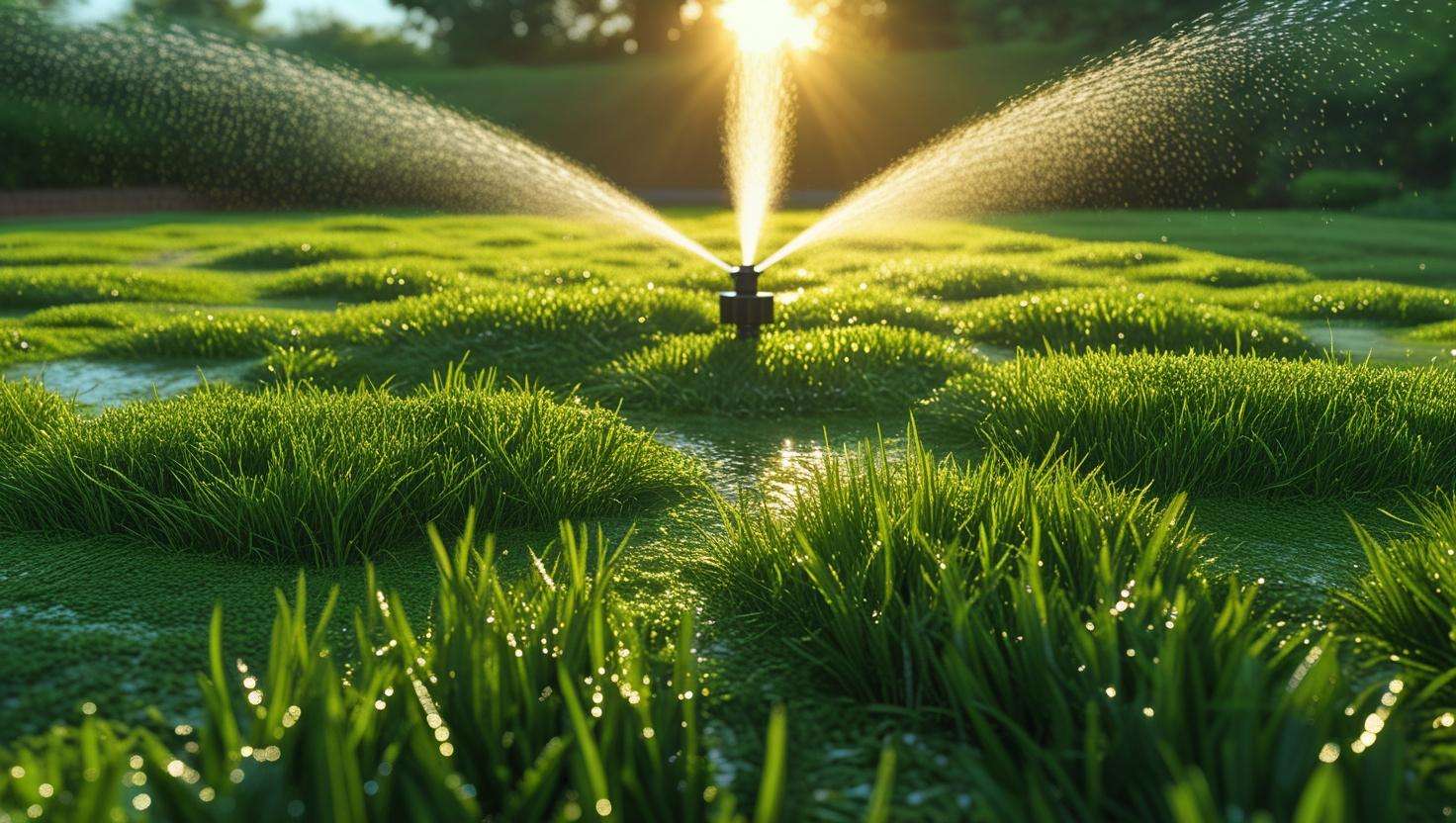
Image source: Bing (Web (fair-use with source credit))
Quick Answer
The best time of morning to water grass is between 4 AM and 10 AM. Water in the pre-dawn window for the lowest evaporation. Water in the early morning window for convenience and safety.
Avoid watering after 10 AM when heat and wind spike. Always check local water restrictions first.
What Actually Happens When You Water at Different Times
Watering isn't one-size-fits-all, and the hour you pick changes how much water your lawn actually keeps. Here's a breakdown of the four main windows and what each one delivers.
Pre-Dawn (4 AM to 6 AM)
This is the gold standard for most homeowners. Air temperature is at its lowest, wind is usually calm, and the sun isn't pulling moisture out of the soil before it can soak in. Sprinkler distribution is more even because there's no thermal distortion or gusty drift.
The trade-off? You'll need a timer or smart controller to make it happen, since most people aren't awake to drag hoses around at 4 AM. That's also why automatic irrigation systems are designed around this window.
Early Morning (6 AM to 10 AM)
Still a strong choice. The sun is low, temps are mild, and blades have time to dry before evening. If you're hand-watering or running a manual hose-end sprinkler, this is the most realistic window.
By 9 or 10 AM, especially in summer, evaporation starts climbing fast. You'll lose 20 to 30 percent more water to evaporation compared to a 5 AM run, per typical turfgrass irrigation research. But for most homeowners, the convenience tradeoff is worth it.
Midday (10 AM to 4 PM)
The worst window for efficiency. Evaporation losses can hit 50 percent or more in hot, dry, or windy conditions. Watering in full sun doesn't actually burn grass blades (that's a myth), but you're wasting water and stressing the plant.
The only time midday watering makes sense is if your lawn is showing severe heat stress and you need to cool the canopy fast. Think of it as emergency triage, not a routine.
Evening (6 PM to Midnight)
Tempting after a hot day, but risky. Blades stay wet for 8 to 12 hours overnight, creating ideal conditions for brown patch, dollar spot, and other fungal diseases, especially in warm-season grasses like St. Augustine and Zoysia.
If you must water in the evening, keep the runtime short and aim to finish by 7 PM so blades have time to dry before midnight.
| Time Window | Evaporation Loss | Disease Risk | Best For |
|---|---|---|---|
| 4–6 AM | Low (5–10%) | Very Low | Automatic systems, best efficiency |
| 6–10 AM | Moderate (10–25%) | Low | Manual watering, most homeowners |
| 10 AM–4 PM | High (30–50%+) | Low | Emergency cooling only |
| 6 PM–12 AM | Low | High | Last resort, disease-prone areas |
The Conditions That Change Your Ideal Watering Window
The 4 AM to 10 AM rule is a strong default, but it's not universal. Your ideal time shifts based on climate, grass type, soil, and local rules.
Hot, Arid Climates (Southwest US)
If you're in Phoenix, Las Vegas, or Albuquerque, push your start time as early as possible. Evaporation kicks in fast once the sun rises, and afternoon temps can hit 100+ by 11 AM. Pre-dawn watering (3 AM to 5 AM) is standard practice here, and many municipalities mandate it during drought restrictions.
You'll also want to water deeply but less often, aiming for 1.5 inches per week delivered in two sessions rather than daily light sprinkles. This trains roots to grow deeper where soil temps are cooler and moisture is more stable.
Humid Climates (Southeast US)
In Florida, Georgia, and the Carolinas, the calculus flips slightly. Humidity is already high, so evaporation loss is lower even at 9 AM. But fungal pressure is intense, especially on St.
Augustine and centipede lawns.
The fix: water early enough that blades dry by mid-morning. A 6 AM start usually works. If your lawn has a history of brown patch, lean toward pre-dawn (4 AM to 5 AM) so the sun dries the canopy faster.
Cool-Season Grass Regions (Northeast, Midwest, Pacific Northwest)
Fescue, Kentucky bluegrass, and ryegrass thrive in cooler temps and don't face the same fungal pressure as warm-season grasses. You have a wider window, roughly 5 AM to 9 AM, and you can get away with occasional evening watering in midsummer without major disease risk.
The bigger concern here is rainfall. If you're getting regular rain, cut back on supplemental watering. Overwatering cool-season grass leads to shallow roots and thatch buildup.
Sloped or Compacted Soil
Water runs off before it soaks in. If your yard has any slope or heavy clay content, split your runtime into two shorter cycles with a 30 to 60 minute gap between them. This is called cycle-and-soak, and it dramatically improves absorption.
For example, instead of running sprinklers for 20 straight minutes, run them for 10 minutes, wait 30 minutes, then run another 10. The first pass wets the surface and reduces runoff; the second pass drives water deeper into the root zone.
Water Restrictions and HOA Rules
Many cities restrict outdoor watering to specific days or hours, especially during drought. Check your local water utility's website or call before you set a schedule. Violations can mean fines or mandatory shutoff.
Some municipalities ban daytime watering entirely (10 AM to 6 PM is common) to reduce peak demand on the system. In those cases, your window is forced into pre-dawn or early morning whether you like it or not.
How to Set Your Morning Watering Schedule Step by Step
Once you know your ideal window, the next step is dialing in how long and how often to run your system. Here's a research-based workflow that works for most lawns.
Step 1: Check Soil Moisture First
Don't water on a calendar schedule. Water based on need. Push a screwdriver or soil probe into the ground.
If it slides in easily 4 to 6 inches deep, you have enough moisture. If you hit resistance at 2 inches or less, it's time to water.
You can also use the footprint test: walk across the lawn. If your footprints stay visible and the grass doesn't spring back, you're underwatered.
Step 2: Measure Your Sprinkler Output
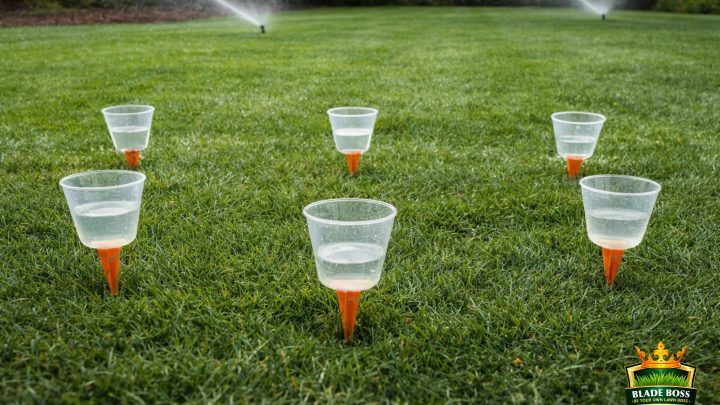
You need to know how many inches per hour your system delivers before you can calculate runtime. Set out 5 to 10 straight-sided containers (tuna cans, rain gauges, or catch cans) across each irrigation zone.
Run the sprinklers for 15 minutes, then measure the depth of water in each container. Average the results and multiply by 4 to get inches per hour. A typical pop-up spray head delivers 1.5 to 2 inches per hour.
Rotor heads deliver 0.5 to 1 inch per hour.

Step 3: Calculate Total Weekly Watering Time
The target for most established lawns is 1 to 1.5 inches per week, including rainfall. If your system delivers 1 inch per hour and you need 1.5 inches total, that's 90 minutes of runtime per week.
Split that into two sessions (45 minutes each, on different days) to improve absorption and reduce runoff. Three sessions (30 minutes each) works even better on slopes or clay soil.
Step 4: Set Your Start Time
For most automatic systems, set the start time between 4 AM and 6 AM. This puts the bulk of watering in the lowest-evaporation window and finishes before the sun heats up.
If you have multiple zones, stagger the start times by 15 to 30 minutes so the system isn't trying to run everything at once. This keeps water pressure stable and improves distribution uniformity.
Step 5: Adjust by Season
Your watering time isn't static. As of 2026, most smart controllers adjust automatically based on local weather data, but if you're running a manual timer, here's a rough seasonal guide:
| Season | Weekly Water (inches) | Sessions per Week | Best Start Time |
|---|---|---|---|
| Spring | 1.0 | 2 | 6 AM |
| Summer | 1.5 | 2–3 | 4–5 AM |
| Fall | 1.0 | 1–2 | 6–7 AM |
| Winter (dormant) | 0.25–0.5 | 1 | 7–8 AM (warm-season only) |
Step 6: Monitor and Adjust
Check the lawn weekly. Look for signs of stress (blue-gray color, footprints that don't bounce back) and signs of overwatering (mushroom growth, spongy feel, fungal rings). Adjust runtime in 10 percent increments up or down based on what you see.
Common Watering Mistakes That Hurt Your Lawn
Even with the right timing, a few common errors can undo all your effort. Here's what to watch for.
Watering Too Late in the Morning
Anything after 10 AM in summer is flirting with high evaporation. If your schedule forces you into the 8 AM to 10 AM window, make sure the runtime is long enough to push water deep, not just wet the surface. A short, late-morning watering is the worst of both worlds: blades stay wet into midday heat, but the water never reaches the roots.
Watering Too Shallowly
Frequent, light watering trains roots to stay near the surface, where they're vulnerable to heat and drought. Instead, water deeply and less often. The goal is to wet the soil 4 to 6 inches down each session.
That's where the root mass lives, and that's where the water needs to go.
If you're unsure how deep your watering reaches, push a soil probe or long screwdriver into the ground right after a cycle. It should slide in easily 4 to 6 inches. If you hit dry soil at 2 inches, increase your runtime.
Watering at Night
We covered this earlier, but it bears repeating. Night watering is a fungal disease risk, especially in humid climates or on warm-season grasses. If your only option is evening, keep it short and finish by 7 PM.
Ignoring Rainfall
If you got a half-inch of rain last night, turn off the irrigation for the next cycle. A simple rain sensor or smart controller will do this automatically, but manual timers require you to pay attention. Overwatering is just as harmful as underwatering.
It suffocates roots, leaches nutrients, and invites disease.
Mismatched Sprinkler Types in the Same Zone
Mixing pop-up spray heads and rotor heads in the same zone is a recipe for uneven coverage. Spray heads put down water 3 to 4 times faster than rotors, so one part of the zone gets soaked while another stays dry. If you have mixed heads, run them on separate zones with different runtimes.
Watering the Sidewalk
Adjust sprinkler heads so they don't overshoot onto pavement, driveways, or streets. Water hitting concrete is pure waste, and in some municipalities, runoff into storm drains is a violation. Use a screwdriver to adjust the arc and distance on each head, or hire an irrigation professional to do it once a year.
Morning Watering by Grass Type and Climate
Your grass type and regional climate set the baseline for when and how much to water. Here's how the major turfgrass categories respond to different morning routines.
Cool-Season Grasses (Fescue, Kentucky Bluegrass, Ryegrass)
These grasses grow actively in spring and fall and slow down in summer heat. Their root systems stay relatively shallow, so they need more frequent watering, but smaller amounts per session.
Target 1 to 1.25 inches per week during peak summer, split into two or three morning sessions. Start times between 5 AM and 8 AM work well. Because fungal pressure is lower than on warm-season grasses, you have slightly more flexibility, but pre-dawn watering still delivers the best efficiency.
Warm-Season Grasses (Bermuda, Zoysia, St. Augustine, Centipede)
Warm-season grasses are built for heat. They go semi-dormant in winter and thrive in 80°F+ weather. Their root systems run deeper, so they tolerate longer intervals between watering.
Target 1 to 1.5 inches per week, but you can deliver it in fewer, deeper sessions. Start times between 4 AM and 6 AM are ideal, especially for St. Augustine and centipede, which are highly susceptible to fungal disease.
Zoysia and Bermuda handle a slightly later window (6 AM to 8 AM) without major issues.
Transition Zone (Mixed Climate Regions)
If you're in the middle, where both grass types can survive (think Virginia, Tennessee, or northern Texas), your biggest variable is summer humidity. In dry, hot stretches, lean toward pre-dawn watering and deep sessions. In humid spells, prioritize blade dryness and cut back to every third or fourth day.
Clay vs. Sandy Soil
Soil texture changes how fast water moves. Clay holds water but absorbs it slowly, so shorter cycles with rest periods work best. Sandy soil drains fast, so you may need shorter, more frequent sessions to keep the root zone moist without wasting water past the root depth.
| Grass Type | Weekly Water (inches) | Ideal Start Time | Sessions/Week |
|---|---|---|---|
| Fescue / Bluegrass / Rye | 1.0–1.25 | 5–8 AM | 2–3 |
| Bermuda / Zoysia | 1.0–1.5 | 4–6 AM | 1–2 |
| St. Augustine / Centipede | 1.0–1.5 | 4–5 AM | 1–2 |
| Transition Zone (mixed) | 1.0–1.5 | 5–7 AM | 2 |
Frequently Asked Questions
Is 7 AM too late to water grass?
No, 7 AM is within the recommended 4 AM to 10 AM window and works well for most lawns. It's a practical choice for manual watering or systems that can't run pre-dawn. In humid climates, aim closer to 6 AM to reduce fungal risk.
In dry, windy areas, 7 to 8 AM is fine because evaporation is still low.
Can I water grass at 11 AM if it's cool outside?
Technically yes, but it's not ideal. Once the sun is up and air temps climb above 75°F, evaporation rates jump. Even on a cool day, 11 AM pushes you toward the high-loss window.
If your schedule only allows midday watering, expect to use 20 to 30 percent more water to achieve the same root-zone moisture.
How long should I run my sprinklers in the morning?
It depends on your output and target depth. For most lawns, aim to deliver 0.5 to 0.75 inches per session, two to three times per week. If your system puts out 1 inch per hour, that's 30 to 45 minutes per session.
Use the catch-can test to measure your actual output and adjust from there.
Is it bad to water grass every day?
Usually, yes. Daily light watering trains roots to stay shallow and increases disease risk. Most established lawns do better with deep, infrequent watering, two or three times per week rather than daily.
The exception is new seed or sod, which needs light, frequent watering for the first two to three weeks until roots establish.
Does watering in the morning prevent fungus?
It reduces the risk compared to evening watering, but it's not a guarantee. Morning watering gives blades time to dry before nightfall, which breaks the disease cycle. In high-humidity regions, combine morning watering with good airflow (prune surrounding shrubs, dethatch annually) for the best protection.
What if my city restricts morning watering?
Some municipalities ban outdoor watering before 8 or 10 AM to reduce noise or peak system demand. In that case, your legal window is 10 AM to 6 PM, and you should aim for 10 AM to 2 PM for the lowest evaporation within that allowed range. Always check your local water utility's rules before setting a schedule.
Your Decision Guide: Picking the Right Time for Your Yard
You've got the science, the steps, and the seasonal adjustments. Now let's boil it down to a quick decision framework you can use right now.
If You Have an Automatic System
Set your start time to 5 AM. Run two or three cycles per week, delivering 1 to 1.5 inches total. Use a smart controller or rain sensor to skip cycles after rainfall.
Adjust seasonally, earlier in summer, later in spring and fall.
If You Water by Hand or Hose
Start between 6 AM and 8 AM, whatever fits your routine. Water deeply but less often. Two long sessions per week beat five short ones.
Water until you see runoff, then stop and let it soak in before resuming.
If You Live in a Drought Zone
Check local restrictions first. Many areas mandate one or two specific watering days per week. Use pre-dawn timing within those allowed windows.
Prioritize deep watering to keep roots strong and drought-resilient. Let your lawn go slightly dormant if needed; most turfgrasses can survive 4 to 6 weeks without water and recover when conditions improve.
If You Have Fungal Disease Problems
Shift to pre-dawn watering (4 AM to 5 AM) so blades dry fastest. Cut back to once or twice per week. Increase airflow by dethatching and pruning nearby plants.
If disease persists, treat with a fungicide labeled for your grass type and consult your local university extension office for diagnosis.
The bottom line? Water early, water deeply, and let the lawn tell you when it needs more. The 4 AM to 10 AM window gives you the best balance of efficiency, disease prevention, and practical flexibility, and once you dial in your schedule, you can stop thinking about it and let the system do the work.

Similar Posts