How Long to Run Sprinklers Per Zone in Summer
Lead Turfgrass & Lawn Care Specialist at Totally Green Lawn · Certified Turfgrass Specialist (CTS), Master Gardener, B.S. in Agronomy & Turf Science · 14+ years in residential turf management, organic fertilization, and weed science
How long to run sprinklers per zone in summer isn't a single number you can copy from a neighbor's settings. The right runtime depends on your soil, your grass type, your sprinkler heads, and how much heat your lawn actually takes. Most homeowners end up overwatering because they set a timer once and forget it, then wonder why the bill climbs and the grass still looks rough.
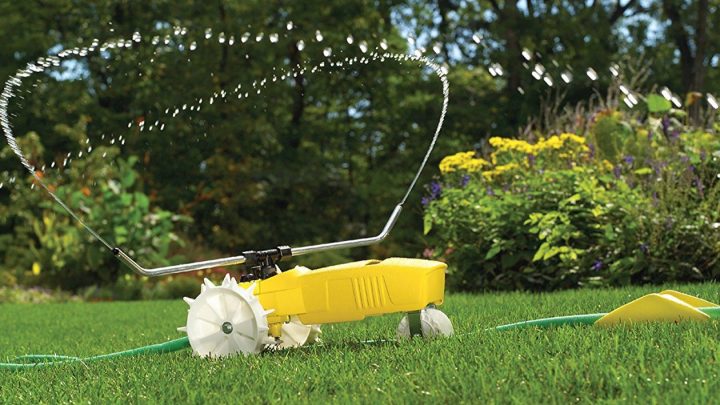
The math behind a good summer schedule is simple once you see it. Manufacturer specs and university extension data show that spray heads put out around 1.5 to 2 inches of water per hour, while rotor heads deliver closer to 0.4 to 0.7 inches. That single difference is why one lawn needs 12 minutes per session and another needs 40.
As of 2026, smart controllers and ET-based scheduling have made this easier, but the underlying formula still runs everything.
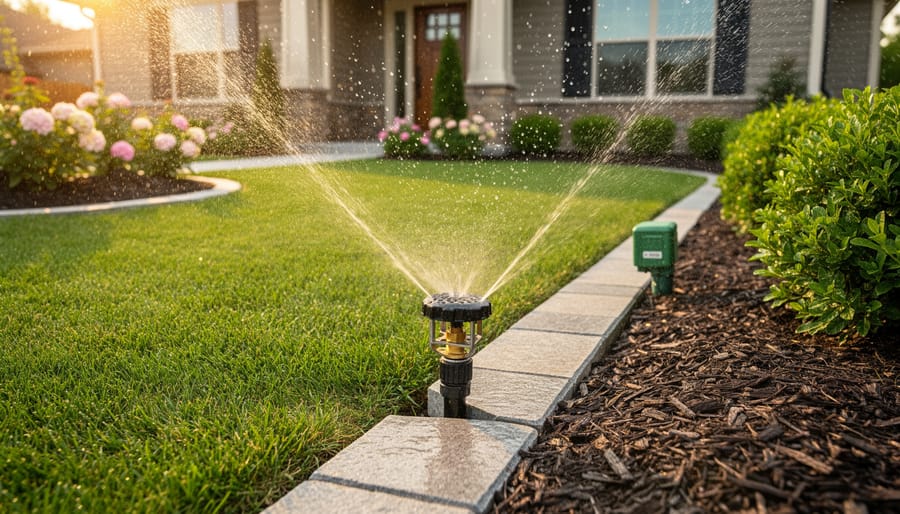
Image source: Bing (Web (fair-use with source credit))
Quick Answer
Run each sprinkler zone long enough to deliver about 1 to 1.5 inches of water per week. Most spray zones need 10 to 20 minutes per session. Most rotor zones need 30 to 45 minutes.
Water two to three days per week, early morning, splitting into short cycles if runoff shows up. Always confirm with a catch-can test on your own yard.
Why "20 Minutes, Three Times a Week" Is the Wrong Answer
It sounds clean. It shows up in a dozen blog posts. And it underwaters your rotor zones while drowning your spray zones.
The "20 minutes" number comes from a general spray-head average, but most residential systems mix head types across zones, and the difference in output is huge.
Here's the gap between advice and reality:
| Sprinkler type | Typical output (in/hr) | Minutes to apply 0.5 in |
|---|---|---|
| Spray head | 1.5 to 2.0 | 15 to 20 |
| Rotor head | 0.4 to 0.7 | 43 to 75 |
| Rotary nozzle | 0.4 to 0.6 | 50 to 75 |
| Drip emitter | n/a (slow) | 60 to 120 |
A rotor zone running 20 minutes only gets about 0.15 inches down. That's barely a sip. A spray zone running 45 minutes floods the lawn and wastes water.
The runtime has to match the hardware, not the calendar.
There's also the soil factor. University extension data shows that water moves through sandy soil fast, but clay absorbs it slowly. So a "20-minute" runtime in sandy Texas dirt may work fine, while the same runtime on clay in North Carolina turns into a river running down the driveway.
That's the whole problem with generic advice. It ignores the three biggest variables: head type, soil, and grass. If your settings don't account for those, you're guessing.
The 5 Variables That Decide Your Sprinkler Run Time
Before you touch the controller, you need to know what you're working with. The runtime only makes sense once you lock down these five variables.
1. Sprinkler head type. This is the biggest lever. As the table above shows, rotor heads put out roughly a third of what spray heads deliver.
Identify what's in each zone. If a zone has mixed heads, you have a bigger problem than runtime, because matched precipitation rate matters more than minutes.
2. Soil type. Sandy soil drinks water fast. Clay soil takes its time and then puddles.
Loam sits in the middle. Your soil decides whether you can run one long cycle or whether you need to split into shorter bursts with soak time in between.
| Soil type | Infiltration rate (in/hr) | Implication |
|---|---|---|
| Sandy | 0.5 to 1.0+ | Longer single cycles usually fine |
| Loam | 0.25 to 0.5 | Moderate cycles work |
| Clay | 0.1 to 0.3 | Cycle and soak required |
3. Grass type and root depth. Cool-season grasses like fescue and Kentucky bluegrass typically need around 1.5 inches per week in summer. Warm-season grasses like Bermuda, Zoysia, and St.
Augustine need closer to 1.0 to 1.25 inches. Deep-rooted grass pulls from further down, so it handles longer intervals between waterings.
4. Sun, slope, and exposure. A zone in full Texas sun loses more water to evapotranspiration than the same zone in dappled shade. Peak summer ET in arid climates runs 0.2 to 0.3 inches per day.
Slopes shed water before it soaks in, so they need shorter cycles even if the soil is sandy.
5. Local rules and water cost. Drought-stage restrictions, odd-even day rules, and tiered water pricing all shape when and how long you can run. In places like Phoenix or San Diego, summer watering windows are tight, and every minute matters more.
Get those five right, and the runtime answer falls out of a basic formula. Skip them, and you're back to guessing.
Step-by-Step: How to Calculate the Right Run Time Per Zone
Now the actual workflow. This is the part generic guides skip, and it's the only part that matters if you want a number you can trust.
Step 1: Identify the head type in each zone. Walk the yard while the zone runs. Note whether you're seeing pop-up spray heads (short, fixed spray pattern) or rotor heads (rotating stream). Write it down per zone.
Zone 1 might be spray; Zone 4 might be rotor. They will never share a runtime.
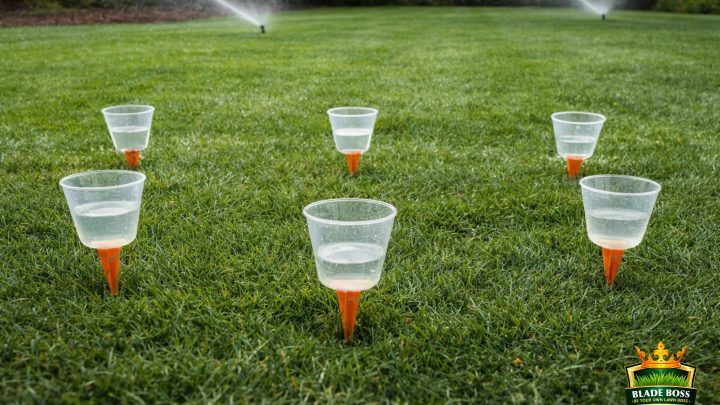
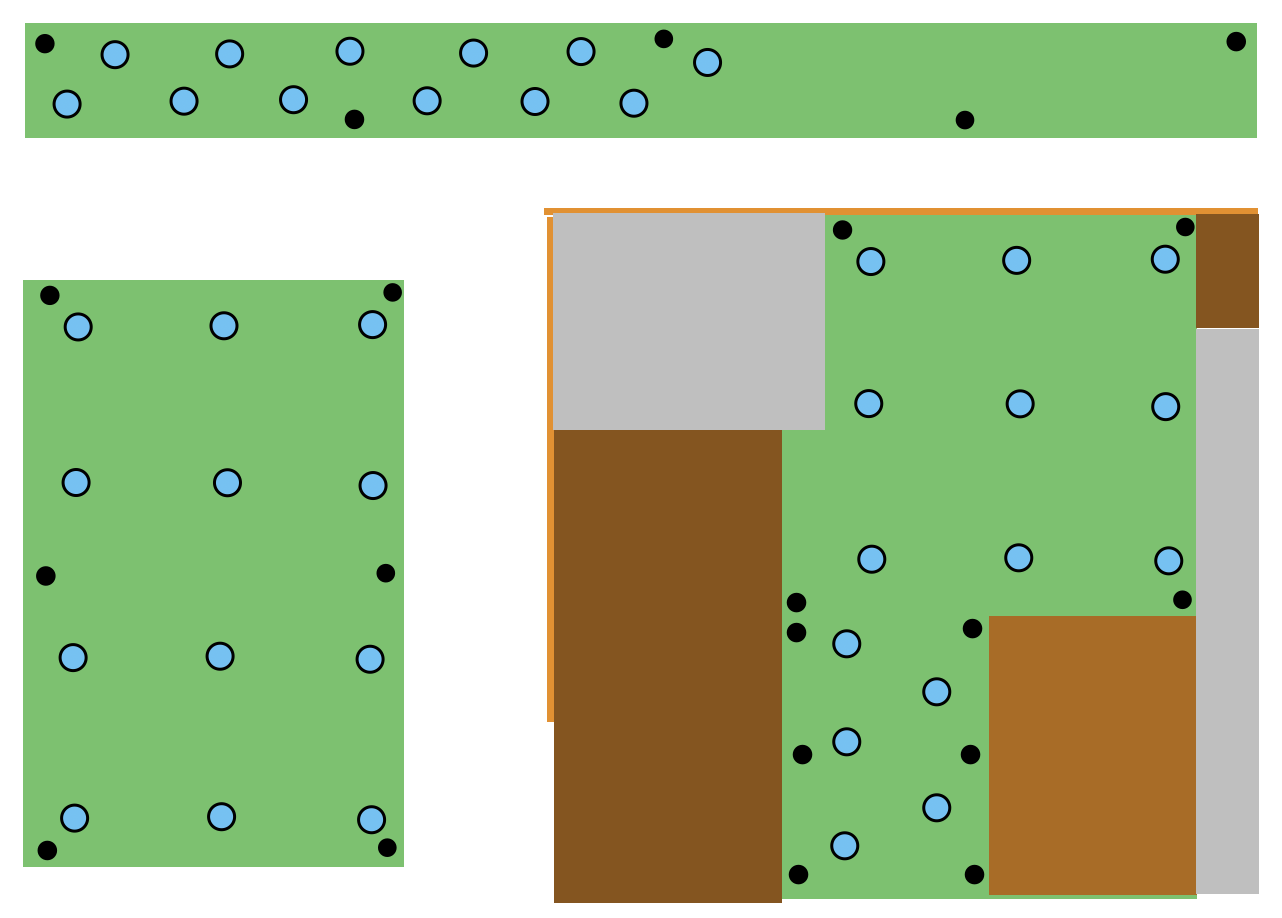
Step 2: Run a catch-can test. This is the single most useful ten minutes of summer irrigation work. Place 5 to 6 straight-walled containers (tuna cans, cat food tins, or actual rain gauges) across the zone in a scattered pattern. Run the zone for 15 minutes.
Measure the depth in each can with a ruler, then average them.
Here's the formula:
Average depth (inches) ÷ 0.25 hours = precipitation rate (inches per hour)
If your average is 0.4 inches in 15 minutes, your precipitation rate is 1.6 inches per hour. That's a spray head. If your average is 0.1 inches in 15 minutes, you're at 0.4 inches per hour, classic rotor territory.
Step 3: Pick your weekly target depth. For most established lawns, 1.0 to 1.5 inches per week is the right range. Cool-season grass in July heat sits at the top of that range. Warm-season grass can usually hold the lower end.
If you're under watering restrictions, drop to 1.0 inch and water more efficiently rather than starving the lawn.
Step 4: Calculate base runtime per session. Use the formula:
(Weekly target depth ÷ Watering days per week) ÷ Precipitation rate × 60 = minutes per cycle
Example: 1.5 inches per week, 3 watering days, 0.5 in/hr precipitation rate.
(1.5 ÷ 3) ÷ 0.5 × 60 = 0.5 ÷ 0.5 × 60 = 60 minutes
That rotor zone needs 60 minutes total, split into 2 or 3 cycles if you see runoff.
Step 5: Pick watering days. Two deep waterings beat five shallow ones for almost every grass type. Three is fine in peak summer. Watering daily encourages shallow roots and fungal problems, especially in cool-season lawns.
Step 6: Set the start time between 4 AM and 8 AM. Wind is calm, evaporation is low, and the lawn dries before nightfall. That last point matters because wet grass overnight is an open invitation to brown patch and dollar spot.
Step 7: Watch for runoff on the first run. If water starts running off the lawn or into the street before the cycle ends, stop there. Note the time. That's your cycle limit.
Run another cycle after a 30 to 60 minute soak window.
(Image source: Bing (Web (fair-use with source credit)))
That's the whole system. Run the test once a year, ideally at the start of summer, and you'll have a real number instead of a guess.
Adjusting for Soil Type, Grass Type, and Sun Exposure
The base calculation gets you in the ballpark. These three adjustments dial it in for your specific yard.
Soil type adjustments. If you've got heavy clay, don't fight it by extending runtime. Clay accepts water slowly, and once it's full, the rest runs off. Stick to the cycle-and-soak method.
Short bursts of 5 to 10 minutes with 30 to 60 minute gaps let water soak down to the root zone without wasting it. Sandy soil is more forgiving. Longer single cycles work because infiltration isn't the bottleneck.
Grass type adjustments. Cool-season grasses (fescue, bluegrass, rye) go semi-dormant in extreme heat. They still need water, but they don't need as much as you think. If your fescue goes brown in July, it may be going dormant, not dying.
Cutting back to 1 inch per week during peak heat, then ramping up in September, is a common play recommended by university extension services.
Warm-season grasses (Bermuda, Zoysia, St. Augustine, Centipede) love the heat and use water efficiently. They can usually take 1 to 1.25 inches per week through August and stay green.
St. Augustine is the thirstiest of the bunch. Bermuda is the most drought-tolerant.
Sun and slope adjustments. A south-facing zone in full sun in Phoenix loses far more water to ET than a north-facing zone under an oak in Charlotte. Add 10 to 20% runtime to hot, exposed zones. Cut 10 to 20% from deeply shaded zones.
Slopes need the cycle-and-soak treatment regardless of soil, because gravity wins before absorption does.
For local ET data and watering recommendations, the Irrigation Association and your state's cooperative extension service (run through your land-grant university) are the most reliable sources. They publish region-specific guidance that beats any generic article.
Cycle-and-Soak: The One Trick That Prevents Runoff
If you watch your sprinklers run and water starts streaming off the lawn before the cycle ends, you don't need more time. You need a smarter schedule. That's cycle-and-soak in a nutshell.
Run the zone for a short burst, pause to let water soak in, then run again. Repeat until you've hit your target depth.
The standard split is 2 to 3 short cycles, separated by 30 to 60 minute soak windows. For a spray zone that needs 18 minutes total, two 9-minute cycles beat one 18-minute cycle every time on clay or slope. For a rotor zone that needs 60 minutes, three 20-minute cycles save more water than one long soak session.
| Zone type | Single long cycle | Better: cycle-and-soak |
|---|---|---|
| Spray on clay | 18 min, runoff after 8 | 2 × 8 min, 45 min apart |
| Rotor on slope | 60 min, runoff after 25 | 3 × 20 min, 30 min apart |
| Drip on loam | 90 min, mostly fine | 2 × 45 min, 30 min apart |
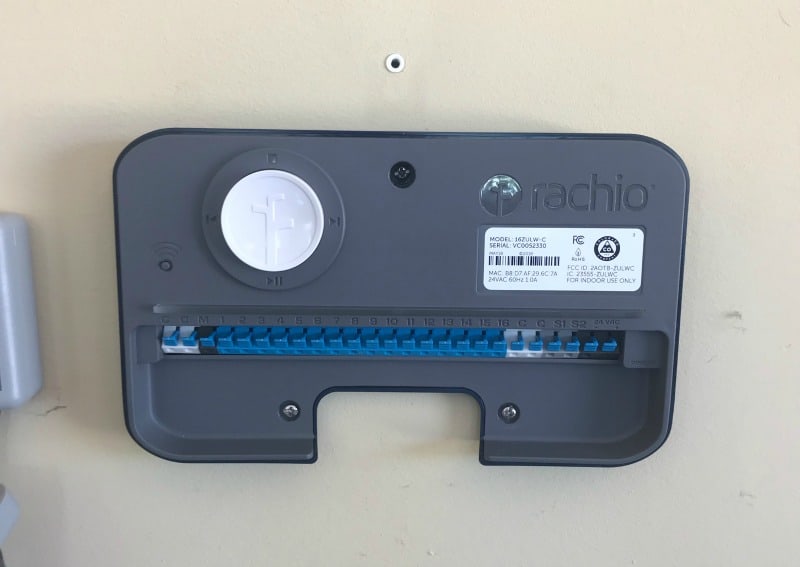
The visual here is water disappearing into the soil between cycles, not racing down the driveway. If you're using a smart controller, look for the cycle-and-soak feature. Most major brands (Rachio, Rain Bird, Hunter, Orbit) now offer it as a built-in option, so you set the total runtime and the controller does the splitting.
Common Mistakes That Waste Water and Stress Your Lawn
Most summer lawn problems trace back to the controller, not the grass. These are the patterns that show up again and again in extension service reports and irrigation audit data.
Watering every day. Short, daily sessions train roots to stay near the surface. Those shallow roots then burn out in July and need even more water. Two to three deep waterings per week build the deep root system that actually survives summer.
Mixing head types in one zone. A spray head and a rotor head in the same zone cannot deliver matched precipitation. One will flood, the other will under-water. Fix the zone by swapping the heads so they match, or split it into two zones.
Setting the controller once in spring and walking away. Summer ET isn't static. June might need 1 inch per week. August in a hot climate might need 1.5 inches or more.
Recalculate at the peak of summer, then again as it cools.
Watering at midday. Wind picks up, evaporation spikes, and you're losing 30% or more of the water to the air. Early morning (4 AM to 8 AM) is the consistent winner across all climates.
Ignoring the catch-can test results. Manufacturer specs are a starting point, but pressure, nozzle wear, and spacing all change actual output. A 5-year-old spray head often delivers less than its rated rate. The catch-can test is the only number that reflects your real yard.
Watering during or right after rain. A rain sensor or a smart controller with skip-on-rain will catch this automatically. If you're running a basic timer, you'll need to shut it off manually and turn it back on when the soil dries.
Treating brown grass as automatic "more water." Brown can mean dormant, fungal, or grub-damaged. More water makes the fungal case worse. Diagnose before you ramp up the runtime.
Smart Controllers, Rain Sensors, and Local Rules
A basic timer is a calendar. A smart controller is a calculator. It pulls local weather data, adjusts for ET, and shifts your schedule when rain hits.
The EPA's WaterSense program estimates that WaterSense-labeled controllers save a household around 7,600 gallons of water per year on average. That's not a marketing line. It's measured savings from certified field testing.
If you don't want a full smart controller, a $30 rain shutoff sensor is the bare minimum. It interrupts the schedule when rainfall crosses a set threshold (usually 1/4 inch to 1/2 inch), so the system doesn't run on wet soil. Most municipalities require them on new installs anyway.
(Image source: Bing (Web (fair-use with source credit)))
Local rules are the piece most homeowners ignore until they get a fine. Drought-stage restrictions, odd-even day rules, and time-of-day bans vary city to city. Phoenix, Las Vegas, and much of Southern California run Stage 1 or Stage 2 restrictions most summers.
Some HOAs have their own schedule on top of municipal rules. Your water bill insert or the local utility website is the fastest way to confirm what's allowed.
Two best practices that hold up across every region: water between 4 AM and 8 AM, and aim for two to three days per week rather than daily. If your area allows only one or two days, water deeply when you can and use cycle-and-soak to make every gallon count.
Frequently Asked Questions
How long should I run rotor sprinklers in summer?
Most rotor zones need 30 to 45 minutes per cycle, two to three times per week. Rotor heads deliver about 0.4 to 0.7 inches per hour, so a 45-minute cycle applies roughly 0.4 inches. Two cycles per week puts you close to the 1-inch minimum for warm-season grass, and three cycles get cool-season grass to its 1.5-inch target.
Confirm with a catch-can test, since actual output varies.
Is 10 minutes enough for a spray zone?
Often, yes. Spray heads deliver 1.5 to 2.0 inches per hour, so 10 minutes applies 0.25 to 0.33 inches. Two 10-minute cycles in one morning, repeated twice a week, delivers about 1 inch total.
If your soil is sandy and the zone has good coverage, a single 15 to 20 minute cycle can work. Watch for runoff on clay. If water pools or runs off, split it into two cycles with a 30 to 60 minute soak between them.
How do I know if I'm overwatering?
Look for these signs: spongy soil underfoot, persistent mushrooms, a swampy smell, or brown patches that feel slimy. Fungus shows up fast in overwatered lawns, especially in cool-season grass during humid stretches. Another check: push a screwdriver into the soil.
If it slides in easily 6 inches down, you have plenty of moisture. If it stops at 2 inches, you actually need water.
Can I water at night in summer?
You can, but it's risky. Overnight moisture on grass blades creates the conditions brown patch and dollar spot love, especially when nighttime temps stay above 70°F. Early morning is the better window because the grass dries before evening.
If your area restricts daytime watering, water as late at night as the rules allow, but morning beats night in every climate.
Do smart controllers actually save water?
Yes, and the data backs it up. EPA WaterSense field tests show smart controllers cut irrigation water use by about 20% to 50% compared to basic timers. The savings come from automatic rain skips, ET-based adjustment, and cycle-and-soak scheduling.
If your water bill is high or your area charges tiered rates, a smart controller usually pays for itself within two to three summers.

Similar Posts