Overseeding Warm Season Grass in Spring: What to Know
Lead Turfgrass & Lawn Care Specialist at Totally Green Lawn · Certified Turfgrass Specialist (CTS), Master Gardener, B.S. in Agronomy & Turf Science · 14+ years in residential turf management, organic fertilization, and weed science
Can you overseed warm season grass in spring? Yes, but only under the right conditions, and it's a very different play than the fall overseeding most homeowners are used to. Spring overseeding of warm-season turf is really a repair move, not a thickening move, and it works best when soil temperatures have climbed into the right window and the existing lawn is thin or damaged, not dense and healthy.
Most university extension services, including guidance from Texas A&M AgriLife Extension, put the soil temperature threshold for warm-season grass germination at roughly 65°F to 70°F at a 2 to 4 inch depth. As of 2026, that window is what separates a successful spring overseed from a wasted bag of seed. Below, we'll walk through when it makes sense, when it backfires, and how to do it right.
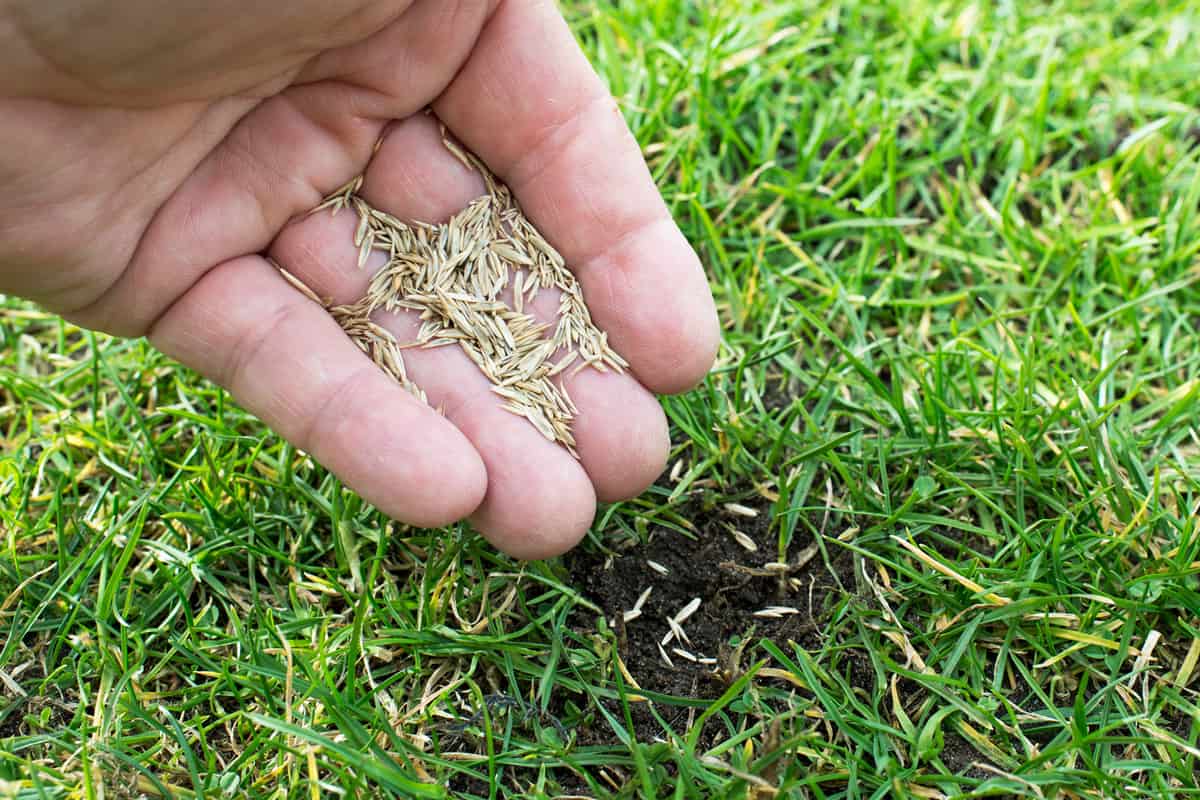
Image source: Bing (Web (fair-use with source credit))
Quick Answer
Yes, you can overseed warm season grass in spring. Do it once soil temps stay above 65°F. It's a repair move for thin or winter-damaged lawns.
Match the seed to your existing species. Skip spring seeding if you used a pre-emergent earlier.
It Depends on Your Grass, Your Zone, and Your Goal
Spring overseeding isn't one decision. It's three layered questions, and the answer flips depending on how you answer each one.
Warm-season grass types and how they respond to spring seeding
Warm-season grasses aren't a single category. They share a love of heat, but they spread, germinate, and recover on very different timelines. That matters a lot when you're dropping seed on top of an existing lawn.
- Bermudagrass spreads aggressively by stolons and rhizomes. It germinates fast (often 7 to 14 days in warm soil) and recovers from damage quickly. It's the most forgiving species for spring overseeding.
- Zoysiagrass spreads slowly and germinates slowly (14 to 21+ days). It can be overseeded in spring, but expect a longer wait and more weed pressure while the seedlings establish.
- Centipedegrass is a slow, low-maintenance grass with poor seedling vigor. Spring overseeding is possible, but establishment is finicky and seed is harder to source.
- St. Augustinegrass is rarely grown from seed at all. It's usually plugged, sodded, or sprigged. Overseeding St. Augustine with St. Augustine seed isn't a realistic homeowner project.
- Bahiagrass can be seeded, but it's mostly used in pasture and roadside settings, not typical home lawns.
Transition zone vs. Deep South: why location flips the answer
Where you live changes the math.
In the Deep South (USDA zones 8 through 10, Gulf Coast, Florida, South Texas), spring comes early. Soil warms up fast, and warm-season grass hits its stride by late March or April. Spring overseeding here is a real option for repairing winter damage.
In the transition zone (roughly zones 6 through 7, including parts of the upper South and lower Midwest), spring is a race. Soil may warm late, then summer stress arrives early. Spring-seeded warm-season grass often struggles to establish before heat and drought hit.
Fall overseeding usually wins here.
Repair vs. thicken vs. overseed for color: three different goals, three different plans
This is where most homeowners go wrong. They're really trying to do one of three things, and each has a different best path.
- Repair winter kill, spring dead spot, or bare patches. Spring overseeding with the same warm-season species is a strong move.
- Thicken a thin but healthy lawn. Fall overseeding is almost always the better call. Spring seedlings get outcompeted by mature grass waking up.
- Add winter color with ryegrass. That's a fall or dormant winter overseed, not a spring project. Putting ryegrass down in spring fights your warm-season grass as it tries to green up.
When Spring Overseeding Actually Works (and When It Backfires)
The soil temperature rule that decides everything
If you remember one number, make it this: 65°F at a 2 to 4 inch soil depth, measured in the morning, for several consecutive days. That's the line extension services consistently cite for warm-season grass germination.
Below 65°F, seed sits. It rots, feeds birds, or gets eaten by fungi. Above 70°F, you're in the sweet spot.
A cheap soil thermometer takes the guessing out of this entirely.
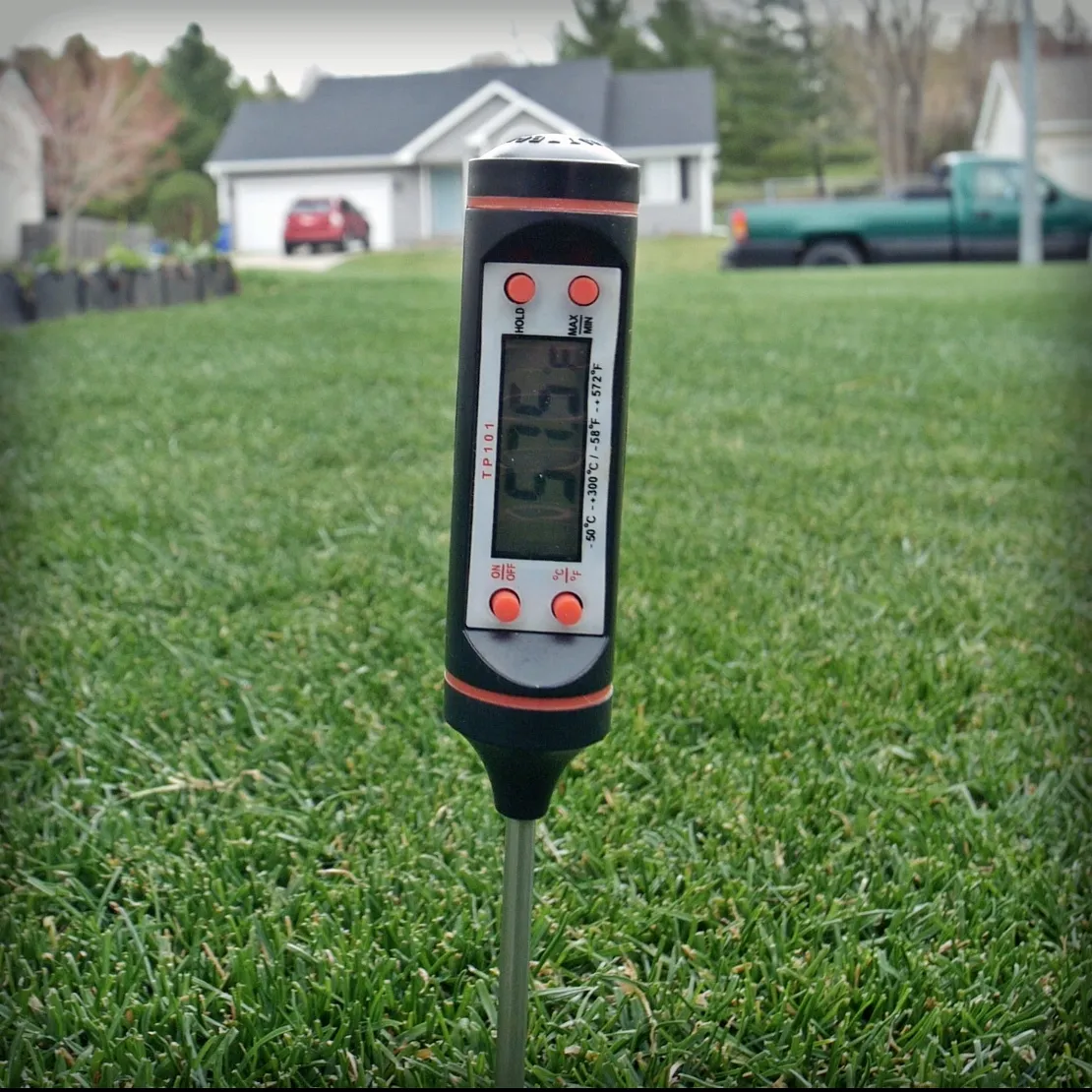
Image source: Bing (Web (fair-use with source credit))
Spring dead spot, winter kill, and bare patches: scenarios where overseeding helps
Spring overseeding earns its keep in a few specific situations:
- Spring dead spot in Bermudagrass. These circular patches don't fill in on their own. Reseeding into the affected areas is the standard fix.
- Winter kill from a hard freeze or ice storm. Damaged areas need new plants, and overseeding is cheaper than resodding.
- Bare patches from wear, pet damage, or disease. Spot overseeding in spring works well if the surrounding lawn is otherwise healthy.
- Thin canopy heading into summer. A modest overseed can help crowd out weeds before they take advantage of the open soil.
Bermuda, Zoysia, Centipede, and St. Augustine: species-by-species reality check
| Grass | Spring overseed viability | Germination time | Seeding rate (per 1,000 sq ft) |
|---|---|---|---|
| Bermudagrass | Excellent | 7 to 14 days | 1 to 2 lbs |
| Zoysiagrass | Good, but slow | 14 to 21+ days | 2 to 3 lbs |
| Centipedegrass | Possible, finicky | 14 to 28 days | 0.25 to 0.5 lbs |
| St. Augustinegrass | Not from seed | N/A | Sod, plugs, or sprigs only |
Bermuda is the easy win. Zoysia works, just slower. Centipede is a patience test.
St. Augustine isn't a seed project at all.
How to Overseed Warm Season Grass in Spring: Step-by-Step
Test your soil temp before you open the seed bag
Before anything else, confirm soil temperature. Use a probe thermometer at 2 to 4 inches deep, taken in the morning for three to five days in a row. Wait until readings consistently hit 65°F or above (closer to 70°F for Zoysia and Centipede).
If you seed into cold soil, you've already lost.
Prep the seedbed: scalp, dethatch, aerate, topdress
Seed needs soil contact. A thick thatch layer or tall canopy is the most common reason spring overseeds fail.
- Scalp the lawn. Drop your mower to its lowest setting and bag the clippings. This opens the canopy and lets sunlight hit the soil.
- Dethatch if thatch exceeds half an inch. A power dethatcher or vertical mower works best.
- Core aerate. Pull plugs across the lawn, especially in compacted areas. The holes catch seed and improve germination.
- Topdress lightly with a thin layer of sand or compost. This improves seed-to-soil contact and levels low spots.
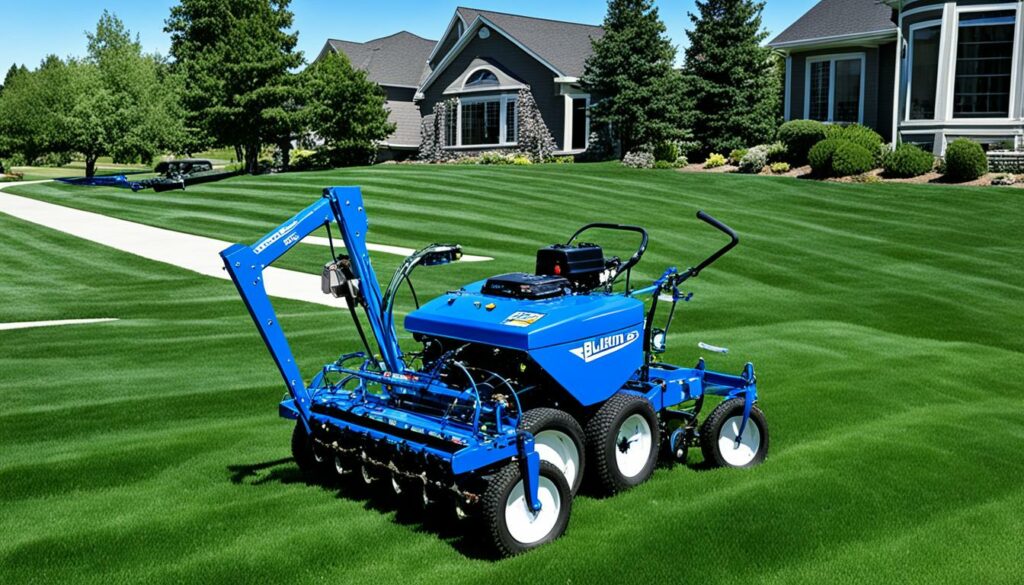
Image source: Bing (Web (fair-use with source credit))
Pick the right seed and seeding rate for your grass
Buy certified seed with a current germination test date. Look for low weed seed percentages and a high pure seed count on the label. Match the cultivar to your existing lawn if possible.
A slit seeder gives the best results because it drops seed directly into the soil. If you're broadcasting by hand or with a spreader, plan on slightly higher seeding rates and rake lightly to work seed into the surface.
Watering, mowing, and feeding the new seedlings
New seedlings are fragile. Treat them differently than your established lawn for the first few weeks.
- Water lightly, two to four times a day, just enough to keep the top inch of soil moist. Avoid puddles and runoff.
- Back off to once a day once germination is consistent, then stretch to every other day as seedlings hit 1 to 2 inches.
- Hold off on mowing until new grass reaches about one-third taller than your normal cutting height. Then mow high and bag the clippings for the first cut.
- Use a starter fertilizer with a modest nitrogen level and higher phosphorus (where local rules allow). Skip the high-nitrogen "grow it fast" blends. Slow and steady wins here.
Watch the pre-emergent window; this mistake kills spring overseeds
This is the single biggest spring overseeding failure we see. If you applied a pre-emergent herbicide earlier in the year (for crabgrass or summer annual weeds), that product doesn't know the difference between weed seed and your grass seed. It will block germination of both.
Most pre-emergents stay active in the soil for 3 to 4 months after application. If you put one down in February, you're locked out of seeding until June at the earliest. Either skip the pre-emergent in the area you're seeding, or wait until the window opens.
Spring Overseeding vs. Fall Overseeding vs. Dormant Winter Overseeding
Why fall is usually the better thickening window
For most warm-season lawns, fall overseeding is the gold standard for thickening. Soil is still warm, air temps are cooling, weed pressure drops, and new grass has fall and the following spring to mature before summer stress hits. Spring overseeding, by contrast, asks seedlings to establish during the most stressful part of the year.
If your goal is a thicker lawn and you can wait, fall is almost always the smarter play.
Why most pros overseed ryegrass in winter, not spring
The "overseed for green winter color" project uses annual or perennial ryegrass, and it goes down in fall or early winter when the warm-season grass is dormant. By spring, that rye is supposed to die off as temperatures climb and the warm-season grass takes over.
Dropping rye in spring creates a fight. The rye stays green longer than it should, competes with your warm-season grass for water and nutrients, and delays the spring green-up you actually want. It's a common mistake, and one extension offices warn against every year.
When spring is still the right call
Spring wins in three situations. Winter damage that needs urgent repair. Bare patches that will only get worse as summer arrives.
And post-emergence recovery from spring dead spot or disease. In all three cases, the alternative (waiting until fall) means looking at a bad lawn for another full growing season.
Common Mistakes That Wipe Out a Spring Overseeded Lawn
Overseeding too early into cold soil
We see this every spring. Eager homeowners drop seed in March because the calendar says spring, but the soil is still sitting at 55°F. The seed doesn't germinate.
It just feeds birds and waits for rot.
Wait until soil temps hold at 65°F or above for several days. A cheap soil probe thermometer is the best money you'll spend on the whole project.
Fighting pre-emergent herbicide residuals
Pre-emergent herbicides don't break down the moment spring arrives. Most stay active in the top inch of soil for 12 to 16 weeks after application. If you put down a crabgrass preventer in February, your grass seed has almost no chance of breaking through that barrier.
Either skip pre-emergent in the area you're seeding, or wait until the herbicide has fully degraded. Read the product label. The waiting period is right there in the fine print.
Picking the wrong species for your zone and grass type
Dropping tall fescue into a Bermuda lawn in spring is a recipe for a weird-looking, patchy mess. Fescue stays green through summer in spots, then competes with the Bermuda as it tries to go dormant in fall. Match your seed to your existing grass, or accept that you're starting a multi-year conversion.
Watering the new seed like an established lawn
Mature warm-season grass likes deep, infrequent watering. New seedlings need the opposite. They need light, frequent cycles that keep the top half inch of soil consistently moist for two to three weeks.
If the surface dries out even once during germination, you've likely killed that round of seed. Set a reminder. Check it twice a day.
It matters.
Quick Decision Guide: What Should You Actually Do?
Bermuda in the transition zone
Go ahead with spring overseeding if you're repairing winter damage. Wait until soil temps hit 65°F, aerate, and overseed with a cold-tolerant Bermuda cultivar. Plan for a longer establishment window and stay on top of watering.
For thickening only, skip spring and plan a fall overseed instead. The seedlings will do better.
Bermuda in the Deep South
Spring overseeding works well here. Soil warms early, the growing season is long, and Bermuda establishes fast. Use 1 to 2 lbs of seed per 1,000 sq ft, mow low before seeding, and water consistently.
You can also plan a fall overseed in October if you want a thicker stand by next spring. Both windows work in the Deep South.
Zoysia, Centipede, or St. Augustine
Zoysia responds to spring overseeding, just slowly. Allow 21+ days for germination and don't expect full coverage until mid-summer.
Centipede is finicky. Buy seed from a reputable source, use a low rate (0.25 to 0.5 lbs per 1,000 sq ft), and don't overwater or over-fertilize.
St. Augustine doesn't grow from seed in any practical sense. Use sod, plugs, or sprigs if you need to fill bare areas.
If your goal is winter color, not repair
Stop. You're talking about a ryegrass overseed, and that project happens in fall or early winter. Putting rye down in spring fights your warm-season grass and delays green-up.
Wait until fall. Overseed with perennial rye at 5 to 10 lbs per 1,000 sq ft once your warm-season grass is fully dormant. Then enjoy the green through winter and let the rye fade out in spring.
Frequently Asked Questions
What month is best to overseed warm season grass?
Late spring through early summer, once soil temperatures stay at 65°F or warmer. In the Deep South, that's often April. In the transition zone, it can push to May or even early June.
Can you overseed Bermuda in March?
Usually not. March soil is still too cold in most regions, and Bermuda seed needs 65°F+ to germinate reliably. Wait until April or May, depending on your zone.
Will grass seed germinate at 60 degree soil?
Most warm-season grass seed will sprout very slowly, if at all, at 60°F. Germination rates climb sharply once soil hits 65°F, and peak around 70 to 80°F.
Should I put down starter fertilizer when overseeding?
Yes, a starter fertilizer with moderate nitrogen and higher phosphorus helps seedling root development. Check local rules. Some states restrict phosphorus in lawn fertilizers.
How long does it take for overseeded Bermuda to fill in?
You'll see germination in 7 to 14 days under good conditions. Full coverage typically takes 6 to 8 weeks, with stronger density by the end of the first full growing season.
Can I overseed over weeds in spring?
It's not ideal. Pull or spot-treat existing weeds first, then scalp and prep the area. Weeds compete aggressively with new grass seedlings and will crowd them out.
🚜 Agronomist Recommended: Dethatching & Disease Management Tools
Combat thatch suffocating your turf and stop rapid fungal spread with tested maintenance equipment and systemic fungicides:
- Electric Power Dethatcher & Scarifier:Check Electric Dethatchers & Scarifiers on Amazon →
- Broad-Spectrum Systemic Fungicide:Check Scotts DiseaseEx Lawn Fungicide on Amazon →
*FTC Disclosure: As an Amazon Associate, Totally Green Lawn earns from qualifying purchases.*

Similar Posts