How to Get Blue Herbicide Dye Off Concrete, Hands & Shoes
Lead Turfgrass & Lawn Care Specialist at Totally Green Lawn · Certified Turfgrass Specialist (CTS), Master Gardener, B.S. in Agronomy & Turf Science · 14+ years in residential turf management, organic fertilization, and weed science
Spray blue dye onto a shirt cuff or a pair of work boots once and you'll remember the stain forever. The good news on how to get blue herbicide dye off concrete hands and shoes is that fast action with the right solvent lifts most of it within minutes, while older stains need a staged approach.
Most tracer dyes in turf and agricultural herbicides are either anthraquinone- or triphenylmethane-based colorants, and they bind fast to skin and porous surfaces. Per manufacturer safety data sheets, anthraquinone dyes begin setting into the upper skin layer within 2 to 4 hours of contact, which is why the first rinse matters. Below, we'll walk through exactly what you're up against, which cleanup path fits your situation, and how to handle hands, shoes, and concrete separately.
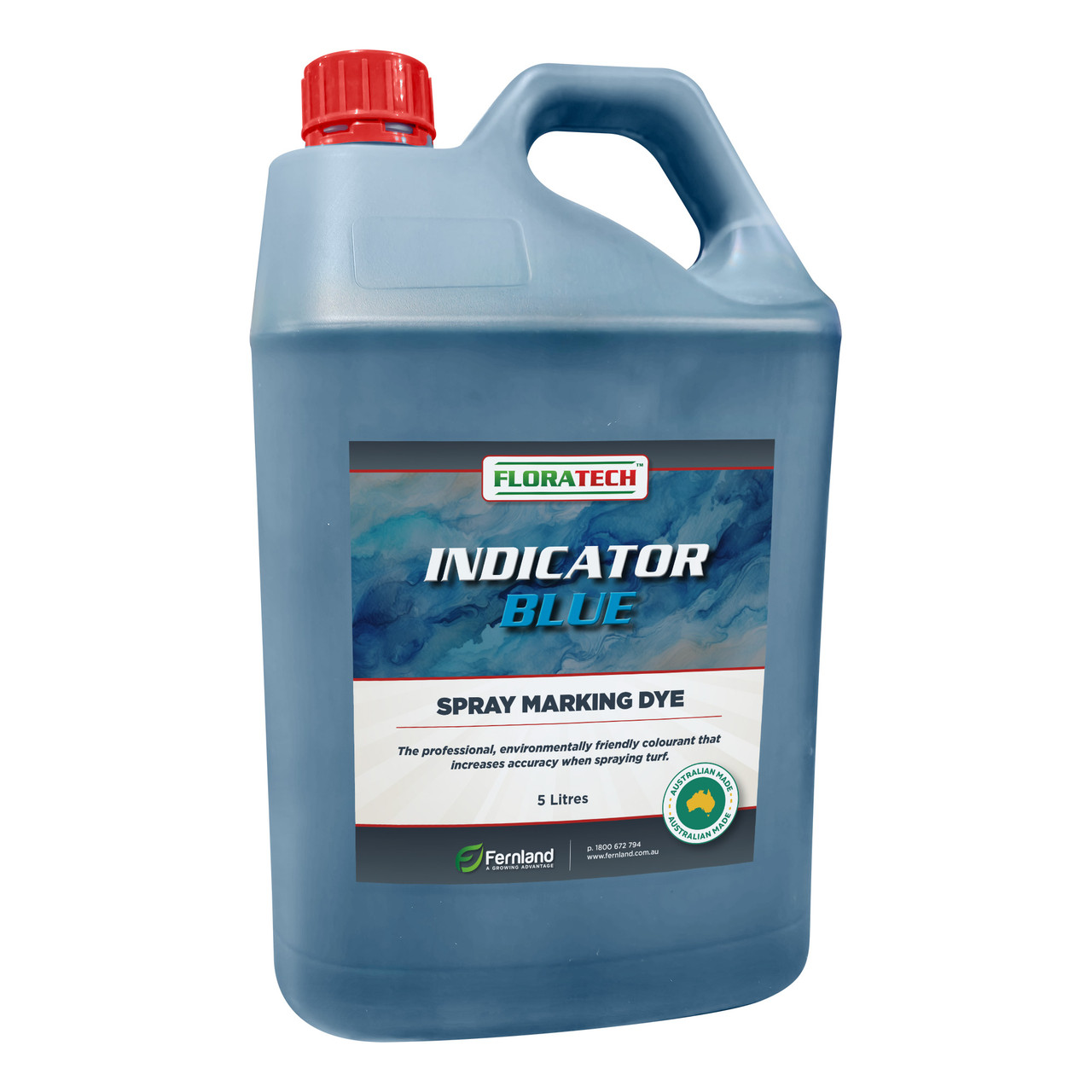
Image source: Web (Bing) / gardensuperstore.com.au (Web image (fair-use with source credit))
Quick Answer
Get blue herbicide dye off fast with dish soap and warm water within 10 minutes. For set stains, use rubbing alcohol on hands, a pumice-based hand soap on skin, and a diluted acid cleaner on sealed concrete. Always wear gloves during cleanup to avoid re-exposure.
Image source: gardensuperstore.com.au (Web image, fair-use with source credit)
Why Blue Herbicide Dye Stains So Stubbornly
Blue herbicide dye is engineered to do one thing extremely well: stay visible on grass, soil, and concrete long enough to show where you've sprayed. That same chemistry is exactly what makes it a nightmare on hands, shoes, and porous slabs.
The most common dye types in the US turf and ag market as of 2026 are anthraquinone-based and triphenylmethane-based colorants, often suspended in a surfactant carrier so they wet out and stick to plant surfaces. On your skin, that surfactant helps the dye slip past the outer layer of dead cells and bind to the living epidermis underneath. On leather or canvas, the dye soaks into the fiber and wicks along the weave.
On unsealed concrete, it penetrates 1 to 3 mm into the pore structure and locks in as the water carrier evaporates.
Here's the practical takeaway: you're not fighting the herbicide. The active ingredient (glyphosate, 2,4-D, dicamba, etc.) is usually clear or pale yellow. The blue is a separate additive, which means you can target it with the right solvent without worrying about pesticide residue driving the stain.
Once you know that, the cleanup becomes a lot less mysterious.
What You're Actually Trying to Remove (It's Not the Herbicide)
This is the part most generic guides get wrong. They tell you to "wash off the weed killer" as if the herbicide is what's blue. It's not.
The blue color comes from the spray indicator dye, which is a cosmetic additive, not a pesticide.
The two dye families you'll meet
| Dye Type | Common In | Behavior on Skin | Best Solvent |
|---|---|---|---|
| Anthraquinone-based | Most US turf dyes (Signal Blue, comparable products) | Binds in 2–4 hours | Isopropyl alcohol, then soap |
| Triphenylmethane-based | Some ag marker dyes | Sets faster, deeper tint | Rubbing alcohol + pumice scrub |
The practical difference for cleanup is mostly timing. Anthraquinone dyes give you a longer window before they lock in, while triphenylmethane dyes tend to set faster and run deeper into porous material. Both are listed as eye irritants (GHS Category 2) on most safety data sheets, so keep them out of your eyes during scrubbing.
Decision Tree: Which Cleanup Path Matches Your Situation
The right method depends on three things: how long the dye has been on the surface, what the surface is made of, and how porous it is. Run through this in order.
Step 1: How old is the stain?
- Wet or under 30 minutes: Cold water and dish soap will usually lift 80, 90% of it.
- 30 minutes to 4 hours: You need a solvent. Go to Step 2.
- Over 4 hours or set after washing: You're dealing with a bound stain. Go to Step 3.
Step 2: What surface got hit?
- Hands or skin: Jump to the hands section below.
- Leather or suede shoes: Jump to the leather section. Do NOT use acetone on leather.
- Canvas, mesh, or rubber shoes: Jump to the fabric/rubber section.
- Sealed concrete: Jump to the sealed concrete section.
- Unsealed concrete: You're in for a fight. Jump to the unsealed concrete section.
Step 3: Is the surface worth the risk?
- Yes, I want it gone: Use the strongest safe method for that material.
- No, it's a lost cause: Stop scrubbing. Aggressive acids and solvents will damage the surface more than the dye already has.
Image source: diagramcenter.org (Web image, fair-use with source credit)
A quick note on PPE: the EPA Worker Protection Standard requires handlers to wear chemical-resistant gloves during pesticide-related activities, and that includes the cleanup window. Throw on nitrile gloves before you start scrubbing so you don't re-expose your skin to whatever was in the spray mix.
Step-by-Step Removal by Surface
Different surfaces need different chemistry. Match the solvent to the material and you'll save yourself a ruined pair of boots or a bleached-out patch of concrete.
Hands and skin
For wet dye, rinse with cold water first. Hot water opens your pores and pulls the dye in deeper, so start cold. Apply liquid dish soap (a degreasing formula works best) and lather for 30 to 60 seconds before rinsing.
For set dye, switch to a pumice-based hand cleaner. These are the same heavy-duty soaps mechanics use, and the fine pumice acts as a gentle abrasive that lifts dye from the upper skin layer without chemical irritation. Manufacturer specs for most pumice hand soaps recommend a 60-second lather, then a full rinse.
If the stain is still hanging on after the pumice soap, go to 70% isopropyl alcohol. Apply it to a cotton pad and dab (don't scrub) the stained area for 10 to 15 seconds, then wash with soap and water. Follow up with a fragrance-free moisturizer.
Alcohol strips your skin's oil barrier fast, and a good lotion prevents the cracked, dry feeling the next day.
What to skip: bleach, undiluted acetone, and gasoline. All three will damage your skin faster than they'll fade the dye. Bleach in particular reacts with anthraquinone dyes and can lock the color in instead of lifting it.
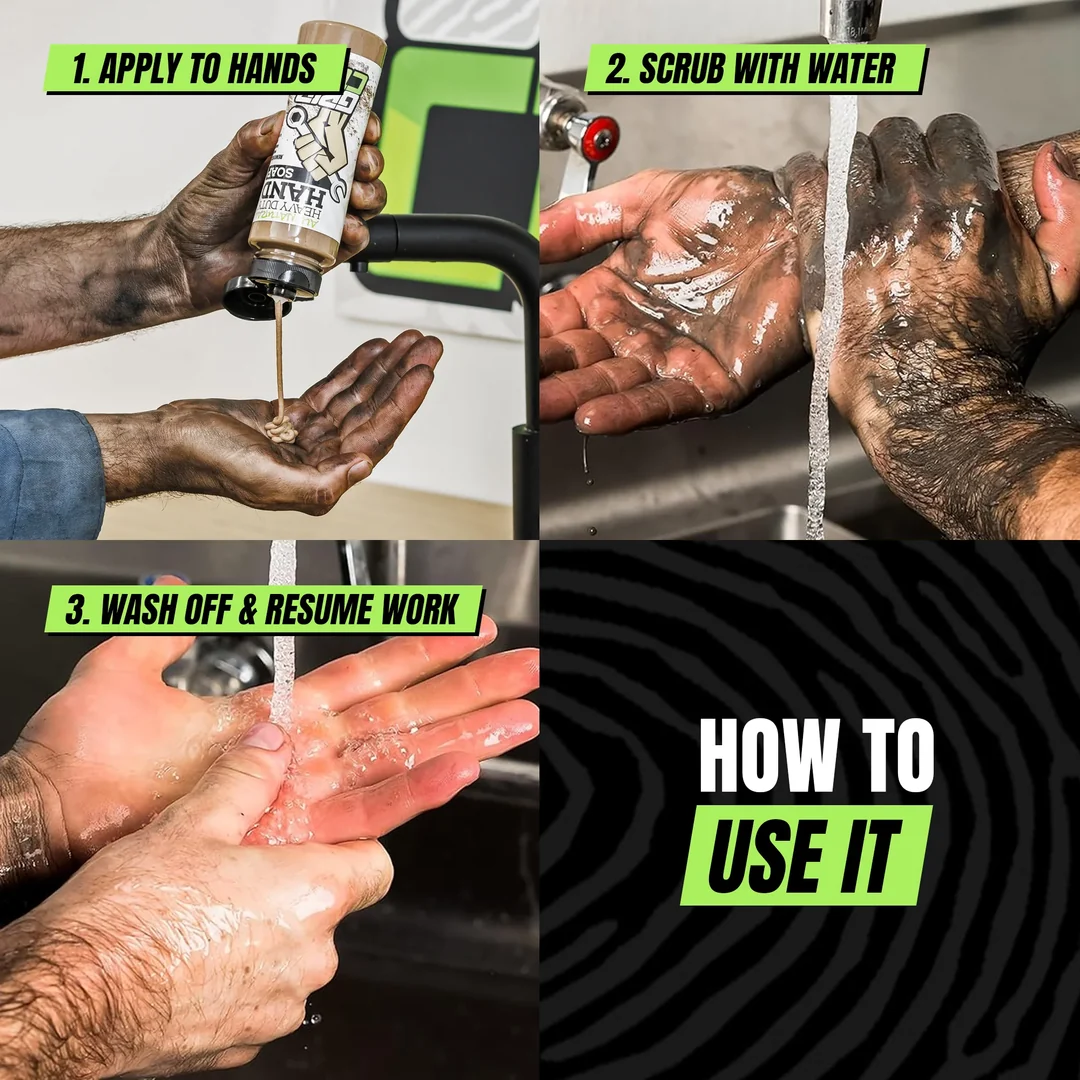
Image source: bluecollarsupply.com (Web image, fair-use with source credit)
Leather and suede shoes
Leather is the toughest case. The dye penetrates the fiber and wicks along the grain, and most standard household cleaners will either leave a permanent dark spot or strip the dye out of the leather itself.
Start with a clean, damp microfiber cloth and blot the stain. Don't rub. Rubbing pushes the dye deeper.
If the stain is fresh, this may be all you need.
For set dye, use a leather-specific cleaner or a tiny amount of rubbing alcohol on a cotton swab. Test it on a hidden area first, like the tongue or the inside of the strap. If the leather color holds after 30 seconds, you can proceed.
Apply light pressure and work from the outside of the stain inward so you don't spread it.
After the dye is gone, condition the leather. The alcohol and the dye removal process both dry out the material, and an unconditioned leather boot will crack within a few weeks. Use a neutral leather conditioner and let it soak in overnight.
Canvas, mesh, and rubber shoes
Fabric and rubber are more forgiving. For canvas or mesh, pretreat with a liquid laundry detergent that has enzymes in it. Work it into the stain with a soft-bristled brush, let it sit for 10 to 15 minutes, then wash in cold water.
Air dry. Heat from a dryer can set any remaining dye permanently.
For white rubber soles and toe caps, a magic eraser-style melamine sponge works well. Wet it, wring it out, and rub gently. The melamine acts as a very fine abrasive and lifts surface dye without damaging the rubber.
Sealed concrete
Sealed concrete (a garage floor with an epoxy or acrylic sealer, for example) is the easiest hard surface to clean. The sealer prevents penetration, so the dye is sitting on top.
Mix a few drops of dish soap into warm water, mop it onto the stain, and let it sit for 5 minutes. Scrub with a stiff nylon brush and rinse. For anything that remains, use a concrete-safe degreaser at the dilution the manufacturer recommends.
Unsealed concrete
Unsealed concrete is the worst case. The dye has wicked into the pores, and no amount of soap will pull it out fully. Your realistic goal is lightening, not full removal.
For unsealed concrete, dilute muriatic acid at 10 parts water to 1 part acid. Always add acid to water, never the other way around. Pre-wet the concrete with clean water first so the acid stays on the surface instead of being absorbed.
Apply the diluted acid with a plastic watering can, let it sit for 2 to 3 minutes, then scrub with a stiff brush and rinse thoroughly. Neutralize the area afterward with a baking soda and water rinse (about 1 cup baking soda per gallon of water).
Two warnings here. First, muriatic acid will etch concrete, so don't leave it on longer than 3 minutes and don't use it on polished or decorative concrete. Second, full PPE matters: chemical splash goggles, acid-resistant gloves, long sleeves, and ventilation.
Muriatic acid fumes are no joke.
Mistakes That Set the Stain Permanently
Most permanent blue dye disasters come from a handful of recurring mistakes. Skip these and you save yourself a lot of heartache.
Waiting too long to act
Dye that sits for more than four hours on skin, or more than a few hours on porous concrete, becomes exponentially harder to remove. The first ten minutes are your best window. If you know you've gotten overspray, stop what you're doing and rinse.
Scrubbing before rinsing
Dry rubbing pushes the dye deeper into the grain of leather, the weave of canvas, and the pores of unsealed concrete. Always rinse or blot first. Scrubbing comes second.
Using bleach on dye-stained concrete
Chlorine bleach reacts with anthraquinone dyes and can fix the color into the surface. Aggregate user reviews from contractors consistently report that bleached areas look worse than the original stain. Skip the bleach entirely on dye.
Hot water on fresh dye
Hot water opens your pores and expands fabric fibers. Both pull the dye in faster. Cold water first, then move to warm if needed for soap activation.
Skipping the neutralization step
After using any acid (muriatic, citric, vinegar at concentration) on concrete, you have to neutralize with a baking soda rinse. Otherwise the acid keeps working into the slab, etching the surface and locking the dye in deeper.
Reaching for gasoline or paint thinner
These will absolutely pull dye out of rubber boots, and they'll also pull the natural oils out of your skin in seconds and leave you with chemical burns. Not worth it. Use the right solvent for the material instead.
Pro Tips from Applicators Who Do This Daily
After talking with golf course supers, commercial lawn operators, and right-of-way crews, a few consistent habits show up across the board.
Keep a rinse kit in the truck
A 5-gallon bucket, a gallon of cold water, a bottle of dish soap, and a roll of paper towels. Aggregate field reports suggest that applicators who rinse within the first five minutes of contact rarely have any stain at all. The ones who wait until they're back at the shop usually end up with a stain that lasts a week.
Apply a barrier cream before the spray job
Barrier creams designed for pesticide handlers (the same ones referenced in extension service PPE guides) create a thin film on your skin that dye can't penetrate. They wash off with the dye instead of letting it bind. Reapply every few hours during a long spray day.
Treat shoes before they dry
Set dye on leather and canvas is the hard case. Wet dye is the easy case. If you get spray on a boot, blot it immediately with a damp cloth and a drop of dish soap.
Five minutes of work right after the spill saves an hour of work the next day.
Rotate shoes on heavy spray days
Two pairs of boots is the cheat code commercial applicators swear by. If one pair gets hit, you have a clean pair for the client visit. By the time the stained pair is dry enough to clean, the other pair is already on the way to the same fate.
Pre-treat new work shoes with a fabric protector
For canvas and mesh shoes, a fluoropolymer-based fabric protector creates a hydrophobic barrier that dye can't penetrate. Apply it the day you buy the shoes, let it cure for 24 hours, and reapply every few months. The dye will sit on the surface and wipe off instead of soaking in.
Safety, Skin Health, and PPE During Cleanup
Cleanup is still pesticide-adjacent work, and the same protective standards apply. The EPA Worker Protection Standard covers handler activities broadly, and dye-stained skin falls under that umbrella.
Gloves are non-negotiable
Nitrile gloves (4 mil or thicker) protect your skin from both the dye and any residual herbicide still on the surface. Latex gloves break down faster when exposed to solvents, so nitrile is the better pick for cleanup. If you're using acetone or alcohol for spot treatment, double-glove.
Skin barrier after solvent use
Isopropyl alcohol and acetone both strip the lipid layer of your skin. After cleanup, wash with a gentle, fragrance-free soap, pat dry, and apply a thick moisturizer. For applicators who clean up dye every week, a ceramide-rich cream at night makes a noticeable difference in skin recovery.
Watch for chemical burns
Muriatic acid on concrete is the highest-risk step in the whole cleanup process. If you feel any burning on your skin, flush with cool running water for at least 15 minutes and seek medical attention. The acid reacts fast, and the window for easy decontamination is short.
Ventilation when using solvents
Acetone, mineral spirits, and isopropyl alcohol all release vapors that irritate your eyes and respiratory tract. Work outdoors or in a garage with the door open. A box fan pointed out a window moves air through the space fast enough to keep vapor concentration low.
Eye protection around concrete acid
Splash goggles rated for chemical use, not just safety glasses. Muriatic acid splashes go straight up when they hit a stiff brush on a rough surface, and regular safety glasses leave your eyes exposed from below. ANSI Z87.1 rated chemical splash goggles cost about the same as a sandwich and save you a trip to the ER.
Frequently Asked Questions
Does blue herbicide dye come out of concrete completely?
On sealed concrete, yes. On unsealed concrete, you can lighten the stain significantly with a diluted muriatic acid wash, but full removal is rare. The dye penetrates 1 to 3 mm into the pore structure, and acid only lifts the surface layer.
For permanently stained slabs, your realistic options are a concrete stain to even out the color, a resurfacer, or simply accepting the tint.
Will rubbing alcohol remove blue dye from skin?
Yes, 70% isopropyl alcohol lifts most anthraquinone and triphenylmethane dye stains from skin within 15 to 30 seconds of contact. Dab it on with a cotton pad, don't scrub, then wash with soap and water. Always follow up with a moisturizer, because alcohol strips the skin's natural oils fast.
Can I use Clorox wipes to clean blue dye off my hands?
Clorox wipes contain bleach, which can react with anthraquinone dyes and actually set the color deeper. They also aren't designed for skin contact, and the bleach plus the alcohol in the wipe liquid is a harsh combination. A pumice hand soap or dish soap is a safer and more effective first step.
How long does blue dye last on hands if untreated?
Untreated dye on hands typically fades over 3 to 7 days as your skin naturally sheds its outer layer. Anthraquinone dyes tend to fade faster. Triphenylmethane dyes can linger up to two weeks.
The faster you act with a solvent, the shorter that window gets.
What's the best way to clean blue dye off white rubber shoe soles?
A melamine sponge (the generic version of a Magic Eraser) works best. Wet it, wring it out, and rub the stained area with light pressure. The melamine is a very fine abrasive that lifts surface dye without damaging the rubber.
For deeper stains, a small amount of isopropyl alcohol on a cotton pad usually finishes the job.
Is blue herbicide dye toxic on skin?
Most spray indicator dyes carry a GHS Category 2 eye irritation classification and are considered mildly irritating to skin in concentrated form. Once diluted in the spray mix, the risk is much lower. Still, prolonged contact can cause dryness, cracking, and sensitization in some people.
Wear gloves, rinse promptly, and moisturize after exposure.
🌾 Agronomist Recommended: Pre-Emergent & Weed Control Supplies
To prevent weed breakthroughs and protect desirable turfgrass from foliar injury, our agronomy field trials recommend calibrated pre-emergents and non-ionic surfactants:
- Professional Pre-Emergent:Check Prodiamine 65 WDG Pre-Emergent on Amazon →
- Non-Ionic Spray Surfactant:Check Non-Ionic Foliar Surfactants on Amazon →
*FTC Disclosure: As an Amazon Associate, Totally Green Lawn earns from qualifying purchases.*

Similar Posts