Brown Patch vs Chinch Bugs: How to Tell the Difference
Lead Turfgrass & Lawn Care Specialist at Totally Green Lawn · Certified Turfgrass Specialist (CTS), Master Gardener, B.S. in Agronomy & Turf Science · 14+ years in residential turf management, organic fertilization, and weed science
Yellowing St. Augustinegrass in July is one of the most common calls we get from homeowners. The hard part is knowing whether the culprit is brown patch fungus or chinch bug damage, because the treatments are completely different.
A wrong guess wastes money and lets the real problem spread.
Brown patch (caused by the fungus Rhizoctonia solani) thrives when nighttime temperatures stay above 70°F and leaves stay wet for 10+ hours, while chinch bugs (Blissus insularis) prefer hot, dry soil and attack at the root zone. Per extension data from the University of Florida IFAS, chinch bug damage thresholds sit around 20 to 25 bugs per square foot on St. Augustinegrass, which is the most common reason the two get confused.
Let's walk through how to tell them apart before you spend a dime on the wrong product.
Quick Answer
Brown patch fungus creates circular patches with a dark "smoke ring" border and lesions on individual blades. Chinch bug damage spreads irregularly from hot, sunny edges, and grass pulls up easily. Brown patch needs a fungicide and less water.
Chinch bugs need an insecticide and more water. Confirm with a float test before treating.
Why Mixing Up Brown Patch and Chinch Bugs Is So Common
Both problems hit warm-season turf at the exact same time of year, often in the same yard, and both turn grass yellow before it goes brown. They're the two most reported causes of summer turf decline in the Southeast, which is why your neighbor's "magic cure" might not work on your lawn.
The confusion matters because the treatments are opposites. Brown patch fungus loves excess moisture and overwatering makes it worse. Chinch bugs thrive in dry, drought-stressed soil, so watering more actually helps your lawn recover.
Apply the wrong product and you'll watch the damage keep spreading while the real cause multiplies underneath.
Cost adds up fast too. Per 2026 retail pricing, a single professional fungicide or insecticide application runs $75 to $150, and most homeowners burn through two or three applications before they realize the diagnosis was wrong. A 10-minute inspection saves hundreds and protects turf you'll spend a full season replacing.
What Each Problem Actually Does to Your Lawn
Brown Patch Fungus (Rhizoctonia solani)
Brown patch is a foliar and crown-rotting fungus that attacks the leaf blade first, then the base of the plant. It doesn't kill roots directly, but it weakens them enough that the whole plant collapses under heat stress.
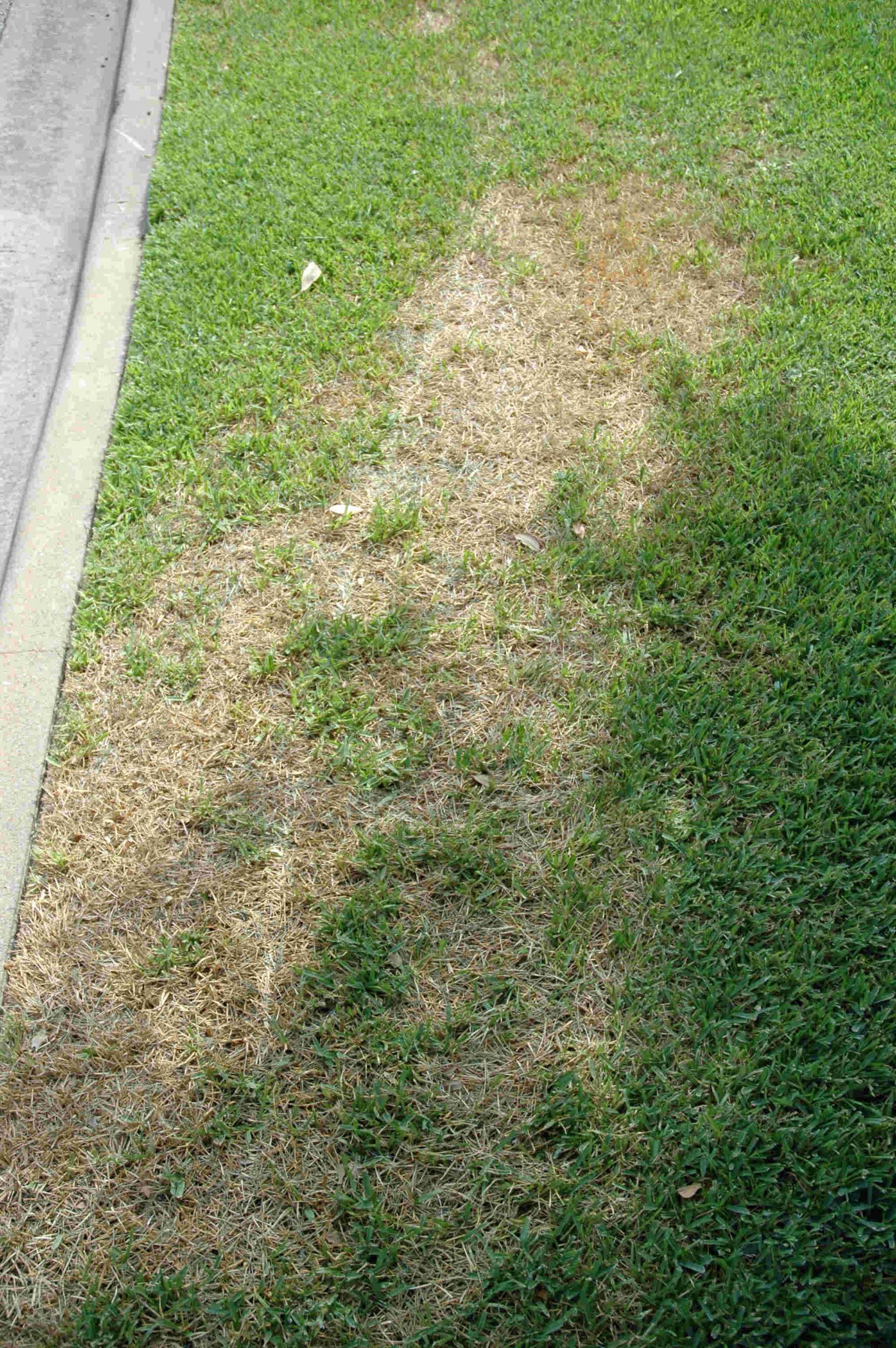
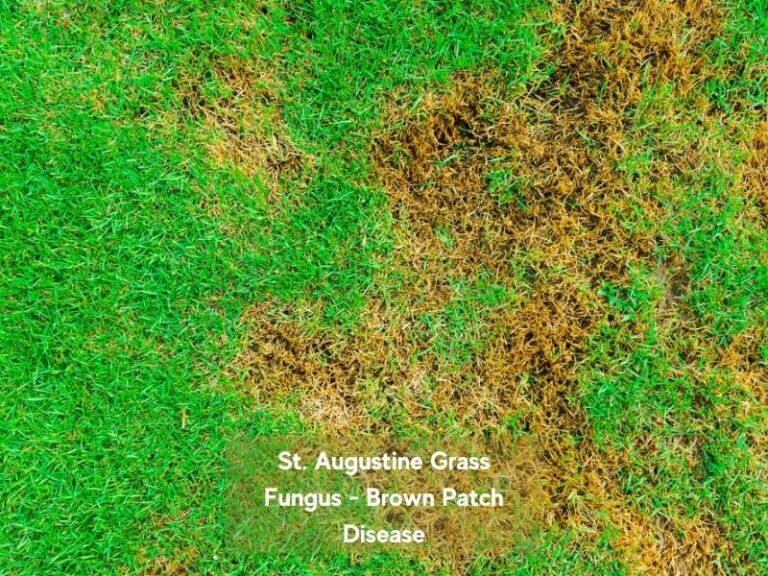
The classic calling card is the "smoke ring," a thin dark brown or grayish ring of wilted grass on the outer edge of the patch, most visible in early morning dew. Inside the ring, blades show tan lesions with a darker border, and the patch itself looks like a perfect circle 1 to 5 feet across. If you walk out at sunrise, you may see a faint cobweb-like mycelium on the leaf tips.
Chinch Bug Damage (Blissus insularis)
Chinch bugs are tiny true bugs (about 1/6 inch long) that pierce grass stems and suck the sap, injecting a toxin that blocks water uptake. Damage starts in the hottest, driest part of the lawn, often near pavement, south-facing slopes, or where irrigation misses.
The pattern is irregular and spreads outward, with no clean ring border. The grass turns yellowish, then straw-brown, and feels crunchy underfoot. Because the toxin disrupts the crown, damaged turf usually pulls up like loose carpet, a key sign we'll come back to in the diagnostic workflow.
In heavy infestations, you can brush the grass and watch the black-and-white adult bugs scurry to the surface.
The 5-Step Diagnostic Workflow to Tell Them Apart
Use this sequence in order. Each step narrows the answer and points you toward the right treatment.
Step 1: Map the Damage Pattern
Walk the yard and sketch (or photograph) where the yellowing sits. If the damage forms near-perfect circles with defined edges, you're leaning fungal. If it's irregular and concentrated along hot, dry edges, suspect chinch bugs.
If you see damage both in low spots and along pavement, you may actually have two problems running at once.
Step 2: Check the Grass Blade and Base
Get on your knees. Look for tan lesions with a dark border on individual blades (brown patch). Look for uniformly yellow blades with no spotting (chinch bug).
Then part the grass and check the soil line. A thick thatch layer (over 1/2 inch) hides chinch bugs and also holds the moisture that brown patch needs.
Step 3: Do the Tug Test
Grab a fistful of damaged turf and pull. If it lifts like loose sod with almost no resistance, chinch bug toxin has killed the crown. If the turf holds firm but the blades break off at the base, the roots are still alive, and brown patch is more likely.
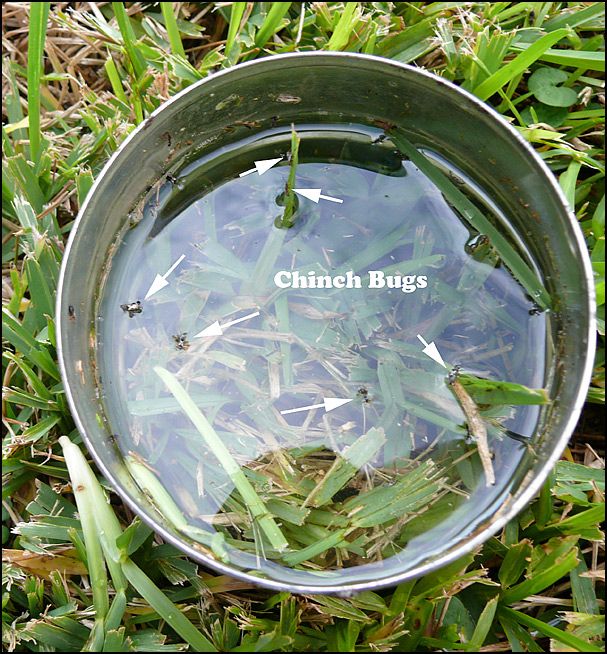
Step 4: Run the Float or Flotation Test
Cut both ends off a coffee can or similar cylinder. Press it 2 to 3 inches into the damaged area. Fill it with water.
If chinch bugs are present, they'll float to the surface within 5 minutes as small black insects with white wings. This is the most reliable DIY confirmation for chinch bug activity.
Step 5: Confirm With a Lab or Extension Office
If both tests are inconclusive, your local university extension office can identify the issue from a turf sample, sometimes for free. Submit a 4×4 inch plug from the edge of the damage zone, including healthy and damaged grass.
Brown Patch vs. Chinch Bugs: Side-by-Side Comparison
| Clue | Brown Patch Fungus | Chinch Bug Damage |
|---|---|---|
| Shape of damaged area | Round, with a dark "smoke ring" border | Irregular, no defined edge |
| Location in yard | Low, moist, shaded spots | Hot, dry, sunny edges, near pavement |
| Time of peak activity | 75 to 90°F nights, wet leaves | 85 to 95°F+ days, dry soil |
| Grass blade look | Tan lesions with dark border, 1 to 2 inches | Uniform yellowing, no spots |
| Thatch pull test | Roots hold firm | Turf pulls up like loose carpet |
| Visible pests | No insects; mycelium at dawn | Small black bugs at soil line |
| Float test | No insects float | Bugs float up within 5 min |
| Right treatment | Fungicide, less water | Insecticide, more water |
If your reading matches mostly the left column, treat for brown patch. If it matches the right, treat for chinch bugs. If you see overlap, treat the one you can confirm first, then reassess in 7 to 10 days.
Mistakes That Make the Damage Worse Either Way
Watering at the Wrong Time of Day
Night watering keeps leaves wet for hours, which is exactly what Rhizoctonia solani needs to germinate. If you suspect brown patch, water before 10 a.m. so blades dry by sunset. If you suspect chinch bugs, do the opposite.
Water deeply 2 to 3 times a week so the soil stays moist below the surface.
Skipping the Float Test
Spraying insecticide "just in case" kills beneficial insects and builds resistance in the chinch bug population. Always confirm bugs are present before treating. Per University of Florida IFAS Extension guidance, treating without thresholds (20 to 25 bugs per square foot) is one of the top reasons infestations rebound worse the following year.
Mowing Too Short During Recovery
Scalping stressed turf exposes crowns to heat and slows regrowth. Raise your mower to 3 to 4 inches for St. Augustinegrass.
Taller blades shade the soil, cool the root zone, and help turf outcompete both fungus and insects.
FAQs on Brown Patch and Chinch Bug Identification
Can a lawn have both brown patch and chinch bugs at the same time?
Yes. Brown patch favors wet, shaded spots while chinch bugs prefer hot, dry edges, so a large lawn can host both. Treat whichever you confirm first, then reassess the rest of the yard in 7 to 10 days before applying anything else.
How fast does chinch bug damage spread compared to brown patch?
Chinch bug damage can expand 1 to 2 feet per day in peak summer heat. Brown patch spreads more slowly, usually 3 to 6 inches per day, and stops when conditions dry out. If your damage is racing across the lawn, insects are the more likely culprit.
Will fertilizer help a lawn recovering from either problem?
Not right away. Heavy nitrogen feeds brown patch fungus and pushes tender growth that chinch bugs love. Wait until the lawn shows signs of recovery, then apply a slow-release fertilizer at half the normal rate.
Can I treat brown patch or chinch bugs organically?
Yes, with patience. Neem oil and beneficial nematodes suppress chinch bugs, while compost teas and potassium bicarbonate products help with brown patch. Organic options work best as prevention or on light infestations, not as rescue treatments on advanced damage.
How do I know the treatment actually worked?
Healthy green runners should start creeping back into the damaged zone within 14 to 21 days. Re-run the float test for chinch bugs in the same spots. If no bugs surface and grass is regrowing, you're in the clear.
If damage holds steady or expands, your diagnosis was wrong.
Your Decision Guide: What to Do Based on What You See
Start by mapping the damage shape. If you see clean circles with a smoke ring, walk the lawn at dawn looking for mycelium. Confirm brown patch with a blade lesion check, then apply a labeled fungicide (azoxystrobin or propiconazole work well) and cut back nighttime watering.
If the damage is irregular and hugs hot, dry edges, run the float test immediately. Pull up a fistful of turf. If it lifts like loose carpet and bugs float up, treat with a labeled insecticide (bifenthrin or cyantraniliprole) and water the lawn deeply to break drought stress.
If neither test gives a clear answer, take a sample to your local extension office before spending on chemicals. Once you've treated, give it 14 days, then recheck. Recovery, not new green growth on top of dead crowns, is your real success metric.
For long-term prevention, dethatch when it exceeds 1/2 inch, water in the morning, and mow at the high end of the recommended range. Healthy turf resists both problems far better than stressed turf, and most of the worst cases we see start with a lawn that was already on the edge.
🚜 Agronomist Recommended: Dethatching & Disease Management Tools
Combat thatch suffocating your turf and stop rapid fungal spread with tested maintenance equipment and systemic fungicides:
- Electric Power Dethatcher & Scarifier:Check Electric Dethatchers & Scarifiers on Amazon →
- Broad-Spectrum Systemic Fungicide:Check Scotts DiseaseEx Lawn Fungicide on Amazon →
*FTC Disclosure: As an Amazon Associate, Totally Green Lawn earns from qualifying purchases.*

Similar Posts