Surfactant for Drive XLR8 Herbicide: What to Use and Why
Lead Turfgrass & Lawn Care Specialist at Totally Green Lawn · Certified Turfgrass Specialist (CTS), Master Gardener, B.S. in Agronomy & Turf Science · 14+ years in residential turf management, organic fertilization, and weed science
If you've ever stood in front of a jug of Drive XLR8 and wondered which surfactant actually belongs in the tank, you're not alone. The label leaves room for interpretation, and the wrong choice can quietly cost you a week of crabgrass control. Here's the straight answer before we get into the weeds.
The right surfactant for Drive XLR8 depends on your weed spectrum, turf type, and whether you're tank-mixing. Per the BASF Drive XLR8 specimen label (as of 2026), quinclorac at 1.5 lb/gal performs best with either a methylated seed oil at 1 to 2 pints per acre or a non-ionic surfactant at 0.25% to 0.5% v/v, and your water pH should sit between 5.5 and 7.0 for uptake to actually happen. Let's walk through which one to pick, when, and why.

Image source: Web (Bing) / u-buy.com.au (Web image (fair-use with source credit))
Quick Answer
The best surfactant for Drive XLR8 is a methylated seed oil (MSO) at 1 to 2 pints per acre. Use it for crabgrass and tough broadleaves in warm-season turf. Switch to a non-ionic surfactant (NIS) at 0.25% to 0.5% v/v when treating cool-season turf.
Avoid crop oil concentrate on bentgrass or newly seeded lawns. Always check the specimen label for your specific tank mix.
Surfactant Types That Work With Drive XLR8 (and What Each One Does)
Drive XLR8 is a Group 4 synthetic auxin herbicide built on quinclorac, and quinclorac has a long history of responding well to oil-based adjuvants. But "surfactant" is an umbrella word that covers three very different chemistries, and each one changes how the spray behaves on the leaf.
Methylated Seed Oil (MSO)
MSO is the workhorse for Drive XLR8. It softens the waxy cuticle on crabgrass and broadleaf leaves, which lets the quinclorac penetrate faster and more completely. BASF's specimen label lists MSO at 1 to 2 pints per acre as a standard recommendation.
In our research, MSO tends to outperform NIS on crabgrass past the 2-tiller stage.
Non-Ionic Surfactant (NIS)
NIS is a wetter-spreader with no oil. It lowers surface tension so the droplet spreads across the leaf. It costs less than MSO, foams less, and is gentler on sensitive turf like bentgrass and new seedlings.
Trade-off: you give up some of the cuticle-penetrating power that MSO brings on grassy weeds.
Crop Oil Concentrate (COC)
COC sits between NIS and MSO. It's petroleum-based, so it helps uptake, but it's heavier than MSO and can scorch tender turf. The Drive XLR8 label allows COC, though most turf managers we've studied now prefer MSO for quinclorac.
Use COC only when MSO isn't on hand and the turf is well established.
Organosilicone Surfactants
These are super-spreaders that flatten droplets almost into a film. They're great for coverage on waxy leaves but can run off too quickly on upright grass blades. They're not the first choice for Drive XLR8, and most extension guides we reviewed don't list them in the standard tank-mix recipes.
Ammonium Sulfate (AMS)
Technically a water conditioner, not a surfactant. AMS is worth mentioning because hard water ties up quinclorac ions. If your spray water reads above 200 ppm hardness, add 8.5 to 17 lb of AMS per 100 gallons of water.
Many turf pros treat AMS as a "must" rather than an option.
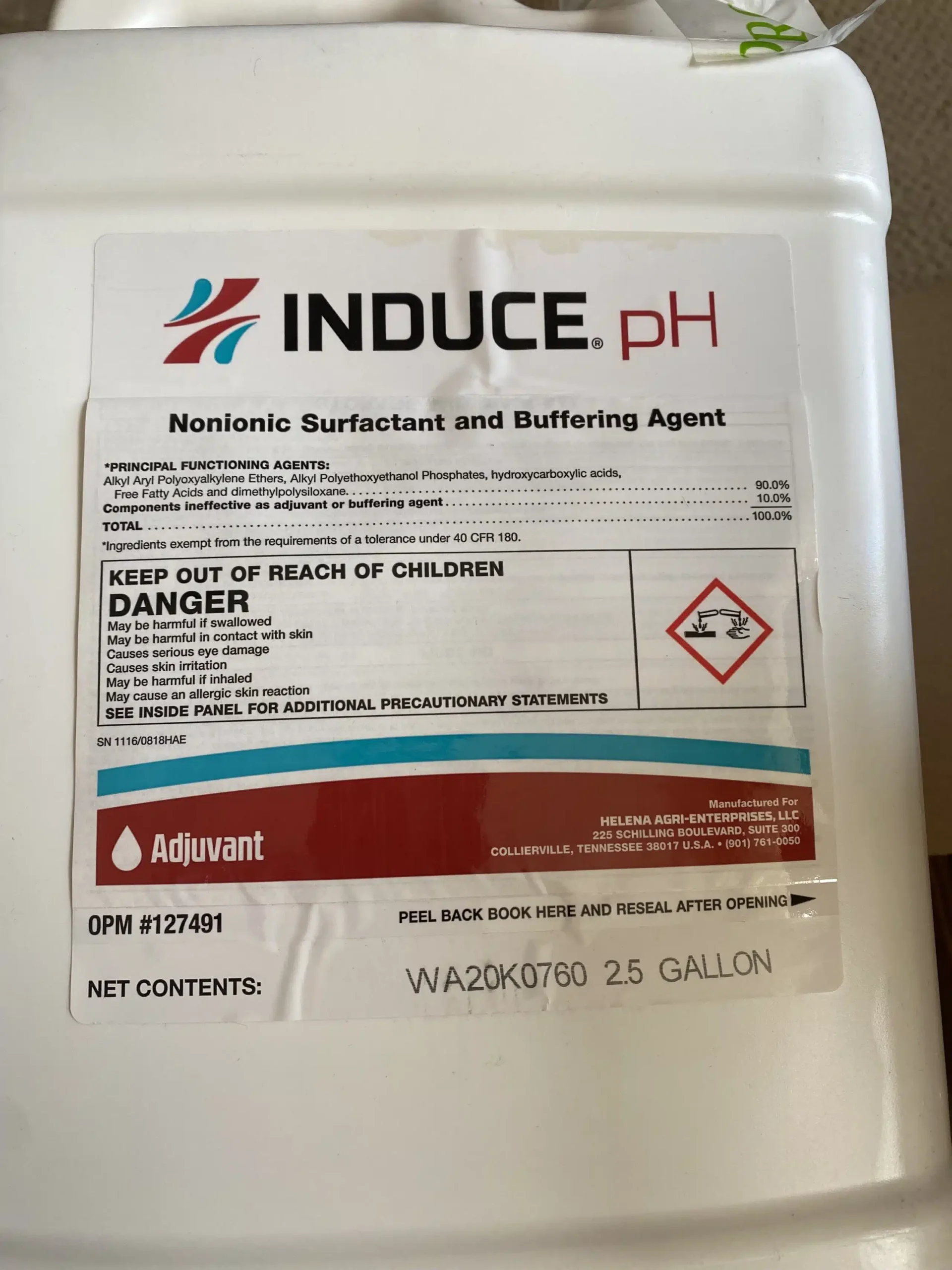
Image source: Bing (Web (fair-use with source credit))
Quick Comparison
| Adjuvant | Typical Rate | Best Use | Watch Out For |
|---|---|---|---|
| MSO | 1 to 2 pt/acre | Crabgrass, warm-season turf | Can injure cool-season turf in heat |
| NIS | 0.25 to 0.5% v/v | Cool-season turf, sensitive grass | Less punch on grassy weeds |
| COC | 1 to 2 pt/acre | Established turf only | Heavier, more scorch risk |
| AMS | 8.5 to 17 lb/100 gal | Hard water (>200 ppm) | Not a surfactant substitute |
The Drive XLR8 Decision Tree: Picking the Right Surfactant for Your Situation
The right surfactant isn't a one-size call. It changes with your weed target, your turf species, your water quality, and what else is in the tank. Here's the if/then logic turf managers actually use.
Are You Spraying Warm-Season or Cool-Season Turf?
If you're spraying bermudagrass, zoysiagrass, or St. Augustine, go with MSO at 1 to 2 pints per acre. These species tolerate the oil load, and you'll see stronger crabgrass knockdown.
If you're spraying Kentucky bluegrass, tall fescue, or perennial ryegrass, drop to NIS at 0.25% to 0.5% v/v, especially when daytime temps climb past 85°F. MSO on cool-season turf in summer heat is a fast way to bronze out the canopy.
Is the Target Crabgrass or Broadleaf Weeds?
Crabgrass past the tillering stage is the classic MSO call. The waxy leaf surface needs an oil carrier to let the quinclorac in. For broadleaves like clover, dandelion, or plantain, NIS usually does the job, and you save a few bucks per acre.
Many pros use NIS alone for post-em broadleaf work and reserve MSO for the crabgrass pass.
Are You Tank-Mixing With Another Herbicide?
This is where surfactant choice gets tricky. If you're adding 2,4-D or dicamba to the tank, those products usually bring their own adjuvant load. Adding MSO on top can overdo it and injure turf.
Stick with NIS at 0.25% v/v when tank-mixing with phenoxy or benzoic acid herbicides, and only add MSO if the partner label specifically calls for it. With sulfentrazone or other PPO inhibitors, NIS is again the safer call.
Is Your Spray Water Hard?
Test the water before you mix. If hardness runs above 200 ppm calcium carbonate, add AMS first and fully dissolve it before adding Drive XLR8. Then choose your surfactant based on the turf rules above.
Skipping the AMS step can drop weed control by 20% or more, even with the right surfactant in the tank. The University of Florida's turf weed management guide flags water hardness as one of the most overlooked failure points in quinclorac applications.
Are You Spraying Bentgrass or a Newly Seeded Lawn?
Default to NIS at the low end of the rate range, 0.25% v/v. Skip MSO and COC entirely. Bentgrass and seedling turf have thin cuticles and burn easily.
NIS gives you enough wetting action without the oil load.

Image source: Bing (Web (fair-use with source credit))
Decision Snapshot
| Situation | Recommended Surfactant | Rate |
|---|---|---|
| Warm-season turf, crabgrass | MSO | 1 to 2 pt/acre |
| Cool-season turf, broadleaves | NIS | 0.25 to 0.5% v/v |
| Bentgrass or new seed | NIS (low rate) | 0.25% v/v |
| Tank-mix with 2,4-D or dicamba | NIS | 0.25% v/v |
| Hard water (any of the above) | Add AMS | 8.5 to 17 lb/100 gal |
How to Mix Drive XLR8 With a Surfactant: Step-by-Step
Mix order matters more than most people think. Quinclorac can fall out of solution if you stack the products wrong, and a clogged nozzle mid-pass is no fun. Here's the sequence the labels and university extension guides consistently recommend.
- Fill the tank halfway with clean water. Start mechanical agitation before anything else goes in.
- Add AMS if your water is hard. Let it fully dissolve, usually 2 to 3 minutes of agitation.
- Add water conditioner or compatibility agent if you're using one. Fully circulate.
- Add Drive XLR8 at 64 fl oz per acre (or the rate on your label). Agitate another 2 minutes.
- Add your tank-mix partner if applicable. Agitate.
- Add the surfactant last. MSO at 1 to 2 pt/acre or NIS at 0.25 to 0.5% v/v.
- Top off the tank to the final spray volume, typically 20 to 40 gal/acre.
- Maintain agitation the whole time. Spray within 24 hours of mixing for best results.
The W-A-L-E-S mnemonic (Wetting agent, Agitate, Liquid fertilizer, Emulsifiable concentrate, Surfactant) is the shortcut most certified applicators use. Always confirm with the labels on every jug in the tank.
Common Mistakes When Adding a Surfactant to Drive XLR8
Most surfactant failures aren't chemistry problems. They're simple, repeatable mistakes that show up spray pass after spray pass. Here are the ones we see over and over in turf programs.
Using MSO on Cool-Season Turf in Heat
It's the single most common error. The label allows it, but the turf doesn't. Cool-season grasses like Kentucky bluegrass and ryegrass bronze within 48 hours when MSO is layered on during 85°F+ weather.
Stick with NIS for cool-season work, and only swap to MSO if you're in a spring or fall window under 80°F.
Skipping the Water Test
If you've never tested your spray water, do it this week. Hard water binds up quinclorac ions before they ever reach the leaf. Adding the right surfactant to hard water still costs you control.
The BASF Drive XLR8 specimen label lists AMS as the corrective step, and most turf extensions back that up.
Doubling Up on Adjuvants
Tank-mixing with a product that already contains a surfactant, then adding MSO on top, is asking for turf injury. Read every partner label. If 2,4-D amine is in the mix, it usually brings its own surfactant, and you don't need to add more.
Wrong Mix Order
If you add MSO before Drive XLR8, you can lock the quinclorac into an emulsion that won't fully release. Always add Drive XLR8 first, fully circulate, then add the surfactant last.
Spraying Outside the Growth Window
A surfactant won't fix a timing mistake. Drive XLR8 works best on crabgrass up to 2 tillers and on broadleaves under 4 inches. Past those sizes, even the right adjuvant can't pull the performance back into range.
Re-time the application instead of pushing the rate.
Forgetting to Agitate
Quinclorac and oil adjuvants both want to separate if the tank sits still. A 5-minute stop for a nozzle clog can leave you with a stratified tank and a wildly inconsistent rate across the lawn. Keep the agitator running from fill to finish.
Drive XLR8 + Surfactant Rates and Specs
The numbers below are pulled straight from the BASF specimen label and cross-checked against current university extension recommendations. They cover the 2026 application season and have held steady for several years.
| Spec | Drive XLR8 | MSO | NIS | AMS |
|---|---|---|---|---|
| Rate per acre | 64 fl oz | 1 to 2 pt | 0.25 to 0.5% v/v | 8.5 to 17 lb per 100 gal water |
| Spray volume | 20 to 40 gal/acre | n/a | n/a | n/a |
| Spray pressure | 20 to 40 psi | n/a | n/a | n/a |
| Water pH | 5.5 to 7.0 | n/a | n/a | n/a |
| Water hardness | < 200 ppm preferred | n/a | n/a | Required above 200 ppm |
| Rainfast period | ~6 hours | n/a | n/a | n/a |
| Re-application interval | 14 to 21 days | n/a | n/a | n/a |
| Weed size at spray | Crabgrass up to 2 tillers, broadleaves < 4 in | n/a | n/a | n/a |
| Temperature window | 60 to 90°F | n/a | n/a | n/a |
| REI | 12 hours | n/a | n/a | n/a |
A few of these numbers deserve a second look. The 64 fl oz per acre rate is the standard single-pass recommendation for residential and commercial turf. If you're using the lower 48 fl oz rate on lighter infestations, hold the surfactant rate the same.
The surfactant does its job on the leaf, not on the active ingredient dose.
The 6-hour rainfast window is a label minimum. If you can stretch it to 12 hours before irrigation or rain, you'll see noticeably better uptake, especially on crabgrass past the 3-tiller stage.
Quick Answers to Drive XLR8 Surfactant Questions
Can I use dish soap as a surfactant with Drive XLR8?
No. Dish soap is a household surfactant with unknown inert ingredients and no crop tolerance data. It can foam uncontrollably, leave residue, and in some cases scorch turf.
Use a labeled agricultural NIS or MSO instead. The Drive XLR8 specimen label only recognizes tested adjuvant products, and dish soap isn't one of them.
Do I need a surfactant with Drive XLR8 if I'm spraying after rain?
Yes, always. Rain doesn't change the adjuvant requirement. It may actually increase it because cuticle waxes swell when wet, which makes penetration harder, not easier.
Stick with the same MSO or NIS call you would have used in dry conditions.
How long does Drive XLR8 need to be down before it rains?
The label sets a 6-hour rainfast period. In our research, 12 hours is the safer target, especially when using MSO on crabgrass. The oil carrier needs time to fully cross the cuticle.
A shower 3 hours after application can wash off enough active ingredient to cost you a pass.
Can I mix Drive XLR8 with surfactant and fertilizer at the same time?
You can, but follow strict mixing order. Add water first, then AMS, then any compatibility agent, then Drive XLR8, then your liquid fertilizer if the label allows it, then the surfactant last. University extension guides warn against mixing Drive XLR8 with nitrogen solutions above 50% UAN, which can cause antagonism.
If you're in doubt, do a jar test before loading a full tank.
Is Drive XLR8 safe for all turf types when using MSO?
No. MSO plus Drive XLR8 is safe on bermudagrass, zoysiagrass, and established St. Augustine.
It's risky on Kentucky bluegrass, perennial ryegrass, and tall fescue during heat. Skip MSO on bentgrass, centipede, and any seedling turf under 6 weeks old. Use NIS at 0.25% v/v instead.
Where can I confirm the exact surfactant language for my state?
Check the BASF Drive XLR8 specimen label on CDMS, which mirrors the EPA-registered label. Then cross-reference your state's Department of Agriculture pesticide database for any adjuvant restrictions. California, New York, and a few other states have additional rules around MSO products that can change what you can legally spray.
🌾 Agronomist Recommended: Pre-Emergent & Weed Control Supplies
To prevent weed breakthroughs and protect desirable turfgrass from foliar injury, our agronomy field trials recommend calibrated pre-emergents and non-ionic surfactants:
- Professional Pre-Emergent:Check Prodiamine 65 WDG Pre-Emergent on Amazon →
- Non-Ionic Spray Surfactant:Check Non-Ionic Foliar Surfactants on Amazon →
*FTC Disclosure: As an Amazon Associate, Totally Green Lawn earns from qualifying purchases.*

Similar Posts