Why Pulling Nutsedge Makes It Spread Faster
Lead Turfgrass & Lawn Care Specialist at Totally Green Lawn · Certified Turfgrass Specialist (CTS), Master Gardener, B.S. in Agronomy & Turf Science · 14+ years in residential turf management, organic fertilization, and weed science
You've been yanking nutsedge out by the fistful, and somehow there are more weeds next week than there were before. It's maddening, and it feels like the harder you pull, the worse your lawn gets.
That's not your imagination, and it's not bad luck. Pulling nutsedge by hand typically makes the infestation worse because the plant reproduces from underground tubers, and hand-pulling usually snaps the rhizome chain above them, leaving viable nutlets behind to sprout a fresh flush. Yellow nutsedge (Cyperus esculentus) can produce hundreds of tubers per plant in a single season, and those tubers can stay dormant in the top 6 inches of soil for up to three years.
So let's walk through what's actually happening underground, and what to do instead.
Quick Answer
Pulling nutsedge by hand usually spreads it because the tubers stay in the soil. The above-ground plant breaks off at the rhizome chain. Each remaining tuber then grows a new plant.
You end up with more weeds, not fewer.
Why Pulling Nutsedge Makes the Problem Worse
Nutsedge isn't a grass. It's a perennial sedge, and it behaves nothing like the weeds you're used to pulling.
Most common lawn weeds, like dandelions and plantain, grow from a single taproot. Yank the top, and you've got the whole plant. Nutsedge is the opposite.
It grows from a chain of underground tubers, technically called nutlets, connected by horizontal stems called rhizomes. The top of the plant is almost an afterthought. The real nutsedge plant lives below the surface.
When you grab the green top and pull, the stem usually snaps somewhere along the rhizome chain. You walk away with a handful of leaves, and the tuber network below is largely intact. Worse, the act of pulling often breaks rhizomes at multiple points, effectively pruning the underground network and stimulating the remaining tubers.
The Tuber Problem
Here's the specific biology that trips people up:
| Factor | What Happens |
|---|---|
| Tuber depth | Most nutlets form in the top 4 to 6 inches of soil |
| Tuber count | A single plant can produce 200 to 2,000 tubers per season |
| Dormancy | Viable nutlets can sprout years after the parent plant is gone |
| Fragment response | Broken rhizomes trigger sprouting in remaining tuber pieces |
University extension research from Cornell and UC IPM confirms that yellow nutsedge tubers can remain dormant but viable in soil for three years or longer. Every time you disturb the soil by pulling, you bring new tubers closer to the surface where light and warmth trigger germination.
The result is the frustrating pattern most homeowners describe: "I pulled a patch of nutsedge, and two weeks later the area was even more covered than before." That's not regrowth from the same plant. It's a new generation from tubers you helped activate.
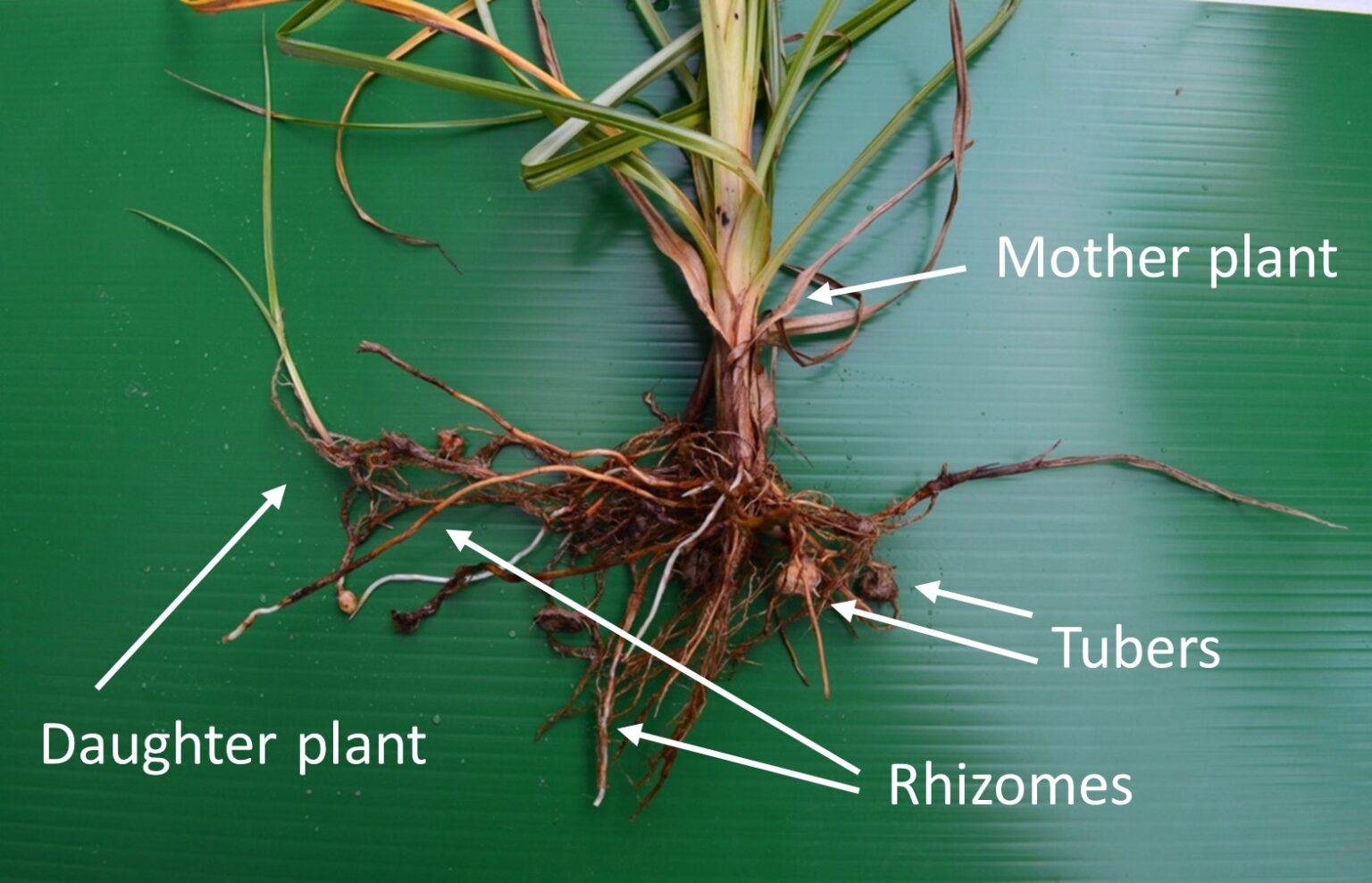
Image source: Bing (Web (fair-use with source credit))
How Nutsedge Actually Spreads Underground
The visible plant is the least important part of the nutsedge life cycle. Understanding the underground structure is the only way to understand why hand-pulling fails.
The Three-Part Underground System
Nutsedge plants are built from three connected structures:
- Tubers (nutlets). These are the resting and reproductive organs. They're the size of a peanut, store energy, and sprout new plants. This is the only part you really need to eliminate.
- Rhizomes. The horizontal underground stems that connect tubers to each other and to the above-ground shoots. They can run several inches between nodes.
- Roots and basal bulb. Fine roots and a small bulb-like base sit just below the soil surface. They support the visible shoot.
When you pull the green top, the shoot separates from the rhizome. The rhizome often breaks somewhere between the parent tuber and the surface. You've removed maybe 10 percent of the plant's total mass.
The rest of the tuber network is still there, unharmed, ready to send up new shoots.
Why Disturbance Makes It Worse
Soil disturbance triggers two problems at once. First, it breaks rhizomes, which releases apical dominance in the connected tubers. Apical dominance is the plant's way of keeping some tubers dormant while one main shoot grows.
Break that chain, and multiple tubers wake up at once.
Second, every time you dig or pull, you move soil around. Dormant tubers that were buried too deep to sprout get shifted up into the germination zone (the top inch or two of warm, moist soil). Even tubers on your shovel or your hands get carried to new parts of the yard.
This is how a small patch in one corner of the lawn becomes a scattered problem across the whole property. The pulling didn't spread the seeds, because nutsedge barely uses seeds. It spread the tubers through soil movement and rhizome fragmentation.
The Real Damage: What Happens When You Pull It
Let's walk through the exact sequence of what happens during and after a typical hand-pulling session, because the damage is invisible until you know what to look for.
Step 1: You Pull the Green Top
The stem snaps at the weakest point, usually just below the soil line. You get leaves and a short piece of stem. The rest of the plant, including most of the rhizome chain and all of the tubers, stays underground.
Step 2: The Tuber Network Responds
Within 24 to 48 hours, the connected tubers detect that the main shoot is gone. Without the hormonal signal from the dominant shoot, dormant tubers along the rhizome chain start breaking dormancy. The USDA NRCS plant profile for yellow nutsedge notes that tubers can sprout multiple times if the initial shoot is destroyed, unlike true bulbs that have a single growth cycle.
Step 3: New Shoots Emerge
In warm soil (above 60°F / 15.5°C), new shoots can push to the surface in 7 to 14 days. If the parent plant was mature when you pulled it, the tubers attached to it were already nearly fully formed. Those mature tubers sprout faster and more vigorously than the original seedling did.
Step 4: The Cycle Repeats Faster
Here's the part nobody warns you about. A single nutsedge shoot that got pulled once will often send up three, four, or five replacement shoots from the surrounding tuber network. The plant is responding to the threat.
Over the course of a single growing season, one hand-pulled plant can leave behind 50 to 100 daughter plants across a several-square-foot area.
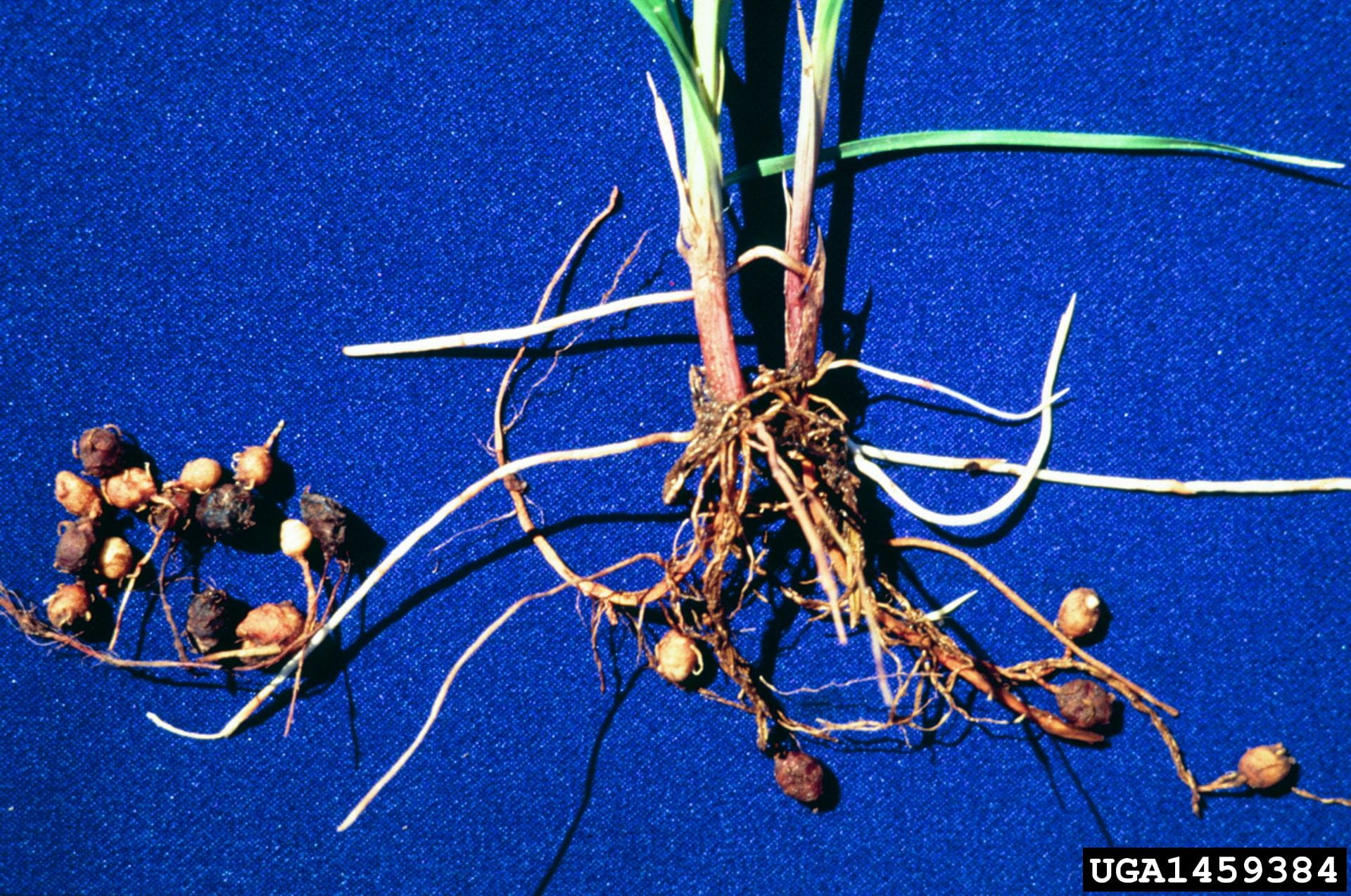
Image source: Bing (Web (fair-use with source credit))
Why This Matters for Your Whole Lawn
If you only have nutsedge in one small patch, repeated hand-pulling will reliably turn that one patch into a much larger patch by midsummer. The pulling isn't failing to keep up with the growth. It's actively accelerating the spread.
That's the core reason pulling makes the problem worse.
What Actually Works Against Nutsedge (And What Doesn't)
If pulling is the problem, what's the actual fix? As of 2026, the most reliable control comes from a combination of cultural practices and targeted herbicide timing. The University of California Integrated Pest Management program recommends focusing on exhausting the tuber bank, since tubers are the only structure that needs to die for the plant to be gone for good.
What Doesn't Work
| Method | Why It Fails |
|---|---|
| Hand-pulling | Snaps rhizome chain, leaves tubers, stimulates sprouting |
| Mowing low | Doesn't reach tubers, may stress turf more than nutsedge |
| Vinegar-based "natural" sprays | Only burns leaf tips, no effect on tubers |
| Pre-emergent herbicides | Most don't list nutsedge on the label; tubers aren't true seeds |
What Does Work
The reliable path to nutsedge control has three parts:
- Selective post-emergent herbicides with active ingredients like halosulfuron-methyl, sulfentrazone, or imazapyr. These are absorbed by the leaves and transported down into the rhizome and tubers. Two applications, spaced 4 to 6 weeks apart, are usually required.
- Improved turf density. Nutsedge loves thin, moist, under-fertilized lawns. A thick stand of competitive turfgrass (especially tall fescue or zoysia, depending on region) shades the soil and reduces nutsedge germination.
- Proper irrigation and drainage. Nutsedge thrives in wet spots. Fixing drainage and watering deeply but infrequently makes the lawn less hospitable.
Why Herbicide Timing Matters So Much
Selective nutsedge herbicides only work when the plant is actively growing and translocating energy down into the tubers. That window is roughly late spring through early summer, after the shoots have fully leafed out but before the plant starts producing new tubers. Spraying too early (when shoots are tiny) or too late (when the plant is dying back) wastes the application.
Two treatments in the same growing season are the norm because tubers sprout at different times. The first application kills the actively growing shoots and many of the connected tubers. The second catches the next flush from tubers that were dormant during the first spray.
The Role of Persistence
Even with perfect herbicide timing, expect a smaller flush of nutsedge the following year from the long-lived tubers still in the soil. As of 2026, university extension services including Michigan State and Penn State still recommend planning for a two to three year control window. That's normal.
The tuber bank depletes gradually, not all at once.
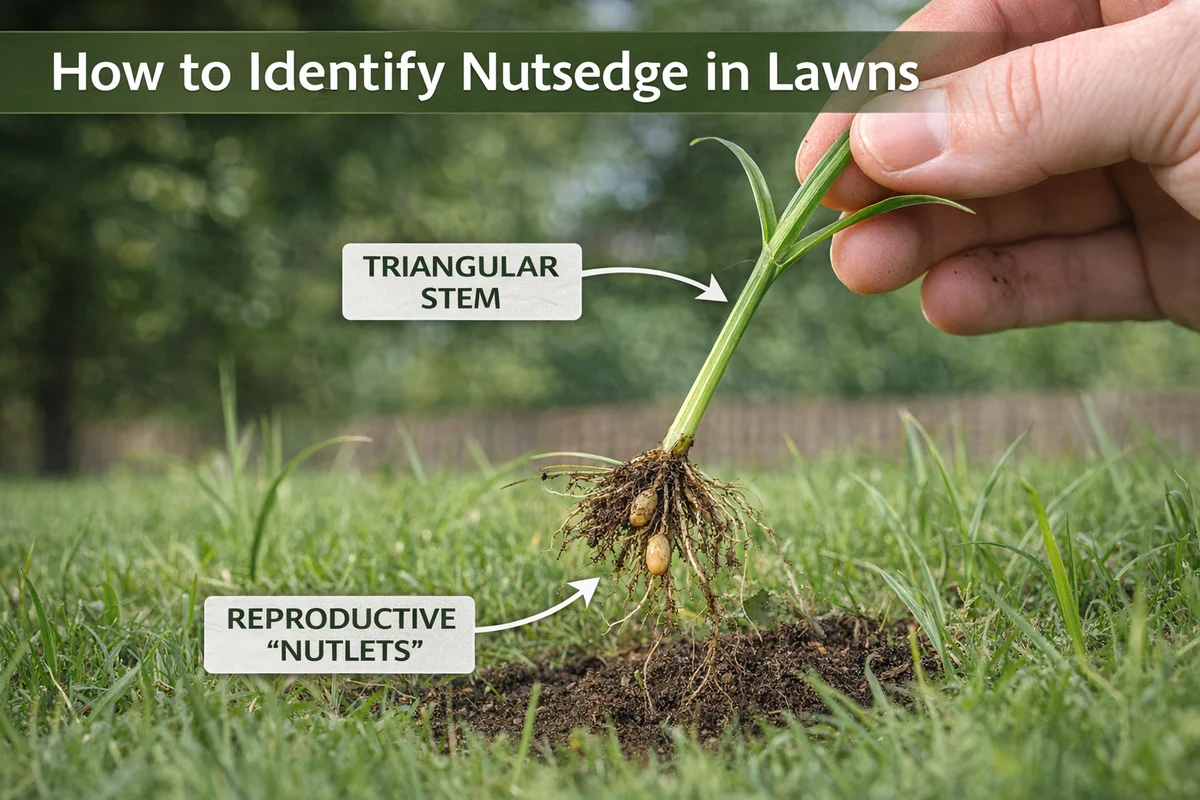
Image source: Bing (Web (fair-use with source credit))
Mistakes to Avoid and When to Call a Professional
Most nutsedge problems get worse because of a few specific habits. Here's what to watch for, and the point at which DIY stops being the best option.
Common Mistakes That Spread Nutsedge
Working soil when it's wet. Wet soil sticks to tools, shoes, and hands. Every bit of clinging soil can carry tubers to a new area.
Wait until the soil is dry enough to crumble rather than smear before doing any digging.
Tilling a nutsedge patch. This is the single fastest way to spread the infestation across a whole bed. Each tuber cut by the tiller becomes a potential new plant.
Soil solarization or targeted herbicide is the safer path.
Pulling the visible plants before treating. If you're going to use a selective herbicide, don't pull first. Stressed, partially pulled plants absorb herbicide poorly, and you've already triggered the multi-shoot sprouting response described earlier.
Letting the first patch "just one more season" it. Tubers multiply every year you wait. A small patch this spring is a thick patch by next fall.
Early action is dramatically easier than late action.
Confusing it with grass and ignoring it. If the leaves grow in sets of three and the stem feels triangular when you roll it between your fingers, it's nutsedge. Treating it as just another grass problem is how infestations get established.
When to Call a Professional
DIY control is realistic for small patches under about 100 square feet, where selective herbicides and density improvement can do the job. It's worth bringing in a licensed lawn care professional if:
- The patch covers more than a quarter of the lawn
- Purple nutsedge (Cyperus rotundus) is present, which is harder to control than yellow nutsedge
- Tubers have been spread by tilling across a large area
- The lawn has recurring problems despite two full seasons of herbicide treatment
Professionals have access to restricted-use products and turf-specific equipment that aren't available to homeowners. Per EPA pesticide regulations, certain effective nutsedge herbicides require a certified applicator. For infestations that span a property, that certification often pays for itself in saved product and faster resolution.
A licensed applicator can also confirm what you're dealing with. Misidentification between yellow and purple nutsedge is common, and the two species respond to different treatments.
Frequently Asked Questions
Does pulling nutsedge ever actually work?
Only if you remove every tuber in the rhizome chain, which is unrealistic by hand. In loose, moist soil with a hand trowel, you can occasionally lift a small plant before it has produced mature tubers. For established plants with mature nutlets, pulling is a losing strategy.
How long do nutsedge tubers stay alive in the soil?
Viable tubers can sit dormant for three years or more in some cases, with most sprouting within the first two seasons. That's why a single missed year of control often restarts the cycle. Plan control around depleting the tuber bank, not just killing visible shoots.
Is there a way to remove nutsedge without chemicals?
Covering the patch with heavy black plastic for an entire growing season (soil solarization) can kill tubers in the top 6 inches of soil. It works best in warm, sunny climates. Sheet mulching with several layers of cardboard and wood chips smothers existing shoots but rarely kills deep tubers in one season.
Why is nutsedge worse in some parts of my lawn?
Nutsedge loves wet, compacted, or under-fertilized spots. Low areas where water collects, near irrigation leaks, and along edges where the lawn is thin are the usual hot spots. Fixing drainage and turf density in those zones is a permanent part of any control plan.
Will nutsedge ever go away on its own without any treatment?
No. Tubers ensure the plant returns every season. Ignoring an infestation doesn't starve the tubers, because the plant finishes its tuber production before visible dieback in fall.
Skipping control guarantees the problem gets larger each year.
Can I spread nutsedge by mowing my lawn?
It's possible but uncommon. Tubers aren't typically moved by mower wheels the way seeds are. The bigger risk is mowing while shoots are seeding, though nutsedge seed production is limited in most turf settings.
The greater spreading vector is soil movement from pulling, tilling, or foot traffic in wet conditions.
🌾 Agronomist Recommended: Pre-Emergent & Weed Control Supplies
To prevent weed breakthroughs and protect desirable turfgrass from foliar injury, our agronomy field trials recommend calibrated pre-emergents and non-ionic surfactants:
- Professional Pre-Emergent:Check Prodiamine 65 WDG Pre-Emergent on Amazon →
- Non-Ionic Spray Surfactant:Check Non-Ionic Foliar Surfactants on Amazon →
*FTC Disclosure: As an Amazon Associate, Totally Green Lawn earns from qualifying purchases.*

Similar Posts