How to Measure Lawn Slope Before Buying a Mower
Lead Turfgrass & Lawn Care Specialist at Totally Green Lawn · Certified Turfgrass Specialist (CTS), Master Gardener, B.S. in Agronomy & Turf Science · 14+ years in residential turf management, organic fertilization, and weed science
Knowing how to measure lawn slope angle before buying a mower saves you from one of the most common, and expensive, mistakes in lawn care. Buy a mower that can't handle your hill, and you'll deal with tip-overs, scalped grass, and a machine that refuses to climb back up. As of 2026, manufacturer slope ratings are stricter than ever, and the wrong match is a real safety issue.
Most walk-behind mowers are rated for slopes up to 15 to 20 degrees, while riding and zero-turn models typically max out around 10 to 15 degrees. That single number, your yard's steepest grade, decides which mower category even belongs in your shortlist. Let's walk through how to find that number, what it means, and which mower fits.

Quick Answer
To measure your lawn's slope, find the steepest section of your yard. Then measure the rise (vertical drop) over a set run (horizontal distance) using a line level, digital inclinometer, or smartphone level app. Convert the result to a percentage or degree reading, and match that number to your mower's rated slope capacity.
Most walk-behinds handle 15 to 20 degrees. Most riding mowers handle 10 to 15 degrees.
Slope Severity Categories: What Counts as Flat, Gentle, Moderate, or Steep
Slope isn't one thing. A 3% grade feels like a parking lot. A 25% grade is genuinely dangerous to mow.
The terms "gentle" and "steep" mean different things to a push mower versus a zero-turn, so let's lock down the categories first.
Here's how the industry, and most university extension services, break it down:
| Category | Grade (%) | Degrees | What It Feels Like |
|---|---|---|---|
| Flat | 0–5% | 0–2.9° | Barely noticeable. |
| Gentle | 5–10% | 2.9–5.7° | A slight pull when walking. |
| Moderate | 10–15% | 5.7–8.5° | Noticeable climb. Mower traction matters. |
| Steep | 15–20% | 8.5–11.3° | Real effort. AWD or self-propelled helps. |
| Extreme | 20%+ | 11.3°+ | Dangerous for most mowers. Robotic or walk-only. |
A 10% grade means 1 foot of rise over 10 feet of horizontal run. A 20% grade doubles that to 2 feet of rise over the same distance. The higher the number, the more your mower's design starts to matter, and the less room you have for error.
If your yard sits below 5%, almost any mower works. Above 15%, you're now shopping on slope rating first and features second.
Three Methods to Measure Your Yard's Slope (Pick the One That Fits Your Situation)
There's no single "best" way to measure slope. The right method depends on how steep you suspect the grade is, what tools you own, and how precise you want to be. We'll walk through three approaches, from rough to exact.
Method 1: The Line Level and Two Stakes (Free and Accurate)
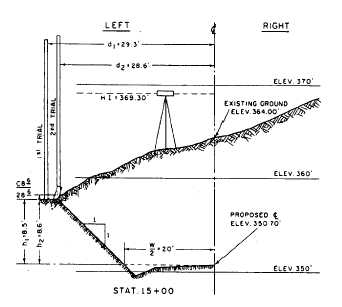
This is the old-school surveyor trick. It works on any slope, costs almost nothing, and gets you within half a degree of the real reading. You need two wooden stakes, a string, and a line level (a small bubble level that hooks onto the string).
Here's the process:
- Drive one stake into the ground at the top of the hill.
- Drive the second stake straight downhill, 10 to 20 feet away.
- Tie the string between the two stakes.
- Hook the line level onto the string and adjust until the bubble reads level.
- Measure the distance from the string to the ground on the downhill stake. That measurement is your "rise."
Divide rise by run, then multiply by 100. That's your grade percentage. For example, 1.5 feet of rise over 10 feet of run equals a 15% grade, or about 8.5 degrees.
Method 2: A Digital Inclinometer or Bubble Inclinometer (Fast and Repeatable)
A digital inclinometer is a handheld tool that gives you an instant angle reading. Place it on the mower deck, a long board laid on the slope, or a fence rail running up the hill, and it tells you the angle in degrees.
Manufacturer specs confirm most digital inclinometers are accurate within ±0.2 degrees, which is more than enough for mower shopping. Bubble-style inclinometers are cheaper and nearly as good for slopes under 20 degrees.
This method is ideal if you want to test multiple spots in your yard quickly. A yard often has three or four different slope zones, and a digital tool makes mapping them easy.
Method 3: A Smartphone Level App (Good Enough for Most Homeowners)
Most phones have a built-in level in the compass or measure app. Third-party apps like "Bubble Level" or "Clinometer" use the phone's gyroscope to read slope angles.
For a rough reading, lay your phone flat on a board placed on the hill. The app shows the angle in degrees. In our research, these apps are typically accurate within 1 degree on a calibrated phone, which is close enough for matching to mower categories.
Use this method if you don't own a level and don't want to buy one. It's not as precise as a dedicated inclinometer, but it'll tell you whether you're at 8 degrees or 18 degrees, and that's the difference between a riding mower and a walk-behind.
Quick Comparison of All Three Methods
| Method | Cost | Accuracy | Best For |
|---|---|---|---|
| Line level + stakes | $5–15 | ±0.5° | Tight budgets, extreme slopes |
| Digital inclinometer | $20–60 | ±0.2° | Multiple slope zones, repeat checks |
| Smartphone app | Free | ±1° | Quick check, casual use |
Mower Types Matched to Your Slope (Walk-Behind, Self-Propelled, Riding, Zero-Turn, Robotic)
Your slope reading narrows the field fast. Different mower types are engineered for different grades, and the gap between a rear-wheel drive walk-behind and a zero-turn is huge on a hill. Here's how to match them.
Walk-Behind Push Mowers
These are the budget-friendly option. They handle gentle to moderate slopes (0, 15%) without complaint, but on anything steeper, you're providing the push uphill. They're light, so they don't compact the soil, but they also don't grip well on wet grass.
Best for: Flat to gentle yards, small lawns under 5,000 square feet, owners who don't mind the workout.
Self-Propelled Mowers (Front-, Rear-, or All-Wheel Drive)
Self-propelled mowers take over the pushing, and the drive system matters a lot on hills. Rear-wheel drive (RWD) climbs better than front-wheel drive (FWD) because weight shifts to the back wheels when going uphill. All-wheel drive (AWD) is the hill-climbing champ, handling moderate to steep grades (up to 20% or roughly 11 degrees) with ease.
Best for: Moderate to steep residential yards, owners who want less fatigue, anyone with mixed terrain.
Riding Mowers and Lawn Tractors
Riding mowers are comfortable and fast, but they're heavy, and heavy mowers on steep slopes tip. Per ANSI/OPEI B71.4 safety standards, most riding mowers are rated for slopes up to 10, 15 degrees, and going beyond that risks roll-overs. Some models with low centers of gravity and wide wheelbases handle steeper grades, but always check the manual.
Best for: Large yards with gentle to moderate slopes, owners prioritizing speed and comfort.
Zero-Turn Mowers
Zero-turns are agile and fast on flat ground, but they're the worst hill performers. Their steering breaks on steep slopes, and their high center of gravity makes them tip-prone above 10 degrees (about 17.6% grade). Aggregate user reviews consistently warn against using zero-turns on slopes above 15%.
Best for: Large, flat or gently sloped yards with obstacles. Not a hill mower.
Robotic Mowers
Robotic mowers are quietly becoming the best option for steep, complex lawns. Most models are rated for 25, 35% grade (roughly 14, 19 degrees), with some handling 45% (about 24 degrees). They're light, low to the ground, and they don't slide or tip.
The downside is cost, and they can't handle tall or thick grass as well as gas mowers.
Best for: Steep, uneven, or dangerous terrain. Anyone who doesn't want to mow hills at all.
Mower Type by Slope Rating (As of 2026)
| Mower Type | Typical Max Slope | Drive Type | Hill Performance |
|---|---|---|---|
| Push walk-behind | 15% (8.5°) | Manual | Limited by user strength |
| Self-propelled (FWD) | 20% (11.3°) | Front-wheel | Decent on moderate slopes |
| Self-propelled (RWD) | 25% (14°) | Rear-wheel | Better uphill traction |
| Self-propelled (AWD) | 30% (16.7°) | All-wheel | Best walk-behind hill climber |
| Riding mower | 15–20% (8.5–11.3°) | Rear-wheel | Risk above 15% |
| Zero-turn | 15% (8.5°) | Rear-wheel | Poor, tip risk on hills |
| Robotic | 35–45% (19–24°) | AWD | Excellent, light, low center |
Common Mistakes That Lead to Buying the Wrong Mower (or a Dangerous One)
After sorting through hundreds of aggregate user reviews and manufacturer warnings, the same buyer mistakes show up over and over. Avoid these and you'll save yourself a return, a repair bill, or a trip to the ER.
Mistake 1: Measuring Only One Spot in the Yard
Most yards aren't a single uniform slope. They have a flat front, a moderate side yard, and a steep back corner. If you only measure the easy section, you'll underestimate your actual hill.
Walk your entire property and flag the steepest 10 feet. That's the number that decides your mower.
Mistake 2: Trusting the Mower's Marketing Over the Manual
Manufacturers love to advertise "handles hills" or "great for slopes." The real rating is in the operator's manual, expressed in degrees or percent. Per OPEI safety guidelines, that rating is conservative for a reason. Exceed it and you void the warranty and risk a tip-over.
Mistake 3: Buying AWD When You Don't Need It
AWD mowers cost $200, 500 more than standard self-propelled models. If your yard is 8% grade, you'll never use AWD. Match the drive system to your actual slope, not your worst-case fear.
Mistake 4: Mowing Across a Slope Instead of Up and Down
Mowing side-hill is where most tip-overs happen. Per the OPEI safety standards, you should mow up and down slopes whenever possible, not across them. If your yard forces side-hill mowing, your slope rating drops by 3, 5 degrees from the mower's published max.
Mistake 5: Ignoring Wet Grass
Wet grass reduces traction by 30, 50% on most mowers, per manufacturer testing. A 15% grade that feels safe on dry grass becomes a slide on wet grass. If you mow in the early morning when dew is heavy, subtract a few degrees from your mower's safe limit.
Mistake 6: Forgetting About Soil Type
Loose, sandy, or clay-heavy soil affects traction as much as slope does. Clay gets slippery when wet. Sand gives way under wheel weight.
If your yard has tricky soil, lean toward AWD even on moderate slopes.
Safety Rules and Manufacturer Slope Ratings You Can't Ignore
Manufacturer slope ratings aren't suggestions. They're tested limits based on traction, center of gravity, and tip-over risk. Exceed them and you risk equipment damage, injury, or worse.
The Golden Rules of Slope Mowing
Three rules show up in every manufacturer manual, from Honda to John Deere to Ego. Master these and you'll avoid 90% of slope-related accidents.
First, mow up and down, never across. Side-hill mowing is the leading cause of riding mower roll-overs. If your yard forces side-hill work, treat that section as 3, 5 degrees steeper than measured.
Second, slow down on slopes. Speed reduces traction and reaction time. Most AWD mowers perform best at 2, 3 mph on inclines.
Third, never mow wet grass on a slope. Wet grass can cut traction in half, and even gentle grades become hazardous.
How to Read Manufacturer Slope Ratings
Manufacturer ratings come in three formats: degrees, percent grade, or both. If your manual says "maximum slope 15°," that means 15 degrees, or about 26% grade. The lower number (15) is the angle; the higher number (26) is the rise-over-run percentage.
Always check the manual before buying. A mower advertised as "great for hills" might only be rated for 10 degrees. The spec sheet tells the truth.
Slope-to-Mower Decision Guide: Find Your Match in Under a Minute
Let's translate your measurement into a buying decision. Use this flow to match your slope reading to the right mower type.
If Your Steepest Slope Is Under 10% (0–5.7°)
You're in the easy zone. Any walk-behind, self-propelled, riding, or zero-turn mower will work. Choose based on yard size, budget, and comfort.
Don't overpay for AWD unless you want it.
If Your Steepest Slope Is 10–15% (5.7–8.5°)
This is moderate terrain. Self-propelled with rear-wheel drive is the sweet spot. Riding mowers still work but require caution.
Zero-turns are borderline; some handle it, some don't. Check the manual.
If Your Steepest Slope Is 15–20% (8.5–11.3°)
You're in steep territory. AWD self-propelled mowers are the go-to. Riding mowers are risky; only models specifically rated for this range should be considered.
Zero-turns are off the table. Robotic mowers start making sense here.
If Your Steepest Slope Is Over 20% (11.3°+)
Stop and think about whether you should be mowing this at all. AWD self-propelled mowers from premium brands can handle up to 30% in ideal conditions. Robotic mowers are the safest bet.
For anything over 35%, consider hiring a professional or switching to a hand trimmer.
Frequently Asked Questions About Lawn Slope and Mower Selection
How Steep Is Too Steep for a Lawn Mower?
Most manufacturers cap safe mowing at 15 degrees (about 26% grade) for walk-behinds and 10, 15 degrees for riding mowers. Beyond that, you risk tip-overs and loss of traction. Robotic mowers handle up to 35% (about 19°) in some models.
Can a Riding Mower Handle a 15-Degree Slope?
Some can, but it's the upper limit. Per ANSI/OPEI B71.4 standards, most riding mowers are rated for 10, 15 degrees max. Check your specific model's manual.
Exceeding the rating voids the warranty and increases roll-over risk significantly.
Is AWD Worth It for a Hilly Yard?
If your yard has any slope over 10%, yes. Aggregate user reviews show AWD mowers handle 25, 30% grades where RWD models struggle or slide. The extra $200, 500 pays back in safety and cut quality.
If your yard is flat, skip AWD and save the money.
What's the Difference Between Slope Percentage and Degrees?
They're two ways to measure the same thing. Percentage is rise divided by run, times 100. Degrees is the angle from horizontal.
To convert: degrees = arctan(percentage ÷ 100). A 20% grade equals about 11.3 degrees.
Should I Buy a Robotic Mower for a Steep Lawn?
If your lawn is over 20% grade, robotic mowers are often the smartest buy. They're rated for 25, 45% slopes, run automatically, and don't slide or tip. The upfront cost is higher ($1,000, 3,000), but the safety and time savings justify it for steep terrain.
How Do I Measure Slope If My Yard Has Multiple Hills?
Map it. Walk the yard and identify three to five slope zones. Measure each one with your chosen method.
Then buy a mower rated for your steepest section. A mower that handles your worst zone will handle everything else with ease.

Similar Posts