Why Sprinkler Shut-Off Causes Loud Pipe Bangs (Water Hammer)
Lead Turfgrass & Lawn Care Specialist at Totally Green Lawn · Certified Turfgrass Specialist (CTS), Master Gardener, B.S. in Agronomy & Turf Science · 14+ years in residential turf management, organic fertilization, and weed science
That loud bang behind the wall the moment your sprinkler zone shuts off isn't your pipes "settling." It's water hammer, a pressure surge that hits when a fast-closing irrigation valve stops a moving column of water almost instantly. And it's one of the most common plumbing complaints in homes with automated sprinkler systems.
The spike can push pressures well past 150 psi for a fraction of a second, even when your static household pressure sits at a normal 60 to 70 psi. Per ASPE and IAPMO guidance, that kind of surge is exactly what hammer arrestors are designed to absorb, and it's why modern plumbing codes call for them near quick-closing valves. Let's walk through how to figure out what's happening in your system and which fix actually matches your setup.
Image source: Bing (Web (fair-use with source credit))
Quick Answer
Water hammer bangs pipes when a sprinkler shuts off because the valve closes faster than the water can stop. That sudden stop converts the water's momentum into a pressure spike. The spike travels through the pipe and shakes anything loose.
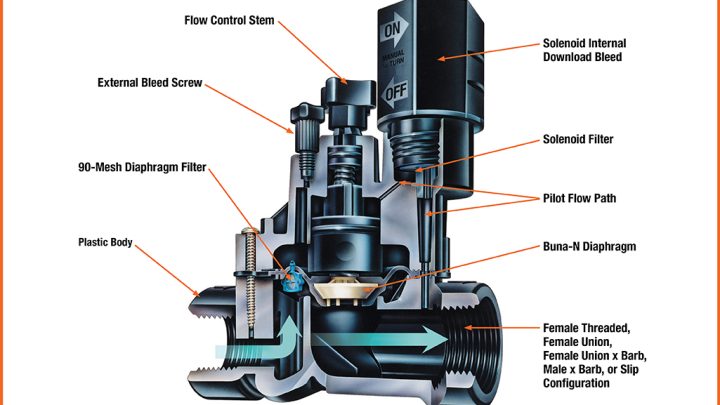
Fast-closing solenoid valves make it worse.
What's Actually Causing the Bang When Your Sprinkler Shuts Off
When your irrigation zone finishes its run, the solenoid valve snaps shut in roughly 0.1 to 0.5 seconds. Water inside the pipe is moving with real momentum, sometimes at 5 to 8 feet per second. The valve stops the flow, but the water doesn't stop on command.
It slams into the closed valve, and that energy has to go somewhere. It goes into a pressure wave, which is the bang you hear.
The physics here is well documented. The Joukowsky equation says the pressure surge equals roughly 0.433 times the flow velocity, scaled by a constant based on pipe material and fluid. In a half inch copper line at typical household pressure, a sudden valve closure can spike well past 200 psi in the pipe wall.
Your normal pressure might be 60 psi, so that spike is more than triple what the system sees the rest of the day.
A few variables decide how loud and how damaging the bang gets:
- Valve closure speed. Standard irrigation solenoids close almost instantly. Slow-close models stretch that out and cut the surge dramatically.
- Pipe material. Copper transmits noise and shock better than PEX. PVC sits in the middle.
- Static pressure. If your supply runs 80 psi or higher, the surge stacks on top of an already elevated baseline.
- Pipe support. Loose hangers, missing strapping, or pipes resting against studs act like a drum head.
- Distance from the valve. Longer runs mean a heavier water column, and more momentum to absorb.
If you've got all five working against you, the bang is going to sound like someone hit the wall with a sledgehammer. As of 2026, most modern irrigation installations include some form of surge protection at the manifold, but older systems and DIY retrofits often skip it.
One more piece that surprises people: even "quiet" PEX systems hammer just as hard internally. You just hear it less because the material damps the sound. The pressure spike still happens, and over time it can fatigue brass fittings, crack solder joints, and slowly loosen pipe hangers.
How to Tell If It's Water Hammer or Something Else
Not every pipe noise after a sprinkler cycle is water hammer. A few common mimics show up in homes with irrigation, and the fix is different for each. Here's the decision branch most homeowners and techs use:
| Symptom | Likely Cause | How to Confirm |
|---|---|---|
| Single sharp bang right when the valve closes | Water hammer | Shut off a faucet quickly, same sound? If yes, it's hammer |
| Crackling or ticking for 10-30 seconds after shutoff | Thermal expansion (hot water lines cooling) | Only happens after hot water use? Probably expansion |
| Banging only when the pump cycles (well systems) | Pressure tank short-cycling | Check pressure gauge on the tank, needle bouncing fast |
| Rattling that continues between cycles | Loose pipe hangers or straps | Visually inspect pipe runs in the basement or crawl space |
| Clunk from the backflow preventer | Internal check valve slam | Tap on the backflow body, the noise originates there |
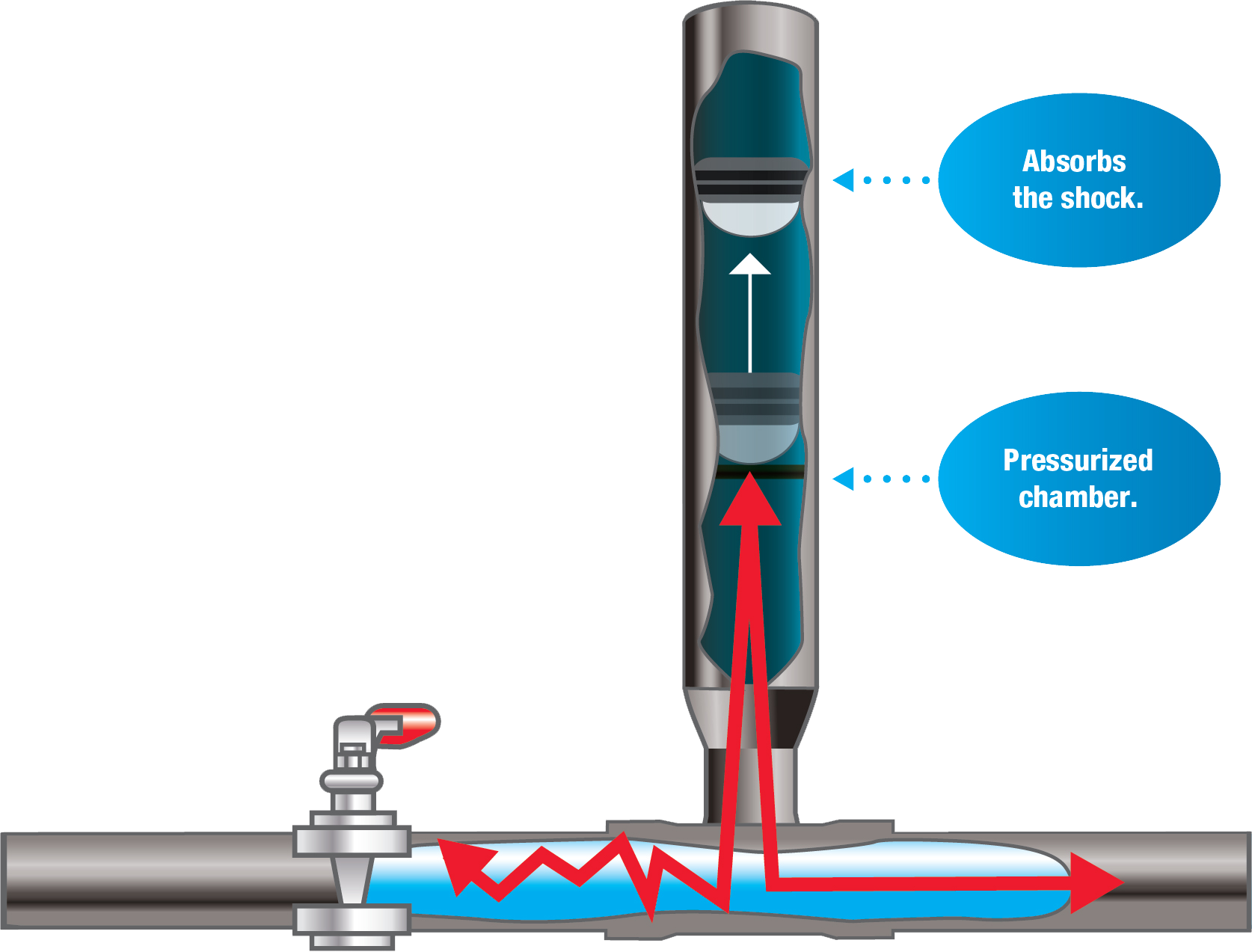
Image source: Bing (Web (fair-use with source credit))
Is the noise coming from the irrigation line or the house plumbing?
This is the first real branch in the diagnosis. Run a manual zone from the controller, but open one hose bib inside the house at the same time. If the bang happens when the solenoid closes regardless of whether the indoor faucet is open, the surge is staying in the irrigation branch.
If the bang only happens when the indoor fixture is open, the surge is feeding back into the house main.
Does it happen on every zone or just one?
Single-zone bangs usually point to a solenoid starting to fail or a specific pipe run with poor support. System-wide bangs at every shutoff point to a missing or undersized arrestor at the main manifold, or a pressure that's too high upstream.
Quick check: how high is your static pressure?
Screw a 0 to 100 psi gauge onto an outdoor hose bib. Run water for a minute to get a true reading. If the number climbs past 80 psi, your pressure-reducing valve (PRV) is either missing, set too high, or failing.
That alone can make hammer dramatically worse, and fixing the PRV often reduces the noise before you ever touch the irrigation side.
If your pressure is in the 50 to 70 psi range and the noise is still loud, you're dealing with classic valve-closure hammer. That's where the right arrestor will make the biggest difference.
The Fix That Matches Your Setup
There's no single "best" fix. There's the right fix for your pipe size, pressure, and how many zones you run. Here's how to match the solution to what you've got:
| Your Situation | Best Fix | Why It Works |
|---|---|---|
| Single zone, ½" line, normal pressure (50-70 psi) | Tee-mounted shock arrestor at the valve | Absorbs the surge right at the source |
| Multi-zone manifold, 1" or larger manifold | Manifold-mounted arrestor (½" or ¾") | Covers all zones from a central point |
| Static pressure above 75 psi | Pressure-reducing valve first, then arrestor | Stops the spike from stacking on high baseline |
| Older home with air chambers that have gone silent | Drain the system, refill, listen | Restores the air cushion without new parts |
| DIY install on copper with loose hangers | Add or replace pipe straps every 4-6 feet | Stops pipes from moving under surge |
Mechanical shock arrestor vs. an old-school air chamber
Air chambers are just capped vertical pipes. They work, but they waterlog over time as oxygen absorbs into the water. Most waterlogged chambers are 5 to 10 years old.
A mechanical shock arrestor uses a spring-loaded piston inside a sealed body, so it never waterlogs. For sprinkler systems, mechanical is the better long-term answer, especially for the 150 psi, 180°F ratings you typically see on arrestor spec sheets from manufacturers like Zurn Wilkins and Oatey.
What size arrestor do you actually need?
Match the arrestor to the pipe size at the connection point. A ½" arrestor on a ½" line is correct. Undersizing kills the effectiveness.
Most residential irrigation valves use 1" or ¾" piping, but the arrestor often tees down to ½" at the valve body. Match at the tee, not the main.
Slow-close solenoid valves
If you're replacing a solenoid anyway, look for a slow-close model. The difference in noise is dramatic. A standard solenoid snaps closed in about 0.1 seconds.
A slow-close version stretches that to 0.5 seconds or more, which can cut the surge by 30 to 50 percent. It's not a magic fix, but it stacks well with an arrestor.

Image source: Bing (Web (fair-use with source credit))
Step-by-Step: Diagnosing and Solving Sprinkler Water Hammer
Here's the workflow we walk through when a homeowner calls with a banging-pipes complaint tied to their irrigation system. Follow it in order. Each step is designed to either confirm the cause or rule something out.
- Confirm the pressure. Screw a 0 to 100 psi gauge onto an outdoor hose bib. Run water for 60 seconds. Read the pressure with no flow. If it's above 75 psi, the PRV needs attention first. The Uniform Plumbing Code calls for residential pressure under 80 psi for good reason.
- Check the static pressure with the system off. Close the house's main shutoff, drain a hose bib, and read the gauge again. If it doesn't drop, your PRV is stuck open or bypassed. Replace or adjust it before going further.
- Listen at each valve. Run zone 1 manually. Stand near the manifold and the valve box. Note where the bang originates. Run zone 2, then zone 3. If one zone is louder, the problem is closer to that valve or that branch.
- Inspect the pipe hangers. Walk the basement, crawl space, or wherever the irrigation main enters the house. Pipes should be strapped every 4 feet on horizontal runs and at every change of direction. Add or replace any loose, missing, or broken straps. Plastic hangers on copper are common, and they fail.
- Drain and refill the system to test the air chambers. Close the house main. Open every faucet and drain the lines. Close the faucets, then turn the main back on. Run a zone. If the bang is gone, your air chambers had waterlogged. They will waterlog again in a few years, so plan to install mechanical arrestors within 12 months.
- Install a shock arrestor at the loudest valve. Tee a ½" mechanical arrestor into the line within 12 to 18 inches of the solenoid valve. Use a proper brass tee, not a push-to-connect fitting buried underground. Run the zone. If the bang disappears, you've found the source.
- If noise persists across all zones, install a manifold arrestor. Mount a larger arrestor at the irrigation main where it enters the house, before the zone valves. This catches surges that travel back upstream from multiple valves.
- Replace any failing solenoids. If a solenoid is chattering, leaking when closed, or slow to energize, swap it. Failing solenoids can slam unevenly and create hammer even with an arrestor in place.
- Retest every zone. Run each one for 2 to 3 minutes. Listen at the manifold, at the valves, and inside the house. Quiet across the board means the fix held.
- Document baseline pressure and any new parts. This matters for warranty claims, insurance, and the next homeowner. Manufacturer specs confirm arrestor ratings, so keep that data with the install record.
Mistakes That Make the Banging Worse
A few common fixes actually amplify the problem. We've seen each of these show up in well-meaning DIY work and even some pro installs:
- Using pipe straps that are too tight or too soft. Cushion-style or foam straps don't restrict movement enough, so the pipe still moves when surge hits. Use rigid plastic or metal hangers sized for the pipe.
- Installing the arrestor too far from the valve. An arrestor is most effective within 18 inches of the quick-closing device. Place it three feet away and you'll lose most of the benefit.
- Skipping the PRV because the pressure "seems fine." Household fixtures are rated for 80 psi max. Letting static pressure sit at 90 psi shortens the life of every rubber gasket, supply line, and washing machine hose in the home.
- Capping the air chamber thinking it solved the problem. If your system relies on capped vertical pipes for surge protection and they go silent, drain and refill first. Don't permanently cap and abandon them without adding a mechanical arrestor.
- Using a pressure-reducing valve to "solve" hammer without an arrestor. A PRV helps with high baseline pressure, but it doesn't absorb the surge. You usually need both.
- Oversizing the arrestor thinking bigger is better. An oversized arrestor at a small valve can create water hammer of its own by adding air volume to the line. Match the size to the pipe.
One more that's easy to miss: never assume the bang is harmless. Repeated surge events fatigue brass, copper, and even PEX fittings. Manufacturer specifications indicate that pressure spikes above 150 psi, sustained over years, are a leading contributor to pinhole leaks in copper.
The bang is a warning, not a quirk.
Costs, Parts, and What to Buy
You don't need a truckload of parts. Most sprinkler water hammer cases get solved with one or two of the items below. Here's what we typically recommend and the realistic price band for each as of 2026.
| Part | What It Does | Typical Price (USD) | When You Need It |
|---|---|---|---|
| ½" mechanical shock arrestor | Absorbs surge at the valve | $15 to $30 | Single-zone fix, most common add-on |
| ¾" mechanical shock arrestor | Larger volume for bigger lines | $25 to $50 | Multi-zone manifolds, 1" main |
| Pressure-reducing valve (PRV) | Drops static pressure to 50-70 psi | $80 to $200 | Static pressure above 75 psi |
| Pressure gauge (0-100 psi) | Confirms system pressure | $10 to $20 | Every diagnosis, keep one on hand |
| Slow-close solenoid valve | Reduces closure speed | $25 to $60 per valve | Replacing a failing or noisy solenoid |
| Brass tee fittings | Proper arrestor installation | $5 to $15 each | Any new arrestor install |
| Pipe hangers and straps | Secures loose pipe runs | $2 to $5 each | Loose or missing supports |
A simple single-zone arrestor install usually runs $25 in parts and about 30 minutes of work. A full manifold rebuild with a PRV can run $300 to $500 in parts, plus professional labor if you go that route.
What brands the pros actually use
Manufacturer specs from Zurn Wilkins, Sioux Chief, and Oatey dominate the residential arrestor market. Their published ratings (typically 150 psi working pressure, 180°F max) match what residential systems see day to day. Watts Water also makes a well-regarded arrestor line that's common in commercial work.
Buy from a plumbing supply house or a major home improvement retailer. Avoid no-name arrestors on marketplace sites with no published pressure ratings. The piston-and-spring design has tight tolerances, and a poorly machined arrestor can fail in under a year.
Don't overbuy
The most common spending mistake is buying the largest arrestor available "just in case." An oversized arrestor on a small branch line adds air volume, and that can create its own pressure oscillations. Match the size to the pipe. If the line is ½", use a ½" arrestor at the tee.
Mistakes That Make the Banging Worse
We covered a few of these earlier, but they're worth repeating because they show up in almost every service call where the homeowner has already tried to fix it.
- Adding a "water hammer arrestor" from a big-box store without checking the spec. Some low-cost arrestors are rated for low-pressure domestic fixtures only, not irrigation. Confirm 150 psi minimum working pressure on the label.
- Replacing the solenoid but not the arrestor. A new solenoid can still slam if the line has no surge protection. Replace both if the system is older than 10 years.
- Teflon tape on arrestor threads that are not designed for it. Some arrestor bodies use a specific thread sealant. Check the install sheet. Over-taping can crack the female fitting.
- Leaving the system pressurized while working on it. Always depressurize the irrigation main before any valve or arrestor work. Even a slow leak can soak a utility trench fast.
- Assuming "it's been like that for years" means it's fine. It does not. Every hammer event is a fatigue cycle. Eventually something gives, and it's almost never at a convenient time.
- Burying an arrestor in a place you can't reach. Install at grade, in a valve box, or in an accessible basement. If it ever needs replacement, you'll thank yourself.
When to Call a Pro and What to Expect
If you've confirmed pressure is normal, checked the hangers, and installed an arrestor at the loudest valve, and you're still hearing bangs, it's time for a licensed plumber or irrigation specialist. Persistent hammer after basic fixes usually points to a deeper issue.
Common reasons pros get called in:
- A failed or stuck pressure-reducing valve upstream
- A backflow preventer with a failing internal check valve
- A mainline that was undersized from the original install
- Hidden leaks creating air pockets in the lines
- Multiple arrestors required across a long main
A typical service call runs $100 to $200 for the visit and diagnosis, with hourly labor of $75 to $150 beyond that. Most residential sprinkler hammer cases get resolved inside two hours once a pro is on site.
What to ask when you call
Ask whether the tech has worked on residential irrigation hammer specifically. Ask if they'll test static pressure before and after any install. And ask what brand of arrestor they're using, then confirm it's rated for 150 psi minimum.
A tech who answers those three questions clearly is usually worth the money.
Insurance and documentation
If the hammer has already caused visible damage, take photos and keep all parts receipts. Some homeowners policies cover sudden plumbing failures, and a documented repair history helps claims go smoothly. Most carriers expect you to have addressed known issues, so a record of fix attempts and final resolution protects you if a pipe ever bursts later.
Long-term outlook
Once you've got the right arrestor, the right pressure, and tight hangers, sprinkler hammer rarely returns. Mechanical arrestors are rated for hundreds of thousands of cycles, and a slow-close solenoid can outlast a standard one by years. The fix is permanent, and the system runs quieter from the first cycle.
Frequently Asked Questions
Can water hammer damage my pipes long term?
Yes. Repeated pressure spikes fatigue brass fittings, solder joints, and copper pipe walls. The bang is a warning sign, and ignoring it raises the risk of pinhole leaks or joint failure over time.
Is water hammer dangerous to drink from?
No. The water itself stays safe. The issue is mechanical stress on the plumbing system, not water quality.
If you have a hammering line, fix it for the pipe's sake, not the water's.
How much does it cost to fix sprinkler water hammer?
A single arrestor install runs $25 to $50 in parts and about 30 minutes of DIY labor. A whole-house or manifold solution with a new PRV can reach $300 to $500 in parts, plus professional labor if you hire it out.
Will a water hammer arrestor work on my sprinkler system?
Yes, as long as it's rated for at least 150 psi working pressure and matched to the pipe size. Mechanical piston-style arrestors are the standard for irrigation because they don't waterlog like old air chambers.
Why does it bang only on one sprinkler zone?
Usually a single solenoid starting to fail, a poor pipe support on that branch, or an undersized line feeding that zone. Test each zone individually to isolate which one is loudest.
Should I replace the sprinkler valve or just add an arrestor?
Start with the arrestor. If the solenoid is more than 8 to 10 years old, chatters, or leaks, replace it. Otherwise, the arrestor alone handles the surge and the existing valve keeps working.
How do I know if my static pressure is too high?
Screw a 0 to 100 psi gauge onto a hose bib with all water off, then read it. Anything above 75 psi means your pressure-reducing valve needs adjusting or replacement. The Uniform Plumbing Code recommends staying under 80 psi for residential systems.

Similar Posts