Why Potassium Is Key for Lawn Cold and Drought Resilience
Lead Turfgrass & Lawn Care Specialist at Totally Green Lawn · Certified Turfgrass Specialist (CTS), Master Gardener, B.S. in Agronomy & Turf Science · 14+ years in residential turf management, organic fertilization, and weed science
Why potassium is essential for lawn cold tolerance and drought comes down to one thing: it's the mineral that keeps grass cells alive when conditions turn harsh. Most homeowners focus on nitrogen for green color, but potassium is what actually protects turf when temperatures drop or rain disappears. Skip it, and your lawn pays the price through winterkill and summer dieback.
Research from university turfgrass programs shows a target tissue K concentration of around 2.5 to 3.0 percent in actively growing turf, and that range lines up directly with stronger cold hardiness and better drought performance. Getting your soil test into the right window is the move that separates lawns that shrug off stress from lawns that struggle every season. Let's dig into how potassium actually works so you can make sense of your own soil test and timing.
Quick Answer
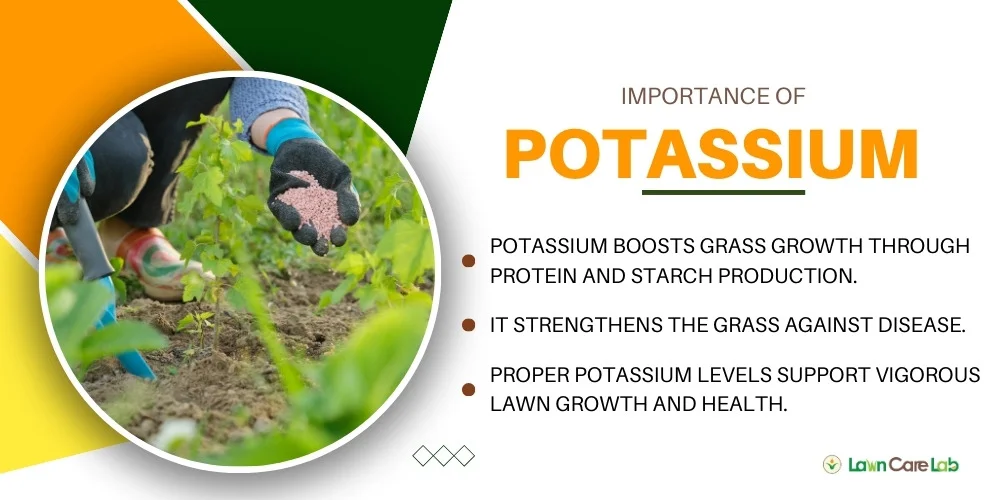
Potassium regulates water balance inside grass cells. It strengthens cell walls and lowers the freezing point of cell sap. It powers deeper roots that find water during drought.
It cuts winterkill and summer dieback. So if you want a lawn that survives stress, potassium is non-negotiable.
Why Potassium Matters More Than Most People Realize for Lawn Stress
Most lawn care conversations center on nitrogen, the green-up driver. Potassium plays a quieter role, but it's the difference between a lawn that recovers from a hard winter or brutal August and one that thins out and stays thin.
Potassium's stress-protection role is well documented in peer-reviewed turf research. A landmark study published in Crop Science on potassium fertilization of Kentucky bluegrass found that higher K tissue levels correlated with significantly improved turf quality under both drought and cold stress. The mechanism is simple once you see it.
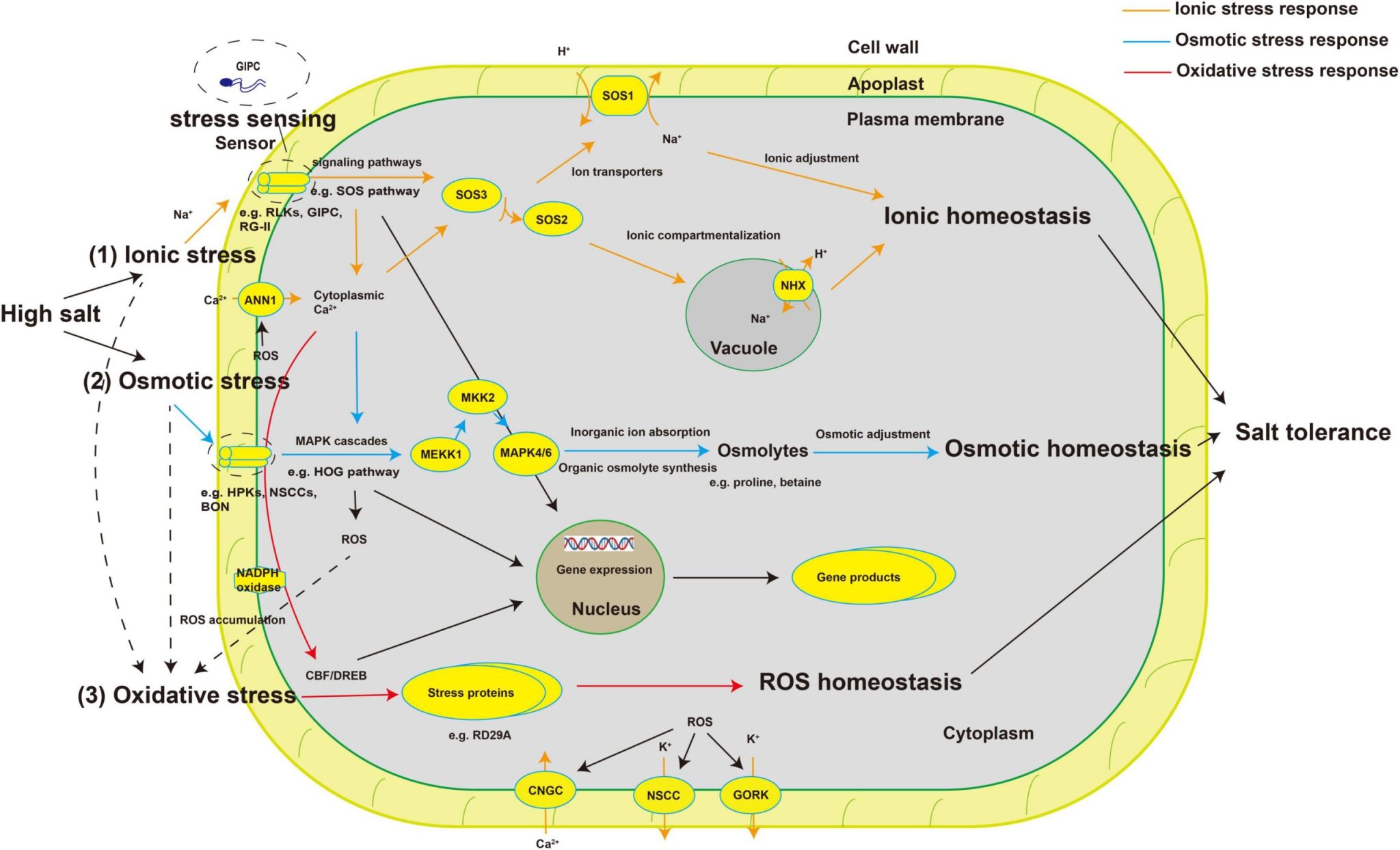
Potassium ions regulate the osmotic pressure inside grass cells, which controls how water moves in and out of those cells. When a turf plant has plenty of K, it holds water more efficiently, can extract moisture from drier soil, and resists the dehydration that kills crowns in winter.
Beyond stress protection, K supports:
- Enzyme activation for photosynthesis and energy transfer
- Protein and starch synthesis that fuel recovery growth
- Improved water-use efficiency during hot, dry spells
Lawns deficient in K often look acceptable in spring but then fall apart the moment weather turns extreme. That's the pattern most homeowners miss.
How Potassium Actually Protects Your Lawn (The Biology Without the Boring)
To use potassium well, you need to understand what it's actually doing inside the plant. Three mechanisms matter most for cold and drought tolerance.
Osmotic regulation and turgor pressure
Potassium is the main cation (positively charged ion) inside plant cells. It pulls water in and holds it there. Well-fed grass cells stay firm and hydrated under heat.
Potassium-starved cells lose turgor fast, which is why drought-stressed turf wilts and then suffers crown damage.
Cold hardiness through cell sap concentration
When temperatures drop, grass crowns need high concentrations of soluble sugars and salts inside their cells to lower the freezing point and avoid ice crystal damage. Potassium supports the production of these solutes. Tissue K in the 2.5 to 3.0 percent range (as documented in the Kentucky bluegrass study) lines up with measurable gains in freeze tolerance.
Root growth and water extraction
K drives carbohydrate movement from leaves down to roots, fueling deeper, denser root systems. Deeper roots reach moisture further down in the soil profile, stretching the time between wilting and recovery during dry spells.
Cold Tolerance vs. Drought Tolerance: Why Potassium Handles Both
People lump cold and drought stress into one thing. They feel similar (grass goes brown, growth stops), but they're physiologically different. Potassium helps with both, through slightly different pathways.
For cold tolerance
Cool-season grasses prepare for winter by hardening off. Crowns accumulate sugars, cell walls toughen, and cellular water becomes more concentrated. Potassium supports all three.
University extension guidance from Purdue University Turf Tips and other land-grant programs consistently recommends a late-season K application about two to four weeks before expected dormancy to boost cold hardiness. Going in to winter with full K reserves gives crowns a better shot at surviving freeze-thaw cycles and dry winter winds.
For drought tolerance
When soil moisture drops, grass responds in two ways. It closes stomata to slow water loss, and it pulls what water it can from the soil through its roots. Potassium powers both moves.
It keeps stomata functioning properly, and it drives the root growth that makes moisture extraction possible. Warm-season grasses like bermudagrass and zoysiagrass especially benefit, because their summer dormancy periods can stretch into genuine drought.
| Stress Type | What K Does | Best Timing |
|---|---|---|
| Cold tolerance | Strengthens crown cells, increases cell sap concentration, supports hardening-off | Late fall, 2 to 4 weeks before dormancy |
| Drought tolerance | Maintains turgor, improves stomatal function, fuels deep root growth | Late spring through summer |
| Combined transition-zone stress | Both effects, especially during summer-to-winter swings | Split applications spring and fall |
Why nitrogen alone backfires
Many homeowners pile on nitrogen in fall expecting winter hardiness. The opposite happens. Late nitrogen pushes soft, lush growth that doesn't harden off.
Potassium does the opposite: it supports stress defense without encouraging tender new shoots. The best fall program uses low N and high K, often a 2:1 or higher K-to-N ratio in the fertilizer analysis.
Signs Your Lawn Is Running Low on Potassium
Most homeowners diagnose potassium deficiency as "looks rough" and stop there. There are specific visual cues worth learning.
Visual symptoms
- Yellowing or scorching along leaf blade tips and margins (classic K deficiency pattern, unlike nitrogen deficiency which starts on older leaves but shows as general pale color)
- Slowed vertical growth even when N is adequate
- Increased wilt during heat, with slower recovery after irrigation or rain
- Higher disease pressure in summer, especially brown patch and dollar spot
Clues from your soil test
The most reliable signal comes from a soil test. Target ranges vary by extraction method, but general guidelines from university labs:
- Below 100 ppm K: deficient. Expect stress symptoms, plan to apply.
- 100 to 150 ppm: low. Supplemental K is recommended.
- 150 to 250 ppm: adequate for most home lawns.
- Above 250 ppm: high. Additional K won't help and may cause imbalance.
For more detail on interpreting university soil tests, the USDA's soil health resources provide solid background on what those numbers mean.
Tissue testing as the deeper check
Soil tests tell you what's available. Tissue tests tell you what the plant actually absorbed. Critical thresholds for turfgrass tissue K sit around 2.0 percent (deficient) to 3.0 percent (adequate).
If your soil test reads fine but your lawn still struggles, tissue K often reveals the gap.
That gets us through the biology and the symptoms. Next up is the part most homeowners actually need: how to apply K the right way, at the right time, with the right source. We also cover the timing window for cold tolerance going into winter, and the rates that line up with what peer-reviewed research recommends rather than what's printed on a fertilizer bag.
The Right Way to Apply Potassium (Timing, Rates, and Sources)
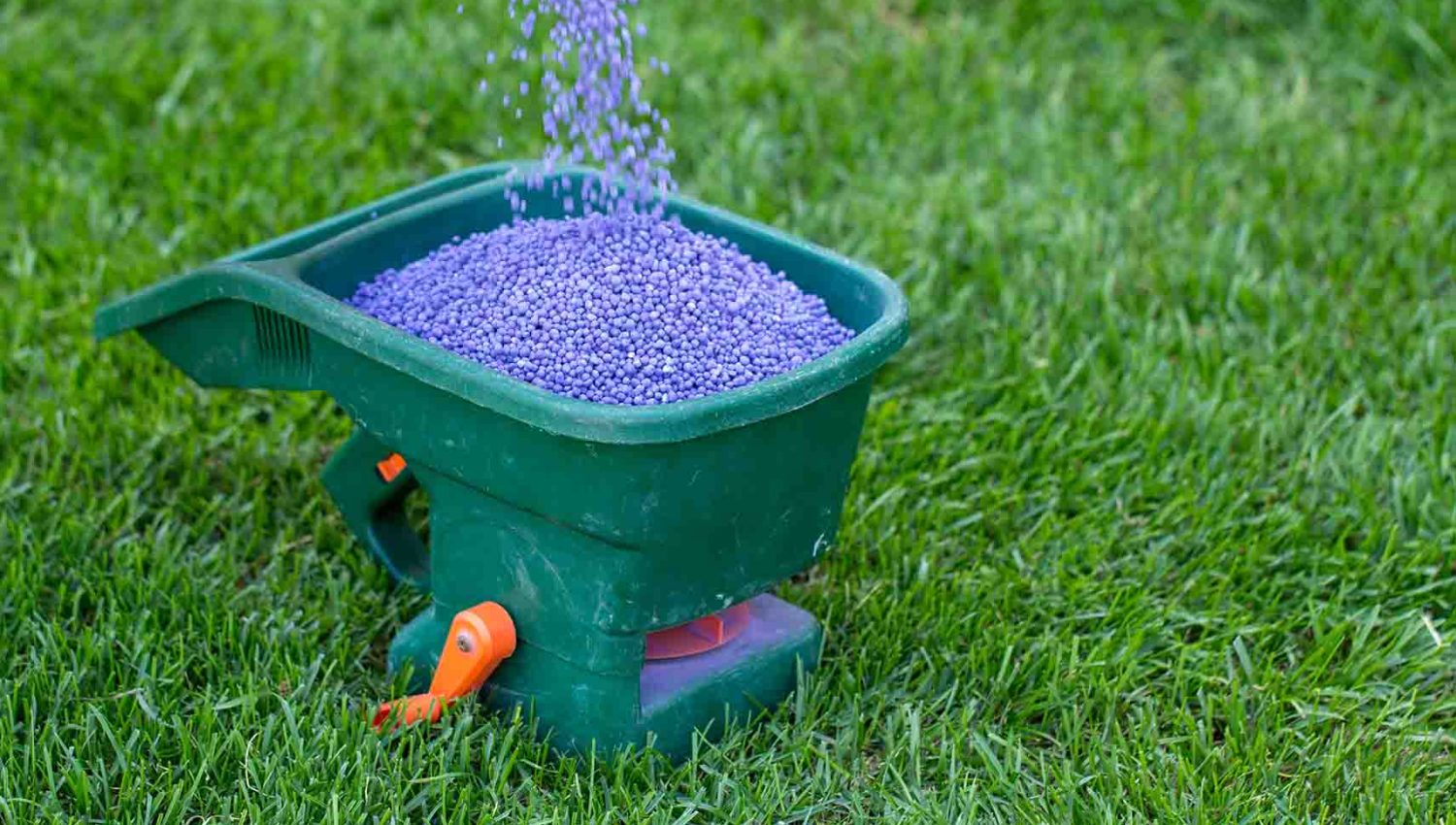
Image source: Bing (Web (fair-use with source credit))
Getting the rate wrong is the most common mistake. Too little and you don't move the needle on stress tolerance. Too much and you create nutrient imbalances that lock out calcium or magnesium.
How much K to apply
A practical annual target for most home lawns is 1 to 3 pounds of K2O per 1,000 square feet. The exact number depends on your soil test and grass type. Sandy soils leach K faster and often need the higher end.
Clay soils hold K better, so a lighter application works.
For cold hardiness specifically, the late-fall application is the one that matters most. Plan for 1 to 2 pounds of K2O per 1,000 square feet about two to four weeks before the lawn goes dormant. Soil temperatures in the 40s are still warm enough for the crowns to take up K and store it.
Choosing a source
Three main K sources show up in the home lawn market:
- Muriate of potash (KCl): most common, cheapest, highest K content (around 60 percent K2O). Fine for most lawns, though the chloride can bother salt-sensitive grasses in very sandy coastal soils.
- Sulfate of potash (K2SO4): about 50 percent K2O, low chloride, supplies sulfur. A good fit for sensitive turf and for late-fall applications where chloride buildup is a concern.
- Organic sources like kelp meal, compost, and greensand: lower analysis and slower release, useful as part of a long-term soil-building program.
| Source | Typical K2O | Best For | Watch-Outs |
|---|---|---|---|
| Muriate of potash | ~60% | General use, budget programs | Chloride on sensitive sites |
| Sulfate of potash | ~50% | Late-fall cold prep, salt-sensitive lawns | Higher cost |
| Organic K sources | 1 to 5% | Long-term soil building, organic programs | Slow release, need larger volumes |
Granular vs. liquid
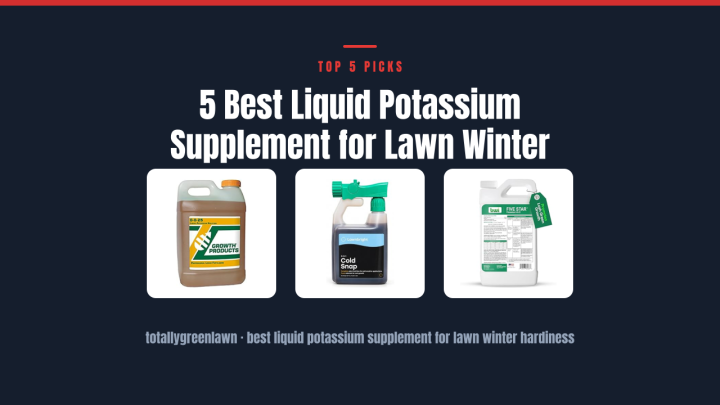
Granular is the workhorse for home lawns. It spreads evenly, lasts in the soil, and works well with fall timing. Liquid K is useful as a quick boost during summer stress or to correct a tissue-test gap mid-season.
For drought defense through the summer, a split program with granular in spring and a light liquid pass during peak heat works well.
Watering in
Water the application in lightly after spreading. About a quarter inch of irrigation or rainfall moves K off the blades and into the root zone where it counts. This step is especially important with sulfate of potash, which is more prone to foliar burn if it sits on the leaf.
Mistakes That Sabotage Potassium Uptake and Stress Defense
Even homeowners who apply K can undercut the benefit with a few common errors.
Applying K to dry soil during heat
Potassium needs moisture to move into the root zone. Spreading muriate of potash on bone-dry soil in August followed by no irrigation is wasted product. Water it in, or wait for rain.
Pushing high nitrogen in fall
A heavy fall nitrogen application pushes soft growth that is highly vulnerable to winterkill and disease. The proper late-fall ratio is low N to high K, often labeled as a "winterizer" blend with a 2:1 or higher K-to-N ratio.
Ignoring soil CEC and leaching
Sandy soils and any lawn with low cation exchange capacity loses K fast. If your soil test reports a low CEC, plan on split applications through the year instead of one big fall dose.
Over-liming without retesting
Raising pH changes nutrient availability. Potassium becomes less available in some high-pH soils. If you lime, retest in 6 to 12 months before adding more K.
Skipping the soil test entirely
Guessing on K rates is the most common reason for either deficiency or excess. As of 2026, university extension labs and most commercial soil labs still report K in ppm with category ratings. A $20 test saves $200 in misapplied fertilizer.
🌱 Agronomist Recommended: Bio-Stimulants & Turf Nutrition
Achieve deep golf-course green color and root resilience without surge growth using lab-verified nutrients and bio-stimulants:
- Liquid Iron & Humic Acid:Check Liquid Iron & Humic Blends on Amazon →
- Stress-Blend High Potassium Fertilizer:Check High Potassium Lawn Fertilizers on Amazon →
*FTC Disclosure: As an Amazon Associate, Totally Green Lawn earns from qualifying purchases.*

Similar Posts