Control Weeds in Buffalo Grass Without Damaging It
Lead Turfgrass & Lawn Care Specialist at Totally Green Lawn · Certified Turfgrass Specialist (CTS), Master Gardener, B.S. in Agronomy & Turf Science · 14+ years in residential turf management, organic fertilization, and weed science
If you've ever looked at your buffalo grass and wondered whether spraying for weeds will hurt the lawn more than help it, you're asking the right question. Controlling weeds in native buffalo grass without injury is mostly about timing, weed type, and which products you reach for, because the wrong move on a warm-season native like Bouteloua dactyloides can yellow, thin, or even kill it.
Here's the good news. Buffalo grass is naturally tough, it's a deep-rooted warm-season native, and with the right workflow, you can knock back weeds without burning the turf. Texas A&M AgriLife Extension recommends a mowing height around 2 to 4 inches and limited nitrogen, two cultural moves that already cut weed pressure dramatically.
As of 2026, university extension guidance still lines up with that approach, so we'll walk through the decision points, the safe herbicide list, and the timing windows that keep your lawn healthy.
Quick Answer
You can control weeds in native buffalo grass without injury by first identifying the weed type. Then match the treatment to the season. Use selective broadleaf herbicides labeled safe for buffalo grass.
Spot-treat, don't broadcast, on established lawns. Keep mowing height at 2 to 4 inches. Limit nitrogen to discourage weed flushes.
Always read the EPA label before applying anything.
How to Control Weeds in Native Buffalo Grass Without Injuring It
Most buffalo grass weed problems fall into three buckets: broadleaf weeds like dandelions and clover, grassy weeds like crabgrass and foxtail, and tough perennial invaders like Bermudagrass or nutsedge. Each one needs a different tool. Spray the wrong product, especially a non-selective herbicide or a grassy-weed killer, and you'll watch your buffalo grass turn yellow within days.
The fix is a simple workflow. Identify the weed, check the season, confirm your buffalo grass is healthy and out of dormancy, then pick the safest product that does the job. The rest of this guide walks through every step, the products that work, the ones that don't, and the timing windows that matter most.
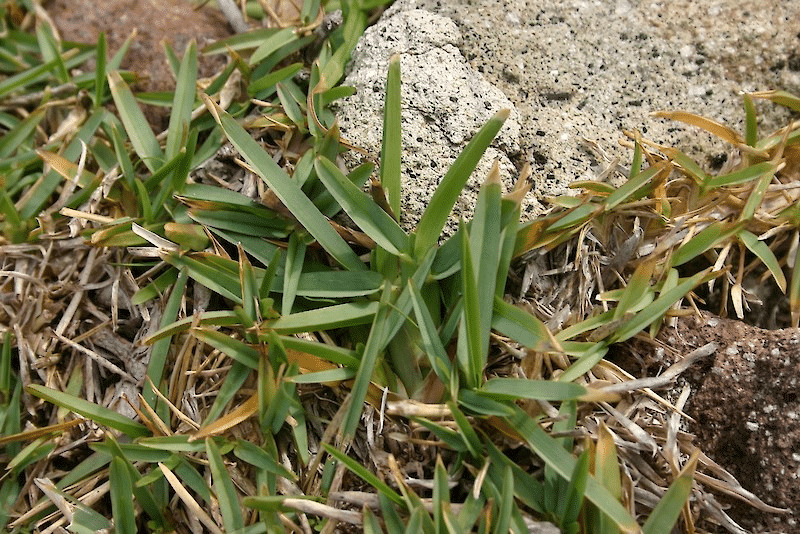
Image source: Bing (Web (fair-use with source credit))
The 4 Decision Points That Change Your Weed Control Plan
Before you grab any sprayer, answer these four questions. Your answers decide which method, which product, and which rate you'll use. Skip this step, and you're guessing, which is how buffalo grass gets injured.
What Type of Weed Are You Dealing With?
Weed ID is the single biggest decision point. Broadleaf weeds (dandelions, plantain, clover, henbit) have wide leaves with netted veins. Grassy weeds (crabgrass, foxtail, goosegrass) look like grass blades and grow in clumps or patches.
Sedges (yellow and purple nutsedge) have triangular stems and grow faster than the surrounding turf in summer.
Why this matters: most safe herbicides on buffalo grass are broadleaf killers. They won't touch crabgrass or nutsedge. You'll need a different active ingredient, and some of those will yellow buffalo grass if misapplied.
| Weed Type | Examples | Looks Like | Typical Control |
|---|---|---|---|
| Broadleaf | Dandelion, clover, plantain, henbit | Wide leaves, often flowering | Selective broadleaf herbicide (2,4-D, dicamba) |
| Grassy | Crabgrass, foxtail, goosegrass | Grass-like, clumping | Pre-emergent in spring or specific post-emergent |
| Sedge | Yellow nutsedge, purple nutsedge | Triangle stem, rapid growth | Halosulfuron or sulfentrazone (spot only) |
Is Your Buffalo Grass Established or Still Filling In?
This is the second big fork. A buffalo grass lawn in its first growing season is fragile. Seedlings and young plants haven't built the root mass or stolon density to bounce back from herbicide stress.
A mature, fully covered lawn (2+ years old, thick stolon network) handles selective products much better.
If you're in year one, lean hard on hand-pulling, hoeing, and dense mowing to shade out weeds. As of 2026, university extension publications from Kansas State and Texas A&M still recommend holding off on broadleaf herbicides until at least the second full growing season on seeded stands.
What Season Is It, and Is the Grass Active?
Buffalo grass is warm-season. It greens up in late spring (soil temps consistently above 60°F), peaks in summer, and goes dormant and tan/brown from first frost through early spring. Spraying dormant buffalo grass with most broadleaf herbicides is actually a common and effective practice, but spraying during the spring green-up transition is risky because the plant is just starting active growth and is more sensitive.
| Season | Buffalo Grass State | Safe to Treat? | Notes |
|---|---|---|---|
| Late winter / early spring | Dormant (brown) | Yes, with caution | Broadleaf weeds are visible against brown turf; good window for glyphosate on winter annuals in dormant buffalo grass |
| Spring green-up (soil 55-65°F) | Breaking dormancy | Risky | Avoid herbicides; let the grass leaf out fully |
| Summer (active growth) | Fully green, growing | Yes, with care | Spot-treat broadleaves; avoid heat-stressed days above 90°F |
| Fall (before first frost) | Slowing down | Yes | Excellent window for perennial broadleaf control; plant stores energy in roots |
How Big Is the Weed Problem?
A few scattered dandelions? Pull them or spot-spray. A solid infestation of henbit or chickweed across the whole lawn?
You're looking at a broadcast application, and the stakes go up. Spot-treating is the safest approach for buffalo grass because it limits total herbicide load on the turf.
Rule of thumb: if more than 30 to 40 percent of your lawn is weeds, the issue is usually thin or weak buffalo grass, not a herbicide problem. Fix the turf first (mowing height, fertility, water) and the weeds recede on their own.
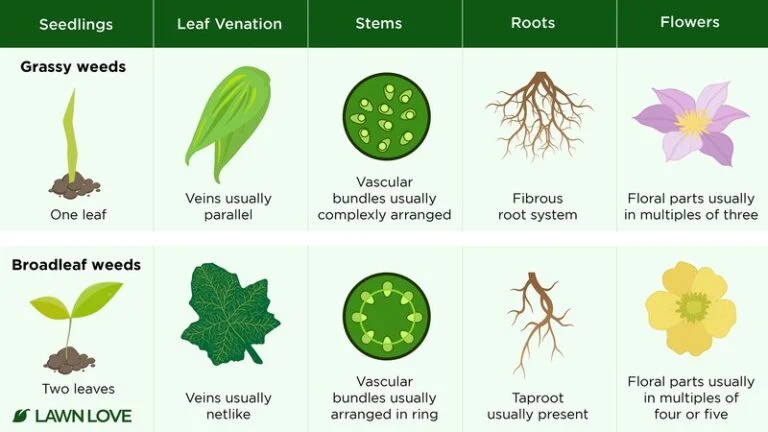
Image source: Bing (Web (fair-use with source credit))
Step-by-Step: The Safe Weed Control Workflow for Buffalo Grass
Here's the exact sequence we walk through when helping homeowners and turf managers handle weed pressure without damaging the stand. Follow these steps in order, and don't skip the ID step.
Step 1: Walk the Lawn and ID Every Major Weed
Get a notebook, walk the lawn in a grid, and jot down what you see. Group by type: broadleaf, grassy, sedge. Take photos if you're unsure and compare against a university extension weed ID guide.
This step alone prevents 80% of herbicide mistakes, because you'll only buy what you actually need.
Step 2: Confirm Buffalo Grass Health and Growth Stage
Is the lawn fully green and growing? Is it thick enough that you can't see bare soil? Are the stolons (above-ground runners) active and spreading?
If yes to all, you're cleared for selective post-emergent herbicides. If the lawn is thin, patchy, or still establishing, skip ahead to cultural methods.
Step 3: Choose the Right Product and Rate
Match the product to the weed from Step 1 and the season from Step 2. For broadleaf weeds in actively growing buffalo grass, the standard university-recommended tank mix is 2,4-D amine plus dicamba, applied at label rates (typically 1 to 2 quarts per acre of 2,4-D). For grassy weeds, you're looking at a pre-emergent like prodiamine or pendimethalin applied in early spring before crabgrass germinates, or a post-emergent like quinclorac for spot treatment.
| Weed Problem | Active Ingredient | Timing | Buffalo Grass Safe? |
|---|---|---|---|
| Dandelion, clover, plantain | 2,4-D + dicamba | Summer or fall | Yes, established lawns |
| Henbit, chickweed (winter annual) | 2,4-D or dicamba | Late winter on dormant buffalo grass | Yes |
| Crabgrass (pre-emergent) | Prodiamine, pendimethalin, dithiopyr | Early spring (soil 55°F) | Yes, label rate |
| Crabgrass (post-emergent) | Quinclorac | Young crabgrass, spot treat | Yes, low rates |
| Yellow nutsedge | Halosulfuron | Summer, spot only | Yes, very low rates |
| Bermuda grass invasion | No selective control | N/A | Must hand-remove or renovate |
Step 4: Spot-Treat Whenever Possible
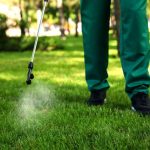
Use a pump sprayer, a 1- or 2-gallon handheld, or even a trigger sprayer for small jobs. Mix only what you need, and target individual weeds or weed patches. Broadcasting herbicide across the whole lawn increases the total chemical load on buffalo grass and raises the risk of yellowing or stunting.
Step 5: Mow and Water Correctly Around the Application
Mow 1 to 2 days before spraying so weed leaves are full and exposed. Don't mow for 2 to 3 days after spraying so the herbicide can move through the plant. Water the lawn the day before, not the day of, application.
Stressed, drought-hit buffalo grass is more easily injured than hydrated turf.
Step 6: Watch and Re-Treat If Needed
Most selective broadleaf herbicides take 7 to 14 days to show full results. If weeds are still green and growing after 2 weeks, a second application is usually safe on established buffalo grass, but always check the label for the maximum number of applications per year. Never double the rate to "hit harder." That burns the turf.
Step 7: Lock In Cultural Practices to Prevent Regrowth
Mow at 2.5 to 4 inches (higher than cool-season lawns). Buffalo grass tolerates a shorter cut but weeds don't, and a taller canopy shades out new weed seeds. Limit nitrogen to 0.5 to 1 pound per 1,000 square feet per year, and only apply during the summer active growth window.
Skip the spring fertilizer, it feeds weeds more than buffalo grass.
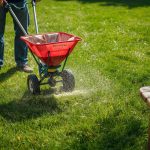
Safe Herbicide Options (and the Ones That'll Wreck Your Lawn)
Here's the cheat sheet, what works, what to avoid, and why. This list is based on university extension recommendations and current EPA-registered labels as of 2026.
Products Generally Safe on Established Buffalo Grass
- 2,4-D amine: the workhorse for dandelion, plantain, and most broadleaf weeds. Use at 1 to 2 quarts per acre.
- Dicamba: often tank-mixed with 2,4-D for tougher broadleaves like henbit and knotweed.
- MCPA: a softer broadleaf option with slightly less turf injury risk on sensitive stands.
- Metsulfuron-methyl: very low rates (0.5 to 1 oz per acre) can suppress certain broadleaves, but be cautious, metsulfuron can injure buffalo grass at higher rates.
- Prodiamine and pendimethalin: standard pre-emergents for crabgrass control.
- Quinclorac: post-emergent crabgrass control when applied to young, actively growing plants.
- Halosulfuron: the go-to for yellow nutsedge, applied as a spot treatment at labeled rates.
Products to Avoid or Use Only on Dormant Buffalo Grass
- Glyphosate (Roundup): non-selective, kills everything green. Only safe on dormant (fully brown) buffalo grass for winter annual weed cleanup, never during active growth.
- MSMA and DSMA: older grassy weed killers, mostly banned for residential use. Avoid.
- Atrazine: sometimes used on St. Augustine and centipede, but atrazine can injure buffalo grass. Skip it.
- Imazapic and imazethapyr: commonly used on Bermudagrass, but both yellow and thin buffalo grass at typical rates. Don't use.
- Fenoxaprop: grassy weed killer that will set back buffalo grass hard. Avoid.
- Diclofop: another grassy-weed selective that injures buffalo grass.
The Dormant Application Rule
If you spray glyphosate on a lawn that has even a little green buffalo grass showing, you'll see yellow stripes or dead patches within a week. The safe window is when the lawn is 100% tan/brown and the soil temperature is consistently below 50°F. Once you see new green shoots in spring, the dormant window is closed.
Image source: Bing (Web (fair-use with source credit))
For a deeper look at label-specific rates and tank-mix options, the Texas A&M AgriLife Extension turfgrass program publishes current guidance for Texas and the southern Plains, and the University of Nebraska, Lincoln Turfgrass Science program covers the northern edge of buffalo grass's range with research-backed recommendations.
Common Mistakes That Kill Buffalo Grass During Weed Control
These are the errors we see over and over. Avoid them, and your buffalo grass will shrug off most weed control attempts.
Treating During Spring Green-Up
This is the number one injury cause. Buffalo grass breaks dormancy when soil temps hit roughly 60°F, and for a 2 to 3 week window, the plant is pulling energy from roots while pushing new leaves. Any herbicide stress during this window stunts the plant and can thin the stand.
Wait until the lawn is fully green and actively growing before spraying.
Spraying Heat-Stressed Lawns in Summer
If your buffalo grass is wilting, gray-green, or showing curled leaves from 95°F+ heat, hold off. Water it deeply, wait for cooler weather, then spray. Herbicides amplify stress on already-thirsty turf.
Overlapping Spray Passes
Walking the same strip twice "to be sure" doubles the rate. Calibrate your sprayer and walk at a steady pace. Coverage should be even, not soaked.
Using the Wrong Product "Because the Label Says Turf"
Many herbicides are labeled for "turfgrass" but only tested on Bermuda, zoysia, or fescue. Buffalo grass isn't always on the label for a reason, it's sensitive. Always check the label for Bouteloua dactyloides specifically, and when in doubt, call the manufacturer's tech line or your local extension agent.
Mowing Too Short
Scalping buffalo grass to 1.5 inches opens the canopy, lets sunlight hit the soil, and invites weed seeds to germinate. Mowing at 2.5 to 4 inches (or not mowing at all on low-maintenance stands) is one of the best weed prevention tools you have.
Mixing Products Without Checking Compatibility
Tank-mixing 2,4-D with a fertilizer, a fungicide, or another herbicide can cause unexpected phytotoxicity. If you're combining products, do a jar test first and check the labels for compatibility notes.
Seasonal Timing: When to Treat Without Causing Stress
Timing matters more than product choice on buffalo grass. Get the window wrong, and the safest selective herbicide can still yellow the turf. Here's how the year breaks down for cool-season and warm-season regions, since buffalo grass behaves differently depending on where you live.
Spring (March Through May)
Soil temperatures drive everything. Once soil at 2 inches deep holds at 55°F for 3 to 5 days in a row, crabgrass seeds wake up. That's your pre-emergent window for grassy weeds.
For broadleaf sprays, wait until the lawn is fully green and has been mowed at least twice. Late spring (soil consistently 65°F+) is the safest active-growth spray window.
Summer (June Through August)
Active growth, high heat, and the best window for post-emergent broadleaf work. Spray in the morning when temps are below 85°F. Avoid mid-day applications above 90°F, and skip days with wind above 10 mph.
Water the day before, not the day of.
Fall (September Through November)
The second excellent window. Perennial broadleaf weeds are moving energy down to roots for winter, so herbicide gets carried deep into the plant. Buffalo grass slows but stays green in early fall, and that's fine, it's still strong enough to handle a properly timed 2,4-D + dicamba application.
Stop spraying about 2 weeks before your average first frost.
Winter (Dormant Lawn, Brown Canopy)
The dormant application window. The lawn is fully tan, soil temps below 50°F, and only winter annual weeds (henbit, chickweed, annual bluegrass) are green and growing. You can use glyphosate here for total vegetation cleanup of winter annuals without harming dormant buffalo grass.
The moment you see green tips emerging in late winter, the dormant window is over.
| Timing Question | Best Answer |
|---|---|
| When to put down pre-emergent for crabgrass? | When soil temp hits 55°F for 3 to 5 days straight |
| When to spray broadleaf weeds on green buffalo grass? | After the lawn is fully green and mowed twice |
| When to avoid spraying entirely? | During spring green-up and on heat-stressed days above 90°F |
| When to spray dormant buffalo grass? | Winter, when lawn is 100% tan and soil is below 50°F |
Decision Guide: Match Your Situation to the Right Method
This is the quick-reference version of everything above. Find your situation, jump to the matching method.
Scenario 1: A Few Dandelions, Otherwise Healthy Lawn
Hand-pull or spot-spray with a 2,4-D + dicamba mix. Use a 1-gallon pump sprayer, target individual plants, and you're done in under 30 minutes. Lowest risk to the turf.
Scenario 2: Spring Crabgrass Showing Up in Year Two Lawn
Apply prodiamine or pendimethalin next spring before soil temps hit 55°F. For the current year's escapes, spot-treat with quinclorac on young, actively growing crabgrass. Keep mowing height at 3 inches or higher to shade out new seeds.
Scenario 3: Henbit and Chickweed Covering the Whole Lawn in Winter
Wait for full dormancy. Hit it with a careful glyphosate application when the lawn is fully tan and soil is below 50°F. Read the EPA label, follow re-entry intervals, and spot-treat where possible even in dormancy.
Scenario 4: Yellow Nutsedge Patches in Summer
Spot-treat with halosulfuron at the labeled rate. Repeat in 3 to 4 weeks if regrowth shows. Improve drainage where the sedge is thickest, since sedges love wet soil.
Scenario 5: Bermuda Grass Encroaching Into Buffalo Grass
There's no safe selective herbicide. You'll need to hand-dig rhizomes and stolons, solarize the area with clear plastic for 6 to 8 weeks during peak summer heat, or renovate and replant. The University of Nebraska, Lincoln Turfgrass Science program has published research on the difficulty of removing Bermudagrass from buffalo stands, and the short answer is that mechanical and cultural work beats any chemical shortcut.
| Your Situation | Recommended Method | Risk Level |
|---|---|---|
| Scattered broadleaf weeds | Hand-pull or spot-spray | Very low |
| Crabgrass pressure | Pre-emergent + spot post-emergent | Low |
| Winter annuals on dormant lawn | Dormant glyphosate | Low if timed right |
| Nutsedge | Halosulfuron spot treatment | Low to moderate |
| Bermuda grass invasion | Mechanical removal or renovation | High, no selective fix |
Frequently Asked Questions
Can You Use 2,4-D on Buffalo Grass Without Killing It?
Yes, on established, actively growing buffalo grass. Apply 2,4-D amine at 1 to 2 quarts per acre when the lawn is fully green and mowed at least twice. Avoid spring green-up and summer heat stress above 90°F.
Spot-treat whenever possible.
Will Pre-Emergent Harm Buffalo Grass?
No, standard pre-emergents like prodiamine and pendimethalin are safe on buffalo grass at labeled rates. They stop weed seeds from germinating without affecting the established turf. Apply in early spring before soil temps hit 55°F.
When Can I Spray Weeds After Seeding Buffalo Grass?
Wait at least one full growing season. Young buffalo grass seedlings don't have the root mass to recover from herbicide stress. Use hand-pulling, hoeing, and dense mowing during year one.
Selective broadleaf sprays are usually safe starting in the second summer.
How Do I Get Rid of Bermuda Grass in My Buffalo Lawn?
There's no selective herbicide that kills Bermuda and spares buffalo grass. Your best options are hand-digging rhizomes, repeated spot-treatment with glyphosate on Bermuda-only patches while shielding the buffalo grass, or full renovation of the affected area. Prevention is easier than removal, so edge barriers and clean equipment matter.
Is Buffalo Grass the Same as the Grass in Australia?
No, this is a common source of confusion. North American buffalo grass is Bouteloua dactyloides, a native warm-season prairie grass. Australian "buffalo grass" is Stenotaphrum secundatum (St.
Augustine), a completely different species with different herbicide tolerances. Herbicide guidance for one doesn't always apply to the other.
Can I Use Vinegar or Natural Herbicides on Buffalo Grass?
Acetic acid-based "natural" herbicides are non-selective and will burn buffalo grass the same as any other plant. They're a short-term top-kill only and don't reach the roots. Use them for spot treatment on young weeds in dormant buffalo grass, with the same caution as glyphosate, and don't expect a season-long fix.
🌾 Agronomist Recommended: Pre-Emergent & Weed Control Supplies
To prevent weed breakthroughs and protect desirable turfgrass from foliar injury, our agronomy field trials recommend calibrated pre-emergents and non-ionic surfactants:
- Professional Pre-Emergent:Check Prodiamine 65 WDG Pre-Emergent on Amazon →
- Non-Ionic Spray Surfactant:Check Non-Ionic Foliar Surfactants on Amazon →
*FTC Disclosure: As an Amazon Associate, Totally Green Lawn earns from qualifying purchases.*

Similar Posts