2,4-D Amine vs Ester on Dormant Bermuda: Soil Temp & Mixing Rules
Lead Turfgrass & Lawn Care Specialist at Totally Green Lawn · Certified Turfgrass Specialist (CTS), Master Gardener, B.S. in Agronomy & Turf Science · 14+ years in residential turf management, organic fertilization, and weed science
Yes, you can spray 2,4-D on dormant Bermuda grass safely, but only when the lawn is fully dormant and soil temps stay below 55°F. Pick a 2,4-D amine over an ester to keep volatility low, and you'll get clean winter weed control without hurting the rhizomes. Skip the spray if your Bermuda is only semi-dormant or if a warm spell is on the way.
The window is narrower than most homeowners realize. 2,4-D is a synthetic auxin herbicide, and even dormant Bermuda crowns can absorb enough to slow spring green-up by a week or two. University extension data from NC State, Texas A&M, and the University of Georgia all point to the same rule: confirm true dormancy with a soil thermometer, not the calendar. As of 2026, the standard soil-temp threshold across most warm-season turf guides remains 55°F measured at the 2 to 4 inch depth for three straight days.
Quick Answer
You can spray 2,4-D on dormant Bermuda grass safely when the lawn is fully dormant. Soil temperature must stay below 55°F for several days. Use a 2,4-D amine formulation, not an ester.
Do not spray during a warm spell or near green-up. Always read the product label first.
What 2,4-D Actually Does to Bermuda (and Why Dormancy Matters)
2,4-D is a synthetic auxin, a plant hormone mimic that causes broadleaf weeds to grow themselves to death. It overloads the weed's growth system, twisting stems and curling leaves until the plant collapses. Grasses like Bermuda have a much higher tolerance to this hormone signal, which is why 2,4-D has been a go-to broadleaf herbicide on warm-season turf for over 70 years.
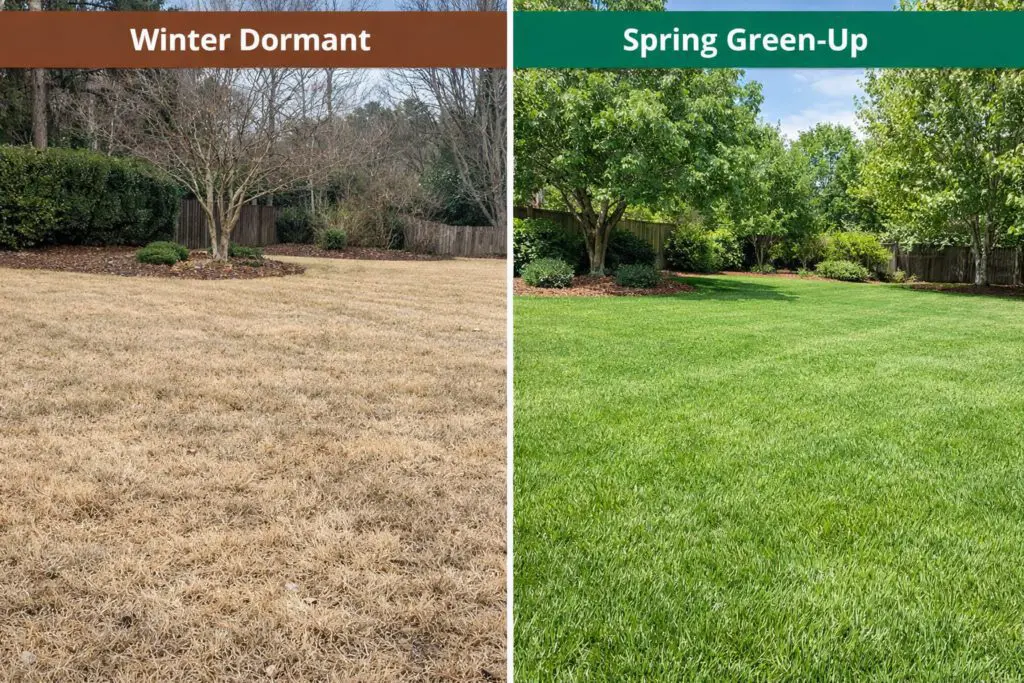
Bermuda grass (Cynodon dactylon) survives winter by going dormant. Growth stops above ground, but the rhizomes and stolons underground stay alive. When you spray during true dormancy, the plant is not actively pulling herbicide down into the crown.
That's the whole trick. Once soil temps climb back into the 60s and new shoots start popping, that same spray can scorch new growth, delay green-up, or in worst cases thin the stand.
Two things decide whether you get clean weed control or a damaged lawn:
- How dormant the Bermuda actually is (not just brown, but truly physiologically shut down)
- Which 2,4-D formulation you reach for
We'll cover both in detail. But first, the single most important number in this whole guide.
The Soil Temperature Rule That Decides Everything
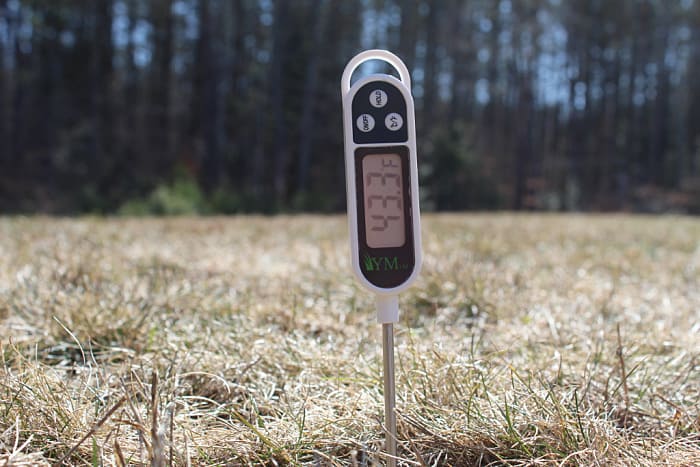
Calendar dates lie. Bermuda dormancy shifts two to four weeks year to year depending on fall rainfall, first frost, and latitude. The only reliable signal is soil temperature at the 2 to 4 inch depth, taken mid-morning for three consecutive days.
The thresholds turf managers actually use
| Bermuda Status | Soil Temp (2 to 4 in) | Spray 2,4-D? |
|---|---|---|
| Active growth | Above 65°F | No, risk of injury |
| Semi-dormant / transitional | 55 to 65°F | Risky, wait |
| Fully dormant | Below 55°F, falling | Yes, ideal window |
| Breaking dormancy | Rising past 55°F | No, too late |
Most university extension services, including NC State TurfFiles and the University of Georgia's turf program, anchor their dormant-season Bermuda herbicide guidance to that 55°F line. If your soil thermometer reads 58°F in the afternoon but 52°F at sunrise, you're still in the safe zone, but you have maybe a week before green-up risk kicks in.
Other dormancy cues to confirm, not rely on
- Canopy fully tan or straw-colored, no green tissue at the crown
- No new leaf blades emerging after a light rain
- Stops responding to nitrogen within 10 to 14 days
Use these as backup, never as your primary trigger. A cheap soil thermometer ($10 to $15) is the single best tool you can own for this decision.
2,4-D Amine vs. Ester: Which One to Use on Dormant Bermuda
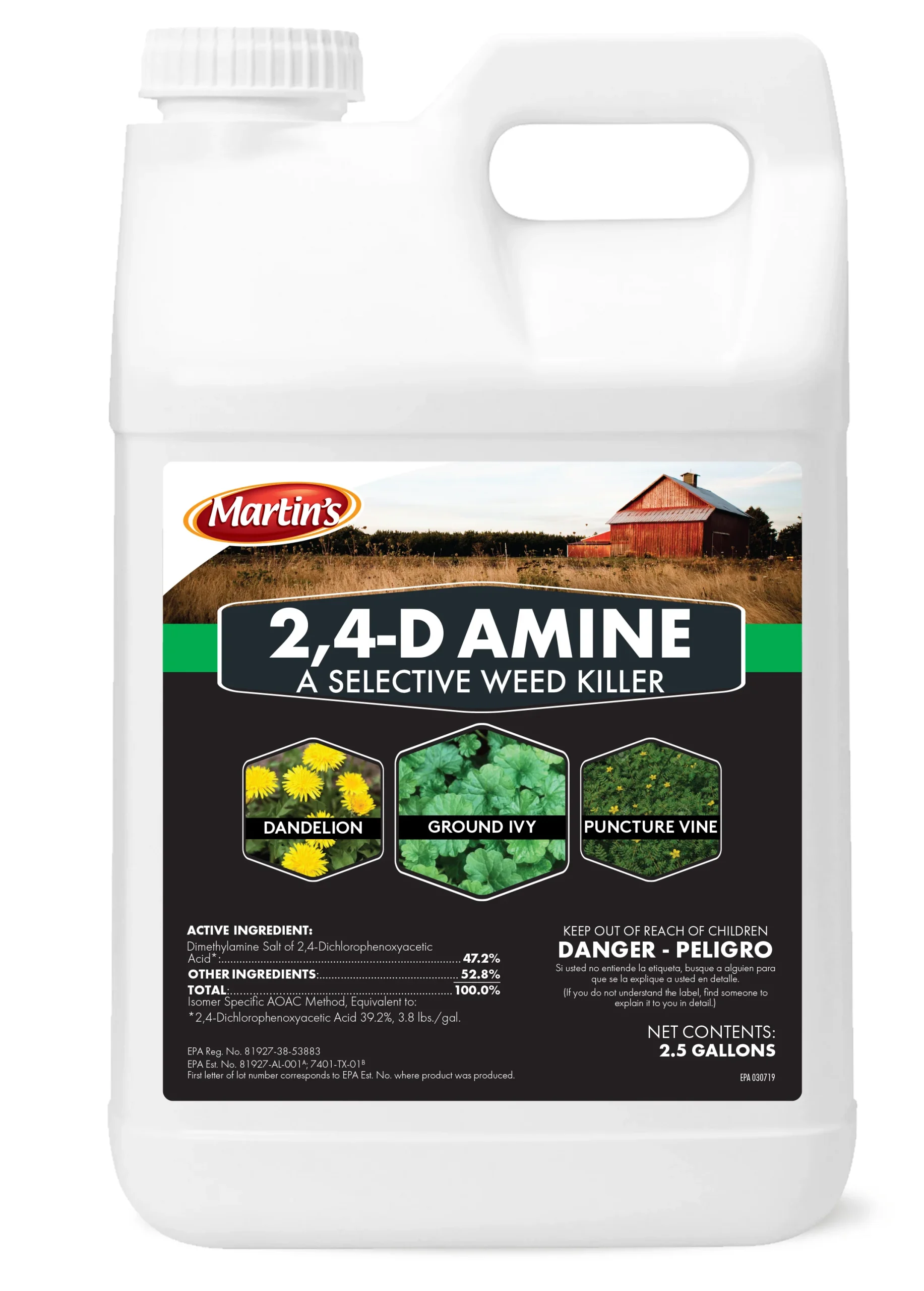
Both formulations kill the same weeds. They differ in how easily they turn into vapor after spraying, and that difference matters a lot near houses, gardens, and sensitive crops.
Quick comparison
| Feature | 2,4-D Amine | 2,4-D Ester (LVE) |
|---|---|---|
| Volatility | Low | Moderate to high |
| Drift risk | Lower | Higher, even in cool weather |
| Plant uptake | Slightly slower | Faster, more aggressive |
| Cold-weather performance | Excellent | Excellent |
| Best fit on dormant Bermuda | Yes, preferred | Use with extreme caution |
| Smell | Mild | Strong, solvent-like |
For dormant Bermuda lawns in suburban settings, the amine salt formulation is the safer pick. Low volatility means less risk of vapor drift to tomatoes, grapes, roses, or the neighbor's vegetable garden. Ester formulations, including low-volatile esters (LVE), can still volatilize when air temps climb above 60°F, even a day or two after spraying.
When an ester might still make sense
- You have tough brushy weeds like wild rose or brambles
- You're spraying open pasture with no nearby sensitive plants
- Air temps will stay below 50°F for 24 hours after application
For a typical home lawn with trees, gardens, and fences nearby, stick with amine. Aggregate user reports across turf forums consistently show more off-target damage complaints with esters, even LVE versions.
Manufacturer specs for common amine products (such as Nufarm 2,4-D Amine 4 or Lesco 2,4-D Amine) list application rates of 1 to 2 quarts per acre on dormant Bermuda, with a 12 to 48 hour re-entry interval depending on label. Always confirm the exact rate against the product in your hand.
How to Apply 2,4-D Safely on Dormant Bermuda (Step-by-Step)
Once dormancy and formulation are confirmed, the application itself is straightforward. The order below mirrors what experienced lawn care operators follow.
Before you spray
- Check soil temp for three straight days, all readings below 55°F
- Confirm no warm spell (above 65°F days) in the 7-day forecast
- Read the entire product label, including crop rotation and overseeding restrictions
- Verify the herbicide is specifically labeled for use on Bermuda grass
- Check the wind: 3 to 10 mph is fine, calm or gusty above 15 mph is not
Mixing and equipment
- Use a clean pump sprayer or boom sprayer, no rust, no prior herbicide residue
- Half-fill the tank with water, add 2,4-D, agitate, then top off
- Do not mix with nitrogen or iron fertilizers in the same pass
- A coarse droplet size reduces drift. Avoid fine mist nozzles
Application
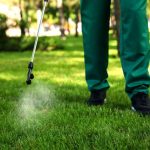
- Spray when foliage is dry and no rain is expected for 6 to 8 hours
- Walk at a steady pace to deliver 20 to 40 gallons of carrier per acre
- For spot treatment, mix per label and treat only the weed, not the whole lawn
- Keep boom height low, 18 to 24 inches above the canopy
After spraying
- Clean the sprayer thoroughly, especially after using an ester
- Log the date, rate, soil temp, and weather for your records
- Hold off on overseeding ryegrass for at least 2 to 3 weeks, longer if the label says so
- Wait to fertilize until spring green-up begins
Quick rates reference
| Product type | Typical rate on dormant Bermuda | Water carrier |
|---|---|---|
| 2,4-D Amine 4 (most labels) | 1 to 2 qt/acre | 20 to 40 gal/acre |
| 2,4-D Amine spot mix | 1 to 2 oz per gallon | 1 gal covers ~1,000 sq ft |
| 2,4-D LVE (if used) | 0.5 to 1 qt/acre | 20 to 40 gal/acre |
These are starting ranges, not the law. Your specific product label is the legal source of truth and overrides anything in this guide.
Mistakes That Damage Bermuda or Drift Onto Neighbors
Most 2,4-D failures on dormant Bermuda come from one of five mistakes. None of them are exotic. They're all routine oversights that show up in extension service complaint files every year.
Spraying too early
This is the most common error. Homeowners see the lawn brown out in late October and assume it's dormant. It isn't.
Bermuda often keeps growing underground well after the surface goes straw-colored. A 2,4-D pass at soil temps of 60 to 65°F can stunt rhizomes, delay green-up by 10 to 14 days, or leave thin patches come May.
Picking up the ester "because it works better"
LVE formulations do penetrate leaf tissue faster. That sounds like a plus until you remember dormant Bermuda has no leaves to absorb it. Most of the spray ends up on bare soil or sitting on brown stems, where volatility becomes the dominant concern.
Aggregate drift complaints in turf extension archives are dominated by ester use, even in cool weather.
Spraying into a warm spell
A 60°F day in January can wake semi-dormant crowns enough to absorb herbicide. Then a hard freeze follows, and the damaged tissue rots before spring. Watch the 7-day forecast as carefully as the soil thermometer.
Skipping the wind check
Calm mornings feel safe but actually trap vapor close to the ground. Wind above 10 mph carries fine droplets off-target. The sweet spot is 3 to 8 mph with a steady direction away from sensitive plants.
Overseeding too soon after
2,4-D residues can hold back ryegrass germination for 2 to 3 weeks after application. If you plan to overseed for winter color, spray first, then wait. The label will give the exact interval, and it's enforceable in court.
Better Alternatives and Tank-Mix Options
2,4-D isn't the only tool that works on dormant Bermuda. Sometimes a different herbicide, or a mix, does the job better.
Common alternatives
- Atrazine: doubles as a preemergence for winter annuals and post control of existing broadleaves. Strong fit on dormant Bermuda but restricted in some states.
- Simazine: similar preemergence role, less effective on emerged weeds. Often used in sod production.
- Celsius (thiencarbazone + iodosulfuron + dicamba): excellent warm-season option but only safe during active growth, not dormancy.
- Triclopyr: tough on woody brush and clover, sometimes mixed with 2,4-D for harder weeds.
Tank-mix partners that make sense
A 2,4-D + dicamba blend (sold under names like Trimec or Three-Way) is the standard professional broadleaf mix. The dicamba widens the spectrum on clover, henbit, and chickweed without raising volatility much, since both are auxin herbicides. Avoid mixing 2,4-D with glyphosate unless you're planning a full dormant renovation.
That combo is a kill shot, not a weed-control pass.
Choosing the right product
| Situation | Best fit |
|---|---|
| Light broadleaf pressure, homeowner lawn | 2,4-D amine alone |
| Heavy henbit + chickweed + clover | 2,4-D + dicamba mix |
| Brushy edges, wild rose, briars | Triclopyr or 2,4-D ester (open area) |
| Full dormant renovation | Glyphosate (no 2,4-D) |
| Preemergence + post control in one pass | Atrazine (where legal) |
If you're torn between 2,4-D amine and a three-way mix, the three-way wins on broad spectrum. If you want the lowest drift risk and a milder product, straight amine is the conservative pick.
FAQs on 2,4-D and Dormant Bermuda Grass
Will 2,4-D kill dormant Bermuda grass?
No, not when the lawn is fully dormant and you use a 2,4-D amine at label rates. Semi-dormant Bermuda can show yellowing, slowed green-up, or thinning. True dormancy below 55°F soil temp protects the crown.
What temperature is too cold to spray 2,4-D on Bermuda?
There's no lower limit for cold, but there's a practical floor around 40°F air temperature. Below that, weeds slow their metabolism and don't absorb herbicide well. The real constraint is the upper limit, not the lower one.
Stay below 55°F soil temp and below 60°F air temp for the safest pass.
How long after spraying 2,4-D can I overseed Bermuda or ryegrass?
Most 2,4-D amine labels require a 2 to 4 week wait before overseeding. Ester labels often require 4 weeks or more. Read the specific product label for the exact interval.
Rushing this step is the fastest way to get a patchy ryegrass stand.
Can I mix 2,4-D with glyphosate on dormant Bermuda?
You can, but it acts as a total kill, not selective broadleaf control. The mix is used in dormant renovation when you're prepared to lose the existing stand and re-sod or re-sprig. For a lawn you want to keep, leave the glyphosate out.
Is 2,4-D safe around trees and shrubs?
2,4-D amine is safer than ester, but both can damage shallow-rooted trees like post oak, hackberry, and ornamentals. Avoid spraying within the dripline of sensitive species. A targeted spot treatment on visible weeds is much safer than a broadcast pass under a tree canopy.
Does rain wash 2,4-D off after application?
2,4-D amine needs about 6 to 8 hours to fully absorb. A heavy rain sooner than that will reduce control. Ester formulations are slightly more rainfast but bring higher volatility risk.
Plan your spray around a dry 24-hour window when possible.
🌾 Agronomist Recommended: Pre-Emergent & Weed Control Supplies
To prevent weed breakthroughs and protect desirable turfgrass from foliar injury, our agronomy field trials recommend calibrated pre-emergents and non-ionic surfactants:
- Professional Pre-Emergent:Check Prodiamine 65 WDG Pre-Emergent on Amazon →
- Non-Ionic Spray Surfactant:Check Non-Ionic Foliar Surfactants on Amazon →
*FTC Disclosure: As an Amazon Associate, Totally Green Lawn earns from qualifying purchases.*

Similar Posts