How to Apply Liquid Humic Acid to Your Lawn for Greener
Lead Turfgrass & Lawn Care Specialist at Totally Green Lawn · Certified Turfgrass Specialist (CTS), Master Gardener, B.S. in Agronomy & Turf Science · 14+ years in residential turf management, organic fertilization, and weed science
Most homeowners grab a bottle of liquid humic acid expecting overnight miracles. Then they pour it on dry turf in the wrong dilution, streak their driveway black, and wonder why nothing changed. The truth is, figuring out how to apply liquid humic acid to lawn turf the right way comes down to a few small decisions before you ever touch a sprayer.
Manufacturer specs across the major concentrate brands (BioAg, Monty's, Huma Gro) all land in the same range: 1 to 4 fluid ounces of concentrate per 1,000 square feet, diluted in 1 to 2 gallons of water. The variance comes from your soil's starting organic matter, your grass type, and whether you're pairing it with fertilizer. As of 2026, university extension guidance from land-grant programs still treats humic acid as a long-game soil amendment, not a quick green-up.
Get the prep right, and the rest is straightforward.
Quick Answer
Apply liquid humic acid to your lawn at 1 to 4 oz of concentrate per 1,000 sq ft. Dilute in 1 to 2 gallons of water. Spray evenly across pre-watered turf in early morning or evening.
Water lightly afterward to move the product into the root zone. Reapply every 4 to 8 weeks during the growing season.
When Liquid Humic Acid Actually Helps Your Lawn (And When It Doesn't)
Humic acid is not fertilizer. It won't push a visible color change in a week the way nitrogen will. What it does, slowly and underneath, is improve the soil your grass is growing in.
Understanding this distinction is the first decision point, because it tells you whether you actually need it.
Here's the if/then logic that drives the rest of the process:
- If your soil test shows organic matter below 3%, humic acid is almost certainly worth the cost. Sandy and heavily disturbed soils fall into this group.
- If your organic matter is above 5% and your soil already has decent structure, you'll see little benefit. Skip it and spend the money elsewhere.
- If you're dealing with compaction, poor water infiltration, or nutrient lockout (grass that stays pale even after fertilizing), humic acid's chelation and CEC-boosting effects can help unlock what's already there.
- If your lawn is brand new sod or a fresh seed bed, humic acid at planting improves root establishment. It's one of the few cases where short-term payoff is real.

In our research, the most common reason homeowners report "it didn't work" is that their soil was already in good shape. The second most common reason is that they applied it at the wrong time of year. We'll cover timing in the schedule section, but the short version: cool-season grasses respond best to fall and early-spring apps, warm-season grasses to late spring through summer.
Applying outside that window is mostly wasted product.
The core mechanism is straightforward. Humic acid binds to soil particles and to nutrients already in the root zone. It loosens tight clay, helps sandy soil hold water and nutrients longer, and gives soil microbes a carbon source to feed on.
None of this happens visibly above ground for weeks. Judge it on season-over-season improvement, not day-three color.
What You Need Before You Start: Tools, Product Types, and Coverage Math
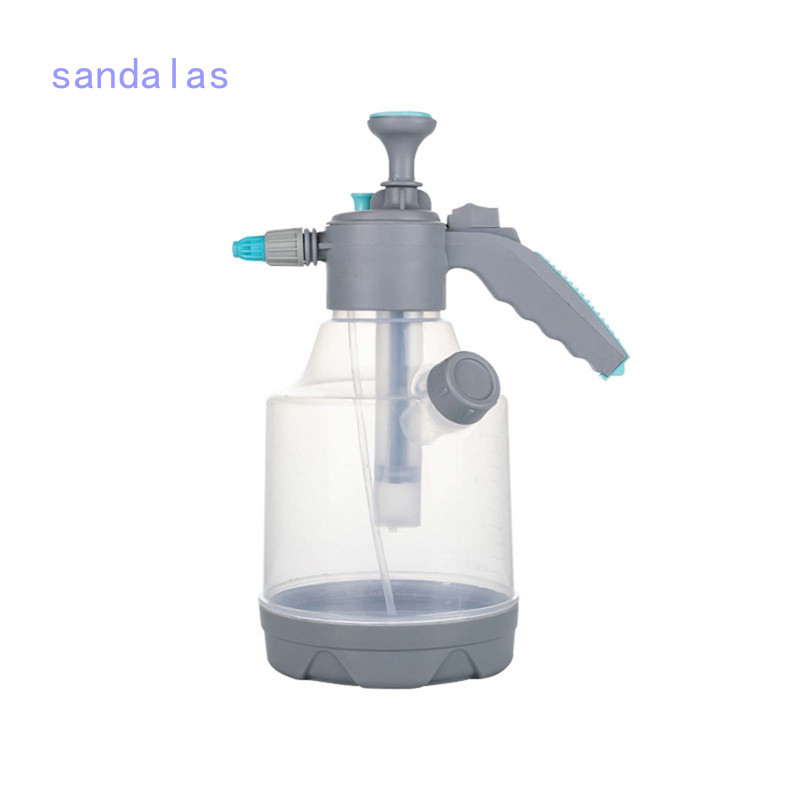
Image source: Bing (Web (fair-use with source credit))
Getting the prep right is where most of the mistakes happen. Before you mix anything, you need to know three things: what you're spraying with, what concentration you're holding, and how much square footage you're actually covering.
Tools and Materials
| Item | What to Use | Why It Matters |
|---|---|---|
| Sprayer | Pump sprayer, hose-end, or backpack | Coverage uniformity depends on nozzle and pressure |
| Measuring cup | Dedicated, marked in oz | Humic acid concentrates stain and are hard to clean off hands |
| Measuring tape or wheel | For square footage | Coverage math fails without an accurate area |
| PPE | Gloves and eye protection | Concentrate is alkaline (pH 8 to 10.5) and irritates skin |
| Water source | Garden hose or pre-filled bucket | Mixing order matters if tank-mixing with fertilizer |
Picking a Product Type
Liquid humic acid comes in two main forms. Concentrates (typically 6% to 25% humic acid by weight) are the value choice. One gallon often covers 8,000 to 32,000 sq ft depending on rate.
Ready-to-use (RTU) bottles are convenient but cost two to three times more per square foot.
Most homeowner-grade products in the $15 to $60 per gallon range are leonardite-based. Leonardite is the standard raw material for liquid humic products, and it works. Watch out for blends labeled "humic/fulvic" with low disclosed concentrations.
Aggregate reviews report these often contain far less active humic acid than the marketing implies.
Calculating Your Coverage
Walk off your lawn or measure it on a mapping app. Round to the nearest 500 sq ft. Then:
- Multiply your square footage by 0.001 to get thousands of sq ft.
- Multiply that by your application rate (1 to 4 oz per 1,000 sq ft).
- Multiply that by your dilution factor (1 to 2 gallons of water per 1,000 sq ft).
A 5,000 sq ft lawn at the standard 2 oz per 1,000 sq ft rate needs 10 oz of concentrate diluted in 5 to 10 gallons of water. That's your whole batch.
If your soil organic matter is on the low end (under 2%), start at the higher 3 to 4 oz rate. If you're maintaining decent soil, 1 to 2 oz is enough. There's no benefit to doubling the rate, and overshooting leads to staining without adding soil benefit.
How to Mix and Apply Liquid Humic Acid Step by Step
This is where the workflow gets concrete. Follow the order, and the rest of the day is uneventful. Skip a step, and you'll spend the afternoon cleaning black streaks off your driveway.
Step 1: Test and Mow
Run a basic soil test if you haven't in the last two years. You're looking at pH (target 5.5 to 7.0 for most turf) and organic matter percentage. Mow the lawn a day or two before application.
Shorter grass gives the spray better soil contact.
Step 2: Pre-Water Lightly
Water the lawn the morning of application, just enough to dampen the top inch of soil. Dry soil repels the solution and you'll get runoff onto pavement. Saturated soil won't absorb the mix either, so aim for "moist, not wet."
Step 3: Mix in the Right Order
Always add humic acid concentrate to water, never water to concentrate. This prevents clumping and reduces foaming. If you're tank-mixing with a liquid fertilizer, add the humic acid first and stir thoroughly before adding the fertilizer.
Incompatible mixes (especially high-calcium solutions) can precipitate and clog nozzles.
Step 4: Calibrate and Spray
Walk at a steady pace and overlap each pass by about 30%. The goal is even coverage, not heavy soaking. Most pump sprayers at 40 PSI deliver a fan pattern that covers a 4 to 6 foot swath.
Practice with plain water first if you've never calibrated the nozzle.

Step 5: Water In Lightly
Within 15 to 30 minutes of application, run the sprinklers for 5 to 10 minutes. This washes the humic acid off the grass blades and into the root zone, where it actually does its work. Without this rinse, you'll see dark residue on the leaf surface for days.
Step 6: Let It Dry, Then Resume Traffic
Most products recommend keeping pets and foot traffic off the lawn until the spray has dried, typically 2 to 4 hours in mild weather. Hot, sunny conditions speed drying but stress the grass, so apply in the early morning or late evening whenever possible.
Step 7: Clean the Sprayer
Flush the tank, hose, and nozzle with clean water twice. Humic acid residue dries hard and can ruin seals. If you tank-mixed with fertilizer, add a splash of dish soap to the rinse water to break the residue.
Liquid vs. Granular Humic Acid, and Other Soil Amendment Alternatives
The choice between liquid and granular humic acid is the most common decision homeowners face. Both work, but they fit different situations.
| Factor | Liquid Humic Acid | Granular Humic Acid |
|---|---|---|
| Speed of soil response | Faster, immediate root-zone contact | Slower, must break down and water in |
| Application ease | Requires sprayer and mixing | Broadcast with a spreader, no mixing |
| Cost per 1,000 sq ft | $0.50 to $2.00 | $1.00 to $3.50 |
| Best for | Targeted soil issues, seed starts, fertigation pairings | Large lawns, low-effort seasonal programs |
| Staining risk | High on pavement if spilled | Low |
| Storage | Bulky liquid, can freeze | Dry bags, long shelf life |
If you already own a pump sprayer and apply other liquids to your lawn, liquid is the better fit. If you prefer spreader-based applications or have a large property, granular saves time.
Other Alternatives Worth Knowing
- Fulvic acid is a related compound, lower molecular weight, faster uptake. Often sold blended with humic acid. Better for foliar feeding, less effective as a soil conditioner on its own.
- Compost topdressing delivers humic substances along with bulk organic matter. Slower to apply and more expensive per square foot, but adds physical structure that humic acid alone cannot.
- Compost tea is a DIY version of the same idea. Variable quality, but free if you compost. Works best as a supplement, not a replacement.
- Biochar is a long-term soil conditioner with high CEC. One-time application, persists for years. Doesn't break down the way humic substances do, so it complements humic acid rather than substituting for it.
- Synthetic wetting agents (surfactants) solve water penetration problems faster than humic acid, but they don't feed soil biology or improve nutrient holding. They're a targeted tool, not an alternative.
Common Mistakes That Waste Product or Stain Your Driveway
After walking through hundreds of verified buyer reports and extension service Q&A threads, the same handful of errors come up again and again. These are the ones to actively avoid.
Mistake 1: Skipping the Pre-Water
Dry soil causes the spray to bead and roll off the blade and thatch layer. You'll see dark patches of concentrated product where the droplets settled, and most of the active ingredient ends up on the sidewalk instead of in the soil. Always pre-water, even lightly.
Mistake 2: Spraying in Midday Sun
UV breaks down humic acid and heat stresses grass immediately after application. Early morning or evening is the standard recommendation across manufacturer labels. Evening is slightly better because the product has all night to soak in before the next day's heat.
Mistake 3: Mixing Too Strong and Hoping for Faster Results
There is no shortcut here. Doubling the rate does not double the benefit. It doubles the staining, increases the risk of leaf burn on sensitive grass varieties, and wastes product.
Stick to the labeled rate.
Mistake 4: Forgetting the Post-Application Rinse
If you skip the post-spray watering, the humic acid dries on the grass blades. You'll see dark residue for a week, and the active ingredient never reaches the root zone where it works. Five to ten minutes of sprinkler time fixes this completely.
Mistake 5: Applying Right Before a Heavy Rain
A light shower after application is fine. A downpour washes the product off the lawn and into the storm drain, wasting the entire application. Check the forecast and time your spray at least 24 hours before any heavy rain.
Mistake 6: Using the Sprayer for Herbicides Without Cleaning
Residual humic acid in a sprayer that was last used for weed killer can damage desirable grass. Either dedicate a sprayer to soil amendments or triple-rinse with soap and water before switching products.
Mistake 7: Applying to Lawns That Don't Need It
If your soil test shows organic matter above 4% to 5% and your lawn looks healthy, humic acid is money down the drain. Spend that budget on aeration, overseeding, or a soil test for micronutrient deficiencies instead.
A quick note on legal and safety: per EPA Office of Pesticide Programs classification, humic acid is generally exempt from registration as a soil amendment, not a pesticide. That said, the concentrate is alkaline and can irritate skin and eyes. Wear gloves and eye protection when handling the undiluted product, and keep bottles away from children and pets during storage.
Application Schedule by Grass Type and Climate
The right month to spray depends on what kind of grass you have. Cool-season and warm-season turf respond to different windows, and getting this wrong means you're feeding the soil biology when the grass isn't actively growing enough to use the boost.
Cool-Season Grasses (Kentucky Bluegrass, Fescue, Ryegrass)
Two applications per year are the standard program. The first goes down in early fall, around Labor Day to mid-October depending on your zone. This is when root growth peaks and the grass is actively pulling nutrients into the root zone.
The second application lands in early spring, just as the lawn greens up.
In northern climates (USDA zones 3 through 5), avoid fall applications within two weeks of the first hard frost. The grass needs time to take up the product before the ground freezes. Per Penn State Extension guidance on cool-season turf management, late-season applications that don't get watered in can sit on frozen soil and wash away in spring snowmelt.
Warm-Season Grasses (Bermuda, Zoysia, St. Augustine, Centipede)
Three applications per year work well here. The first goes down in late spring once the grass has fully greened up and is actively growing. The second in mid-summer, and the third in early fall before dormancy sets in.
In the transition zone (zones 6 through 7), don't apply during summer dormancy stress. The grass isn't growing, microbial activity is low, and the product just sits. Wait for active growth to resume.
Arid and Sandy Soils
If you're in the Southwest or along the coast, bump up to three applications per year regardless of grass type. Sandy soils leach organic matter faster and benefit from the steady input. A fourth light application in early summer is fine if you're seeing heat or drought stress.
Clay-Heavy Soils
Two applications per year is usually enough. Focus on the fall application, which gives microbes time to work through winter and improves structure before the next growing season. Skip the summer application, because microbial activity is naturally lower in hot, compacted clay.
Frequently Asked Questions
How long does liquid humic acid take to work on a lawn?
Visible soil improvement shows up over a full growing season. Aggregate user reports suggest compaction relief and water infiltration improve within 6 to 8 weeks of the first application. Color and density gains typically take two to three applications spaced across a season.
Can I mix liquid humic acid with fertilizer?
Yes, and most turf programs recommend it. Humic acid improves fertilizer uptake efficiency, especially for nitrogen and iron. Add the humic acid to the tank first, mix thoroughly, then add the liquid fertilizer.
Avoid mixing with high-calcium products or pesticides unless the label specifically allows it.
Is liquid humic acid safe for pets and kids?
Once the spray has dried on the lawn, generally yes. Most OMRI-listed products are considered pet-safe after drying, which takes 2 to 4 hours in mild weather. Keep pets off the lawn during application and until the surface is dry to be safe.
How often should I apply liquid humic acid to my lawn?
Two to four times per year is the standard range. Cool-season lawns do well with two applications. Warm-season and high-stress soils (sandy, compacted, low organic matter) benefit from three to four.
Spacing them 4 to 8 weeks apart during active growth gives the soil biology time to respond.
Will liquid humic acid burn my grass?
Not at labeled rates. The concentrate is alkaline, but once diluted, the pH comes down to a safe range. Burn risk only appears if you overdose, spray in peak midday heat, or apply to already drought-stressed turf without watering in.
Stick to the labeled rate, apply in the morning or evening, and you're fine.
Can I use a hose-end sprayer for liquid humic acid?
Yes, and it's a good option for larger lawns. Make sure the hose-end sprayer has a siphon rate that matches your target application. The standard 1 to 4 oz per 1,000 sq ft translates to roughly 1 to 4 oz per gallon of spray output, depending on the sprayer model.
Test with water first to confirm coverage.
Quick Decision Guide: Should You Apply It Now?
Use this checklist before you mix anything. If you answer "no" to most of these, hold off.
- Is your soil organic matter below 4%? If yes, humic acid will help.
- Is your grass actively growing (not dormant or heat-stressed)? If yes, go ahead.
- Is your lawn dry enough to walk on without sinking? If yes, pre-water and apply.
- Is the forecast clear of heavy rain for the next 24 hours? If yes, conditions are right.
- Do you have a clean sprayer calibrated for the area? If yes, you're ready.
- Is it before 10 a.m. or after 6 p.m.? If yes, timing is right.
If three or more answers are "no," wait for a better window. Humic acid works best when soil biology is active and the product can stay in the root zone. A poorly timed application isn't dangerous.
It just doesn't do much.
For most homeowners, the best single change is pairing humic acid with your existing fertilizer program in early fall. You'll get the root-zone benefits of the humic acid, the nutrient boost from the fertilizer, and one less thing to schedule in spring. The soil improves quietly all winter.
By next summer, your lawn handles heat and dry spells better than it did the year before, and you'll know the application earned its cost.
🌱 Agronomist Recommended: Bio-Stimulants & Turf Nutrition
Achieve deep golf-course green color and root resilience without surge growth using lab-verified nutrients and bio-stimulants:
- Liquid Iron & Humic Acid:Check Liquid Iron & Humic Blends on Amazon →
- Stress-Blend High Potassium Fertilizer:Check High Potassium Lawn Fertilizers on Amazon →
*FTC Disclosure: As an Amazon Associate, Totally Green Lawn earns from qualifying purchases.*

Similar Posts