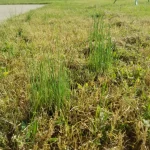
Kill Nutsedge for Good: 7 Proven Ways to Save Your Lawn
Lead Turfgrass & Lawn Care Specialist at Totally Green Lawn · Certified Turfgrass Specialist (CTS), Master Gardener, B.S. in Agronomy & Turf Science · 14+ years in residential turf management, organic fertilization, and weed science
If you've been fighting the same patches of bright green, grass-like weeds every summer and they keep coming right back, you're not imagining things. The good news is that learning how to get rid of nutsedge in lawn permanently isn't about a single magic spray. It's about understanding what makes this weed different, then stacking the right control steps in the right order for your specific lawn.
Nutsedge is one of the few common lawn weeds that's a C4 plant, which means it photosynthesizes more efficiently in heat and drought than your cool-season turf. The underground tubers (called nutlets) can stay dormant in soil for several years before sprouting, so even a "clean" lawn can produce fresh outbreaks each season. The fix is a workflow, not a one-shot treatment, and the rest of this guide walks you through exactly that workflow, starting with what you're actually dealing with.
Quick Answer
To get rid of nutsedge in a lawn permanently, identify the species, correct overly wet or compacted soil, then apply a grass-selective post-emergent herbicide (halosulfuron, sulfentrazone, or imazaquin) at the 3 to 8 leaf stage. Repeat treatments across multiple seasons until tubers are exhausted. Expect 2 to 3 growing seasons for full eradication.
Why Nutsedge Is So Hard to Kill (And What You're Probably Missing)
Most lawn weeds die with one or two treatments. Nutsedge doesn't, and there's a real biological reason for that. Pulling it makes the problem worse.
Mowing shorter doesn't slow it down. And most "weed and feed" products on the shelf at the hardware store won't touch it. Here's why this weed plays by different rules.
The Tuber Problem: Why Surface Treatment Isn't Enough
Nutsedge reproduces from underground tubers, not just seeds. A single plant can produce dozens of nutlets in a season, and they can sit 8 to 18 inches deep in your soil waiting for the right trigger. Research from multiple agricultural extensions confirms these tubers can stay viable for several years.
When you pull the green top, any tuber left behind just sends up a new shoot. When you mow it short, the plant treats that as stress and pushes more energy into tuber production. The whole strategy has to be aimed at the tuber, not the leaf.
It's Not Actually a Grass
Nutsedge looks like grass but it's a sedge. A simple field test: roll the stem between your fingers. Grasses have round or flat stems.
Sedges have triangular stems, which is where the old saying "sedges have edges" comes from. This matters because grass-targeted herbicides (like 2,4-D) basically ignore it. You need a sedge-selective product to even register a hit.
The Soil Moisture Connection
Nutsedge loves wet feet. It's an indicator plant. Where you see nutsedge thriving, you almost always find compacted soil, poor drainage, or overwatering.
University extension research from the University of California and Penn State consistently notes that nutsedge populations drop sharply when soil moisture is corrected. So even the best herbicide is going to underperform if the soil stays soggy. The permanent fix is part herbicide, part cultural change.
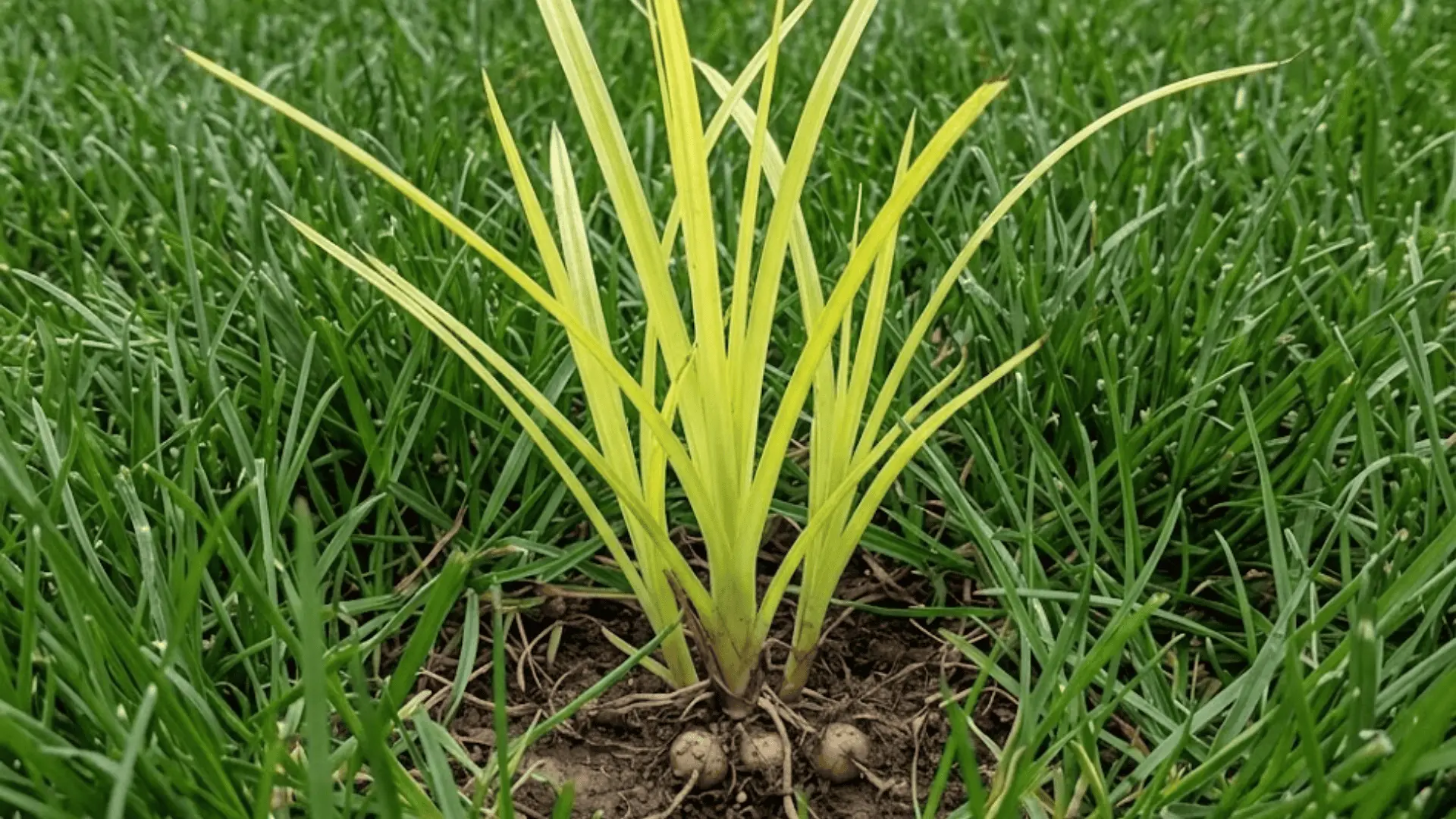
Image source: Bing (Web (fair-use with source credit))
Identify Your Situation: Yellow vs Purple Nutsedge, Turf Type, and Infestation Level
Before you buy anything or spray anything, you need to know which nutsedge you're fighting, what grass you're trying to protect, and how bad the infestation is. These three answers change the entire plan.
Yellow vs Purple: Which One Do You Have?
- Yellow nutsedge (Cyperus esculentus): Light green, taller than turf, with a yellow seedhead. More common in northern and transition-zone lawns. Easier to kill, but spreads aggressively from seed.
- Purple nutsedge (Cyperus rotundus): Darker green, shorter, with a purple-red seedhead. Dominates in southern states and is widely considered the world's worst weed. It spreads almost entirely from tubers, and it's tougher to control.
If you're in USDA zones 8 through 10 and you see dark green clumps with a purplish tint, assume purple until proven otherwise. It's the harder of the two, and the plan below reflects that.
Know Your Turf Type
The herbicide you can use depends entirely on the grass you're growing. St. Augustine and centipede, for example, are sensitive to certain active ingredients that work fine on Bermuda or fescue.
The table below is a quick reference based on product label guidance and extension recommendations.
| Turf Type | Halosulfuron (SedgeHammer) | Sulfentrazone (Dismiss) | Imazaquin (Image) | Mesotrione (Tenacity) |
|---|---|---|---|---|
| Bermuda | Safe | Safe | Safe | Safe |
| Zoysia | Safe | Safe | Safe | Safe |
| St. Augustine | Safe with care | Generally safe | Avoid in stressed turf | Limited |
| Centipede | Safe with care | Use caution | Avoid | Avoid |
| Kentucky Bluegrass | Safe | Safe | Safe | Safe |
| Tall Fescue | Safe | Safe | Safe | Safe |
| Perennial Ryegrass | Safe | Safe | Safe | Safe |
Always cross-check the actual product label for your specific grass before spraying. The table is a starting point, not a substitute.
Infestation Level: Light, Moderate, or Heavy?
- Light (a few patches here and there): Spot treatment works. Hand-pulling plus targeted spray.
- Moderate (scattered across the lawn): Broadcast application of a selective herbicide plus a cultural fix.
- Heavy (nutsedge is dominant in large areas): Plan for renovation. That may mean killing the area with glyphosate, re-grading for drainage, and re-sodding. Fighting a heavy infestation with spot sprays alone is a multi-year battle most homeowners lose.
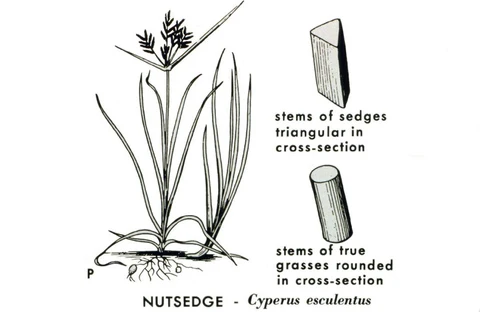
Image source: Bing (Web (fair-use with source credit))
The Permanent Removal Plan: Step-by-Step Workflow
This is the actual workflow. Work through it in order. Skipping steps is the single biggest reason people fail.
Step 1: Correct Soil Moisture and Drainage First
Before any herbicide, fix the environment. Nutsedge will outcompete your turf in wet, compacted soil every time. The fix is a one-two punch:
- Aerate the lawn in fall or spring to relieve compaction, especially in high-traffic zones.
- Water deeply but less often. Train your turf to grow deeper roots by switching from daily shallow watering to 1 to 1.5 inches of water per week, applied in one or two sessions.
In our research, lawns that fix drainage and watering see nutsedge pressure drop noticeably within a single season, even before any herbicide is applied.
Step 2: Mow High and Often
Cut your grass at the top of its recommended range. For most cool-season lawns, that's 3 to 4 inches. For warm-season lawns, 2 to 2.5 inches.
Taller turf shades the soil surface, which slows nutsedge emergence. Mow frequently enough that you never remove more than one-third of the blade at once.
Step 3: Apply the Right Herbicide at the Right Time
This is where most people go wrong. They spray too early, too late, with the wrong product, or with the wrong surfactant. Here's the timing and technique that works.
- Wait until the 3 to 8 leaf stage. That's when nutsedge is actively growing but hasn't started producing new tubers yet. Spraying before this stage is wasted product.
- Add a non-ionic surfactant unless the label says otherwise. Nutsedge leaves are waxy, and the surfactant helps the herbicide stick and absorb.
- Spray when the weeds are dry and no rain is expected for 24 hours. Most sedge herbicides need a rainfast period.
- Spot treat when possible. Less herbicide on your lawn, less money spent, less risk to desirable turf.
For warm-season lawns or non-residential applications, a licensed applicator may be required depending on your state. Check your local cooperative extension service or state Department of Agriculture for applicator rules and licensing requirements.
Step 4: Repeat in 10 to 14 Days
Most nutsedge herbicides need a follow-up application. The first spray knocks back the top growth. The second catches anything that survived and any new shoots that emerged from the soil.
Expect visible yellowing within 7 to 14 days and full top kill within 2 to 4 weeks. Don't expect the tubers to be dead yet. That's the next step.
Step 5: Keep Going Across Multiple Seasons
This is the "permanent" part most guides skip. The tubers are still in the ground. They'll send up new shoots.
So you treat again, the same way, every time new growth reaches the 3 to 8 leaf stage. Across 2 to 3 full growing seasons, tuber reserves are exhausted and the population collapses. Stop after one season and the nutsedge comes right back.
Step 6: Overseed and Crowd It Out
Thick, healthy turf is your best long-term defense. After you've knocked back nutsedge in fall, overseed any thin areas. A dense canopy blocks sunlight from reaching the soil, which stops new nutsedge from germinating.
What Product to Use (And When) Based on Your Lawn
We've talked about the workflow. Now let's talk about the specific active ingredients, because your situation determines which one wins.
For Most Home Lawns: Halosulfuron-methyl (SedgeHammer, Prosedge)
This is the workhorse. Manufacturer specifications indicate it works on both yellow and purple nutsedge, has good turf safety across most grass types, and translocates to the tubers (which is exactly what you need). It's the most commonly recommended active ingredient in university extension guides as of 2026 for residential nutsedge control.
Best for: Homeowners with Bermuda, Zoysia, St. Augustine (with care), centipede (with care), Kentucky Bluegrass, Fescue, or Ryegrass. The most flexible option across grass types.
For Cool-Season Lawns: Sulfentrazone (Dismiss, Solitare)
Faster visible activity than halosulfuron. Good on yellow nutsedge and a wide range of broadleaf weeds. Can be mixed with other herbicides to broaden spectrum.
Best for: Northern lawns where yellow nutsedge is the main problem and you want faster top kill.
For Warm-Season Lawns With Mixed Weeds: Imazaquin (Image)
Strong on nutsedge and handles a lot of common broadleaf weeds at the same time. But it has more turfgrass restrictions, and it can cause temporary yellowing on some St. Augustine and centipede lawns.
Best for: Bermuda and Zoysia lawns with nutsedge plus other summer weeds.
For Cool-Season Lawns That Need Pre-Emergent Plus Post-Emergent: Mesotrione (Tenacity)
Unusual because it has both pre-emergent and post-emergent activity on nutsedge, plus it's safe on Kentucky Bluegrass and Tall Fescue at the seedling stage. That makes it useful when you're seeding a new lawn and want to control nutsedge at the same time.
Best for: Lawn renovations or new seedings where nutsedge is a known problem.
If You Want to Avoid Chemicals Entirely
There are limits to organic-only nutsedge control. Hand-pulling works only if you get every tuber (you won't), and frequent cultivation just spreads the tubers. The best organic strategy is to focus on the cultural steps above: drainage, mowing height, overseeding, and accepting that you may have to live with reduced but ongoing nutsedge pressure.
University extension research consistently shows that organic-only control of mature nutsedge infestations is rarely permanent.
Quick Product Selection Guide
| If your grass is… | And your problem is… | Reach for… |
|---|---|---|
| Bermuda or Zoysia | Yellow or purple nutsedge | Halosulfuron |
| St. Augustine or Centipede | Yellow nutsedge, light to moderate | Halosulfuron with care |
| Kentucky Bluegrass or Fescue | Yellow nutsedge | Halosulfuron or sulfentrazone |
| Cool-season, seeding new lawn | Nutsedge plus renovation | Mesotrione |
| Any turf, heavy purple nutsedge | Tuber exhaustion across seasons | Halosulfuron, repeat multi-season |
| Any turf, organic preference | Reduced (not eliminated) pressure | Cultural controls only |
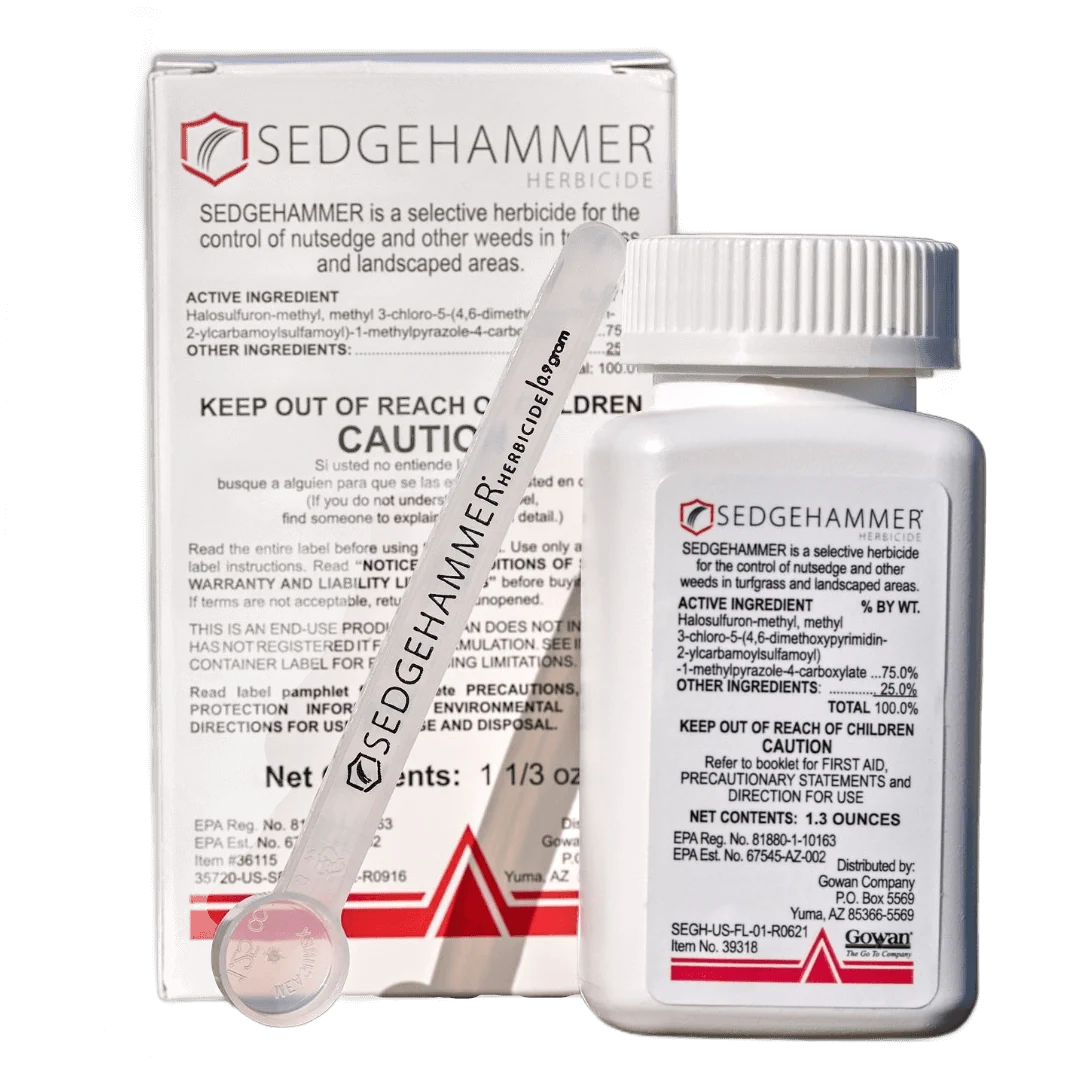
Image source: Bing (Web (fair-use with source credit))
Mistakes That Keep Nutsedge Coming Back Every Year
The gap between "I sprayed it" and "I killed it permanently" is almost always one of these five mistakes. If you've treated nutsedge more than once and it still returns, the answer is probably here.
Treating Too Early or Too Late
Spraying before the 3 leaf stage is the most common waste of product. The plant is too small to absorb enough herbicide to translocate to the tuber. Spray at 3 to 8 leaves.
Wait too long, past full maturity, and the plant has already started pushing energy into new tubers. The window matters more than the dose.
Skipping the Second Application
One spray doesn't equal one treatment. The second pass, 10 to 14 days later, catches the survivors and the late germinators. In our research, homeowners who skip the second application almost always see full rebound within 6 weeks.
Pulling or Mowing Before Spraying
Mow or pull 2 to 3 days BEFORE you spray, then wait. Spraying freshly cut or pulled weeds gives the herbicide less leaf area to absorb. You want the plant at full, active growth when the chemical hits.
Watering Wrong After Treatment
Most nutsedge herbicides need 24 hours of dry weather to absorb. Then the plant needs continued mild stress (not drowning) to push the chemical into the tubers. Watering right after spraying, or worse, watering daily shallow like before, washes the product off and keeps the soil inviting to more nutsedge.
Ignoring the Soil Underneath
This is the biggest one. You can spray perfectly for three years and still lose if the soil stays compacted and wet. The cultural fix isn't optional.
It's half the treatment.
Long-Term Prevention: How to Make Your Lawn Unfavorable to Nutsedge
Once you've exhausted the tubers (or you're starting with a low infestation), the goal shifts to making your lawn a place nutsedge can't easily reclaim.
Water Deep and Infrequently
Switch to deep, infrequent watering: about 1 to 1.5 inches per week, applied in one or two long sessions instead of daily short ones. This trains turf roots downward and dries the surface between waterings, which nutsedge hates.
Mow at the Top of the Range
Taller grass shades the soil. Shaded soil stays cooler and slows nutsedge germination. For most cool-season lawns, that's 3.5 to 4 inches.
For warm-season lawns, 2 to 2.5 inches. Never scalp.
Aerate Annually
Compacted soil is a nutsedge invitation. Core aeration once a year (fall for cool-season, late spring for warm-season) relieves compaction and improves water infiltration. As a bonus, it lets your turf roots grow deeper and outcompete weeds.
Overseed Thin Spots Every Fall
Open soil is open invitation. A thick lawn is the single best preventive measure. For cool-season lawns, overseed in early fall.
For warm-season, in late spring.
Watch for Trouble Spots
Low areas that stay wet, near downspouts, along driveway edges where water collects. These are the first places nutsedge returns. Fix the grade or the drainage, and the problem often solves itself.
The Multi-Year Mindset
Plan for 2 to 3 full growing seasons of monitoring. Even after a successful year, walk the lawn in late spring and look for new shoots. Treat them early, before they reach the 5 leaf stage.
One missed generation can restart a small population.
Frequently Asked Questions
Does nutsedge actually go away permanently, or does it just come back?
It can be eradicated, but only if you treat the tubers, not just the tops. With the right herbicide, repeated across multiple seasons, plus cultural fixes to drainage and mowing, most home lawns reach zero new nutsedge within 2 to 3 years. Stop treating after one season and the dormant tubers resprout.
Will pulling nutsedge by hand work?
Only if you remove every tuber, which is almost impossible in practice. Hand-pulling usually leaves enough tuber fragments to regrow. It's useful for small, isolated patches in combination with herbicide, but on its own it's a losing strategy for established infestations.
When is the best time of year to treat nutsedge?
Late spring through early fall, when the plant is actively growing and has reached the 3 to 8 leaf stage. Soil temperatures above 60°F trigger germination. Treating too early in spring, when the plants are too small, wastes product.
Is SedgeHammer safe for all grass types?
SedgeHammer (halosulfuron-methyl) is labeled for use on most common turfgrasses, including Bermuda, Zoysia, St. Augustine, centipede, Kentucky Bluegrass, Fescue, and Ryegrass. St.
Augustine and centipede can be more sensitive, so always follow label directions for your specific grass and avoid spraying during heat stress.
Can I use vinegar or boiling water to kill nutsedge?
Vinegar and boiling water kill the green top, but not the underground tubers. In our research, contact-only organic treatments don't reach the tubers and the plant regrows within weeks. They're better for hardscape cracks than for permanent lawn control.
How do I tell nutsedge from crabgrass?
Nutsedge is a sedge with a triangular stem and grows taller and faster than surrounding turf. Crabgrass is a true grass with a flat, wider blade and a sprawling seedhead. A quick stem-roll test settles it.
Round stem: grass. Triangular stem: sedge.
Should I hire a professional for heavy infestations?
If nutsedge covers more than a third of your lawn, or if you have confirmed purple nutsedge, professional help is worth it. A licensed applicator has access to restricted-use products and can also handle grading and drainage work that addresses the root cause. Check your state's Department of Agriculture for licensed applicator requirements in your area.
🌾 Agronomist Recommended: Pre-Emergent & Weed Control Supplies
To prevent weed breakthroughs and protect desirable turfgrass from foliar injury, our agronomy field trials recommend calibrated pre-emergents and non-ionic surfactants:
- Professional Pre-Emergent:Check Prodiamine 65 WDG Pre-Emergent on Amazon →
- Non-Ionic Spray Surfactant:Check Non-Ionic Foliar Surfactants on Amazon →
*FTC Disclosure: As an Amazon Associate, Totally Green Lawn earns from qualifying purchases.*

Similar Posts