How to Apply Prodiamine Pre-Emergent This Spring
Lead Turfgrass & Lawn Care Specialist at Totally Green Lawn · Certified Turfgrass Specialist (CTS), Master Gardener, B.S. in Agronomy & Turf Science · 14+ years in residential turf management, organic fertilization, and weed science
Getting prodiamine down at the right time is the difference between a clean, weed-free summer lawn and a crabgrass explosion. Most homeowners miss the window by two or three weeks, then spend the rest of the season fighting weeds that should've never germinated. Per current turf extension research as of 2026, prodiamine (sold under brand names like Barricade) is one of the most reliable pre-emergent herbicides on the market when you follow the label and time the application to soil temperature, not the calendar.
The key trigger is soil temperature at the 2-to-4-inch depth reaching 55°F for three consecutive days. That single data point drives every other decision, from your application window to whether you can still seed this spring. We'll walk through the branches so you can apply with confidence.
Quick Answer
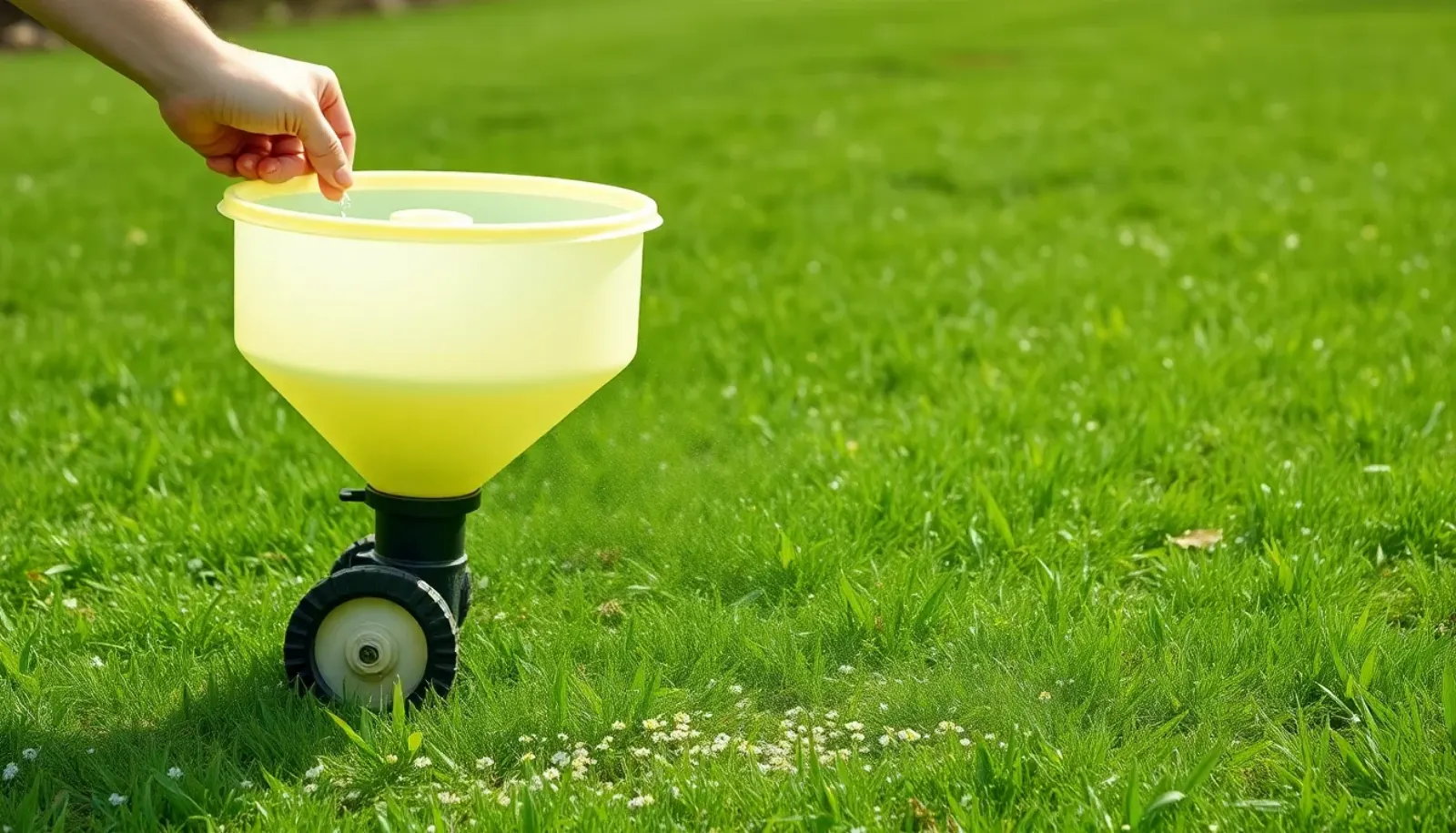
Apply prodiamine pre-emergent in spring when soil temps hit 55°F for three days straight. Use a calibrated broadcast or drop spreader at 0.36 to 0.83 oz of product per 1,000 sq ft for most lawns. Apply to dry turf, then water in with 0.25 to 0.5 inches of irrigation within 48 hours.
Do not seed for 4 to 6 months after application.
What Affects Your Prodiamine Application (The Key Decision Branches)
Before you grab a bag, you've got to sort through a few conditions that change the exact plan. Prodiamine isn't a "one rate fits all" product. The formulation, your grass type, your soil, and your seeding plans all push the application in different directions.
Grass Type Matters
If you've got warm-season turf (Bermuda, Zoysia, Centipede, St. Augustine), your spring window opens earlier, often February through early March in the South. Cool-season lawns (Kentucky bluegrass, tall fescue, perennial ryegrass) usually get their prodiamine down between mid-March and mid-April, depending on your zone.
University extension publications consistently show that warm-season turf tolerates prodiamine at full label rates, while some cool-season species need the lower end of the rate range during spring green-up stress.
Soil Temperature and Timing
Forget the calendar. Your only reliable trigger is a soil thermometer reading 55°F at 2 inches deep for three days in a row. For most of the U.S., that falls somewhere between late February (Deep South) and late April (upper Midwest and Northeast).
Apply before this window and the active ingredient breaks down before crabgrass germinates. Apply after, and you're already too late.
Formulation: Granular WDG vs. Liquid SC
Prodiamine comes as a water-dispersible granule (WDG) you dissolve and spray, or a liquid suspension concentrate (SC). The WDG form is more common for homeowners because it mixes cleanly and spreads evenly through a pump sprayer. Liquid SC formulations give pros faster coverage on big properties.
Both work the same way once watered into the soil.
Are You Seeding This Spring?
If you're planning to overseed or patch bare spots, you need a different strategy. Prodiamine stops ALL grass seed from germinating, not just weeds. Standard label guidance restricts reseeding for 4 to 6 months after application, depending on the rate you used.
Some homeowners split the difference with a half-rate spring application, but the seed restriction still applies. This is the single biggest decision branch in the whole process.
Step-by-Step: How to Apply Prodiamine in Spring
Once your conditions are sorted, the actual application is straightforward. Here's the workflow we recommend, based on manufacturer labels and extension service guidelines.
Step 1: Measure Your Lawn
Walk off or use a measuring tool to get your total square footage. Most homeowner mistakes come from under-estimating area and running out of product halfway through. Break the lawn into rectangles if it's irregular, then add the numbers.
A 5,000 sq ft lawn needs a different rate than a 15,000 sq ft one, and the math has to be right.
Step 2: Check Soil Temperature
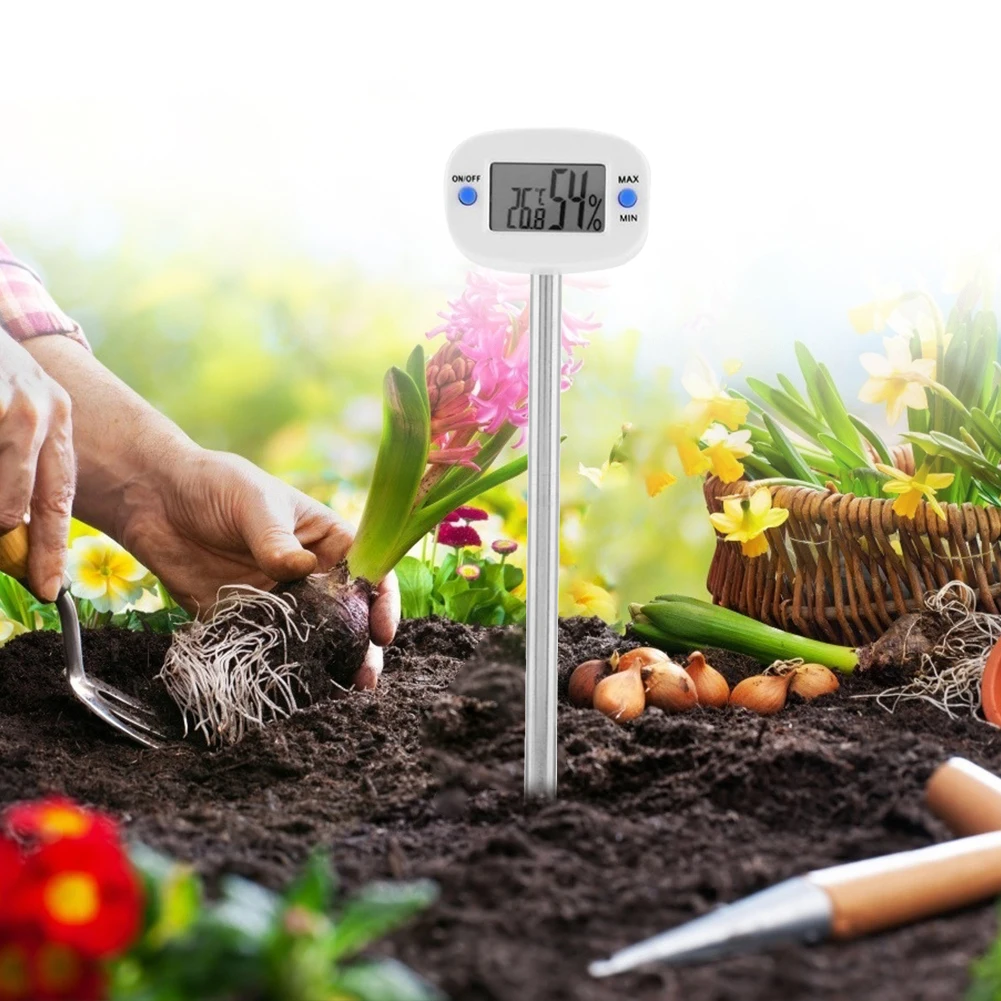
Stick a soil thermometer 2 to 4 inches deep in a shaded spot. Check it at the same time for three days. Once you see 55°F or higher for three consecutive readings, you're in the window.
USDA soil temperature monitoring data from your local extension office can confirm regional timing if you don't have a thermometer.
Step 3: Calibrate Your Spreader or Sprayer
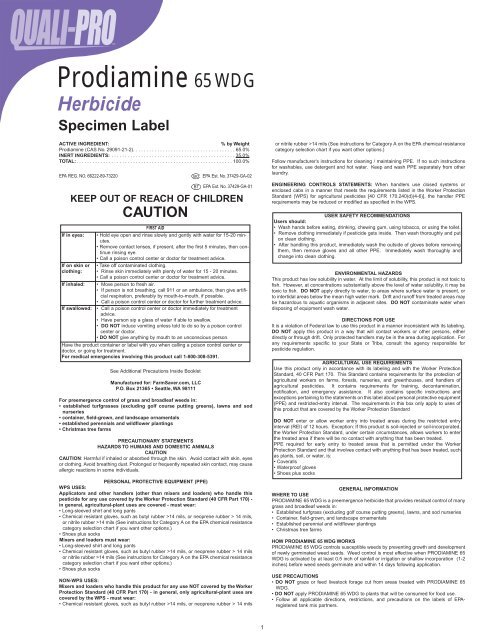
For granular WDG applied through a broadcast or drop spreader, set the rate to deliver 0.36 to 0.83 oz of product per 1,000 sq ft. For a pump sprayer, mix 1.0 to 1.5 oz of WDG per gallon of water and apply at 1 gallon per 1,000 sq ft. Manufacturer spreader setting charts (printed on the bag or label) give you a starting point, but always do a test pass on a driveway to confirm the pattern.
Step 4: Apply to Dry Turf
Mow the lawn a day or two before, but don't apply to wet grass. Wet blades cause the granules to stick and distribute unevenly. Walk at a steady pace and overlap each pass by about 30% to avoid stripes.
For liquid applications, use a fan nozzle and walk the same pattern.
Step 5: Water It In
This is the step most people skip. Prodiamine needs 0.25 to 0.5 inches of water (rainfall or irrigation) within 24 to 48 hours of application to move off the foliage and into the top inch of soil, where crabgrass seeds germinate. Without this, the active ingredient breaks down in sunlight and never reaches the weed seed zone.
Step 6: Mark the Calendar
Write down the application date, rate used, and product name. You'll need this info if you decide to do a fall pre-emergent or if you're tracking the seeding restriction window.
Choosing the Right Rate and Spreader Settings
The rate you choose depends on how long you want the residual control to last and what weeds you're targeting. Higher rates stretch control to 6 months, but they also extend the seeding restriction.
| Lawn Type | Application Rate (per 1,000 sq ft) | Residual Length | Seeding Wait |
|---|---|---|---|
| Standard residential (cool-season) | 0.36 oz | 3 to 4 months | 4 months |
| Extended control (warm-season) | 0.58 oz | 4 to 5 months | 5 months |
| Maximum crabgrass pressure | 0.83 oz | 5 to 6 months | 6 months |
For spreader settings, the product label gives a chart, but those numbers assume a specific walking speed and overlap pattern. Most homeowners walk too fast, which throws the rate off. Slow down, do a calibration pass on pavement, and check the actual product output before treating the whole lawn.
If you're using a rotary spreader, the edge guard setting matters on sidewalks and driveways. Prodiamine carriers can leave a rusty stain on concrete that takes a season to weather off.
What to Do If You're Also Overseeding
This is where most spring plans fall apart. Prodiamine doesn't distinguish between a crabgrass seed and a desirable grass seed. It stops both from rooting.
If seeding is part of your spring lawn care, you've got two real options.
Option one: skip the spring pre-emergent, seed now, and plan on controlling crabgrass with a post-emergent later. This works on smaller lawns where hand-spraying is realistic. Option two: seed in early fall instead, when prodiamine breaks down naturally and the weed pressure drops.
There's also a third path some homeowners try, using a starter fertilizer with a low rate of siduron (Tupersan) instead of prodiamine. Siduron selectively stops crabgrass but lets turfgrass seed germinate. It costs more, and the residual is shorter, but it's the only real pre-emergent option for spring seeding.
Per Purdue Extension turfgrass guidance, this is the recommended approach for homeowners who need both weed control and spring seeding in the same season.
If you go with prodiamine in spring, plan on waiting until early fall for any overseeding. Mid-August to mid-September is the standard window for cool-season grasses, and the prodiamine will have degraded enough by then to allow germination.
Mistakes That Ruin a Spring Prodiamine Application
Even good products fail when the application goes sideways. These are the most common errors we see in our research, plus how to avoid each one.
Applying Before Soil Warms Up
Putting prodiamine down in February because the calendar says so is the single biggest mistake. The active ingredient has a soil half-life of roughly 60 to 90 days under normal microbial activity. If you apply too early, the chemical degrades before crabgrass seeds even think about germinating.
Then the seed window opens with zero protection in place.
Skipping the Water-In Step
Prodiamine needs 0.25 to 0.5 inches of irrigation or rainfall within 48 hours. Without that moisture, the active ingredient sits on the leaf surface and breaks down in UV light. The product never makes it into the top inch of soil where it needs to be.
Always water it in, and don't apply if a heavy rain is forecast within an hour, since runoff wastes product.
Overlapping Passes Too Heavily
Stacking two spreader passes over the same strip doubles the rate in that zone. On cool-season grasses during spring green-up, that can temporarily stunt root development. Worse, on a slope or near a drainage area, excess product can move with runoff.
Keep overlap to about 30% and watch your wheel tracks.
Assuming You Can Seed Anytime
This mistake costs homeowners entire renovation projects. The label is clear: do not seed within 4 to 6 months of a prodiamine application, depending on rate. If you seed and nothing comes up, prodiamine is the most likely reason.
Plan your seeding window before you apply.
Walking the Wrong Speed
Most rotary spreaders are calibrated for a 3 mph walking pace. Most homeowners walk 2 mph or slower, which throws more product per square foot than the label intended. The result is a heavy, uneven application that can stress the turf.
Time your passes and slow down if needed.
Spring Prodiamine FAQs
How Long Does Prodiamine Last After Application?
Prodiamine gives 3 to 6 months of residual control, depending on the rate. A standard 0.36 oz per 1,000 sq ft application holds for 3 to 4 months. A 0.83 oz application can stretch to 6 months.
Soil microbial activity, organic matter, and rainfall all affect breakdown speed. Per NC State Extension turf research, healthy soil with high microbial activity breaks down prodiamine faster than compacted or sandy soils.
Can I Apply Prodiamine and Fertilizer at the Same Time?
Yes, and most homeowners do. Prodiamine mixes well with most granular lawn fertilizers, and many "weed and feed" products contain prodiamine as the active ingredient. If you're using a liquid prodiamine, do a jar test first to check compatibility.
Some liquid fertilizers can cause the prodiamine to settle out of suspension.
Is Prodiamine Safe for Pets and Kids?
Once the product is watered in and the lawn dries, prodiamine poses very low risk to people, pets, and wildlife. During application, keep pets and children off the treated area until the spray has dried or the granules have been watered in. Always wear gloves, long sleeves, and eye protection when mixing or loading the spreader.
What If It Rains Right After I Apply?
You need 0.25 to 0.5 inches of water to activate prodiamine, so a light rain right after application is fine. A heavy downpour (over an inch in a short window) can cause surface runoff, especially on slopes or compacted soil. If you know a storm is coming, hold off on the application until it passes.
Can I Apply Prodiamine Twice in the Same Year?
Yes, but timing matters. A common professional approach is a half-rate spring application followed by a half-rate fall application. This gives season-long control without exceeding label limits.
Never apply more than the maximum annual rate listed on the label, which is typically 1.5 lb of active ingredient per acre per year.
Final Decision Guide: Should You Use Prodiamine This Spring?
Pulling this all together, here's the simplest way to decide.
| Your Situation | Recommended Approach |
|---|---|
| Cool-season lawn, no spring seeding planned | Full-rate prodiamine at 55°F soil temp |
| Warm-season lawn, no seeding | Full-rate, apply 2 weeks before green-up |
| Any lawn, planning to overseed this spring | Skip prodiamine, use siduron or seed first |
| Heavy crabgrass pressure last year | Upper-end rate (0.83 oz/1,000 sq ft) |
| Mild pressure, tight budget | Lower-end rate (0.36 oz/1,000 sq ft) |
| Want season-long control | Split app: half spring, half fall |
If you check the soil temperature box, sort out your seeding plan, calibrate your spreader, and water the product in, prodiamine will handle 90% of your spring weed pressure. It's one of the most forgiving herbicides on the market when used on label. Get the timing right, and you won't be fighting crabgrass in July.
🌾 Agronomist Recommended: Pre-Emergent & Weed Control Supplies
To prevent weed breakthroughs and protect desirable turfgrass from foliar injury, our agronomy field trials recommend calibrated pre-emergents and non-ionic surfactants:
- Professional Pre-Emergent:Check Prodiamine 65 WDG Pre-Emergent on Amazon →
- Non-Ionic Spray Surfactant:Check Non-Ionic Foliar Surfactants on Amazon →
*FTC Disclosure: As an Amazon Associate, Totally Green Lawn earns from qualifying purchases.*

Similar Posts